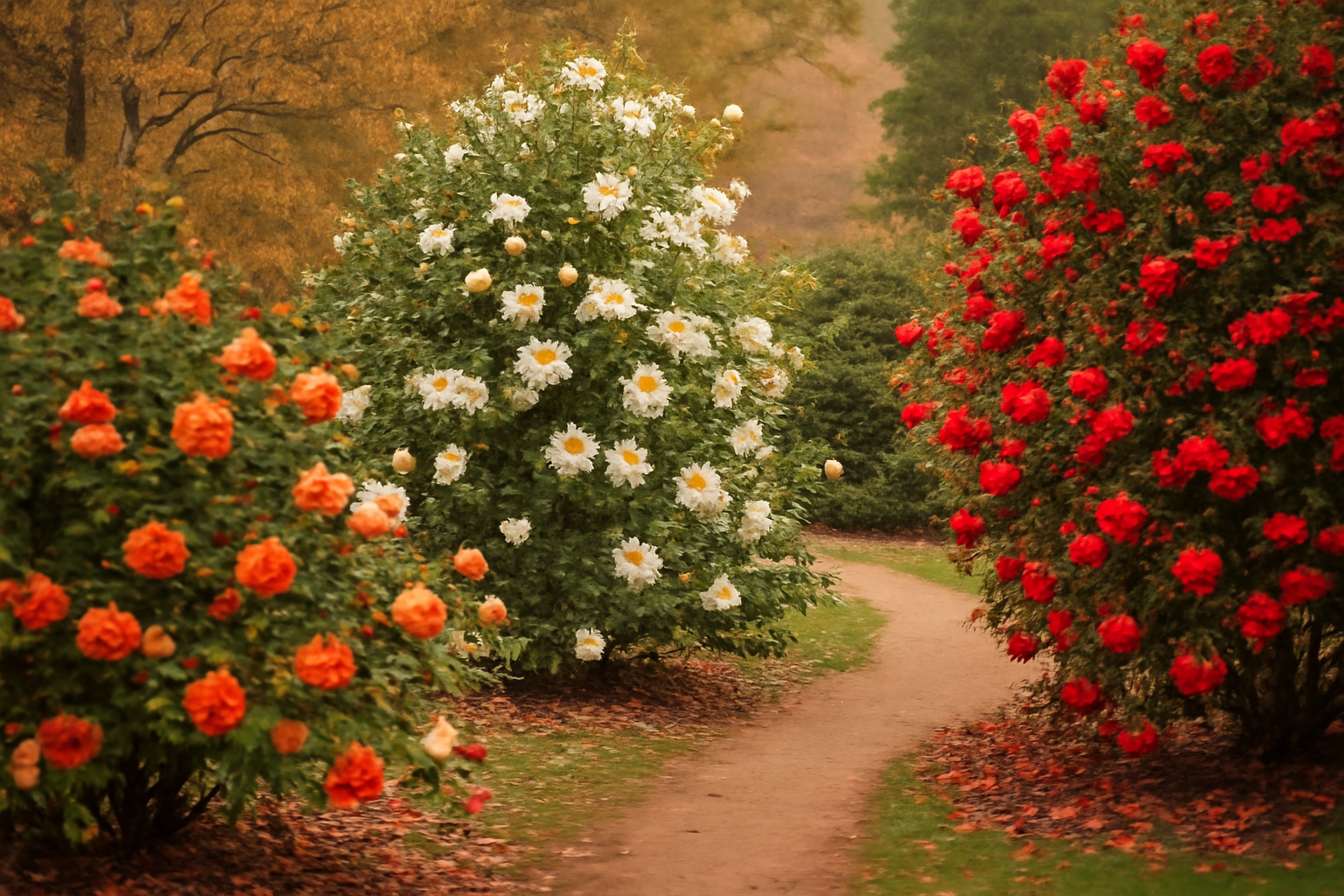
Get the timing wrong, and you’ll end up staring at a bare, leafless shrub for the better part of a year, wondering what you did wrong. That’s the real stake behind the question I probably field more than any other. My neighbor asks it every single February, leaning over the fence to point at my Camellia japonica ‘Nuccio’s Gem’ — its pristine white double blooms utterly unbothered by frost — and demand to know how on earth it’s flowering in the dead of winter. I never tire of answering. The truth is that bloom timing isn’t fixed; it hinges entirely on which species and cultivar you’ve planted. Choose well, and you can have a garden flowering continuously from October straight through May. Choose poorly, and you’ll spend years scratching your head over a camellia that never quite delivers.
Two decades-plus of growing camellias across three USDA zones — 7b, 8a, and 8b — have shaped everything I know about this timing puzzle. My personal collection now runs past the 200-named-cultivar mark, and that hands-on record has taught me more about bloom sequencing than any reference book ever managed. Let’s move through the calendar together, species by species.
The Quick Version: When Camellias Actually Flower
The full camellia bloom window stretches from early autumn all the way to late spring — a genuinely broad span. No individual plant, though, covers all of it. Bloom season shifts dramatically from one species to the next, and grasping those shifts is really the whole foundation of planning a smart camellia garden.
Broadly speaking: Camellia sasanqua opens in fall. Camellia japonica carries the show through winter and into early spring. Camellia reticulata leans toward late winter and spring. Hybrids, meanwhile, blur every one of these lines in delightful ways. Each group is worth examining on its own.
Sasanquas: Your Autumn Show (October–December)
Sasanquas kick things off before any other camellia in the garden. My Zone 8a plants generally open around mid-October. Some seasons, an early type like ‘Yuletide’ is already showing color before Halloween even arrives — that vivid red set against fall foliage remains one of my favorite garden moments all year.
Compared to japonicas, sasanqua flowers run smaller and simpler — single or semi-double forms are typical. They also shed their petals cleanly rather than browning while still attached to the plant. That’s a real practical win in my book; the shrub essentially tidies up after itself.
Sasanqua Varieties Sorted by When They Open
- Early (October): ‘Setsugekka,’ ‘Cleopatra,’ ‘Sparkling Burgundy’
- Mid-season (November): ‘Yuletide,’ ‘Kanjiro,’ ‘Jean May’
- Late (December): ‘Mine-No-Yuki’ (sometimes labeled ‘Snow on the Mountain’), ‘Chansonette’
Sun tolerance is another area where sasanquas simply outperform japonicas. Most of the ones in my garden take full morning sun without any fuss. That said, in Zone 7b, late-season sasanquas can be caught out by an early hard freeze — I’ve watched ‘Chansonette’ lose its blooms to a November cold snap more than once. Tucking those late bloomers up against a south-facing wall buys them a meaningfully longer season.
Japonicas: The Longstanding Winter Standard (November–April)
This is the species most people conjure up when the word “camellia” comes to mind — large formal flowers, deep glossy leaves, a shrub that dares to bloom while everything else stays dormant.
Within a single species, japonicas span a remarkable range. In my Zone 8b garden, an early variety like ‘Berenice Boddy’ opens as early as November, while a late one such as ‘Governor Mouton’ is still going strong come April. That’s nearly five months of possible bloom from this species alone.
Early-Season Japonicas (November–January)
What makes early japonicas fun is that they overlap with the last stretch of sasanqua season. ‘Berenice Boddy’ has proven one of the most dependable early bloomers I grow — its semi-double pink flowers usually open before Christmas and keep producing for weeks afterward.
‘Blood of China,’ ‘Elegans,’ and ‘Lady Clare’ are other early standouts worth naming. There’s a tradeoff, though: blooming early means open flowers are most exposed to frost injury. I’ve made a habit of planting my earliest japonicas beneath tall pines — that overhead canopy cuts radiative frost losses far more than you’d expect.
Mid-Season Japonicas (January–February)
This stretch is really the core of japonica season, and it’s my favorite time to walk the garden. ‘Nuccio’s Gem’ opens. ‘Bob Hope’ unfurls its huge dark red blooms. ‘Dr. Tinsley’ puts on a blush-pink display that stops anyone walking past.
I consider mid-season japonicas the true sweet spot of the group. Their peak lands right when winter feels bleakest, so even a single modest plant looks striking against a gray January sky. Some of the most decorated camellia cultivars ever bred fall into this window, too — ‘Nuccio’s Pearl,’ ‘Kramer’s Supreme,’ and ‘Debutante’ all belong here.
Late-Season Japonicas (March–April)
Late japonicas time their show to overlap gorgeously with spring bulbs. In my Zone 8a beds, ‘Governor Mouton’ and ‘Professor Charles S. Sargent’ are still flowering right as the daffodils emerge — a pairing I deliberately design around now.
These late varieties also tend to escape frost damage more often, simply because temperatures have already eased by the time they flower. If you garden in Zone 7b and keep losing earlier blooms to freezes, shifting your focus toward late japonicas is a genuinely useful fix — one it took me several disappointing winters to work out.
Reticulatas: Bold Late-Winter-Into-Spring Blooms (February–April)
Reticulatas steal the spotlight wherever they’re planted. Their flowers are genuinely oversized — often five to seven inches across — with a looser, more relaxed form than the tightly structured japonica bloom. Plenty of gardeners describe them as breathtaking; I’ll admit they border on intimidating in person.
In my Zone 8b beds, reticulatas hit their stride during February and March. ‘Crimson Robe’ — that deep red semi-double with beautifully fluted petals — is one I go back to season after season. ‘Captain Rawes’ and ‘Shot Silk’ round out the reliable performers in my own collection.
They do have real constraints, though. Cold tolerance lags well behind japonicas, and Zone 8a is essentially the lower edge of their comfort range. In Zone 7b, they’ll need a well-protected microclimate and can still take damage in a rough winter. Heavy clay soil doesn’t suit them either — I make sure mine sit in beds heavily amended with pine bark, at a soil pH between 5.5 and 6.0, right at the more acidic end of what camellias tolerate.
Hybrids: Stretching Bloom Season From Both Directions
Hybrid camellias are where the possibilities really open up if you’re chasing continuous bloom coverage. Two particular hybrid groups are worth singling out here.
Ackerman Hybrids and Other Cold-Hardy Crosses
The breeding work Dr. William Ackerman did at the US National Arboretum reshaped what was thought achievable in Zone 6 and even Zone 5b gardens. Cultivars like ‘Winter’s Snowman,’ ‘Winter’s Charm,’ and ‘Korean Fire’ pushed camellia growing into territory once considered off-limits.
Bloom timing on these hybrids tends to run autumn into early winter, echoing sasanqua schedules — but their cold tolerance is a different league entirely. In my Zone 7b beds, they’re the most dependable autumn bloomers I own. An October frost that would wreck a late sasanqua doesn’t touch them.
Hybrids That Bloom Into Spring
At the opposite end of the calendar, certain hybrids push flowering well into spring. ‘Survivor,’ a japonica hybrid, earns its spot in my garden specifically because it blooms in April and May — later than nearly anything else I grow. It effectively bridges camellia season into the start of summer interest, and that stretch-out matters a lot to me.
‘Spring’s Promise’ and ‘Fragrant Joy’ are two additional hybrids worth mentioning for their spring flowers. As a bonus, quite a few spring hybrids carry actual fragrance — a trait that’s rare in standard japonicas but shows up consistently in hybrids tracing back to C. lutchuensis genetics.
A Planting Mistake — and What It Taught Me
Years back, still fairly new to all this, I devoted a whole bed to mid-season japonicas alone — gorgeous varieties like ‘Nuccio’s Gem,’ ‘Elegans Champagne,’ and ‘Tom Knudsen.’ I was thrilled with that bed at first. Then it hit me: I’d built a display that was jaw-dropping for about eight weeks and completely dead for the other ten months of camellia season.
The fix, once I saw the problem clearly, was to stagger bloom times on purpose. I now think in thirds: roughly a third of new plants I add are early bloomers, a third mid-season, a third late. That simple rule keeps something flowering from October right through April, and it completely changed the feel of the whole garden.
I’ve gone deeper into how I plan planting layout and companion choices for camellias in another post on this site, if you want more detail — it pairs nicely with everything covered here.
Field-Tested Tips for a Longer Bloom Season
Knowing when each type blooms is only half the job — getting those blooms to actually perform is the other half. These are the practices that have moved the needle most in my own garden.
- Soil pH is non-negotiable. Camellias need a range of 5.5–6.5 to take up nutrients properly. Stray outside it, and even a well-timed bud set can fail from nutrient lockout. I check every bed once a year without fail.
- Stop fertilizing after midsummer. Nitrogen applied in August or September triggers soft new growth that frost will punish. My last application always goes down in early July.
- Think carefully about where early bloomers go. Morning sun hitting frosted flowers causes fast cell damage — east-facing spots are actually harder on frost-tender early varieties than north-facing ones.
- Learn your property’s real microclimates, not just your zone label. One low corner of my Zone 8a lot behaves like Zone 7b — I no longer plant early japonicas anywhere near it.
- Overhead cover buys extra bloom time. Pines, mature hollies, even a simple pergola can extend a camellia’s flowering by one to two weeks just by smoothing out temperature swings.
I’ve also written a separate, more detailed post on pruning timing, since pruning at the wrong moment is one of the easiest ways gardeners accidentally wipe out their own bloom set. The short version here: prune right after flowering finishes, never in late summer or fall.
Building a Camellia Display That Blooms All Year
If I were assembling my collection from zero today, here’s the seasonal framework I’d build it around.
- October–November: Sasanquas (‘Setsugekka,’ ‘Kanjiro’) plus cold-tolerant hybrids such as ‘Winter’s Snowman’
- November–January: Early-flowering japonicas (‘Berenice Boddy,’ ‘Elegans,’ ‘Lady Clare’)
- January–February: Mid-season japonicas (‘Nuccio’s Gem,’ ‘Bob Hope,’ ‘Kramer’s Supreme’)
- February–March: Late japonicas alongside reticulatas (‘Governor Mouton,’ ‘Crimson Robe,’ ‘Captain Rawes’)
- April–May: Late-blooming hybrids (‘Survivor,’ ‘Spring’s Promise’)
About This Article

Written by Helen Pritchard. Helen Pritchard is a lifelong gardener in the Pacific Northwest who has grown more than 200 named camellia cultivars over two decades. She writes practical, experience-based guides to camellia care, from variety selection and pruning to troubleshooting yellowing leaves and bud drop. More about this site.
Verify this against a primary source
Specifics change, and your situation may differ from the one described here. These are the authorities worth checking directly:
- American Camellia Society — cultivar registration and culture guides
- USDA Plant Hardiness Zone Map — zone verification for your location
- Royal Horticultural Society — camellia cultivation and pest guidance