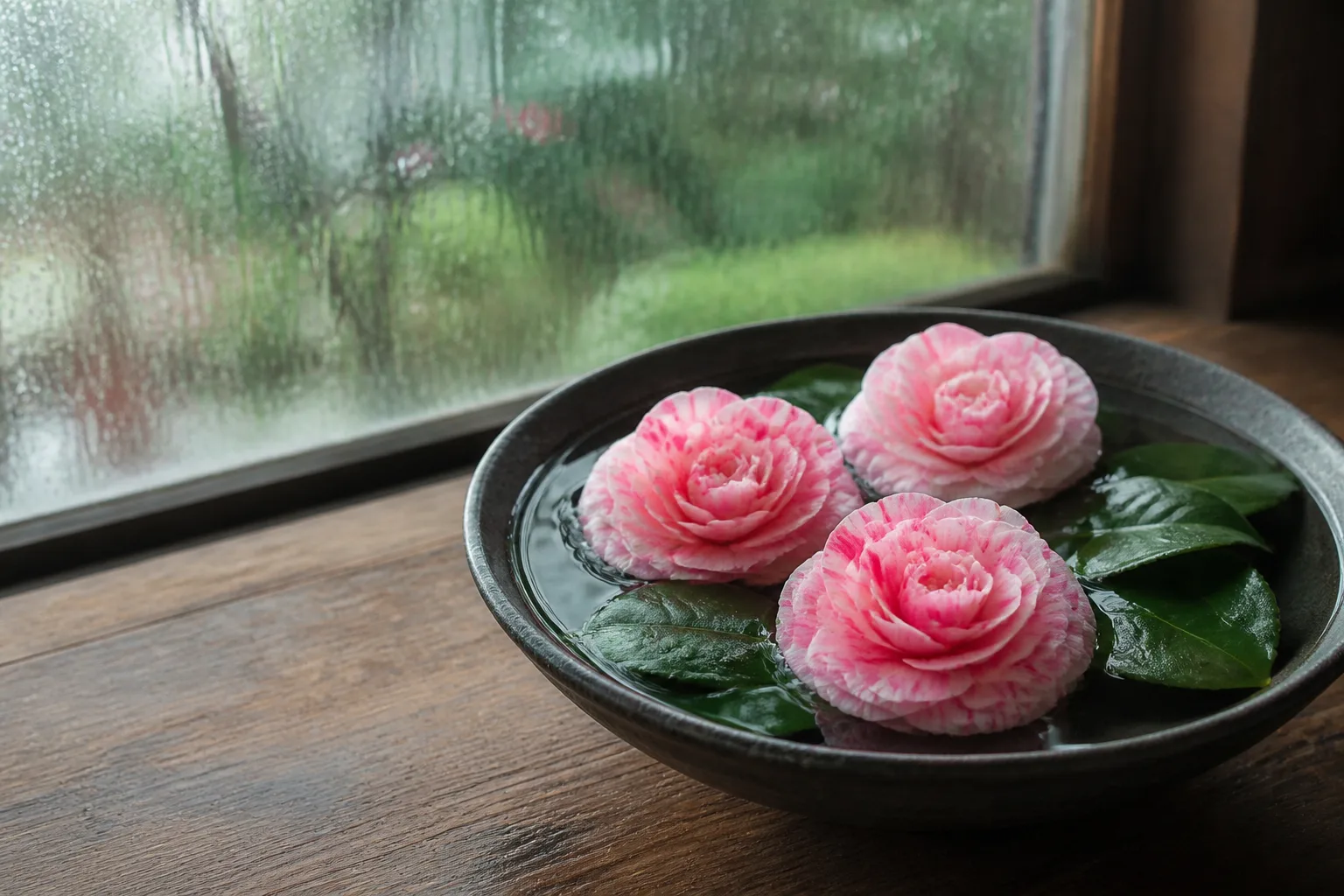
I have a rule about camellias in the house. They do not go in tall glass vases. I learned that the slow way, with a stunning bloom in a bud vase that was limp by the next afternoon, its stem drinking nothing and its petals going soft at the edges. Now I float them in a bowl on the kitchen table, and they last most of a week.
If you are wondering how to make cut camellias last, the short answer is this: keep the stem short, float the bloom in shallow water, pick it in the cool of the morning, and keep it out of the sun and away from the fruit bowl. The rest of this post explains why those four things matter and how to handle the flowers so they look their best.
Why camellias fail in a tall vase
A camellia bloom sits on a short, woody stem. Woody stems take up water poorly compared with the soft green stems of most cut flowers, so a long stem asks the bloom to drink through a straw it cannot really use. The flower runs short of water before the stem ever gets a chance to catch up, and the result is a bloom that droops, bends at the neck, and browns from the outside in.
That is why a tall arrangement of camellias looks tired so quickly. You are not doing anything wrong. The plant simply was not built to be a long-stemmed cut flower.
Floating is the method that works
A shallow bowl solves the water problem. Set the bloom face up on the water, with its back petals resting on the surface, and let the water touch the base of the flower rather than the stem. The bloom gets water where it needs it most, and nothing has to travel up a woody stem.
Keep the water shallow on purpose. If the bowl is deep enough for the bloom to sink, the petals stay wet and start to rot. You want the flower to float on its own, with only a little water underneath.
A wide, low bowl in a dark color makes white and pale pink blooms look their best. Add a few small floating leaves around the edge. They keep the blooms from drifting into the rim, and they add a bit of green to the composition.
Picking the right blooms
Timing matters more than most people expect. Pick in the cool of the morning, when the flowers are fully hydrated and the petals are firm. A bloom cut in the afternoon heat has already lost some of its reserves.
Choose flowers that have just opened, or buds with strong color that look like they are about to open. A fully blown flower has already used much of its life, so it will fade within a day or two in a bowl. A bloom at the start of its life can last the full week.
Handle the flowers by the stem or the calyx, the small green cup at the base of the bloom. Petals bruise brown wherever a finger touches them, and a bruised petal does not heal. If you need to move a bloom, cradle it from underneath and keep your fingers off the front.
Which flower forms hold up best
Not every camellia behaves the same way once it is cut. Flower form makes a real difference, and it helps to know what you are working with before you build an arrangement.
| Flower form | How it behaves when cut |
|---|---|
| Single | Shows its stamens openly, which brown first. Use while fresh and expect the center to age quickly. |
| Semi-double | A little more protection for the center than singles, but stamens still show and brown early. |
| Anemone | Open center with a ring of petals; the exposed stamens are the first thing to fade. |
| Peony | Full and layered, with a good shape for a few days, though the outer petals can bruise if handled. |
| Rose-form double | Tightly packed petals that hold their shape well and tend to last among the longest. |
| Formal double | Dense, symmetrical blooms that keep their form longest and make the most durable floating flowers. |
If you want the longest-lasting arrangement, reach for rose-form and formal doubles. Save the singles for a day when you plan to enjoy them immediately.
Japonica and sasanqua are not the same cut flower
This is one of the most useful things to know. Japonica flowers tend to drop whole, which means they can float for days and then let go of the entire bloom at once. Sasanqua flowers shatter, losing their petals one at a time. A sasanqua bloom that looks fine in the morning can be scattered across the table by evening.
Because of that, sasanquas make poor cut flowers for a bowl that needs to hold its shape. They are wonderful for scattering, though. Float a few petals in a dish of water on the table, or let them drift along a runner, and enjoy the effect without expecting the flower to hold together.
Daily care that keeps a bowl fresh
A floating camellia asks for very little, but it does need attention each day. Change the water every day, using fresh, cool water in the same shallow depth. Pour off the old water, rinse the bowl if it looks cloudy, and refill. Stagnant water is one of the quickest ways to shorten a bloom’s life.
Keep the bowl away from direct sun and from heat sources like a radiator or a sunny windowsill. Warm air draws moisture out of the petals faster than you would expect.
Also keep the bowl away from fruit. Ripening fruit gives off ethylene, a gas that speeds up aging in many cut flowers. A bowl of apples or bananas on the same counter can cut a camellia’s life noticeably short. Move the fruit to another room.
In a cool room, out of direct sun and away from fruit, a floated bloom commonly lasts three to seven days. Heat, sun, and ethylene each shorten that, and a cool, dim spot extends it.
Stems in a vase, if you must
Sometimes you want a camellia on a stem, and that works too, with a few adjustments. Cut the stem short, just enough to hold the bloom upright. Recut it under water, which keeps air from entering the stem and blocking the flow of water. Strip any leaves that would sit below the waterline, since they rot and foul the water. Keep two or three leaves above the water for looks.
Even with those steps, a stemmed camellia will not last as long as a floated one. Think of it as a short-term arrangement for a special occasion, not a week-long display.
When a bloom should go in the bin
Look closely at each flower before you float it. Brown spots that start at the center and spread outward can be a sign of petal blight. Do not compost those blooms, since the disease can carry over. Bin them, and keep them well away from your healthy flowers. Do not float a suspect bloom in the same bowl as clean ones, because the trouble can move from one to the next.
Healthy blooms have clean, even color and firm petals. If the color looks wrong or the petals feel soft and slimy, let the flower go.
Frequently Asked Questions
Why do my cut camellias droop so fast in a vase?
Camellia blooms sit on short woody stems that take up water poorly, so a long stem in a tall vase starves the flower. Floating the bloom in a shallow bowl gives it water directly, which works much better. Shorter stems also help if you do need to use one.
Should I cut camellias in the morning or the evening?
Morning is best, while the plant is cool and fully hydrated. Flowers cut in the afternoon heat have already lost some of their reserves. Pick blooms that have just opened or buds with strong color.
Why do the petals on my camellia turn brown?
Petals bruise brown wherever fingers touch them, so handle blooms by the stem or calyx only. Brown spreading from the center of the flower can be petal blight, and those blooms should be binned rather than composted. Keep affected flowers away from healthy ones.
Can I put camellia flowers next to a fruit bowl?
It is better not to. Ripening fruit releases ethylene, a gas that speeds up aging in many cut flowers, and it can shorten a camellia’s life noticeably. Move the fruit to another room to keep your blooms fresh.
About This Article

Written by Helen Pritchard. Helen Pritchard is a lifelong gardener in the Pacific Northwest who has grown more than 200 named camellia cultivars over two decades. She writes practical, experience-based guides to camellia care, from variety selection and pruning to troubleshooting yellowing leaves and bud drop. More about this site.
Verify this against a primary source
Specifics change, and your situation may differ from the one described here. These are the authorities worth checking directly:
- American Camellia Society — cultivar registration and culture guides
- USDA Plant Hardiness Zone Map — zone verification for your location
- Royal Horticultural Society — camellia cultivation and pest guidance