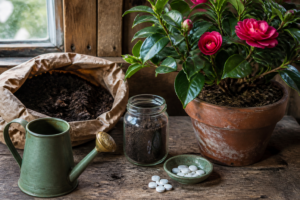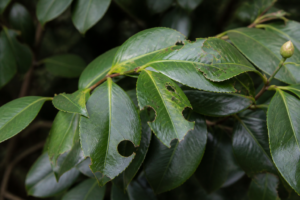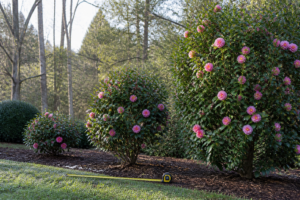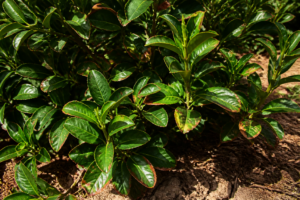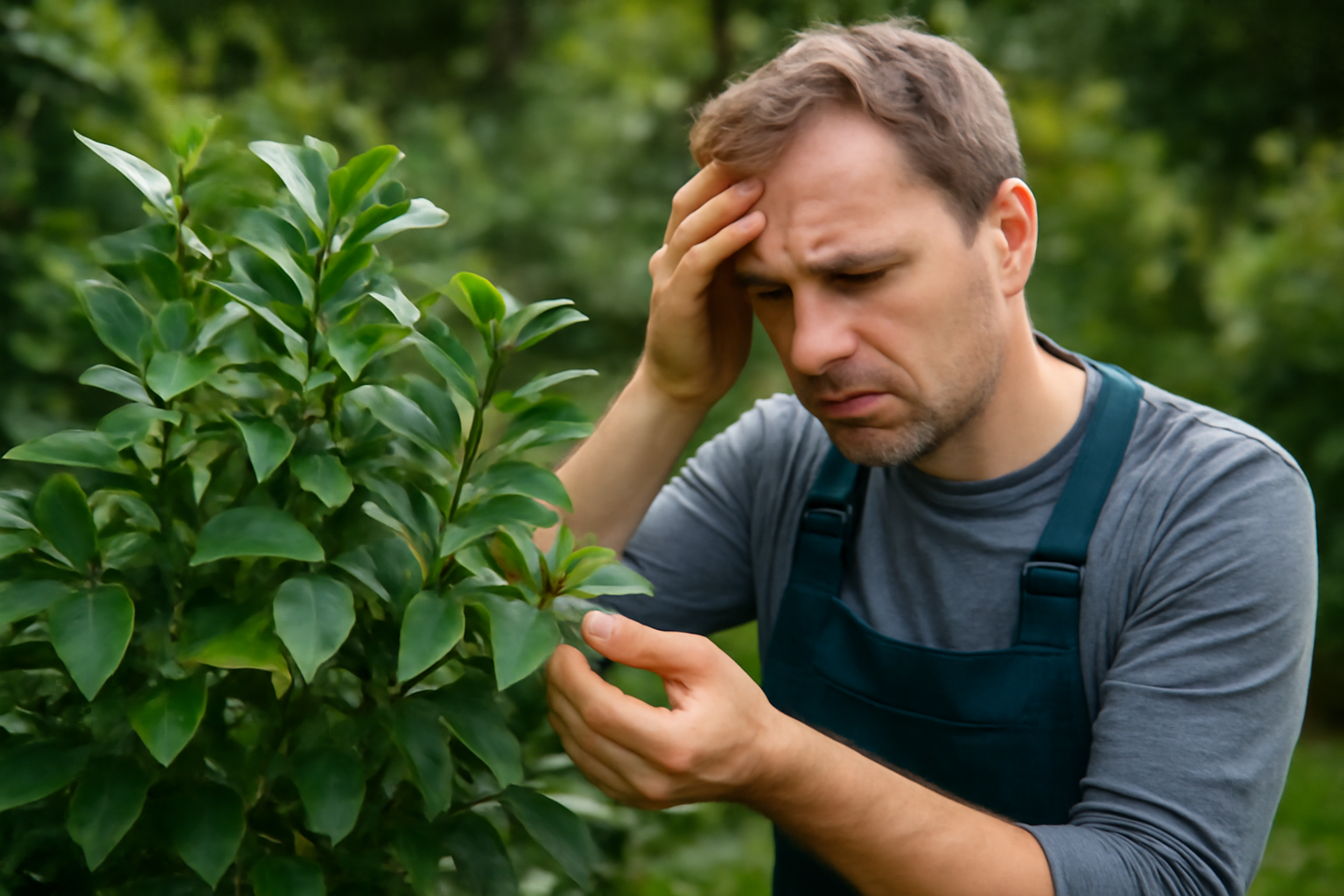
There’s a corner bed along the east fence in my own garden — the one shaded by an old dogwood — where a client’s photo once made me stop and stare. She’d sent me a picture of her camellia looking exactly like mine did years ago: deep green, dense, healthy as can be, and utterly bloomless. That single image sums up the question I get asked more than any other. The good news, after two decades tending camellias across three different USDA zones, is that a non-blooming camellia is almost never a lost cause. I’ve stumbled into nearly every trap there is, and I’ve also found my way back out of each one.
That fence-line bed alone holds a slice of the 200-plus named cultivars scattered through my property — the classic Japonica ‘Debutante,’ the early-season Sasanqua ‘Yuletide,’ and the show-stopping Reticulata hybrid ‘Dr. Clifford Parks’ among them. Every single one has schooled me in something new. But it’s the ones that refused to flower that taught me the deepest lessons.
The Real Reasons Camellias Skip Their Bloom Cycle
Resist the urge to panic first. A camellia that won’t flower is essentially handing you a diagnosis — you just have to know how to translate it. From what I’ve observed over the years, the culprit almost always traces back to one of five things: pruning at the wrong moment, buds dropping before they open, soil chemistry gone sideways, not enough sunlight, or a plant that just hasn’t matured yet.
Let’s go through each one in turn, warts and all, including the spots where I personally fumbled.
Culprit Number One: Cutting Your Camellia at the Wrong Time of Year
Out of everything on this list, this is the error I encounter constantly — and the one I committed personally in year two of growing camellias seriously. I had a stunning ‘Professor Charles S. Sargent’ Japonica that had stubbornly refused to flower. So, in a burst of yard-tidying enthusiasm, I sheared it back hard one late July. Come the following spring, there was absolute silence — not a single bloom appeared.
Here’s why that move backfired so badly. Camellias lock in next year’s flower buds during the summer months — generally June through August, depending on your climate. Cut into the plant during that window and you’re essentially removing the following season’s flowers before they’ve even had a chance to form.
The right window to prune shifts depending on which type you’re growing. Japonicas, which flower from late winter into spring, should be trimmed right as the blooms fade. Sasanquas follow the same logic despite their fall-into-winter bloom time — cut them back just after flowering wraps up. That approach hands the plant the entire summer, undisturbed, to form its buds.
I’ve written an entire separate article covering camellia pruning in detail elsewhere on this site, so head there for the full breakdown. For now, remember one simple rule: keep the shears away from June through September, no exceptions.
Buds That Form but Refuse to Open
There’s a particular kind of disappointment that comes with bud drop. Buds appear right on schedule in late summer and early fall, hope builds — and then, one after another, they detach and fall before ever unfurling. I see this constantly with Japonicas planted in zones 7b and 8a, where several of my own prized specimens live.
A handful of different stressors can set off bud drop, and pinpointing which one is at play in your garden changes everything about how you fix it.
Wild Swings in Temperature
Camellias react badly to abrupt temperature shifts while buds are forming. An unseasonably mild October stretch followed by a hard freeze can knock buds clean off the plant. My ‘Berenice Boddy’ Japonica, planted in my zone 7b bed, dropped nearly its entire bud set during a sudden cold snap a few years back. The takeaway I carried forward: place any cold-sensitive cultivars against a south- or west-facing wall so they benefit from stored heat.
Uneven Water During the Bud-Forming Months
Inconsistent watering ranks right alongside temperature as a leading cause of dropped buds. Let the soil go bone-dry during the summer and fall bud-setting period, and the plant will simply shed its buds as a survival response. Soggy, waterlogged soil creates just as much trouble in the opposite direction. What you want is steady moisture paired with sharp drainage, maintained from June straight through the bloom season.
In my zone 8b beds, where summer heat and dryness are relentless, I keep a slow drip line running exclusively for the camellias from mid-June through October. That one adjustment noticeably boosted flowering on both my ‘Nuccio’s Gem’ Japonica and my ‘Crimson Robe’ Reticulata.
Roots Disturbed by a Recent Move
Recently relocated or transplanted camellias typically sulk for a season or two, producing little to no bloom. All the plant’s energy goes toward rebuilding its root network rather than flowering, which is entirely expected and nothing to worry over. Still, transplanted plants deserve sharp drainage and reliable moisture so they can bounce back as fast as possible.
Soil Acidity: The Quiet Bloom Saboteur
It’s hard to overstate how much soil pH matters to these plants. Camellias insist on acidic ground — a pH range between 5.5 and 6.5 is what they want. Stray outside that band, even in soil that appears rich and healthy on the surface, and the plant loses its ability to pull in the nutrients required for flower development.
Push the pH above 6.5 and iron and manganese become unavailable to the roots. The plant responds by yellowing and losing vigor. A struggling camellia in that state isn’t thinking about flowers — it’s just trying to hang on.
I found this out firsthand with a ‘Kramer’s Supreme’ Japonica planted too close to a concrete foundation. Concrete slowly bleeds lime into the surrounding earth, nudging the pH steadily upward. Within a couple of growing seasons, the plant looked rough and gave me exactly zero flowers. A soil test confirmed the problem — pH sitting at 7.1. After amending with elemental sulfur and switching to an acidifying fertilizer, that camellia recovered beautifully by the next year.
Run a soil test before chasing any other theory. Basic test kits are cheap and easy to find. To get a reliable picture, sample several spots throughout the root zone rather than relying on just one scoop of soil.
Bringing Camellia Soil pH Back Into Range
- Pushing past 6.5: work in elemental sulfur at the rate listed on the package, then retest roughly 60 days later
- Dipping below 5.5: add a modest amount of garden lime, but go slowly — alkaline soil causes camellias far more grief than mildly acidic soil ever does
- Choose an acidifying fertilizer made specifically for camellias, azaleas, and rhododendrons
- Lay down pine bark or pine straw mulch, which gradually lowers pH as it decomposes
- Steer clear of hardwood mulch chips near camellias, since these push pH upward over time
Not Enough Sun — Or a Sudden Overdose of It
Camellias get labeled as shade shrubs constantly, and while it’s true they handle shade better than most flowering plants, they still need a real dose of direct sun to flower properly. In my own experience, most Japonicas do best with roughly two to four hours of morning sun paired with afternoon shade. Deep, unbroken shade tends to produce lush leaves and precious few blooms.
My ‘Pink Perfection’ Japonica spent its opening three years buried under the heavy canopy of a mature oak. Gorgeous foliage, almost no flowers to show for it. The moment I relocated it into dappled morning light, it burst into bloom the very next season.
Sasanquas as a group handle sun far better than Japonicas do. My ‘Setsugekka’ and ‘Kanjiro’ both sit in nearly unshaded positions in my zone 8a garden and flower heavily every autumn. That said, even sun-loving Sasanquas will stall out in truly dense shade.
On the flip side, throwing a shade-grown plant abruptly into harsh afternoon sun invites leaf scorch and stress, which also shuts down flowering. If you’re relocating a shade-dwelling camellia, ease it into brighter light gradually instead of moving it straight into full exposure.
Feeding It Too Much Nitrogen
Nitrogen works against you when the goal is flowers. Heavy nitrogen feeding fuels thick, dark foliage growth at the direct cost of bloom production. A camellia that looks gorgeous but never puts out a single flower is almost always dealing with a nitrogen overload.
I spent years applying an all-purpose, high-nitrogen lawn feed across my entire garden, camellias included. The plants looked fantastic — massive, glossy, and completely bloom-free. Once I switched to a balanced formula built for acid-loving plants, one with nitrogen kept roughly equal to or lower than phosphorus and potassium, their flowering completely turned around.
Timing carries just as much weight as the formula itself. Feed camellias in early spring right after they finish flowering, then again in early summer — no later than late June for most climates. Cut off all feeding by midsummer. Fertilizing too late spurs tender new growth that’s both vulnerable to frost and directly at odds with bud formation.
Maybe It’s Just Not Mature Enough Yet
Sometimes there’s no complicated explanation at all. Young camellias — especially ones started from seed or tiny cuttings — can take anywhere from three to seven years before their first flower appears. Even nursery-grown plants purchased in containers often need a season or two to settle in after transplanting before they’ll flower with any reliability.
Reticulata hybrids, in my experience, are notoriously slow to hit their flowering stride. My ‘Buddha’ Reticulata needed a full four years in the ground before it produced its first real flush of those enormous dinner-plate flowers. Every bit of that wait paid off.
If your camellia hasn’t hit its third birthday yet and otherwise looks healthy, give it more runway. Cover the fundamentals — proper pH, steady moisture, correctly timed pruning, and enough light — and then simply wait it out.
When Your Zone and Your Cultivar Don’t Quite Match
Growing camellias at the chilly fringe of their hardiness range adds a whole extra wrinkle. Japonicas typically hold up down to zone 7a, and sometimes even zone 6b with the right protection. Sasanquas run a touch less cold-hardy on the whole, though certain varieties break that pattern. Push a borderline-hardy cultivar into a zone 7b garden and it spends most of its energy simply surviving the winter rather than gearing up to bloom.
In my own zone 7b beds, I’m deliberate about where exposed Japonicas get planted. Cultivars like ‘Korean Fire’ and ‘Winter’s Snowman’ — both bred specifically for cold tolerance — hold up reliably even in open spots. More delicate showpieces, such as ‘Nuccio’s Carousel,’ get tucked into a sheltered, south-facing microclimate backed by extra thermal mass.
If late-season frosts keep knocking out your developing buds, try wrapping vulnerable plants in frost cloth ahead of hard freezes in late winter. It genuinely helps. Two winters back, I rescued an entire flush of ‘Debutante’ blooms just by covering her the night before an unexpected March freeze rolled through.
A Step-by-Step Fix for a Bloomless Camellia
If a bloomless camellia has been testing your patience, here’s the exact sequence I want you to run through. Work down this list methodically instead of guessing at the cause.
- Test the soil pH right away — you’re targeting 5.5 to 6.5, and adjusting if it’s off
- Think back on your last pruning date — a summer cut is almost always the smoking gun
- Take stock of sunlight exposure — the plant needs a minimum of two hours of direct sun each day
- Look over your feeding routine — swap to a low-nitrogen, acid-formulated product if you’ve been using an all-purpose fertilizer
- Reconsider your watering habits — set up drip irrigation or a reliable deep-watering rhythm through the bud-development stretch
- Factor in the plant’s age — anything under three years old just needs solid care and patience
- Double-check your zone alignment — verify the cultivar you’re growing is actually rated for where you live
Fixing even one item on this list usually shows results within a single growing season. Address several at once and the transformation can be dramatic. I’ve personally watched camellias that sat bloomless for five straight years explode into flower the very next spring, all from a soil pH correction paired with a corrected pruning schedule.
Camellias give generously once their basic needs are met. There’s nothing mysterious about them — they’re simply particular. Figure out what they’re asking for, provide it, and they’ll pay you back with some of the most spectacular flowers you’ll ever grow. I’ve never regretted putting in that effort, and I promise you won’t either.
About This Article

Written by Helen Pritchard. Helen Pritchard is a lifelong gardener in the Pacific Northwest who has grown more than 200 named camellia cultivars over two decades. She writes practical, experience-based guides to camellia care, from variety selection and pruning to troubleshooting yellowing leaves and bud drop. More about this site.
Verify this against a primary source
Specifics change, and your situation may differ from the one described here. These are the authorities worth checking directly:
- American Camellia Society — cultivar registration and culture guides
- USDA Plant Hardiness Zone Map — zone verification for your location
- Royal Horticultural Society — camellia cultivation and pest guidance