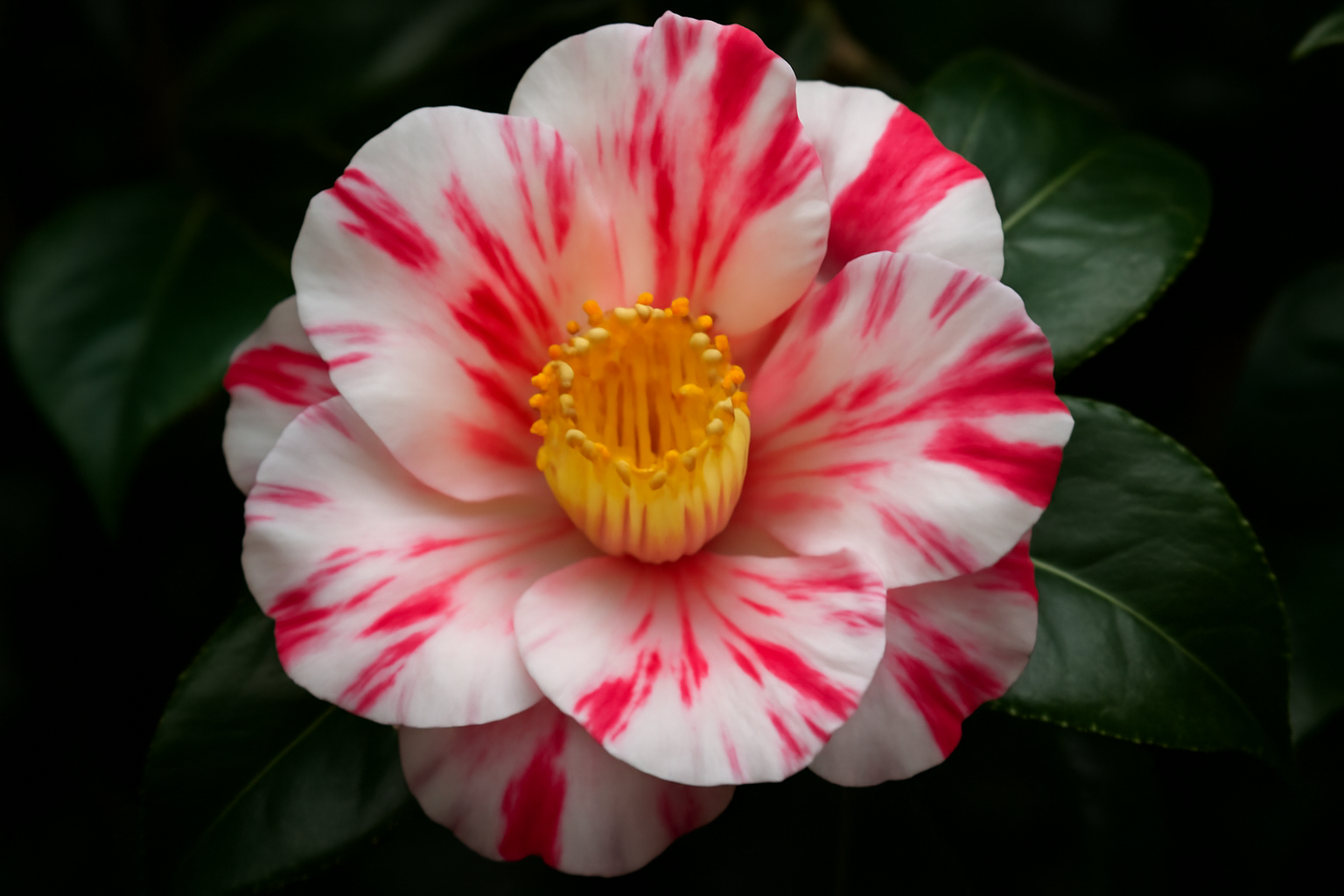
Somewhere in my old photo folders sits a slightly out-of-focus shot of a single bloom — petals striped so cleanly in deep rose and white that they look hand-painted rather than grown. That image is proof of the exact moment my camellia obsession took a hard left turn: a cold February morning in my Zone 8a garden, standing frozen mid-path in front of ‘Desire,’ a Camellia japonica whose flowers stopped me cold. One plant reshaped my entire collecting habit from that point forward. If variegated camellia varieties have pulled you in the same way, you’ve landed in the right corner of the internet. I’ve spent close to twenty years chasing stripes, streaks, and speckles through three separate garden zones, and there’s a lot to unpack.
So What Actually Causes Variegation in Camellias?
Before getting into which varieties to plant, it’s worth untangling what’s actually going on beneath those patterned petals. Not every “variegated” camellia got that way through the same process. Some cultivars carry stable genetic quirks that consistently throw striped or spotted flowers, year after year. Others owe their splashy white markings to a virus — Camellia Yellow Mottle Virus and similar culprits — which paints those dramatic white intrusions onto otherwise solid-colored blooms.
That second category is where caution comes in. Virus-driven variegation is undeniably gorgeous, but it can travel to neighboring plants via grafting tools and, occasionally, insect activity. From what I’ve seen, established nurseries selling properly named variegated cultivars tend to offer selections that have been stabilized and behave predictably. Still, if you ever come across a plant tagged simply “sport” or “variegated seedling,” pump the brakes and ask a few questions before it goes anywhere near your best specimens.
The Striped and Speckled Cultivars I Keep Coming Back To
Across the years I’ve put dozens of striped and speckled camellias through their paces in my own beds. Plenty were letdowns. A handful, though, earned permanent real estate I’d never dream of giving up. Below are the ones I keep planting more of — and my reasoning for each.
Camellia japonica ‘Desire’
This is the cultivar responsible for all of it. ‘Desire’ throws large, formal double flowers in creamy white, heavily washed with deep rose-pink along the edges that bleeds inward in uneven streaks. Here in Zone 8a it flowers mid-season, generally opening late February and carrying through March. The shrub grows upright with moderate vigor, eventually settling in around eight feet after many years without turning into an unruly mess.
A practical tip worth remembering: ‘Desire’ does its best work with morning sun and shade in the afternoon. Push it into harsh afternoon exposure and those pink markings wash out fast, taking the contrast that makes the whole variety worthwhile with them. I learned this the hard way — planted mine facing west and spent three full seasons puzzling over why the blooms looked so flat and faded.
Camellia japonica ‘Ville de Nantes’
‘Ville de Nantes’ never fails to draw attention. Flowers range from semi-double to loose peony form, deep red splashed with bold white blotches and streaks scattered unevenly across each petal — no two blooms ever match. It holds up reliably down into Zone 7b, making it a variety I regularly point colder-climate gardeners toward. Bloom timing runs mid to late season, roughly March into April depending on where you garden.
The petal edges carry a light ruffle, that fimbriated look that adds texture beyond just color. In my own beds, this one keeps its blooms intact even after a hard rain, which is more than I can say for a lot of the large formal doubles out there. If you want theatrical flowers without the fragility, ‘Ville de Nantes’ rarely disappoints.
Camellia japonica ‘Wildfire’
‘Wildfire’ carries a completely different personality. Its semi-double flowers come in orange-red, scattered with white flecks and streaks that look almost like an accident — as if someone flicked paint across the petals on purpose. It opens early to mid-season, often flowering before the harshest winter weather has fully cleared out. Hardy to Zone 7b with a bit of shelter, it’s noticeably less cold-tough than ‘Ville de Nantes,’ so where you plant it actually matters.
I keep mine tucked against a south-facing wall in my Zone 7b section, and the reflected heat there makes a genuine difference. The flowers hold longer in that spot, and the plant puts out noticeably stronger growth each spring. I’d steer anyone growing an early-blooming japonica near the cold edge of its range toward this same kind of siting.
Camellia sasanqua ‘Setsugekka’ and Its Variegated Sasanqua Cousins
Most talk about variegated camellias centers on japonicas, but sasanquas have their own quiet contributions. ‘Setsugekka’ is technically white with a touch of pink rather than genuinely variegated, but elsewhere in the sasanqua family you’ll find cultivars like ‘Sparkling Burgundy’ (rosy-purple with the occasional lighter streak) and the sport ‘Rainbow Champagne,’ which shows off soft blush-pink striping over white petals.
Sasanquas bloom in fall — September through November for me in Zone 8b — which hands you variegated flowers at a time when practically nothing else in the garden is doing much. They also tolerate far more sun than most japonicas. That said, genuine variegation shows up less often and less dramatically in sasanquas, so temper your expectations there.
Variegated Camellia reticulata Selections
Garden in Zone 8a or warmer, and Camellia reticulata swings a whole new door open. Reticulatas turn out some of the biggest camellia flowers you’ll ever see — often five inches across or bigger — and a handful of variegated cultivars, at that scale, are genuinely stunning.
‘Crimson Robe’ and its assorted sports and hybrids have yielded variegated forms over the decades. A more attainable option for most collectors is the reticulata hybrid ‘Dr. Clifford Parks,’ which occasionally throws semi-variegated sports. Anyone chasing true reticulata variegation should track down ‘Purple Gown,’ with its occasional white marbling over deep purple-red petals. These need Zone 8a as a floor and generally appreciate the shelter of a warm wall or overhead canopy in borderline climates.
What Variegated Camellias Actually Need to Thrive
Let me be blunt about something: patterned flowers don’t mean special-needs plants. Variegated camellias run on the exact same fundamentals as every other camellia in your garden. Nail these basics and your striped, speckled selections will do just fine.
There’s No Wiggle Room on Soil pH
Camellias need acidic soil, no exceptions. Aim for pH 5.5 to 6.5 — that’s the whole window. Stray outside it and plants start struggling to take up iron and manganese, which shows up as chlorotic yellowing that fertilizer alone can’t fix until the pH problem is solved. I check my beds every couple of years with a calibrated digital meter — the cheap paper test strips just don’t cut it.
If your soil sits alkaline, above pH 7.0, look into raised beds filled with an amended mix: two parts native soil to one part pine bark fines to one part composted leaf mould. That blend buffers pH nicely while improving drainage at the same time. I’ve built four raised beds like this across my Zone 8b section for the tricky border spots, and the improvement in plant health has been dramatic.
Sun Exposure and How It Shapes Flower Color
This point carries extra weight for the variegated varieties specifically. Harsh, direct afternoon sun can bleach the patterned petals, flattening the contrast between the stripes and the base color. Filtered light or morning sun paired with afternoon shade tends to be the sweet spot for most japonica cultivars. Sasanquas are more relaxed about this — they’ll handle extra sun without much fuss.
On the flip side, too much shade cuts flowering way down. I aim for something like four to six hours of morning light across my japonica beds. That balance keeps the colors sharp and the bud count strong. It took me years of shuffling plants around before this really clicked — don’t hesitate to move a struggling camellia while it’s still young enough to handle the disruption.
Mulch and Water Management
Lay down a three-inch layer of pine bark or pine needle mulch around each camellia every fall. It does triple duty: insulating roots against winter cold snaps, holding onto soil moisture through summer heat, and gradually acidifying the soil as it decomposes. Just keep it pulled back a couple of inches from the trunk to avoid collar rot — a mistake I made with a young ‘Desire’ early on that set its recovery back a full two years.
One Mistake I Made — and the Lesson That Stuck
I’m bringing this up because I keep watching other gardeners walk into the same trap. Years back, I picked up a jaw-dropping unnamed variegated japonica at a plant sale — bold red with dramatic white lightning-bolt streaks running through every petal. The label just said “variegated red japonica,” no cultivar name attached. I was too dazzled by the flowers to ask any questions, and I planted it straight into my main camellia border.
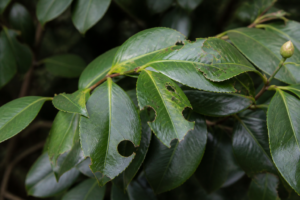
Two seasons later, odd yellow mottling turned up on the leaves of two neighboring plants, followed by strange white sectors appearing on blooms that had always been solid before. The variegation had jumped ship. Turns out that unnamed plant was carrying Camellia Yellow Mottle Virus, and I’d walked it right into the heart of my best planting. Digging out the infected plants and disinfecting every tool I owned was a genuinely painful process.
The takeaway: stick to named cultivars from specialist nurseries with a real reputation. If an unnamed variegated plant still tempts you, quarantine it in a pot for at least one full growing season before it goes anywhere near your main garden. That small bit of discipline protects everything else you’ve spent years building.
Pruning Variegated Camellias for Shape
Variegated camellias don’t call for any different pruning approach than their solid-colored relatives. That said, since these plants tend to become garden focal points, I’m more particular about their overall form. My timing rule stays simple: prune right after flowering wraps up, before the plant starts setting next season’s buds. For japonicas, that generally means late March through April here in Zone 8a.
Clear out dead and crossing branches first. Then step back and evaluate the overall outline. I lean toward a natural, slightly open vase form for most japonicas — it lets the flowers be seen from several angles instead of only from the outside edge. I’ve covered camellia pruning in far more depth in another post here on Camellia Curios, including timing, tool choice, and renovation pruning for shrubs that have gotten out of hand.
Putting Together a Collection Built Around Variegated Camellias
If variegated camellia varieties have hooked you the way they hooked me, consider building a small, deliberate collection instead of just grabbing whatever looks pretty at the garden center. A bit of forethought pays off enormously.
Here’s the framework I’d suggest starting from:
- Anchor your collection with one dependable mid-season japonica — ‘Desire’ or ‘Ville de Nantes’ both work beautifully here
- Add an early-blooming variegated japonica such as ‘Wildfire’ to stretch your flowering window back into winter
- Work in at least one variegated or patterned sasanqua for autumn color while the japonicas are resting
- Gardening in Zone 8a or warmer? Add a reticulata hybrid for scale and sheer visual impact
- Buy from specialist camellia nurseries whenever you can — named cultivars with a documented history, nothing mystery-labeled
Build that foundation and you’ll have blooms running from October clear through April in most mild-climate gardens. The payoff is a garden with a genuine, extended camellia season instead of one brief flash of color. That stretch of continuous interest is what turns a random assortment of plants into a real collection.
Variegated camellia varieties remain, honestly, one of the most rewarding corners of this entire genus to explore. Nothing else in the winter and early spring garden produces patterns quite like these. Get the soil pH dialed in, choose your planting sites thoughtfully, source named cultivars from growers you trust, and then step back and let these remarkable plants do their thing. Your garden — and those cold February mornings — won’t look ordinary again after this.
About This Article

Written by Helen Pritchard. Helen Pritchard is a lifelong gardener in the Pacific Northwest who has grown more than 200 named camellia cultivars over two decades. She writes practical, experience-based guides to camellia care, from variety selection and pruning to troubleshooting yellowing leaves and bud drop. More about this site.
Verify this against a primary source
Specifics change, and your situation may differ from the one described here. These are the authorities worth checking directly:
- American Camellia Society — cultivar registration and culture guides
- USDA Plant Hardiness Zone Map — zone verification for your location
- Royal Horticultural Society — camellia cultivation and pest guidance