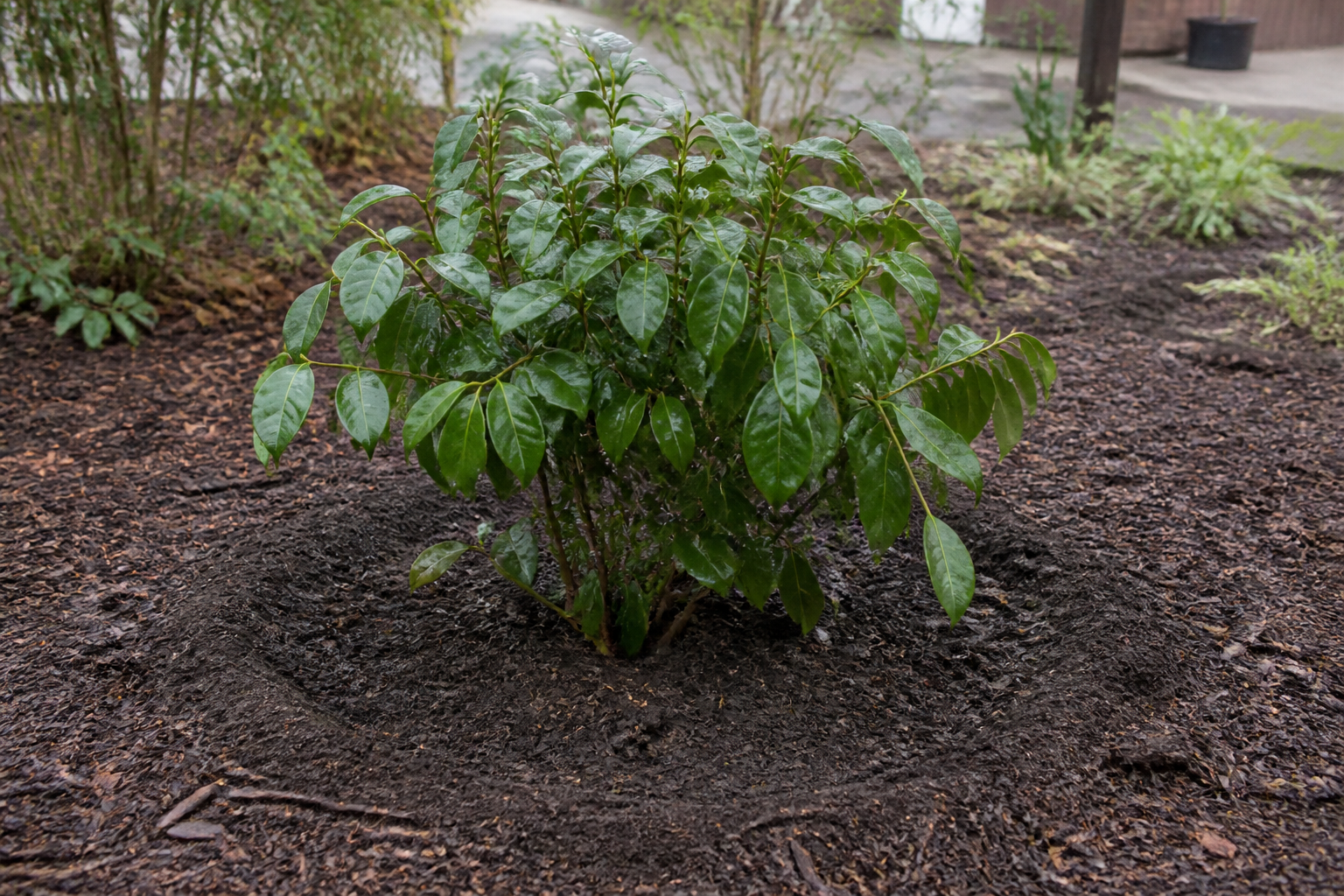
If your camellia looks terrible after you moved it, it probably is not dying. Most camellia transplant shock looks alarming for weeks, sometimes months, before the plant shows whether it has recovered. Wilting, yellowing and leaf drop are the normal first reactions to a root system that has been cut back hard.
The honest answer depends on what you see over the next few weeks. Green buds at the leaf nodes, soft but living tissue under the bark, and firm roots are encouraging signs. Black, mushy stems or a sour smell at the base are not. This post explains how to tell the difference, what helps, and what to leave alone.
What camellia transplant shock actually is
A camellia grows most of its water-gathering capacity in fine, shallow feeder roots. These sit in the top layer of soil, usually within the first foot. They are delicate, and they are the first thing lost when you dig a plant up.
Lifting the plant severs most of those feeder roots. The canopy, however, is still the full size it was the day before. Leaves keep transpiring water into the air, as they always do, but the roots can no longer keep up.
Everything the plant does next is a response to that mismatch. It wilts, drops leaves, stops pushing new growth and holds back flowers. In my experience, nearly every symptom people panic about traces back to this one imbalance.
The real timeline: what is normal and when to worry
People search for this topic because they want a timeline. Here is the pattern I have seen most often in my own beds, with the caveat that weather, soil and plant age all change the details.
Wilting in the first days to two weeks is normal. Leaves may droop, look dull, or curl slightly at the edges during the warmest part of the day. Many of them will perk up overnight, which is a good sign.
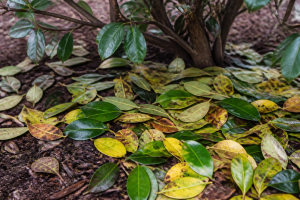
Leaf drop during the first one to two months is common. Older, inner leaves tend to go first. Losing a third of the foliage is not unusual, and it is usually survivable if the stems stay green underneath.
A transplanted camellia commonly sulks for one full growing season. Growth may be slow, the leaves may look smaller, and it often skips a bloom cycle. That is frustrating, but it is the plant rebuilding, not failing.
Real re-establishment typically takes one to two years for a mature plant. A small plant, especially a young one in a one-gallon pot, often settles in faster. Sources disagree on the exact figure, and I would not trust anyone who promises a fixed number. Large, old specimens can take longer than two years.
Symptom triage for a shocked camellia
Use this table to match what you are seeing against the most likely cause. It is a starting point, not a diagnosis, and a few of these symptoms overlap with root problems.
| What you see | Transplant shock? | What it actually means | What to do |
|---|---|---|---|
| Wilting in the first fortnight | Yes, very likely | Canopy is transpiring faster than damaged roots can supply water. | Check moisture at depth, shade the plant, and wait. Do not add water on a schedule. |
| Leaf drop at 2 to 6 weeks | Usually | The plant is shrinking its canopy to match its smaller root system. | Scratch a stem. If it is green underneath, leave the plant alone and keep watering only when the soil is dry. |
| Bronzed or scorched leaf edges | Often | Water loss through leaf margins, worsened by wind or sun exposure. | Add shade cloth or a windbreak for the first season. Mulch the root zone. |
| No flowers the following season | Yes, commonly | Energy went into roots and foliage instead of buds. | Expect a skipped bloom. Remove a few buds early to help roots recover. |
| Sudden total collapse | Unlikely | Usually points to root rot, a badly drained hole, or a severe fungal problem. | Check the base and roots now. Follow the root rot guidance below. |
| New growth appearing | Sign of recovery | Roots have regrown enough to support new shoots. | Keep the routine steady. Avoid fertiliser until growth is firm and established. |
Why dropping leaves is a survival move
Watching leaves fall off a plant you just paid to move is hard. It feels like the plant is giving up. In reality, shedding leaves is one of the smartest things a camellia can do.
Fewer leaves mean less water loss. The plant is matching its canopy to the roots it still has. Think of it as the plant making a budget that fits its current income.
So resist the urge to intervene dramatically. Do not strip the branches, do not spray leaves with anything, and do not move the plant again. Those actions add stress on top of stress.
The watering trap that kills transplanted camellias
This is where most people lose plants. Shock looks like drought, so the instinct is to water more. A wilting camellia seems to beg for a hose every afternoon.
Now add heavy clay, which is common in much of the Pacific Northwest, and a damp spring. Damaged roots sit in soggy soil with no oxygen. That combination is how transplant shock turns into root rot.
The fix is the finger test. Before watering, push a finger or a thin stick into the soil near the root ball, about four inches deep for a planted specimen. If it comes out dark and cool, wait. If the top two inches are dry but deeper soil is still damp, wait.
Water only when the soil is dry at depth. Do not water on a calendar. For a fuller routine by season, see my notes on watering camellias correctly in every season.
What actually helps a shocked camellia recover
Once you have stopped overwatering, the helpful steps are simple. Most of them are about reducing stress, not adding things to the plant.
- Water deeply but infrequently, only when the soil is dry at depth.
- Keep a mulch ring of bark or leaf mould about three inches deep, extending to the drip line.
- Keep mulch pulled back a few inches from the trunk so the bark stays dry.
- Provide dappled shade or a windbreak for the first full season.
- Remove some flower buds so energy goes into roots.
The mulch matters more than most people expect. It keeps the top layer of soil from drying out between waterings, which protects those new feeder roots as they try to form. Keep it off the trunk, though, or you invite rot at the base.
Shade and wind protection help for the same reason. Less sun and less wind mean less water leaving the leaves. Shade cloth, a north-facing spot, or a row of shrubs on the windward side all work. I have seen the difference a windbreak makes on exposed beds.
Removing some flower buds is the step people resist most. Flowers are beautiful, but a shocked plant cannot carry a full bloom load and rebuild roots at once. Pinch off a good share of buds in the first season and let the plant focus underground.
What makes transplant shock worse
Several popular habits make a shocked camellia worse. Each one feels helpful while you are doing it, which is why they persist.
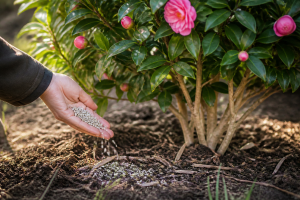
Fertiliser is the big one. A plant with damaged roots cannot take up nutrients efficiently. Salts from fertiliser build up in the root zone and burn what roots remain. Hold off until new growth is firm, usually the following spring or later.
Hard pruning to balance the canopy is another mistake. It removes leaves that are already doing less work than before, and it can open large wounds. Remove only dead, broken or diseased wood.
Root stimulant products are often oversold for this job. Some growers find them useful, but I have not seen clear evidence that they speed recovery in camellias. Good water management does far more. Digging the plant up to check on it is the last thing to do, because every disturbance restarts the damage.
When it is not shock but root rot
Sometimes the plant is not in shock at all. It is failing for a different reason, and the difference matters. Suspect root rot if the collapse is sudden and total, rather than gradual.
Other warning signs include bark at the base that is discoloured, dark or slimy, and roots that smell sour rather than earthy. If the plant was moved into a hole that holds standing water after rain, rot is much more likely. Check the drainage of the hole first.
If you suspect rot, gently check the root ball. Healthy roots are firm and pale or tan. Rotten roots are soft, brown, and fall apart. For the next steps, read the guide to root rot signs, causes and treatment, which covers what to do before it is too late.
Yellowing leaves can also mean something else entirely. Shock sometimes causes a few yellow leaves, but yellowing is not always shock. If the yellowing is widespread or patterned, see why camellia leaves turn yellow before assuming the cause.
For a broader checklist that covers several causes at once, my full diagnostic guide for a struggling camellia walks through the other common suspects. It is worth reading if the symptoms do not match this timeline.
Preventing shock the next time you move a camellia
If you are reading this before moving a plant, you have an advantage. Most of the damage described above can be reduced at the planting stage. Good drainage, a root ball that stays intact, and careful timing make a large difference.
For the step-by-step method, including hole preparation and root handling, see how to transplant a camellia properly in the first place. Moving a plant in its dormant season, when conditions are cool and damp, is also helpful in my region.
Whatever you do, a camellia that is shocked is usually still alive. Give it time, keep the soil dry at depth when needed, and let the leaves fall if they must. Patience is the most useful tool you have here.
About This Article

Written by Helen Pritchard. Helen Pritchard is a lifelong gardener in the Pacific Northwest who has grown more than 200 named camellia cultivars over two decades. She writes practical, experience-based guides to camellia care, from variety selection and pruning to troubleshooting yellowing leaves and bud drop. More about this site.
Verify this against a primary source
Specifics change, and your situation may differ from the one described here. These are the authorities worth checking directly:
- American Camellia Society — cultivar registration and culture guides
- USDA Plant Hardiness Zone Map — zone verification for your location
- Royal Horticultural Society — camellia cultivation and pest guidance