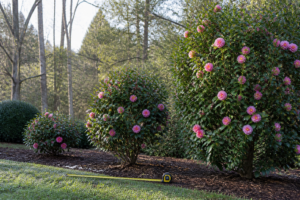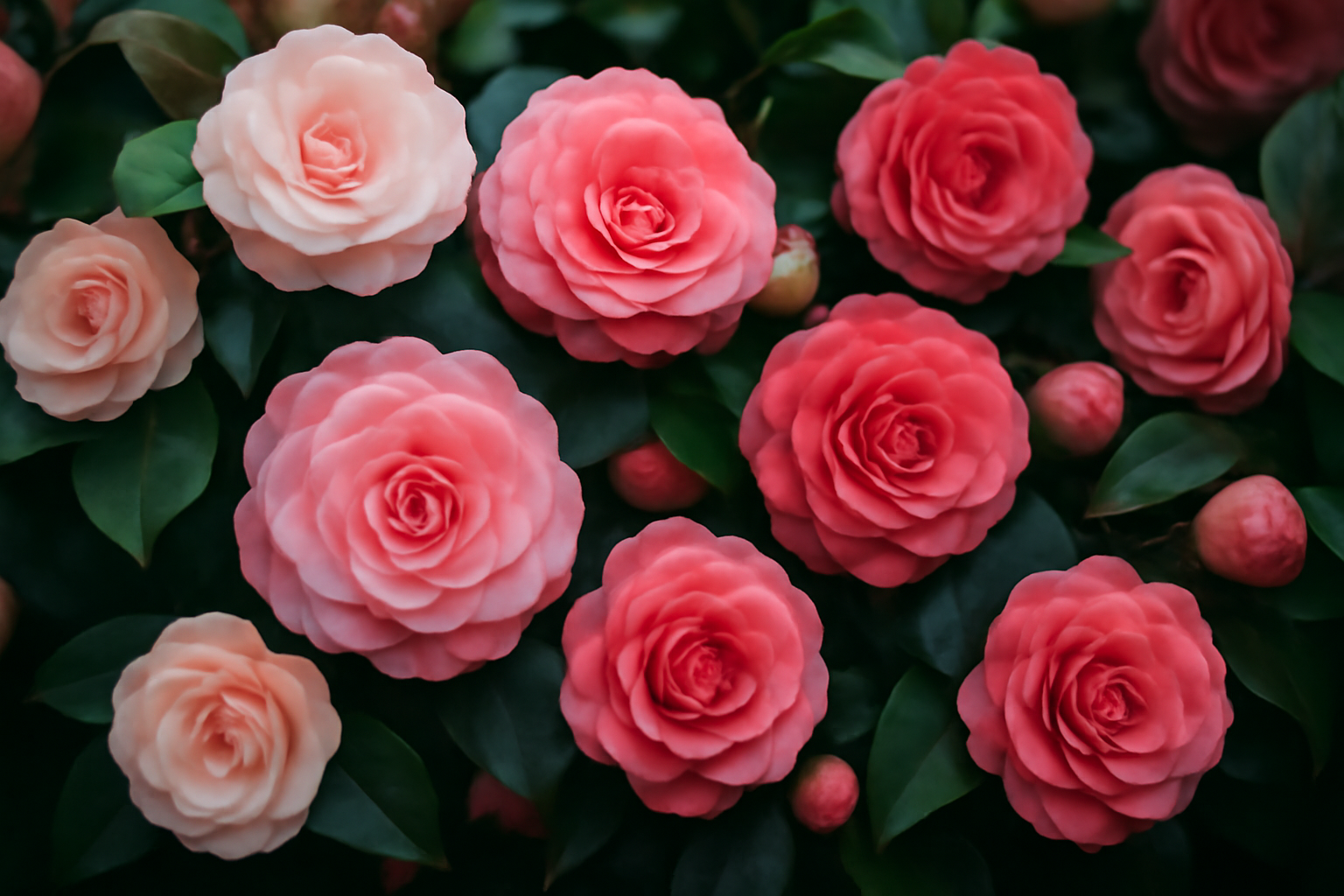
I’m Helen Pritchard, and after two decades of growing camellias in the Pacific Northwest, I can tell you that my garden is home to over 200 named pink cultivars. I’ve planted, relocated, occasionally killed, and fallen head over heels for countless varieties. Last October, as the fog lifted off my back border, I paused mid-step to admire ‘Survivor,’ my sprawling Sasanqua. Its shell-pink blossoms had opened overnight, glowing softly in the grey morning light. That one shrub is why I dove into the world of pink camellias. With camellias, “pink” isn’t just a color; it’s a spectrum that ranges from the gentle blush of a freshly opened Japonica to the vibrant, almost lipstick rose of a Reticulata hybrid that can leave visitors speechless. I’ve grown these beauties across three zones on my property — 7b, 8a, and 8b — and I’m eager to share the insights I’ve gathered along the way.
Why “Pink” Refuses to Behave Like a Single Colour
It may sound silly, but the word “pink” in the camellia world deserves a deep dive. When fellow gardeners ask me about white or red camellias, I can give them straightforward answers. But pink? Oh, it’s a wild card. A plant labeled “pink” could be a soft blush or a bold fuchsia. That difference is significant, especially when you’re planning a border or trying to find the perfect match for a brick wall.
Over the years, I’ve learned to categorize pinks into three main groups: soft blush and pastel tones, clear mid-range pinks, and deep rose that edges into cerise. Each group has its own personality and preferred companions, shines at different times of the year, and can really change the garden’s vibe.
Pale Blush and Pastel-Toned Pink Cultivars
These delicate beauties lift my spirits during the dreary mid-winter months. When January drags on, the faint blush camellias bring a sense of fragility and resilience that nothing else in my garden can match. My top pick for this group is ‘Berenice Boddy.’ This Japonica variety showcases semi-double, pale-pink flowers with a slightly deeper center, blooming mid-season, usually from February to March in my zone 8a beds. It’s a tough, easygoing plant that doesn’t ask for much in return.
For earlier blush colour, I’ve got a soft spot for the Sasanquas. ‘Mine-No-Yuki’ is officially white with pink edges, but in my garden, it reads as the gentlest pink you can imagine. It starts blooming in October in my zone 8b bed, and this pairing stretches my soft pink tones from autumn right into spring when I combine it with Japonicas.
What Sun Taught Me About Growing Pale Pinks
Let me share a lesson I learned the hard way that cost me two full seasons of blooms. I placed ‘Berenice Boddy’ in a spot that caught harsh afternoon sun all summer long. The result? The soft pink flowers faded to nearly white, with scorched edges on every petal. It was a disappointing outcome, but I learned that pale-pink camellias can bleach in strong sun much quicker than their darker counterparts. They thrive in bright, filtered light or morning sun paired with afternoon shade, and you can see the improvement almost instantly.
Another pale pink that deserves recognition is ‘Nuccio’s Cameo.’ Its blooms are formal doubles in a crisp, cool pink that photographs beautifully. However, it grows noticeably slower than ‘Berenice Boddy,’ so I recommend giving it a container or a compact spot instead of a large border where you need quick coverage.
Clear Mid-Pink Varieties: The Border’s Reliable Backbone
If I had to pick a color category that does the heavy lifting in my garden, it would be clear, medium pink. This shade, not washed out or overpowering, reads beautifully from a distance and connects neighboring colors effortlessly. These cultivars are among the most adaptable and generous bloomers I’ve grown.
‘Donation’ is probably the best-known variety in this group, and it absolutely deserves the recognition. This Williamsii hybrid produces a stunning show of semi-double flowers in a warm pink from late winter through spring. It surprisingly handles cold well for a camellia, thriving in zone 7b with some protection. I often recommend ‘Donation’ to new growers — it’s generous, dependable, and simply a joy to have in the garden.
Additional Mid-Pink Cultivars Worth Your Space
‘April Remembered’ is a Japonica I planted specifically for its cold resilience in my zone 7b garden. Its blooms open in a lovely rose-pink, semi-double, and neatly formed. It shrugs off late frosts that leave other camellias sulking, making it a true asset in colder areas.
Among the Sasanquas, ‘Cleopatra’ stands out with its semi-double rose-pink flowers from October through December. Its growth habit arches slightly, making it perfect as an informal hedge or for training flat against a fence. I’ve grown mine along a south-facing fence in zone 8a, and it produces hundreds of blooms each autumn with almost no maintenance.
‘Elegant Beauty,’ a Williamsii hybrid, is another gem. Its blooms open in a warm, anemone-form pink that holds up beautifully as they age on the plant. Thanks to its upright habit and attractive foliage, it serves as a structural element in the garden year-round, blooms or no blooms.
Deep Rose and Bold Pink Camellia Varieties
Now, let’s talk about the show-stoppers. Deep rose camellias grab your attention every single time. They create a striking contrast against dark green foliage, look stunning against pale stone, and provide a visual anchor in any planting scheme.
‘Dr. Clifford Parks,’ a Reticulata hybrid thriving in my zone 8b garden, is nothing short of jaw-dropping. The blooms are massive — easily 5 to 6 inches across — in a bold, semi-double rose-red-pink that straddles the line between deep rose and true red. It flowers from February through April. However, I must be honest: Reticulata hybrids like this one don’t have the same cold tolerance as Japonicas or Sasanquas, so they’re best kept in zone 8 and warmer.
Deep Pink Japonicas to Have on Your Radar
‘Kramer’s Supreme’ is a Japonica with large, fully double flowers in a vivid Turkey-red-pink. Its standout feature is its fragrance — it’s among the rare Japonicas that offer a scent you’ll actually notice and enjoy. That alone makes it worthy of a spot in your garden. Be sure to plant it somewhere you’ll pass by often to enjoy its delightful perfume.
‘Lady Vansittart’ gives you a striking bicolour look, with white petals streaked and edged in rose-pink. From a distance, it registers as a deep pink overall. Though it’s a slow-growing Japonica, the wait is absolutely worth it. If you need something faster, ‘Drama Girl’ produces large, semi-double, deep-rose blooms on a vigorous, upright plant that fills out its space quickly.
Setting Up the Right Growing Conditions for Pink Camellias
Let’s discuss soil, as this is the number-one issue I see people getting wrong. Camellias thrive in acidic conditions, ideally with a pH between 5.5 and 6.5. If you push above 6.5, you’ll start to see chlorosis — yellowing leaves that indicate iron and manganese are locked out of reach. I retest my soil every couple of years and adjust with sulfur as needed. It’s a small habit, but it makes a huge difference in both bloom quality and plant vigor.
Drainage is equally important. Camellia roots despise sitting in water. I’ve lost two plants to root rot in heavy, poorly-draining clay, and both losses were entirely avoidable. Build up your beds, mix in composted pine bark with clay soil, and avoid any spots where rainwater tends to pool.
Feeding and Pruning Practices for Stronger Bloom
For feeding, I use an acid-formula, slow-release fertilizer applied in early spring, right after blooms finish. I stop feeding by late July to avoid encouraging tender new growth before the first frosts. It’s a simple schedule, but sticking to it consistently yields better results than irregular feeding.
I’ve covered camellia pruning in more detail in another post, but here’s the quick version: prune right after the flowers finish for the season. That short window post-bloom is the safest time to cut, allowing you to clear away spent flowering wood without accidentally snipping off the buds already forming for next year’s show.
Matching Japonica, Sasanqua, and Reticulata to Your Pink Preferences
Each species blooms at a different time of year. Sasanquas lead the way from autumn through early winter, and their pink cultivars typically feature lighter, more open flower forms. They’re also the most sun-tolerant of the three, which is crucial when deciding where to plant them. If you’re looking for pink camellias to start blooming in October, this group is your best bet.
Japonicas take over from mid-winter to mid-spring, offering the broadest range of pink flower forms — from simple singles to elaborate formal doubles. They’re also the hardiest of the three species, making them a smart choice for zone 7b gardeners who need reliable winter survival.
Reticulata hybrids bloom last, typically from late winter into spring, and their individual flowers are the largest of any camellia you’ll find. For richly saturated pinks and roses paired with impressive bloom size, nothing else compares. Just keep in mind that they thrive in zone 8 or warmer, plus they need a sheltered position. I wouldn’t risk growing these in a colder zone unless you can provide a genuinely protected microclimate.
Pink Camellia Cultivars I Recommend at a Glance
- ‘Berenice Boddy’ — Japonica, soft light pink, semi-double form, mid-season bloom, thrives in zones 7b–9
- ‘Donation’ — Williamsii hybrid, clean warm pink, semi-double, dependably cold-hardy to zone 7b
- ‘Cleopatra’ — Sasanqua, rose-pink, semi-double, autumn flowering, great choice for hedging
- ‘April Remembered’ — Japonica, rose-pink, notably cold-tolerant, suited to zone 7b
- ‘Elegant Beauty’ — Williamsii hybrid, warm anemone-form pink, upright growth habit, zones 7b–9
- ‘Dr. Clifford Parks’ — Reticulata hybrid, deep rose-pink, oversized blooms, zones 8–10
- ‘Kramer’s Supreme’ — Japonica, deep vivid pink, fragrant, zones 7b–9
- ‘Drama Girl’ — Japonica, deep rose, vigorous and fast-growing, semi-double, zones 7b–9
- ‘Nuccio’s Cameo’ — Japonica, cool pale pink, formal double, ideal for containers or tight spaces
- ‘Mine-No-Yuki’ — Sasanqua, white with pink blush, earliest colour of the autumn lineup, zones 7–9
Where to Go From Here With Pink Camellias
After twenty years of growing pink camellia varieties, my most valuable piece of advice is this: decide on your season before you choose your cultivar. Think about when you want pink to grace your garden. If you want to fill an autumn gap, go for Sasanquas. If you crave deep-winter color, a reliable Japonica like ‘Berenice Boddy’ or ‘Donation’ won’t disappoint. Hoping for a spring showpiece? A Reticulata hybrid is worth considering if your zone allows it.
Then, check your soil’s pH before planting anything. A basic home test kit is inexpensive and can save you from the frustrating troubles caused by alkaline soil. Get your soil chemistry sorted first — then plant.
Pink camellias reward those who put in a little planning upfront. We’re talking years, even decades, of stunning blooms. They aren’t high-maintenance once their core needs are met. Start with a couple of cultivars from different blooming seasons, observe how they respond to your unique conditions, and let your collection grow organically from there. That’s exactly how my own passion for 200-plus cultivars began, and I wouldn’t change a thing.
About This Article

Written by Helen Pritchard. Helen Pritchard is a lifelong gardener in the Pacific Northwest who has grown more than 200 named camellia cultivars over two decades. She writes practical, experience-based guides to camellia care, from variety selection and pruning to troubleshooting yellowing leaves and bud drop. More about this site.
Verify this against a primary source
Specifics change, and your situation may differ from the one described here. These are the authorities worth checking directly:
- American Camellia Society — cultivar registration and culture guides
- USDA Plant Hardiness Zone Map — zone verification for your location
- Royal Horticultural Society — camellia cultivation and pest guidance