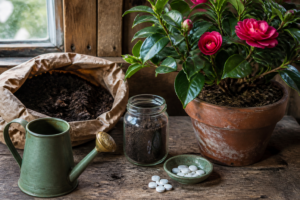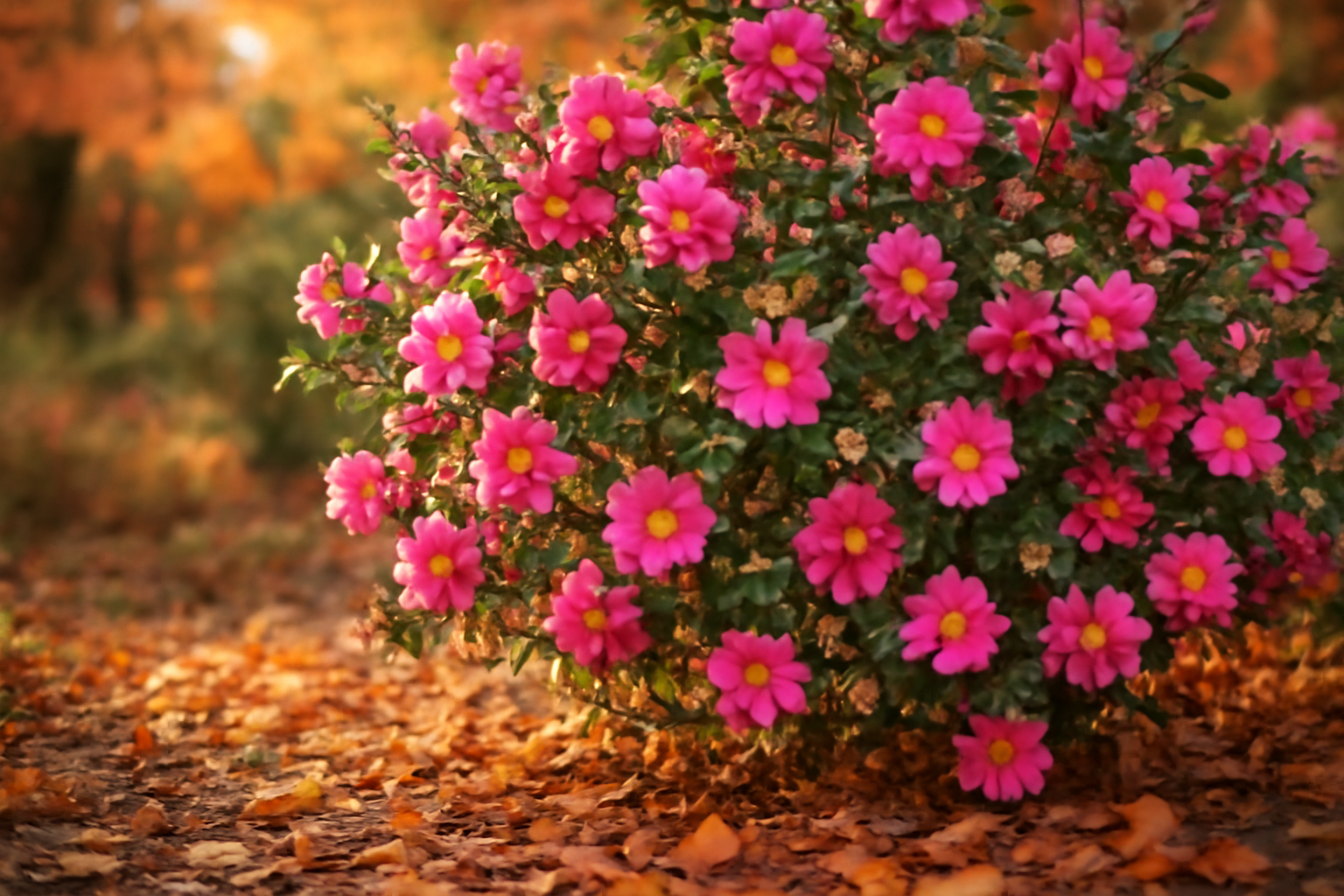
I’m crouched next to my ‘Setsugekka’ this morning, coffee going cold on the flagstone beside me, watching a single ruffled white bloom catch the early light while everything else in the yard looks half-finished for the season. This is the trick sasanquas pull off every year, and after two decades of growing camellias across three different zones in the Pacific Northwest, it still stops me mid-sip. If you landed here hunting for the best fall-blooming camellia sasanqua varieties to stretch your color into the cold months, you’ve found the right page. I’ve run dozens of cultivars through my gardens in zones 7b, 8a, and 8b, and what follows is the honest breakdown — the standouts and the disappointments alike.
What Makes Fall-Blooming Sasanquas Worth the Garden Space
Camellia sasanqua and its better-known relative, Camellia japonica, really aren’t playing the same game. Japonicas own the spring stage — picture ‘Nuccio’s Gem’ unfurling in February or ‘Professor Charles S. Sargent’ stealing the show come March. Sasanquas flip that entirely, flowering from September clear through December, occasionally jumping the gun even earlier. That window is the whole point. Nothing else I’ve grown delivers this much floral punch when autumn settles in.
Sasanquas also carry more grit than japonicas — they shrug off heat, tolerate a stretch of dryness once rooted in, and bounce back fine from a light frost. Even so, they’re not indifferent to soil: they still want it well-drained and acidic, sitting somewhere in the 5.5 to 6.5 pH range. I check my beds every single spring without exception. Ignoring that pH window was actually one of my earliest blunders as a grower, and I’ll walk through that mistake shortly.
The Sasanquas I Actually Plant for Early Fall Color
To be upfront — this isn’t an exhaustive catalog of every sasanqua cultivar in existence. What follows are the ones living in my own beds, ones I’ve watched perform across several seasons, and ones I’d happily point a confused friend toward at the garden center. I’ve arranged them roughly by when they open, earliest bloomers leading the pack.
‘Setsugekka’ — My Standard Starting Recommendation
When someone asks where to begin with sasanquas, ‘Setsugekka’ is my go-to answer every time. In my zone 8a garden, it opens by mid-September, and in an unusually warm year, it’s already going by late August. The blooms are large and semi-double, snow-white with ruffled edges and a golden boss at the center — genuinely showstopping. It’s rated hardy to zone 7b, and it does fine at my coldest site, though I still give it a windbreak there for insurance.
From what I’ve seen, ‘Setsugekka’ is also among the heaviest bloomers I grow — the plant practically buries itself in flowers. Its habit runs slightly open and arching, which makes it a natural for training against a wall or fence. Mine, in fact, climbs a south-facing brick wall at my 8b garden, where the bounced heat off the brick coaxes it into blooming even earlier.
‘Yuletide’ — The Reliable Red That Carries October Into Winter
Across the Southeast, ‘Yuletide’ is likely the sasanqua you’ll spot most often at nurseries, and it’s earned that spot fairly. Single red blossoms with a cheerful burst of yellow stamens show up from October straight through December, timed perfectly for the holidays. One word of caution, though: the name ‘Yuletide’ occasionally gets slapped on seedlings that don’t stay true to form, so source yours from a nursery you trust.
This cultivar holds up reliably down to zone 7b. Its growth habit is naturally tidy and upright, which suits it well for foundation beds or a clipped, formal hedge. I’ve got a line of them bordering my driveway at the zone 8a property, and they’ve asked almost nothing of me in eleven years. Still, like every camellia I grow, they respond well to a thin layer of pine bark mulch that holds moisture and keeps soil temperatures from swinging.
‘Cleopatra’ — A Variety That Deserves More Credit
‘Cleopatra’ flies under the radar far more than it should. Its semi-double, rose-pink flowers show up between October and November, with petals carrying a subtle streaked texture that glows when the afternoon sun hits it. The shrub itself grows upright and vigorously, easily reaching eight feet or beyond if you never touch a pruner to it. For anyone wanting a screening plant or a large focal specimen, this one earns a serious look.
I keep it going in both my 8a and 8b gardens. At my colder 7b site, though, it’s iffy — one early-November hard freeze there stripped most of its buds before they ever opened. If you’re gardening in zone 7b, I’d point you toward tougher choices like ‘Yuletide’ or ‘Survivor’ instead.
‘Survivor’ — Bred for the Rough Winters
‘Survivor’ lives up to its name without any exaggeration. It was bred specifically to push camellia hardiness further north, and in my zone 7b garden, it has come through cold spells unscathed that set back far less resilient plants. Flowers are single to semi-double, a bright, clean medium pink, opening anywhere from September into November — no muddiness or fading in that color at all.
If you’re gardening at the chillier edge of camellia territory, ‘Survivor’ is the dependable option. It also stays fairly compact, having reached only five to six feet in my garden after eight years in the ground, which makes it a good fit for mixed shrub borders where you don’t want one plant swallowing its neighbors. Mine has never needed anything beyond a light trim.
‘Kanjiro’ (Sometimes Labeled ‘Hiryu’) — Pure Volume of Bloom
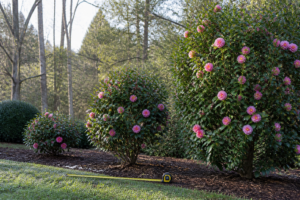
For sheer quantity of flowers, nothing on this list beats ‘Kanjiro.’ Semi-double blossoms in rose-pink to rose-red shades smother the plant almost entirely from October into December — it’s a genuinely jaw-dropping display. In my experience, it ranks among the showiest fall shrubs I’ve grown, period, camellia or otherwise.
Worth flagging: you’ll occasionally find this same plant tagged as ‘Hiryu,’ which trips people up, but it’s identical stock under a different name. Hardy to zone 7b, ‘Kanjiro’ grows with a spreading, loosely arching form. Mine, at the 8b property, has stretched to roughly nine feet across and seven feet tall after fifteen years — so plan for space. Then again, if you need a bold anchor plant for a wide corner or a slope, that generous spread works in your favor.
How Skipping a Soil Test Cost Me Two Growing Seasons
I promised I’d circle back to pH, and here’s the painful part. When I first put this zone 7b garden together, I was too eager to get plants in the ground to bother with a real soil test. I amended casually, tossed in some pine bark, and assumed I was in the ballpark. I was nowhere near it.
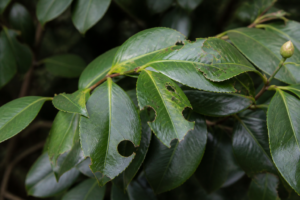
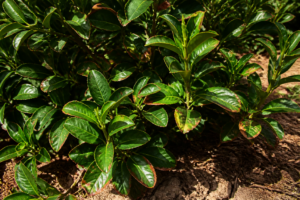
My soil turned out to be sitting around pH 7.2 — basically neutral. Camellias planted in neutral or alkaline ground can’t take up iron and manganese properly. Sure enough, within a single season my new plants showed the telltale interveinal chlorosis — leaves gone yellow with the veins staying dark green. Flowering was thin and unimpressive. Correcting it took two full years of sulfur treatments and acidifying fertilizer, and the plants didn’t really find their footing until year three.
Test your soil before anything goes in the ground. Aim for that 5.5 to 6.5 pH band. If amending is necessary, work elemental sulfur into the soil months ahead of planting whenever you can manage it. I test every bed annually now and adjust before problems show up, not after. It’s the single highest-leverage thing you can do for these plants, and I’ve laid out the full process in a separate post on this site if you want to dig deeper.
Choosing the Right Spot to Plant for Maximum Fall Color
Sasanquas crave more sunlight than japonicas typically want. Most reference books suggest partial shade, and that’s not wrong exactly — but in my own beds, sasanquas grown in six-plus hours of full sun bloom earlier, more heavily, and build sturdier structure. That said, in zone 8b and hotter regions, some afternoon shade through July and August keeps leaves from scorching. Morning sun paired with dappled afternoon shade tends to be the ideal balance in warmer climates.
Drainage isn’t optional here. Camellias sitting in soggy ground develop Phytophthora root rot, and it moves faster than most people expect. Raised beds or gently sloped ground work best. On my heavy clay sites, I’ve mixed generous amounts of pine bark fines and coarse grit through the whole planting area — not just a handful dropped into the hole, but worked across the entire bed.
Getting Planting Season Right for Fall Flowers
For sasanquas, I lean toward planting them in fall — September or early October, depending on your zone. It feels backward to plant right as the flowers are opening, I know. But fall planting hands the roots an entire winter to settle in before summer heat starts testing them. Sasanquas I’ve planted in spring consistently trail fall-planted ones by nearly a full growing season in how quickly they establish.
If you go the fall-planting route, don’t expect fireworks that first year. Let the roots have all the plant’s energy. Pinching off blooms is painful, I won’t pretend otherwise, but doing it genuinely pays off in stronger long-term establishment. Come year two, you’ll be glad you had the discipline.
Pruning Sasanquas Without Overcomplicating It
Sasanquas are easygoing about most things, but pruning timing is one place where precision counts. The rule of thumb: prune right after the blooms finish, before spring’s new growth kicks in. In practice, that means December or January for most sasanquas across zones 7b through 8b. Wait any longer and you risk snipping off next fall’s flower buds before they even form.
When it comes to shaping or controlling size, sasanquas tolerate a fairly firm hand — I’ve trimmed mature plants back by a third with zero negative effects. ‘Kanjiro’ and ‘Cleopatra’ in particular do better with routine shaping, since both can get leggy left alone. I go into more depth on pruning technique — including the differences between shaping japonicas and sasanquas — in another post here on Camellia Curios.
At-a-Glance: Comparing My Favorite Sasanqua Varieties
Here’s the condensed version of everything above, to help you pick which varieties fit your garden:
- ‘Setsugekka’ — White, semi-double blooms, September through October. Zones 7b–9b. Large, arching form — a natural for fences and walls.
- ‘Yuletide’ — Red, single blooms, October through December. Zones 7b–9b. Compact and upright — great for hedges and foundation beds.
- ‘Cleopatra’ — Rose-pink, semi-double blooms, October through November. Zones 8a–9b. Vigorous and upright — best suited to zone 8a and warmer.
- ‘Survivor’ — Pink, single to semi-double blooms, September through November. Zones 7b–9b. Compact habit with strong cold tolerance.
- ‘Kanjiro’ (‘Hiryu’) — Rose-pink to rose-red, semi-double blooms, October through December. Zones 7b–9b. Spreading, large form — a true statement plant.
Ready to Add Fall-Blooming Sasanqua Color to Your Own Garden?
Two decades into growing camellias, I’m still convinced the fall blooming sasanqua is one of the most overlooked shrubs available to American gardeners. Everyone reaches for mums and ornamental kale when autumn rolls around, while sasanquas sit quietly at the nursery, ready to hand you ten to twelve weeks of striking blooms, year after year, for very little ongoing effort once they’re settled in.
Here’s my practical advice: pick two or three varieties that cover different stretches of the bloom season. Pair ‘Setsugekka’ for that early-September color with ‘Yuletide’ for a December show. Toss in ‘Survivor’ if you’re gardening in zone 7b and want dependable cold hardiness. Even that small combination will reshape how your autumn garden feels.
Check your soil pH first. Get it into the 5.5 to 6.5 range before you plant anything. Time your planting for fall if your schedule allows it. Then just let these shrubs do their work. I can promise you this — the first October morning you step outside and find the sasanquas loaded with blooms while the rest of the garden has gone quiet, you’ll understand exactly why I’ve spent twenty years obsessed with this genus.
About This Article

Written by Helen Pritchard. Helen Pritchard is a lifelong gardener in the Pacific Northwest who has grown more than 200 named camellia cultivars over two decades. She writes practical, experience-based guides to camellia care, from variety selection and pruning to troubleshooting yellowing leaves and bud drop. More about this site.
Verify this against a primary source
Specifics change, and your situation may differ from the one described here. These are the authorities worth checking directly:
- American Camellia Society — cultivar registration and culture guides
- USDA Plant Hardiness Zone Map — zone verification for your location
- Royal Horticultural Society — camellia cultivation and pest guidance