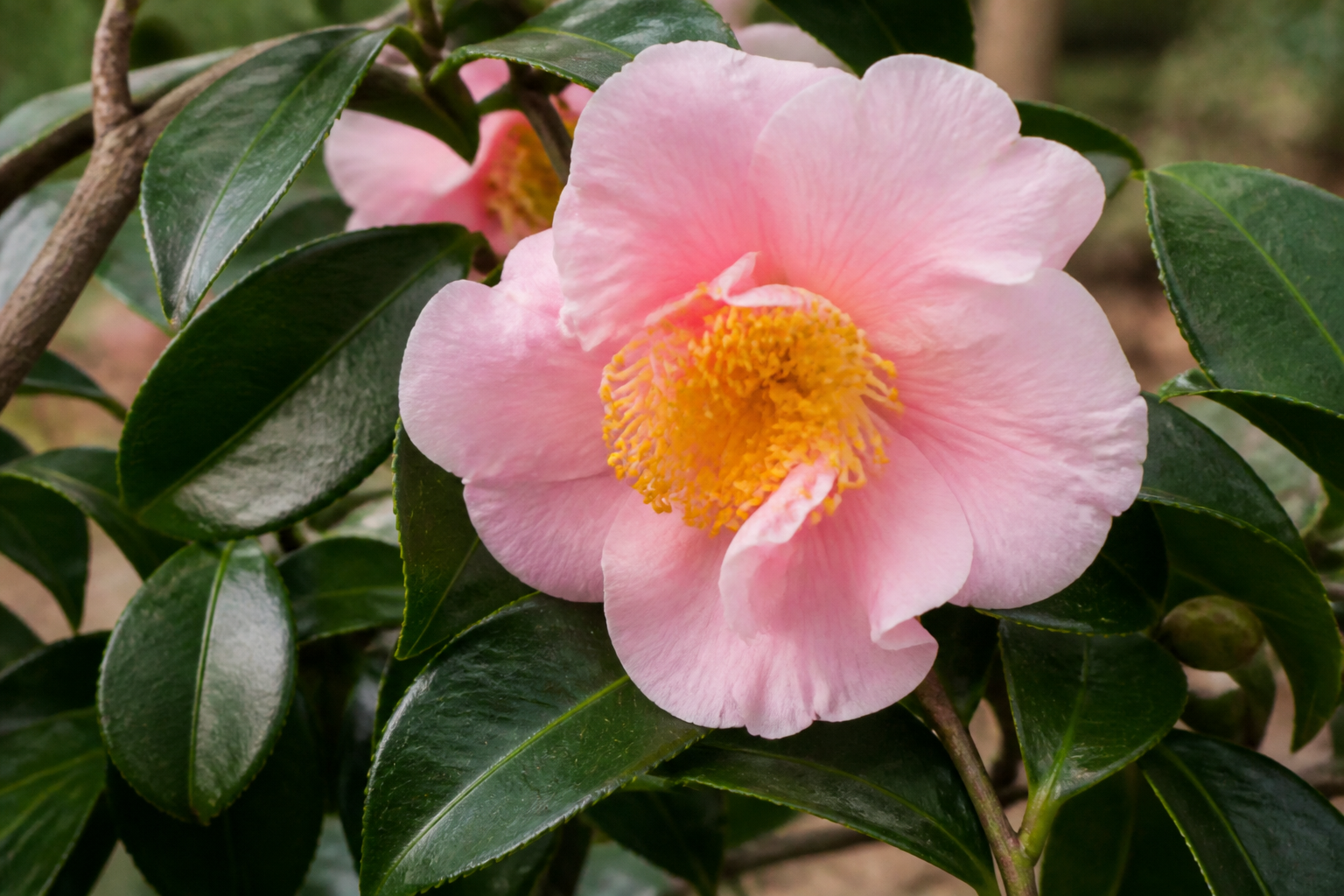
If you have searched for lutchuensis camellia hybrids, you have probably noticed how many scented names share the same family tree. Almost every genuinely fragrant camellia on the market traces back to one small species, Camellia lutchuensis. Once you know that, the catalogue starts to make sense. This post walks through the cultivars I have grown over the years, who bred them, and where the sources disagree. Out of more than 200 named camellias I have grown in two decades, only a handful earn a spot near the front door.
The small white flower behind the scent
Camellia lutchuensis comes from the Ryukyu Islands, the subtropical chain that stretches between Japan’s main islands and Taiwan. Its flowers are small and white, and they are not much to look at. A single branch will not stop a passerby in their tracks. What the species lacks in show, it makes up for in fragrance, and that perfume is the reason breeders have kept coming back to it.
From the early 1960s, breeders set out to move that scent into a flower that people would actually want in a border. Robert Cutter, Kenneth Hallstone, Toichi Domoto, and William Ackerman were all working on camellia fragrance during that period. Their work, along with later crosses, produced the showy, scented plants you can buy today. That is the main reason the lutchuensis camellia hybrids look so different from the scentless japonicas on a typical garden center bench.
The trade-off is real. The species gives you fragrance, but it also hands down a tender constitution. Keep that in mind as you read through the names below, because cold hardiness comes up again later in this post.
Finlay’s fragrant hybrids from Whangarei
J. R. (Jim) Finlay, working in Whangarei, New Zealand, raised more than 50 fragrant hybrids in total. Two of his names that come up often are ‘Sweet Emma’ and ‘Scentimental’. Finlay’s output is a big part of why this group is so well represented in southern hemisphere and specialist collections, and it is worth knowing his name when you read older catalogues.
Scentuous
‘Scentuous’ is the name that makes the family relationship obvious. It was bred from Camellia japonica ‘Tiffany’ crossed with C. lutchuensis, and it was registered in 1981. That parentage tells you what to expect: a showy japonica parent on one side and the fragrant species on the other. The name is a fair description of the perfume, and it is one of the cultivars I would point a new buyer toward first.
High Fragrance
‘High Fragrance’ is also a Finlay raise from Whangarei, and it first flowered in 1985. Here the sources genuinely disagree. One gives the parentage as Camellia japonica ‘Mrs Bertha A. Harms’ crossed with a (‘Salab’ x ‘Scentuous’) hybrid. Another describes it only as a lutchuensis hybrid, without naming the japonica side. I cannot settle that from my own notes, so I would treat the exact cross as unconfirmed.
Whatever the pedigree, the name fits the reputation. If you are choosing between these two Finlay plants, the parentage question matters less than whether the scent shows up in your own garden, in your own climate, at the time of year you spend outdoors.
Ackerman’s line, from Fragrant Joy to Ack-Scent Spice
Dr William L. Ackerman in the USA took a different route. His ‘Fragrant Joy’ has C. lutchuensis crossed with C. rusticana, and it first bloomed in 1968. That makes it one of the earlier names in this group. Its parentage is also the most unusual of the set, because the second parent is not a japonica at all.
Fragrant Pink, the stepping stone
‘Fragrant Pink’ is another Ackerman hybrid. It matters less as a garden plant than as a parent. It appears in the background of ‘Ack-Scent’, which is why you will see it named in pedigrees and seed lists. If you are trying to trace where a particular scent came from, this is one of the links to check.
Ack-Scent
‘Ack-Scent’ is registered with an origin date of 1978. It is shell pink, full peony in form, and grows upright. The parentage is a japonica crossed with ‘Fragrant Pink’, and it is described as having a deep spicy fragrance. One grower listing gives a first bloom of 1974, which would predate the 1978 registration. I have not been able to reconcile those two dates, so treat them as a loose guide rather than a fixed timeline.
Ack-Scent Spice
‘Ack-Scent Spice’ is a separate Ackerman cultivar, registered in 1995. It is deep rose red, with flowers that range from anemone to peony form. Its parentage is japonica ‘Fragrant Star’ crossed with lutchuensis, and the scent is described as lemony to spicy. Those two words cover a lot of ground, so smell it yourself before you commit to one for a windy site.
Cultivar reference at a glance
The table below pulls the six names together. Where my notes have no verified detail, I have written “Not specified” rather than guess.
| Cultivar | Breeder | Parentage | Flower | Notes |
|---|---|---|---|---|
| Scentuous | J. R. (Jim) Finlay, Whangarei, New Zealand | Camellia japonica ‘Tiffany’ x C. lutchuensis | Not specified | Registered 1981. Clear lutchuensis parentage. |
| High Fragrance | J. R. (Jim) Finlay, Whangarei, New Zealand | Sources disagree: C. japonica ‘Mrs Bertha A. Harms’ x (‘Salab’ x ‘Scentuous’), or described only as a lutchuensis hybrid | Not specified | First flowered 1985. Treat exact parentage as unconfirmed. |
| Fragrant Pink | Dr William L. Ackerman, USA | Not specified | Not specified | Ackerman hybrid and parent of ‘Ack-Scent’. |
| Fragrant Joy | Dr William L. Ackerman, USA | C. lutchuensis x C. rusticana | Not specified | First bloomed 1968. |
| Ack-Scent | Dr William L. Ackerman, USA | Japonica crossed with ‘Fragrant Pink’ | Shell pink, full peony form, upright growth | Originated 1978. One listing gives a 1974 first bloom. |
| Ack-Scent Spice | Dr William L. Ackerman, USA | Japonica ‘Fragrant Star’ x lutchuensis | Deep rose red, anemone to peony form | Registered 1995. Lemony to spicy scent. |
Which ones earn their space in my garden
Not every fragrant cultivar deserves a planting hole. I judge them on three things: whether the scent carries, whether the flower is attractive enough to justify the space, and how the plant handles my winters. By those standards, the list sorts itself out fairly quickly.
‘Ack-Scent Spice’ is the one I reach for when I want a scented flower with real colour. Its deep rose red stands out against the paler shell pinks in the same group. It is a good choice when you want the perfume and the colour together in one plant.
‘Ack-Scent’ suits a narrow bed. The upright habit keeps it from sprawling into the path, and the peony form gives you the classic camellia look that many people expect. The spicy fragrance is a bonus, not the whole reason to grow it.
The Finlay names, Scentuous and High Fragrance, are the ones I would plant for scent first. Because High Fragrance’s parentage is uncertain, I would judge it on the plant in front of you rather than on the pedigree printed on a label. If you want a wider comparison beyond this family, the broader roundup of fragrant camellia varieties covers names outside the lutchuensis group.
Hardiness: where these can live outdoors
Because lutchuensis is tender, these plants are generally less cold hardy than a straight japonica. Most are usually rated for roughly USDA zone 8 and warmer. That is the honest starting point, and I would not push past it without a plan.
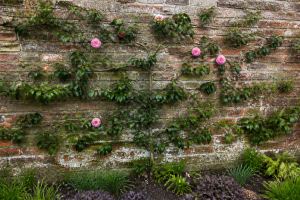
In zone 7, I would choose one of two routes. The first is a container that you can move into a garage, porch, or unheated room during a hard freeze. The second is a sheltered spot against a south or east wall, where the masonry holds some heat and the plant is out of the worst wind. For the mechanics of the first option, see my notes on growing camellias in containers.
Winter conditions vary a lot, even within one county. A sheltered garden in a mild pocket may get through a winter that damages the same cultivar in an exposed yard. Treat any zone rating as a guide, not a guarantee. For cold snaps, I work through a set of steps before each hard freeze, which I describe in my piece on protecting tender camellias from frost.
Small flowers and the scent that seems to disappear
The flowers of these hybrids are typically smaller than a classic japonica’s. That is the trade for the scent. Buyers who expect a dinner-plate bloom are often disappointed, and I understand why. If you want size above all else, a fragrant camellia is probably the wrong choice.
Scent is strongest on a mild, still, humid morning. On a cold, windy day, you may smell nothing at all. That is the most common reason people buy a fragrant camellia, check it on a chilly afternoon, and conclude it has no smell. The plant has not changed. The air has.
So plan the location around how you actually use the garden. Put the plant near a path you walk on a mild morning, or beside a bench where you sit in spring. A fragrant flower tucked behind a fence in a draft will never reward you the way one by the door will.
A practical checklist before you buy
Several of these are easier to find from specialist camellia nurseries than from garden centres. Garden centre stock tends to rotate toward the showiest japonicas, so the scented names may be missing or mislabelled. When you do find one, a few checks will save you disappointment later.
- Confirm the cultivar name and parentage on the label, and note where sources disagree.
- Ask whether the plant has been grown in your zone or a similar climate.
- If the plant is in bud, ask whether it has been open long enough to show the flower form.
- Smell an open flower on a mild day, not in a cold store or a windy car park.
- Decide in advance whether the plant will live in the ground or in a container you can move.
Those five checks cost you nothing but a few minutes. They also separate buyers who enjoy the plant for years from those who return it after one disappointing season. In my experience, the second group usually bought the right plant in the wrong place.
The lutchuensis camellia hybrids reward patience. Start with the names that have clear parentage, plant them where you will notice the scent, and protect them through the first few winters. The fragrance is worth the extra effort, and it is one of the few things in the camellia world that can surprise you from across a yard.
About This Article

Written by Helen Pritchard. Helen Pritchard is a lifelong gardener in the Pacific Northwest who has grown more than 200 named camellia cultivars over two decades. She writes practical, experience-based guides to camellia care, from variety selection and pruning to troubleshooting yellowing leaves and bud drop. More about this site.
Verify this against a primary source
Specifics change, and your situation may differ from the one described here. These are the authorities worth checking directly:
- American Camellia Society — cultivar registration and culture guides
- USDA Plant Hardiness Zone Map — zone verification for your location
- Royal Horticultural Society — camellia cultivation and pest guidance