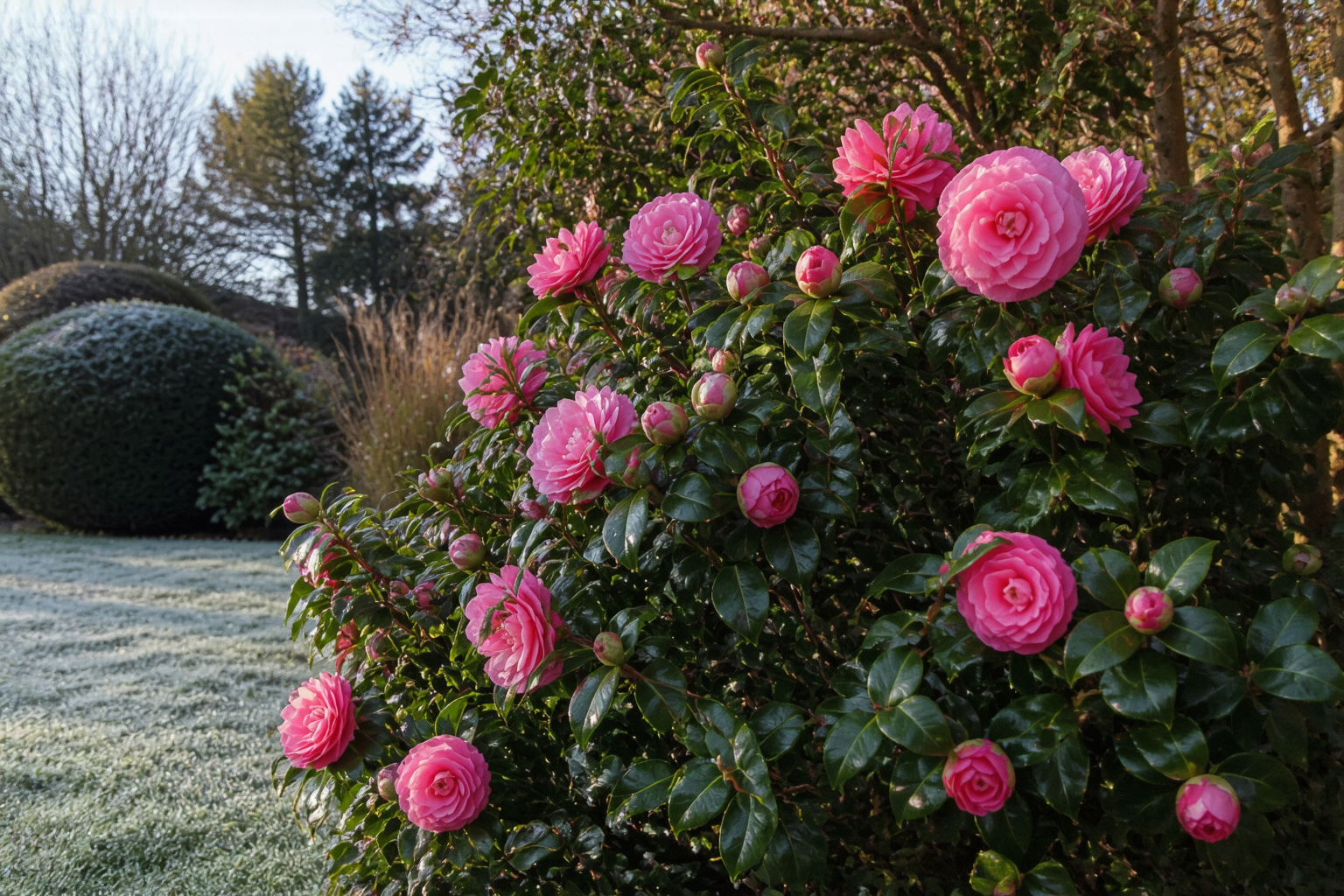

I get this question at least once a month, usually from someone standing in their garden in late winter, watching a few straggly blooms appear after weeks of heavy flowering. “Helen,” they ask hopefully, “is my camellia reblooming? Can camellias bloom twice a year?”
Short answer: no. An individual camellia plant does not produce two separate, distinct flowering cycles in one calendar year. Each cultivar has one bloom season—though that season can stretch eight to fourteen weeks, which can feel like “on and off” flowering if you’re not paying close attention.
That said, the confusion is completely understandable. In my twenty-plus years of growing camellias across three USDA zones, I’ve learned that what people perceive as “blooming twice a year” is usually something else entirely—and I’m going to walk you through exactly what’s really happening in your garden.
The Short Answer: One Bloom Season, Not Two
Here’s the hard truth: camellias do not reliably bloom twice per year. Each species and cultivar has evolved to flower during a specific window. That window is long—sometimes remarkably long—but it’s still just one bloom season per plant, per year.
Camellia sasanqua blooms from October through January. Camellia japonica blooms from December through April. Camellia reticulata and williamsii hybrids have their own seasons, usually winter into spring. They don’t suddenly flip a switch in summer and bloom again.
What does happen is that a single plant’s bloom season can unfold unevenly. Buds open in waves. Some flowers drop early due to cold snaps or stress. Others linger. This staggered display can create the illusion of multiple flowering cycles—but it’s really just one long, sometimes chaotic bloom period.
Why It Looks Like Camellias Bloom Twice a Year
If the honest answer is “no,” then why do so many gardeners swear their camellia blooms twice? I’ve narrowed it down to three main culprits. Understanding these will save you a lot of frustration and false hope.
Growing Sasanqua and Japonica Together
This is the biggest reason people think they have reblooming camellias. I’m actually guilty of encouraging this confusion in my own garden—deliberately, because it’s brilliant.
In my 8a zone, I’ve planted ‘Yuletide’ sasanqua right next to ‘Donation’ williamsii. Yuletide starts opening in late October. By December, Donation takes over. Together, they give me camellia flowers from October straight through April—nearly six months of continuous bloom.
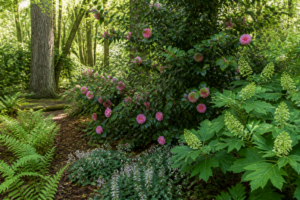
But here’s the thing: these are two different plants. Neither one blooms twice. I’m simply exploiting the fact that sasanqua and japonica (and williamsii hybrids) have different bloom seasons. Stack them together in a border, and it looks like one plant is flowering forever.
This strategy is so effective that I suspect many gardeners genuinely don’t realize they’re growing two plants. They think it’s one especially generous camellia. Then they tell friends, “My camellia blooms from fall to spring!”—and the myth perpetuates itself.
The “False Start” Bloom
Late autumn warm spells can confuse japonica buds. A few flowers open prematurely—weeks before the main flush is supposed to begin. Then cold weather returns, the rest of the buds stay tight, and the bulk of flowering happens on schedule weeks later.
To someone glancing at their camellia in November, then again in January, it looks like two separate blooming events. It’s not. It’s a stumble at the start of one long season, followed by the real show.
In my 7b garden, this happens almost every other year. A warm October tricks ‘Donation’ into cracking open maybe five flowers. I’ll smile, enjoy them, then watch nothing happen for six weeks. Then January arrives and suddenly I have hundreds of blooms again. It’s a false start, not reblooming.
Genuine Stress-Related Reblooming
Here’s where I’ll give the “twice a year” believers a tiny crumb of legitimacy. Rarely—and I mean rarely—a camellia that’s been stressed will drop its buds early, then push a sparse secondary flush once conditions improve.
Drought stress is the usual culprit. A japonica gets thirsty in a dry winter, sheds buds prematurely, then after a good soaking rain, it puts out a few weak blooms in a desperate attempt to set seed. Once conditions improve, the plant tries again.
But this is not a reliable trait. It’s an emergency response, not a feature. I don’t recommend planning your garden around it. If you see this happen once, it doesn’t mean your camellia will do it every year.
Think of it like this: a stressed plant reblooming isn’t “blooming twice a year.” It’s blooming once, badly, and then making a desperate second attempt in the same season. Very different from a rose or a repeat-blooming hydrangea.
How to Get Near-Continuous Camellia Colour (Without Waiting on a Myth)
If you want flowers for months on end, stop looking for a single plant that blooms twice. Instead, use the same trick I use: plant strategically with different camellia species and cultivars.
Here’s my personal formula that works beautifully across zones 7b through 8b:
- October–November: Plant a sasanqua like ‘Yuletide’ or ‘Setsugekka’ for early autumn blooms
- December–February: Add a mid-season japonica such as ‘Adolphe Audusson’ or ‘Elegant Beauty’
- February–April: Finish with a late williamsii hybrid like ‘Donation’ or a late japonica like ‘Magnoliaeflora’
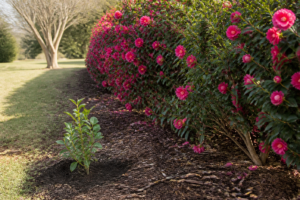
Plant these three together in a staggered, layered border. From October through April, you’ll have camellia flowers almost every single day. No individual plant blooms twice. Instead, you’ve created a succession of blooms using camellia reblooming strategy—not camellia reblooming biology.
This is the honest, reliable way to achieve what people think they’re getting when they ask about camellia second flush. And it works every year, not just once.
The Mistake I Made (So You Don’t Have To)
Several years ago, a client called me excited. Their japonica was “reblooming in spring” after a sparse winter show. They asked if they should cut back on winter feeding to encourage the second flush.
I almost told them yes. Then I visited their garden to investigate.
The japonica—a ‘Mathotiana’—was exactly where I expected it, and yes, it had finished blooming. But behind it, completely obscured by the japonica’s branches and foliage, was a vigorous sasanqua they’d planted months earlier and apparently forgotten about. The “reblooming” was entirely the sasanqua.
I felt silly. But it taught me something crucial: what looks like one plant blooming twice is often two plants you haven’t properly distinguished. Take a close look at your garden. Are you certain you’re not growing two different camellias very close together?
What If Your Camellia Isn’t Blooming at All?
Before you get too disappointed about the lack of double blooming, make sure your camellia is actually blooming at least once. A non-flowering camellia is a much bigger problem than a non-reblooming one.
Common reasons for no blooms include poor drainage, insufficient winter chill hours, too much nitrogen fertilizer, and insufficient light. If your camellia isn’t flowering at all, I’ve written a detailed troubleshooting guide specifically for that. Check it out before you worry about a second bloom season.
The Real Answer to “Do Camellias Bloom Twice a Year?”
No single camellia plant blooms twice per year in any reliable, meaningful way. Each cultivar has one bloom season—sometimes eight weeks, sometimes fourteen weeks, but still one season per plant.
What does happen: confusion from staggered buds, false starts during warm spells, rare stress-response flushes, and—most commonly—growing sasanqua and japonica side by side without realizing they’re two different plants.
If you want camellia flowers from fall through spring, stop hunting for a mythical reblooming camellia. Plant a sasanqua, a japonica, and a williamsii hybrid together. Use the different natural bloom windows of different species to your advantage. Let each plant do what it evolved to do—flower once, beautifully, at its own time.
That’s the honest answer. And honestly, it’s a better strategy anyway.