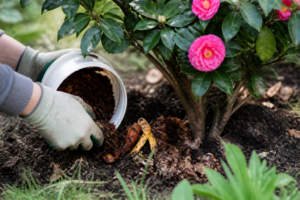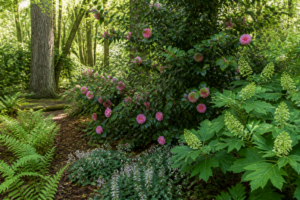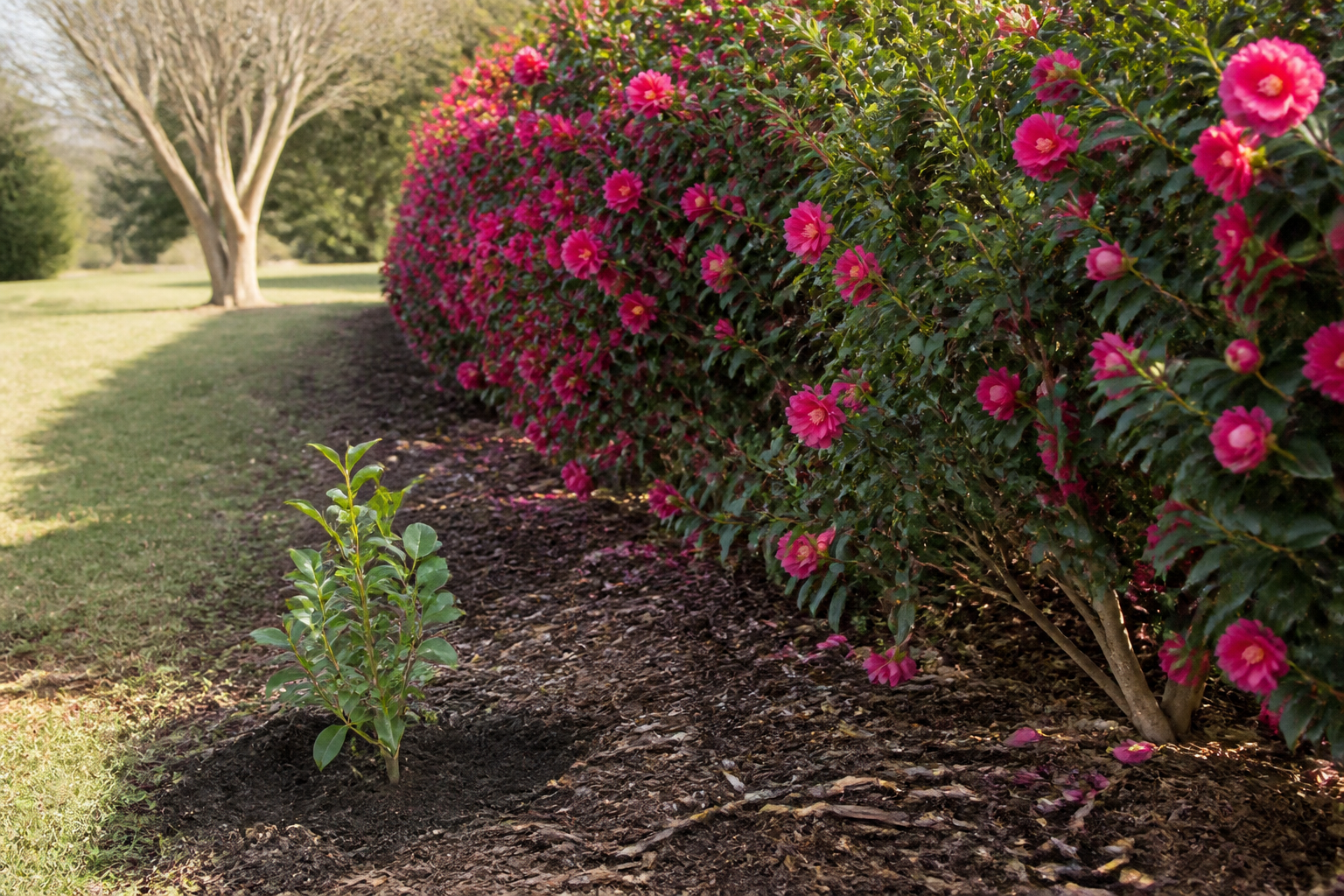
“How long until it actually looks like something?” I hear this question at least twice a month from new camellia gardeners. They’ve just planted a 2-gallon nursery specimen in their garden, and they’re standing there wondering if they’ll need to wait five years—or fifty—before their camellia growth rate finally produces a respectable hedge or specimen plant worth showing off.
After 20 years growing over 200 named cultivars across three USDA zones, I can tell you the answer honestly: it depends on which type you’ve chosen. But the real truth? Camellias are not fast growers, and that’s actually a blessing in disguise. Let me explain why—and give you the specific numbers you need to plan realistically.
Camellias Are Slow-to-Moderate Growers—And That’s a Good Thing
When I first started gardening, I planted a ‘Fastosa’ camellia expecting it to race upward like a forsythia. It didn’t. That’s when I learned the most important lesson about camellia growth rate: these plants are fundamentally different from many popular landscape shrubs.
Most camellias grow 6 to 18 inches per year, depending on the type. Compare that to a typical privet hedge (24 to 36 inches per year) or a photinia (24 inches or more), and you’ll see the difference immediately. However, I don’t frame this as a drawback. I frame it as a feature.
Think about it this way: a slow-growing camellia means far less pruning work once it reaches maturity. You’re not wrestling with an aggressive plant every spring. Instead, you get a naturally elegant form that requires minimal intervention. After 15 years with a mature japonica, I’m pruning maybe twice a year for shape. With a faster-growing shrub, I’d be doing that monthly in the growing season.
That said, patience is part of the camellia bargain. If you need a 6-foot screen *next year*, camellias are the wrong choice. But if you’re thinking 5 to 15 years ahead, they’re ideal.
Sasanqua Growth Rate
Let’s start with the speedsters: sasanquas. If you’re choosing camellias for hedge work or screening, *Camellia sasanqua* is your best option. These autumn bloomers are the fastest-growing of the common garden types—and I mean that in the most practical sense.
Once established, expect roughly 12 to 18 inches of growth per year in good conditions. In my experience, that means a 2-gallon nursery plant can reach a usable hedge height of 4 to 6 feet in around 5 to 7 years. That’s genuinely reasonable if you’re planning a living screen.
The key word here is “established.” During those first 2 to 3 years after planting, sasanquas are doing most of their work underground, establishing root systems. Top growth will be much slower—sometimes only 3 to 6 inches per year. This was a shock when I first planted ‘Narumigata’ years ago. I thought something was wrong. It wasn’t. The plant was just being a camellia.
Once that root system is in place, though? Everything accelerates. In my zone 8b garden, ‘Mine-no-yuki’ and ‘Setsugekka’ have consistently hit that 12 to 18-inch-per-year range once they moved past year three. They’ve become reliable workhorse hedges that don’t demand obsessive pruning.
Sasanquas also handle full sun better than japonicas. This is important because faster growth often correlates with more sun tolerance. If your screening site gets afternoon sun, a sasanqua is far more forgiving than its japonica cousin.
Japonica Growth Rate
Now we move into the more contemplative realm of camellias: the japonicas. These winter bloomers grow noticeably slower than sasanquas, and that difference becomes obvious within the first few years.
Expect 6 to 12 inches of growth per year once a japonica is established—roughly half the pace of a sasanqua. What does that mean in real terms? A 2-gallon japonica might take 10 to 15 years to reach its full mature size of 6 to 12 feet, depending on the cultivar.
This has both a drawback and an advantage. The drawback is obvious: patience required. I planted a ‘Debutante’ japonica the same year I planted a ‘Kanjiro’ sasanqua (both as 2-gallon nursery plants, same soil, same water schedule, same feeding program). Six years later, the ‘Kanjiro’ was a full 5-foot hedge with density you could use as a screen. The ‘Debutante’? Still filling out at about 2.5 feet, with an open, airy form.
The advantage is longevity and ultimate size. Japonicas ultimately outgrow sasanquas. They also live decades longer and develop that distinguished, woody character that sasanquas rarely achieve. My oldest japonica is pushing 35 years old and still producing flowers like it’s 15. Sasanquas, by comparison, often peak around year 20 and then slowly decline.
Japonicas also tolerate shade better than sasanquas. If your planting site is dappled or morning sun only, japonicas will thrive. Sasanquas would sulk. This is worth considering when you’re choosing based on your specific garden light.
Reticulata and Hybrid Growth Rates
The reticulatas and their hybrids are the slowest of the bunch. These spectacular creatures produce enormous flowers—sometimes 4 to 5 inches across—but they pay for that extravagance with glacial growth.
In my garden, reticulatas and their crosses rarely exceed 6 to 9 inches per year once established. That’s about half the rate of a japonica. A 2-gallon specimen might need 15 to 20 years to reach a comfortable 6-foot specimen size. Some cultivars move even slower.
I’ve grown ‘Captain Rawes,’ ‘Francie L,’ and a few hybrid crosses like ‘Jury’s Yellow’ for years, and they all follow this pattern: slow and steady, with magnificent payoffs once they’re mature enough to bloom prolifically.
However—and this is important—if you’re a patient gardener who values exceptional flower form and size over speed, reticulatas are absolutely worth the wait. The blooms are simply incomparable to what sasanquas or japonicas produce.
What Speeds Up or Slows Down Growth
These general numbers—12 to 18 inches for sasanquas, 6 to 12 for japonicas—assume *good* conditions. Your actual camellia growth rate will vary depending on several critical factors.
Factors that speed up growth:
- Consistent moisture. Camellias are shallow-rooted and really dislike drying out between waterings.
- Acidic soil pH between 5.5 and 6.5. Alkaline soil stalls growth immediately.
- Part shade with afternoon sun protection (especially for japonicas and reticulatas).
- Regular feeding from spring through midsummer with a camellia-specific or acid-loving plant fertilizer.
- Well-draining soil rich in organic matter.
Factors that slow growth:
- Heavy clay or poorly drained soil (camellias despise wet feet).
- Full sun exposure, especially afternoon heat.
- Alkaline soil or soil that hasn’t been amended with pine bark or sulfur.
- Competition from aggressive tree roots nearby.
- Skipping fertilizer entirely or using the wrong type.
- Growing in containers (pot size limits root expansion).
I once planted a ‘Mathotiana’ japonica in clay-heavy, neutral-pH soil without amending it first. Growth was abysmal—maybe 2 inches per year. After three years of frustration, I excavated it, amended the soil heavily with pine bark and sulfur, and replanted it. Growth doubled immediately. Lesson learned.
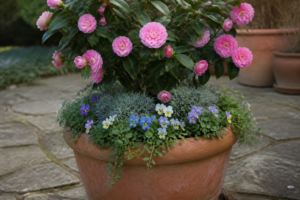
Container-grown camellias deserve a special mention. A camellia in a large pot will generally grow slower than the same variety in open ground, simply because the pot limits root expansion. For patio specimens where you *want* a compact size, this is perfect. For someone trying to establish a hedge quickly, containers are counterproductive.
Choosing a Variety Based on Speed
So how do you choose? Let’s be practical about this.
If you’re planning a hedge or screen and speed matters, choose sasanquas. Full stop. ‘Setsugekka,’ ‘Narumigata,’ ‘Yuletide,’ and ‘Mine-no-yuki’ have all performed beautifully in my hedge trials. You’ll have something useful in 5 to 7 years, and you’ll be pruning maybe once or twice yearly once it matures.
If you’re planting a specimen shrub where ultimate size, longevity, and flower form matter more than speed, choose a japonica or reticulata. Plan on waiting 10 to 20 years, but you’re getting a plant that will live longer, grow larger, and produce flowers with more refinement. ‘Debutante,’ ‘Mathotiana,’ and ‘Elegans’ are worth every year of patience.
Consider your light conditions too. Full or afternoon sun? Sasanqua. Dappled or morning sun only? Japonica or reticulata. This will actually influence your growth rate more than you might expect.
The Bottom Line: Patience Pays
Going back to that ‘Kanjiro’ sasanqua and ‘Debutante’ japonica I planted six years ago: here’s what I actually learned. The ‘Kanjiro’ became the hedge I needed fast. It was the right choice for that spot. But that ‘Debutante’ is now becoming something special—dense, elegant, with a presence that no 6-year-old shrub should have. I’m glad I planted both.
Camellia growth rate isn’t about choosing the “best” type. It’s about matching the type to your actual needs. Understand what slow really means for these plants—and you’ll find yourself with a garden feature that rewards patience with decades of reliable beauty. That’s worth waiting for.