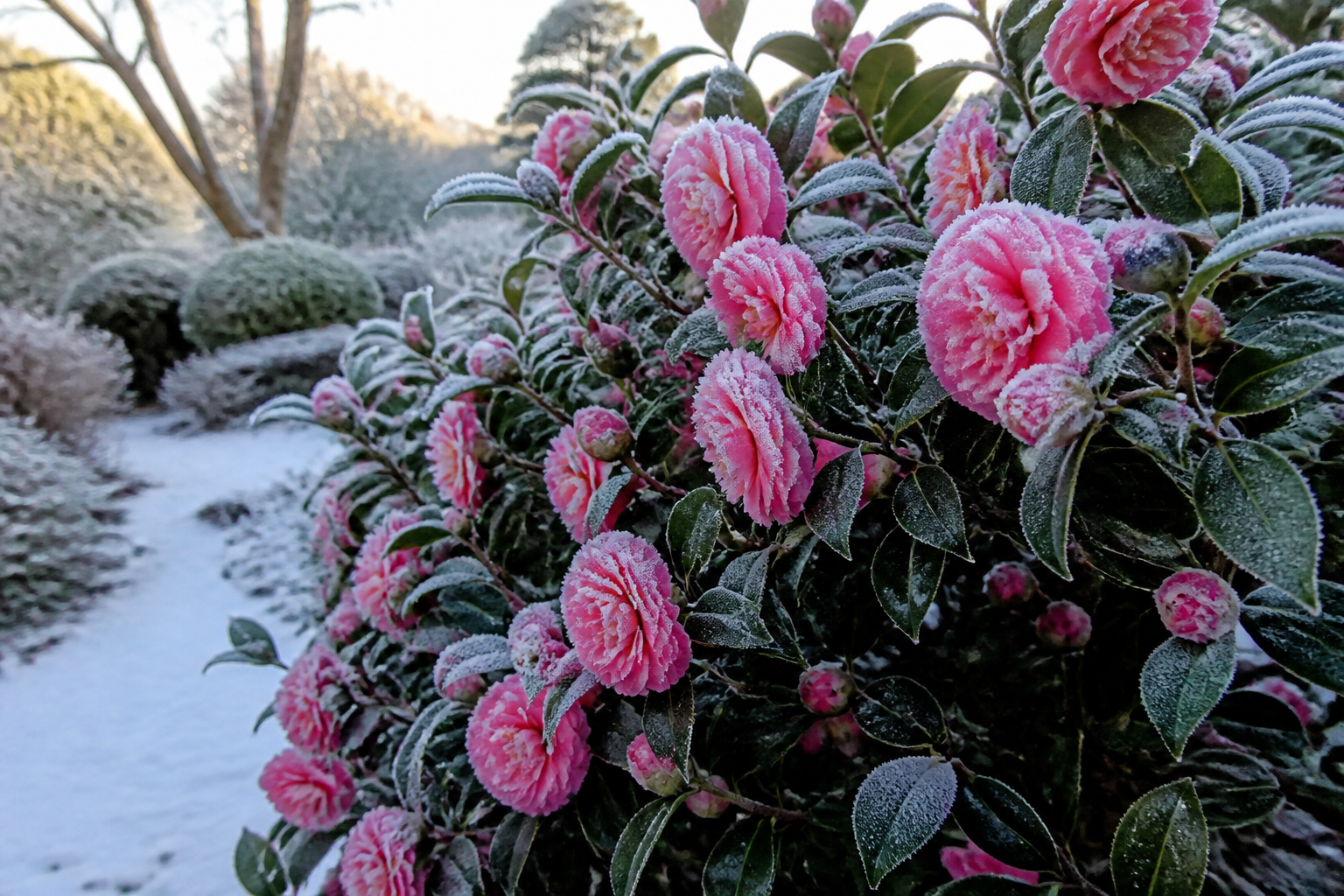
Can a Zone 6 garden actually support camellias? Straight answer: absolutely, provided you’re picky about which ones you plant. This question lands in my inbox constantly, usually from someone who assumed camellias were reserved for milder climates further south. Most camellias, it’s true, evolved for gentler winters. Still, after twenty-plus years cultivating more than 200 named cultivars across several climate zones, I can say with real confidence that hardy options for Zone 6 winters aren’t just rumor—they’re real, they’re resilient, and they reward the extra planning it takes to grow them.
Success comes down to three things: picking cultivars with a proven cold-survival record, shielding young plants during their vulnerable first seasons, and placing them thoughtfully within your yard’s own microclimates. I haven’t gotten this right every time—a late freeze in spring and a season of soggy soil have both cost me plants over the years. Even so, my experience says Zone 6 gardeners can grow camellias with genuine confidence, as long as cultivar selection comes first.
What Zone 6 Winters Actually Throw at Your Camellias
Let’s get the numbers straight first. Zone 6 covers winter lows from -10°F down to 0°F (-23°C to -18°C)—that’s serious cold by any camellia’s standard. But treating “Zone 6” as one uniform climate is a mistake. Zone 6a bottoms out between -10°F and -5°F, while Zone 6b stays a touch gentler, ranging from -5°F to 0°F.
That split matters far more than it might seem at first glance. Gardeners in 6b simply have a wider cultivar list to choose from than those in 6a. A plant rated safe down to 0°F can still fail miserably at -10°F. So before shopping for any variety, pin down exactly where your property falls within the Zone 6 range.
Temperature alone doesn’t tell the whole story, though. Zone 6 winters also bring freeze-thaw cycling, exposed-site winds, and sharp swings in temperature within a single week. A camellia might shrug off -5°F just fine if conditions hold steady—but let early spring sunshine hit frozen flower buds, and they’re finished. Let saturated soil freeze solid around the roots, and those roots suffocate. In other words, your zone rating is only the starting point—the full winter experience matters just as much.
Why So Many Camellias Fail in Zone 6—and What Sets the Survivors Apart
Classic camellias—the Camellia japonica types that fill Southern gardens—only reach reliable hardiness down to Zone 7, or 0–10°F. That leaves Zone 7 gardeners with a generous menu of options, while Zone 6 gardeners are working with a much shorter list. Grasping why is essential before you buy anything.
The species behind true cold tolerance isn’t the one most people assume. It’s Camellia oleifera, the tea-oil plant from northern China. This species shrugs off temperatures that would finish off a standard japonica outright. Its wood grows denser, its internal chemistry runs on a metabolism actually built for harsh winters.
Starting in the 1970s, breeders—most notably the USDA’s research team at Beltsville, guided by the renowned Dr. William Ackerman—began crossing C. oleifera with showier japonica and sasanqua types. Their aim was straightforward: produce camellias with real garden appeal that could still survive Zone 6 winters and beyond. That breeding effort is exactly why we have cold-tolerant options to plant now.
The “Winter’s” lineup grew directly out of that program. Each cultivar in this series carries C. oleifera genetics for genuine cold resistance, without sacrificing the showy blooms camellias are known for. There’s no trick to it—just decades of deliberate crossbreeding meeting horticultural determination.
Top Cold-Tolerant Camellia Cultivars Worth Planting in Zone 6
Anyone planting a camellia in Zone 6 needs a cultivar that’s already proven itself against sustained cold, not just marketing promises. Below are the standout performers I trust most—several of which I’ve personally grown for well over ten years.
Ackerman’s “Winter’s” Series—Purpose-Built for Cold Climates
‘Winter’s Snowman’ ranks among the most dependable cold-hardy cultivars you can buy. Its japonica-form plant produces semi-double white blossoms and, in a protected spot, holds up down to -10°F. I’ve watched it flourish in Zone 6a gardens with only basic winter care during its first couple of seasons.
‘Winter’s Star’ is the cultivar I measure everything else against. Single flowers in a rich pink-purple, an Ackerman hybrid carrying C. oleifera genes, hardy down to -10°F. In my own Zone 7b garden it’s gone through twelve straight seasons without dying back or needing any winter protection—flowering faithfully every single time. That’s the standard I want Zone 6 growers to hold cultivars to.
‘Winter’s Charm’ finishes off the trio with soft orchid-pink, peony-shaped blooms. Also an Ackerman hybrid, it holds firm to -10°F. All three “Winter’s” selections were developed specifically with cold-climate growers in mind—these aren’t consolation-prize plants; they’re built for winter combat from the ground up.
Spring-Flowering Types—A Clever Way Around the Cold
One thing many Zone 6 growers never think about: bloom timing carries enormous weight. Camellias that flower in winter set their buds back in fall, which means those buds sit exposed through the coldest stretch of the year. One hard freeze and the buds are ruined before they ever open.
Spring-blooming cultivars dodge that risk entirely, forming buds only after winter has largely passed. ‘April Kiss’ (semi-double, rose-red) and ‘April Tryst’ (anemone-form, red) open their flowers in April and May, right when Zone 6 overnight temperatures rarely fall below freezing anymore.
This timing advantage is real, not theoretical—you sidestep the crushing bud-drop that plagues winter-bloomers in cold climates. If camellia growing in Zone 6 is new territory for you, I’d steer you toward a spring-blooming cultivar first. You’ll actually see flowers most years, even through those tricky opening winters.
Camellia oleifera and Its Offspring—The Toughest of the Bunch
‘Korean Fire’ is a single-form red cultivar pulled straight from wild stands in South Korea, its cold hardiness field-tested by nature long before any nursery got hold of it. Growing this one feels like borrowing millennia of evolutionary toughness. These aren’t plants that merely endure Zone 6 winters—Zone 6 winters are what made them.
‘Survivor’ deserves a spot on any Zone 6 shortlist too. It carries semi-double pink flowers, originated in Australia, and has held up impressively in cold-climate trials here. The name isn’t marketing fluff—this plant genuinely outlasts less rugged varieties in the same conditions.
Then there’s the unhybridized species itself, Camellia oleifera—worth growing on its own merits. Expect small, white, fragrant flowers and a bushier growth pattern than typical japonicas. But make no mistake: this is the single toughest camellia species that exists. In Zone 6, it’s practically indestructible. Some growers use it purely as grafting rootstock; others plant it for breeding projects. If you want to test the outer edge of what camellias can survive in your climate, oleifera is the species to reach for.
The white-flowered oleifera hybrids—’Polar Ice,’ ‘Snow Flurry,’ and ‘Frost Prince’—sit at the frontier of cold-hardiness breeding right now. Each one may handle conditions as harsh as Zone 5 to 6a. Because they’re relatively recent introductions, we don’t yet have decades of Zone 6 performance data behind them—but what data exists so far looks genuinely promising.
Can You Push Camellias Into Zone 5? The Real Answer
Zone 5 questions land in my inbox regularly too—can camellias survive there at all? Truthfully: it’s possible, but you’d be experimenting rather than following a proven path. Zone 5 winters plunge to -20°F down to -10°F, which is a whole different level of cold to contend with.
‘Polar Ice,’ ‘Snow Flurry,’ and ‘Frost Prince’ remain your strongest candidates if you’re determined to test Zone 5 limits. These oleifera hybrids look promising, but the track record is still short, and nothing’s guaranteed. You’d want an unusually favorable microclimate to back you up—think a south-facing wall, near-perfect drainage, and serious winter coverage.
My honest advice for Zone 5 gardeners: lean on Camellia oleifera itself, or start with whatever selections currently show the strongest hardiness ratings, and go in knowing you’re breaking new ground rather than playing it safe. There’s nothing wrong with that approach—it just demands a different level of commitment than typical camellia growing.
Why Microclimate Can Outweigh Your Official Zone Rating
Here’s something most gardening references gloss over: the actual conditions in your specific yard often matter more than your official USDA rating. I know a gardener in Zone 6b growing standard C. japonica right against a south-facing brick wall. That wall soaks up and releases heat, blocks the worst wind, and effectively creates a pocket that behaves like Zone 8.
Her standard japonicas do beautifully there—yet the same plants would likely die just thirty feet away in an open bed. Microclimate is the reason for that gap.
Take time to map the microclimates hiding in your own Zone 6 garden: a wall that faces south, a fence line that cuts winter wind, a low spot where cold air drains and collects overnight—each creates its own set of conditions. Reserve your most tender camellia for that warm wall, and place your toughest cultivars in the exposed corners. Done well, this kind of site planning can shift effective hardiness by one to two full zones.
Protecting Zone 6 Camellias—Especially While They’re Getting Established
Even the toughest cold-hardy cultivars appreciate some help in Zone 6, particularly during their first years in the ground. A freshly planted camellia hasn’t yet built the deep root system or hardened wood that older plants rely on—so plan to support it through its first one to three winters.
Where you plant it is your strongest safeguard. Choose a sheltered spot near a south-facing wall or fence, and steer clear of low areas where cold air collects. Afternoon sun exposure helps wood harden properly heading into fall. Just as critical: make sure drainage is excellent. Soil that stays waterlogged and then freezes kills roots faster than cold air ever could on its own—a lesson I learned the hard way, losing a lovely specimen to root rot after a wet winter freeze, not to the cold itself.
Physical shielding earns its keep too. During the establishment years, wrap young plants loosely in burlap or horticultural fleece to cut wind exposure and smooth out temperature swings. Don’t wrap so tight that air can’t move around the plant. Come spring, take the coverings off entirely so the camellia hardens naturally as it grows.
Timing in spring makes or breaks the season. Zone 6 camellias rarely die from January or February cold—it’s April sunshine hitting frozen buds that does the real damage. When spring temperatures are swinging wildly and a late freeze looms, throw morning shade cloth over vulnerable plants. The point is slowing down the thaw of frozen buds, since a rapid thaw is what causes them to drop.
Putting Together Your Own Zone 6 Camellia Collection
Growing camellias in Zone 6 isn’t wishful thinking—it’s a realistic, achievable project. Sure, you won’t have the sprawling variety list that Zone 8 gardeners take for granted; that’s simply the tradeoff. But you can still build a garden full of reliable, gorgeous camellias: winter color from ‘Winter’s Star,’ spring blooms from ‘April Kiss,’ or an experimental push with ‘Polar Ice.’
Begin with a proven Ackerman hybrid or a spring-blooming cultivar. Choose a sheltered, south-facing site with strong drainage, wrap it in burlap through its first winter, and let it settle in. By its third year, you’ll have a fully established, cold-hardy camellia that no longer needs special winter treatment—and that’s your cue to plant a second one.
Twenty years of growing camellias across three different zones has taught me one thing above all: the truly hardy cultivars earn every ounce of trust you place in them. ‘Winter’s Star’ alone has taught me more about patience than any failed planting ever could. A thriving camellia garden in Zone 6 isn’t a stretch—it’s within reach. Go plant it.
About This Article

Written by Helen Pritchard. Helen Pritchard is a lifelong gardener in the Pacific Northwest who has grown more than 200 named camellia cultivars over two decades. She writes practical, experience-based guides to camellia care, from variety selection and pruning to troubleshooting yellowing leaves and bud drop. More about this site.
Verify this against a primary source
Specifics change, and your situation may differ from the one described here. These are the authorities worth checking directly:
- American Camellia Society — cultivar registration and culture guides
- USDA Plant Hardiness Zone Map — zone verification for your location
- Royal Horticultural Society — camellia cultivation and pest guidance