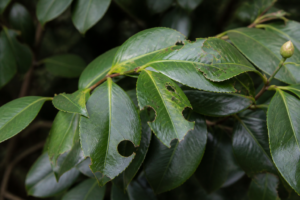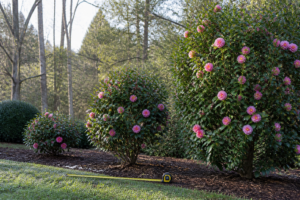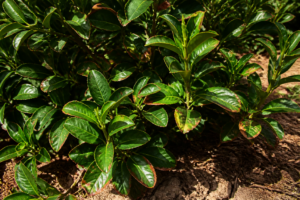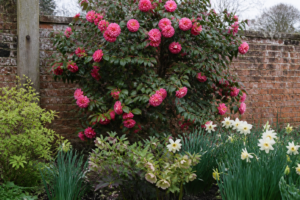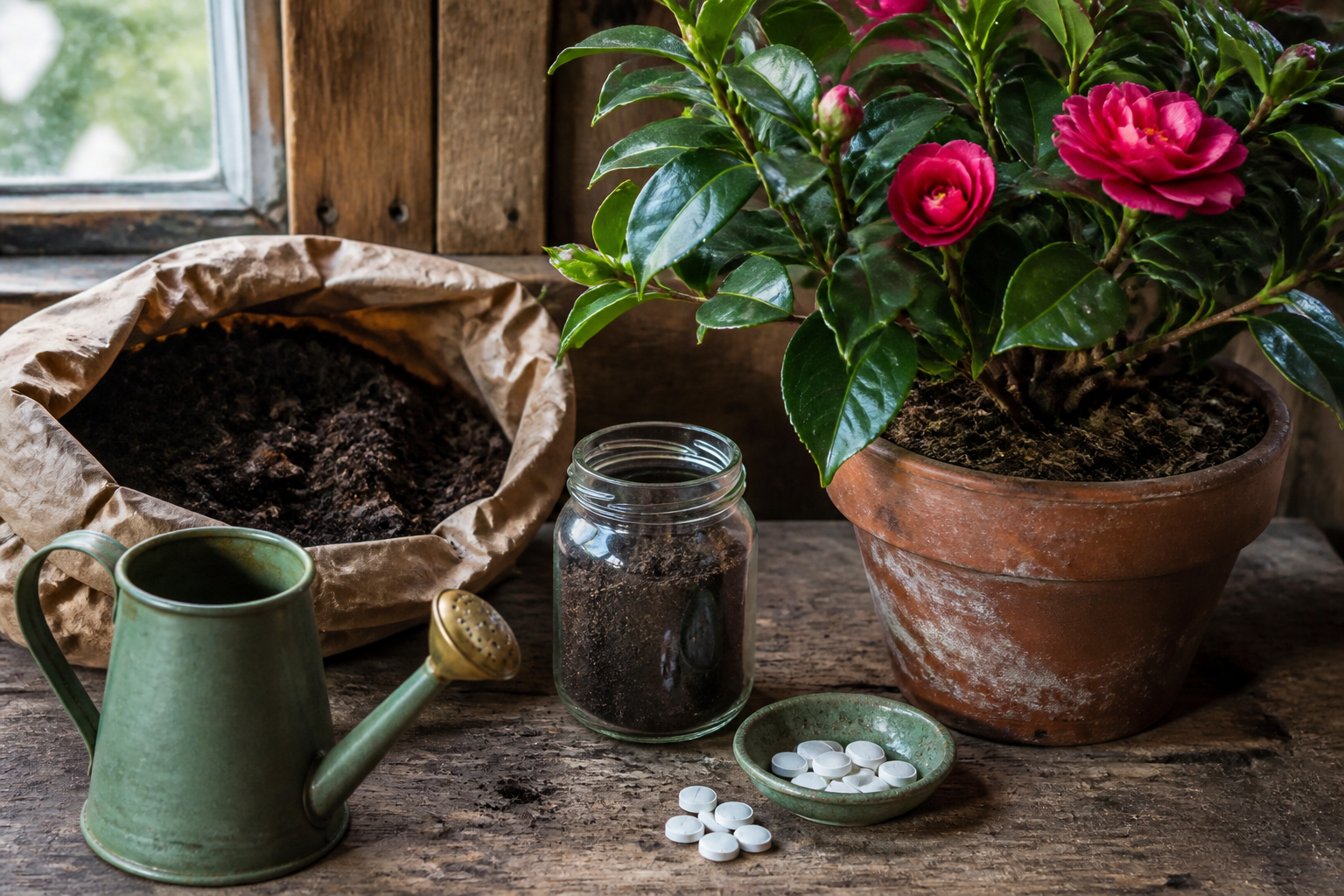
Last spring, a friend called in a panic. Her prized Camellia japonica ‘Elegans’ was yellowing, dropping buds, and looking genuinely unwell. Before I could ask a single diagnostic question, she’d already dissolved an aspirin tablet in water and was reaching for a bucket of fresh cow manure from a neighboring farm. “The internet says both work,” she said hopefully.
That call crystallized something I’ve noticed over twenty years of growing camellias across three USDA zones: when a camellia fails, gardeners rush to folk remedies. Aspirin for camellias, coffee grounds to acidify, rusty nails for yellowing leaves. The logic is understandable. Camellias are particular plants, and when one starts to fade, we want a quick fix.
But here’s what I’ve learned: the remedies that actually work are the ones that change the soil, water, or planting depth. Everything else is usually theatre. In this guide, I’m going to walk you through the folk remedies I’ve tested, failed with, and refined over decades—starting with the one question I hear most often.
Does Aspirin Actually Revive a Camellia?
Let’s start with the headline remedy: aspirin for camellias. The claim is simple and seductive. Drop a tablet in water, drench the roots, and a dying plant bounces back. Why? Because aspirin contains salicylic acid, and salicylic acid is a signalling compound that triggers plant immunity.
That part is real science. It’s not folklore. Salicylic acid does play a role in systemic acquired resistance—a plant’s ability to defend itself against stress and disease. The problem comes next: the leap from “salicylic acid matters” to “a dissolved tablet will save your camellia.”
I understand the appeal. It feels like plant medicine. It’s cheap. It’s in the bathroom cabinet. But when I actually look at the research, and more importantly at what I’ve seen in my own garden, the picture is much less rosy.
What the Salicylic Acid Research Really Shows
The scientific trials on aspirin or salicylic acid are real, but they come with crucial caveats. Most studies measure effects in seedlings or cut flowers—tender, young tissue that responds differently than an established woody shrub.
The dosages in successful trials are also tiny and carefully controlled. We’re talking parts per million in laboratory conditions, not a standard 500 mg tablet crushed into a gallon of water. And the benefits, when they appear, are modest and plant-specific. A slight boost in pathogen resistance. A marginal improvement in stress tolerance.
In other words: salicylic acid is real. Its effects on your camellia are not.
Here’s the harder truth: aspirin will not fix the things that actually kill camellias. Root rot from poor drainage. Alkaline soil that locks up nutrients. Planting too deep, which suffocates the shallow feeder roots. Drought stress. Vine weevil grubs chewing the roots invisibly underground. A tablet cannot address any of these problems.
Moreover, at the concentrations most gardeners use, aspirin can scorch tender foliage. I’ve seen it happen—brown, papery patches on new growth after a strong drench.
Verdict: Harmless but Overrated. If you insist on trying it, dissolve no more than one standard uncoated tablet in a gallon of water. But save your effort. Every camellia I’ve actually saved was saved by fixing the soil, the drainage, or the planting depth—never by a tablet.
What Helen Would Do Instead
When a camellia starts to decline, I work through a checklist. First: drainage. Camellias despise wet feet. If the soil stays soggy, the fine feeder roots rot within weeks. I dig down and inspect. Does water pool? Is the soil compacted?
Second: planting depth. Camellias should sit with the top of the root ball just at soil level, maybe a hair higher. The graft union (if it’s grafted) stays well above ground. Too deep, and the stems rot and the roots suffocate. Too shallow, and the roots dry out.
Third: soil pH. Camellias want acidic soil—ideally 5.5 to 6.5. If chlorosis (yellowing between the veins) appears, it’s almost always a pH lockout, not a missing nutrient. A soil test costs twenty dollars and reveals the truth. Sulfur fixes it permanently.
Fourth: water consistency. In my zone, I water deeply once or twice a week during the growing season, never letting the top inch bake hard but never leaving it waterlogged. Inconsistent watering invites stress and pests.
These fixes take work. But they work. The aspirin tablet works for photographs on Pinterest.
Is Cow Manure Good for Camellias?
Manure has fed gardens for millennia, so the impulse to use it on camellias makes sense. But cow manure—especially the fresh kind—poses two real problems for an acid-loving plant with shallow roots.
Fresh manure burns roots. Camellias have fine feeder roots that cluster near the soil surface, right where you’d spread a pile of decomposing dung. The ammonia and salts in fresh manure scald those delicate roots in days. My friend who called about her yellowing japonica had done exactly this, and the fresh manure made the problem worse.
Second: many farm and bagged manures are alkaline or limed. Farmers add lime to raise pH for most crops. But camellias want acidity. Repeated applications of alkaline manure push your soil the wrong direction, locking up iron and magnesium and leaving your plants chlorotic.
That said, well-rotted cow manure has a place in camellia gardening. After at least a year of composting, the ammonia and salts break down, the material becomes crumbly and stable, and it makes a fine soil conditioner and light mulch.
Verdict: Worth It with conditions. Use only well-rotted manure, keep it two inches away from the trunk, and test your soil pH every few years if you apply it regularly. Better still: replace manure with leaf mould or composted pine bark, both of which are acid and safe for camellias.
Coffee Grounds: The Acidifier That Is Not
Coffee grounds have become the darling of internet gardening forums. The pitch is irresistible: acidify your soil with your morning waste. Free, abundant, local.
But here’s the catch: used coffee grounds are not acidic. The acid in coffee is water-soluble. It ends up in your cup. What remains is close to pH neutral. The myth caught on because fresh coffee grounds smell acidic, and because they’re brown and associated with “natural” gardening. Neither logic holds up under a soil test.
Do coffee grounds add anything useful? Yes, in moderation. As they decompose, they release a little nitrogen and improve soil structure. Composted first (piled together for a month or two to heat and break down), they integrate into the soil without problems.
The risk comes from overuse and poor placement. Fresh grounds piled thick on top of shallow camellia roots mat down, repel water, and go anaerobic. In my experience, the damage isn’t worth the marginal benefit.
Verdict: Harmless but Overrated as an acidifier. Coffee grounds are fine as compost feedstock, mixed into the soil at planting, or aged and spread thinly as mulch. But don’t count on them to shift soil pH. For that, you need elemental sulfur (see below).
Vinegar, Rusty Nails, and Other Quick pH Fixes
When soil tests reveal alkalinity, gardeners reach for quick fixes. Vinegar is the classic. Pour it on, and theoretically, the acidity brings down the pH.
The problem is real and fundamental. Vinegar’s pH swing lasts days at most. Soil has buffering capacity—the ability to resist pH change. That buffering comes from the mineral composition of the soil itself, especially calcium and magnesium. Pouring vinegar on soil is like adding food coloring to a swimming pool: you see a flash of color, then the buffer system absorbs it and the water returns to baseline.
More insidiously, repeated vinegar application damages soil biology. The acidity kills beneficial microbes and fungi that actually maintain soil health. You’re burning down the garden to win a battle that matters far less than the health of the ecosystem around the roots.
Verdict: Actively Risky. Forget vinegar. Use elemental sulfur or prilled sulfur instead. It reacts with soil organisms to produce sulfuric acid, which actually lowers pH permanently and sustainably. (I’ve covered soil pH management in depth elsewhere on this site—head there for the full strategy.)
Rusty nails and iron filings sit in the same category. The folklore is that metallic iron corrects chlorosis. The reality: metallic iron is not plant-available. It sits in the soil inert. Chlorosis on camellias is almost always a pH-lockout problem, not a lack of iron in the soil.
Chelated iron can give a short-term cosmetic green-up—the plant greens up for a few weeks—while sulfur fixes the cause. Choose sulfur.
Verdict: Actively Risky as a distraction. Nails are folklore. Sulfur is science.
Banana Peels, Dish Soap, and the Rest of the Shed
The internet offers endless minor remedies. Let me dispatch a few more.
Banana peels for potassium: Bananas do contain potassium, but the release is slow and unpredictable. Buried peels can attract rodents and rot messily under mulch. More fundamentally: camellias are rarely potassium-deficient. You’re adding something the plant doesn’t need in a form it can’t use predictably. Verdict: Harmless but Overrated.
Dish soap as an insecticide: Here I need to be direct. Dish detergent is not the same as insecticidal soap. Modern dish detergents contain degreasers and fragrances designed to cut grease on plates. They strip the protective waxy cuticle on camellia leaves, and the glossy foliage shows scorch damage badly—brown, papery patches that persist for months. I’ve seen this go wrong too many times. Verdict: Actively Risky. Buy proper insecticidal soap (which is chemically different) or neem oil instead.
The Folk Remedies That Actually Earn Their Place
Not all folk practices are theater. Some are anchored in soil and biology and genuinely help camellias thrive.
Pine needles and oak leaves as mulch: Both are excellent. I use them liberally. They break down slowly, acidify the soil very gradually over years, and provide the loose, airy mulch that camellia roots love. However—and this matters—the acidification effect is far smaller and slower than gardeners assume. If your soil pH is 7.5, a three-inch layer of oak leaves will not bring it to 6.0 in one season. But as part of a sulfur program over time, they help. Use them for what they actually do: mulch and structure. Verdict: Worth It as mulch, not as a standalone pH fix.
We’ve also covered Epsom salts and tomato feed in our fertilizer posts—I won’t repeat that ground here, but those articles are worth reading if you’re thinking about supplemental feeding.
Beyond mulch, the remedies that work share one trait: they address soil, water, or structure. Not symptoms on the leaves.
My Aspirin-and-Manure Mistake
I want to close this section with a failure. Early in my camellia years, I inherited a struggling C. japonica ‘Elegans Splendor’ from my mother. It was yellowing, sparse, looking defeated. I decided to throw everything at it: an aspirin drench one week, a bucket of fresh farm manure the next.
Within a month, it was worse. The manure had raised the pH in an already-alkaline bed. The roots, already shallow and stressed, got burned by the fresh ammonia. The plant limped along for two more years before I finally dug it out.
When I replanted it (in the same hole but with sulfur worked in, the soil tested and corrected, and the graft union set just right), it came back strong. That plant taught me more than years of success ever could: the remedies that matter are the ones you can’t see working. Not tablets and drama. Drainage, depth, and pH.
The Principle That Separates Remedy from Theatre
After two decades and 200-plus cultivars across three zones, I’ve boiled it down to a single test. When you’re tempted by a folk remedy for a failing camellia, ask: does this change the soil, the water, or the way the plant sits in the ground?
If yes, it might work. Test it thoughtfully, measure the results, and adjust. Sulfur changes soil. Deep watering changes water availability. Raising the planting depth prevents root suffocation. These matter.
If the remedy treats a symptom on the leaves—a tablet to revive vigor, nails to green up yellowing, a drench of vinegar to shift pH—it’s usually theatre. It feels like medicine. It’s not. The chlorosis returns. The vigor fades. The remedy gets blamed for failing when actually the soil underneath still has the same problem.
Aspirin for camellias falls squarely in the second category. It’s harmless in small doses, but it’s also beside the point. Your camellia didn’t get sick because of a salicylic acid deficiency. It got sick because of drainage, or pH, or depth. Fix that, and the tablet becomes unnecessary.
The hard wisdom is this: the best remedy for a struggling camellia is patience and soil work, not a quick fix from the medicine cabinet. But if you invest the time to test your soil, adjust the drainage, set the depth right, and maintain consistent moisture, your camellias will reward you with decades of glossy green leaves and perfect flowers. No tablet required.
About This Article

Written by Helen Pritchard. Helen Pritchard is a lifelong gardener in the Pacific Northwest who has grown more than 200 named camellia cultivars over two decades. She writes practical, experience-based guides to camellia care, from variety selection and pruning to troubleshooting yellowing leaves and bud drop. More about this site.
Verify this against a primary source
Specifics change, and your situation may differ from the one described here. These are the authorities worth checking directly:
- American Camellia Society — cultivar registration and culture guides
- USDA Plant Hardiness Zone Map — zone verification for your location
- Royal Horticultural Society — camellia cultivation and pest guidance