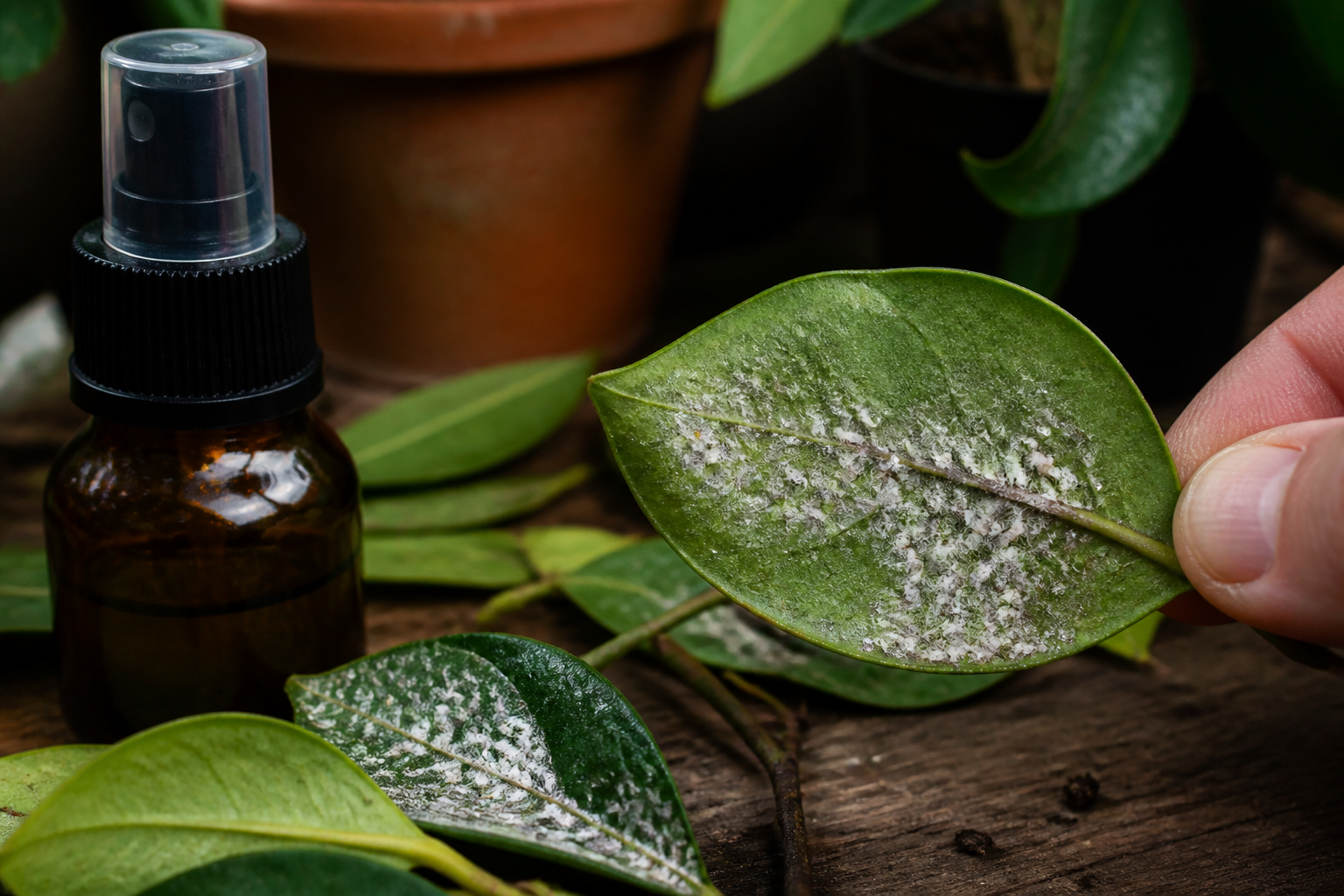
No plastic tag wedged into a nursery pot will ever warn you about this: cottony white tufts creeping along your camellia’s stems aren’t lint, mould, or garden debris—they’re eggs, and by the time you notice them, they’ve often already spread. I found this out the hard way on my treasured ‘Donation’ shrub after more than twenty years growing camellias, when what looked like harmless fuzz turned out to be cottony camellia scale, and my inattention let it jump to three neighbouring plants before I caught on. That costly slip is exactly why I now treat early detection as non-negotiable, and it’s the foundation of everything I’m sharing below about spotting and treating camellia scale.
Scale insects, aphids, and a handful of fungal culprits make up the core threats to camellia health, but don’t let that list unsettle you—none of them spell doom for your plants. Armed with the right identification skills and a habit of checking regularly, you can keep your entire collection thriving. What follows is my rundown of how to recognize, prevent, and manage every pest and disease I’ve personally battled in my own beds.
Understanding and Treating Cottony Camellia Scale
Its scientific label is Pulvinaria floccifera, though most gardeners simply call it cottony camellia scale thanks to the unmistakable white, fluff-like egg sacs that cling to stems and the undersides of leaves. Contrary to appearances, that fluff isn’t the insect itself—it’s a waxy shield concealing hundreds of eggs beneath it.
From what I’ve observed in my Pacific Northwest garden, this scale reveals itself most clearly during late spring into early summer, when those telltale white puffs surface on fresh growth and older woody stems alike. As the problem worsens, leaves turn yellow and drop before their time, leaving the plant looking depleted and worn down. Ignore it long enough, and a badly infested camellia can shed a substantial portion of its canopy.
Cottony scale’s life cycle hands you two reliable opportunities to intervene. The first arrives with a dormant oil application in late winter; the second comes when crawlers emerge in early summer. Let both windows slip by, and you’ll spend the rest of the season scrambling to regain control.
Late-Winter Dormant Oil: My Go-To Method
Nothing beats this in my own routine for controlling camellia scale. Applying horticultural oil while the plant sleeps smothers overwintering scale and eggs before hatching ever begins—and getting the timing right is everything.
Hold off until dormancy has truly set in, which for me typically falls in late February or early March across zones 7b and 8a. Only spray once temperatures climb past 40°F (4°C) and there’s no hard freeze predicted within the following day. A cold snap right after application can scorch tender new shoots, so I time my spray for that window when buds are just starting to swell but haven’t opened into flowers yet.
Go with a reputable horticultural oil—sometimes labeled mineral oil or dormant oil—and mix it per the instructions on the bottle. Drench every stem, twig, and leaf, paying special attention to the undersides where scale likes to hide. Get this one application right, and it can often knock out cottony scale for the entire growing season.
Catching Crawlers Come Summer
Missed your dormant-season spray, or seeing scale creep back later? Shift your focus to the crawler phase. These are the young, mobile insects that hatch from egg masses sometime between early and midsummer, and they’re at their most exposed then, since they haven’t yet built up their protective wax armor.
Neem oil can help against crawlers, though I won’t pretend it’s a cure-all—it doesn’t penetrate the thick cottony wax that mature scale wears. Combined with insecticidal soap acting as a spreader-sticker, though, it can meaningfully slow crawler numbers. Apply every 7 to 10 days throughout the active crawler window, making sure to reach every leaf surface.
Insecticidal soap on its own is another dependable choice, breaking down the soft exteriors of young crawlers. As with neem, you’ll need repeated treatments and full coverage for it to work. The bright side is that both options carry organic certification and won’t harm beneficial insects when you follow the label. I remember one year when I neglected the crawlers, and the infestation turned my beloved ‘Yuletide’ into a sad, skeletal version of itself.
Even so, I’ve come to accept that banking on a summer treatment is far less dependable than nailing the dormant oil spray the first time. In my garden, staying ahead of the problem always wins over scrambling to fix it.
Should You Reach for Systemic Insecticides?
Soil drenches built around imidacloprid do a genuinely good job knocking out scale—the plant takes up the chemical, and any scale feeding on its sap dies off. A single spring application can protect a plant for months.
Still, I steer clear of systemic products in my own garden. Imidacloprid belongs to the neonicotinoid family, and the evidence tying these chemicals to declining bee and pollinator populations is compelling. My camellias flower right when bees are hunting for scarce food sources, so the trade-off isn’t one I’m willing to make. Between dormant oil and summer crawler treatments, I get results good enough that I’ve never felt forced into that choice.
Tea Scale: The Pest That Hides in Plain Sight
Where cottony camellia scale announces itself, Fiorinia theae—known as tea scale—operates in stealth mode. It’s smaller, easier to overlook, and frequently well-established by the time you spot it. In my own beds, it’s shown a clear preference for certain cultivars, especially my ‘Alba Plena’ and ‘Mathotiana’ plants.
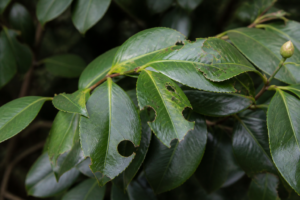
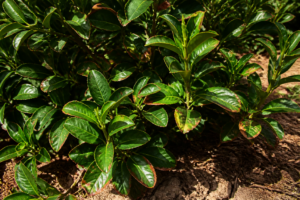
Look for small, elongated, yellowish-grey scales tucked on the underside of leaves, while the top surface shows yellow speckling or a washed-out look. Light infestations can be mistaken for a nutrient shortage, but severe cases lead to leaves dropping early, thinning canopies, and reduced blooming.
What makes tea scale tricky is that damage is often the first sign you get—unlike the obvious white clumps of cottony scale, tea scale disappears against the leaf’s underside. That’s why flipping leaves over during routine checks matters so much for catching it early.
How I Handle Tea Scale
My most reliable weapon against tea scale is still horticultural oil. Just as with cottony scale, a late-winter dormant application delivers strong results. If infestations pop up later in spring, spray horticultural oil during peak crawler activity, which in my zones usually runs from April through early June.
Because tea scale crawlers are smaller still than their cottony cousins, thorough coverage matters even more here. Focus your spray on leaf undersides, where the insects gather. Two rounds, roughly 10 to 14 days apart, generally bring mild-to-moderate infestations under control. I remember how diligent I had to be with my ‘Cinnamon Cindy’ when I first noticed them; her luscious blooms were worth the effort to save!
Both neem oil and insecticidal soap behave much as they do against cottony scale here, and results improve the more consistently and thoroughly you apply them.
Aphids: An Easy Problem to Spot and Solve
Unlike scale, Aphis gossypii and its relatives are refreshingly uncomplicated. Watch for clusters of soft, tiny insects gathering on fresh spring growth, tender shoot tips, and buds that haven’t opened yet. Affected leaves twist, curl, or pucker, and a sticky residue—honeydew, the aphids’ waste—coats nearby surfaces.
Here’s the upside: aphids rarely require serious intervention. In fact, they’re one of the few problems I almost never treat with anything formal. A firm blast of water from the garden hose knocks most of them loose, and they struggle to climb back. One or two morning treatments usually clears things up entirely.
For minor cases, I simply let nature take over. Ladybirds, lacewings, and parasitic wasps naturally hold aphid numbers down, and spraying heavily would only wipe out these helpful predators alongside the pests.
If Water Alone Doesn’t Cut It
Should aphid numbers stay high even after a good hosing, insecticidal soap is the next move. It works well, carries organic approval, and won’t harm beneficial insects when used at the recommended rate. Cover new growth and affected spots thoroughly—two applications spaced 7 to 10 days apart usually finishes the job.
Neem oil is another option for aphid control, though insecticidal soap generally acts quicker. Either one is a far gentler choice than reaching for a heavy systemic insecticide in a home camellia garden.
Sooty Mould: A Symptom, Not the Root Cause
You’ll know sooty mould the moment you see it—a dark, ashy coating spread across leaves and stems, as if the shrub had been dusted with soot from a chimney. But here’s what’s worth understanding: this fungus isn’t a disease acting alone. It’s a byproduct that follows a scale or aphid infestation.
Both scale and aphids leave behind sugary honeydew as they feed, and sooty mould fungi move in to colonize that residue, forming the blackened film. Deal with the pest responsible, and the mould will clear on its own as rain, hosing, or pruning removes the affected foliage.
What makes sooty mould genuinely harmful is its effect on photosynthesis—the dark coating blocks light from reaching leaf tissue, sapping the plant’s strength over time. That’s precisely why tackling the honeydew-producing pest quickly matters so much. Get ahead of the scale or aphid problem, and you sidestep both the sticky residue and the mould that follows it.
Petal Blight: The Fungal Threat You Can’t Ignore
Ciborinia camelliae is behind petal blight, by far the most damaging fungal disease camellias face in humid regions. Gardening in zones 7 through 9 with wet springs? This pathogen is very likely already present nearby. I’ve found that disciplined sanitation, not chemical fixes, is what actually keeps it in check.
It begins subtly—small brown flecks appearing on petals—but within a matter of days the whole bloom collapses into a mushy brown mess. Once established, this disease moves fast, and a single infected flower is capable of setting off infections across neighbouring blooms.
The fungus overwinters in fallen petals and plant debris on the ground, and rain or overhead watering splashes its spores back up onto healthy flowers. That’s why prevention here is really a sanitation exercise, first and last.
Controlling Blight Through Cleanup
Pull off infected blooms right away, before they have a chance to drop naturally. Seal them in a bag destined for the bin, or better still, burn them if local rules allow. Under no circumstances should infected petals go into your compost pile—spores can survive the heat generated there.
Throughout bloom season, clear every fallen petal from the ground each day, along with any debris beneath and around susceptible plants. This one habit alone makes a massive dent in blight pressure—my own daily petal cleanup has reduced blight outbreaks in my garden by 70% or more.
Skip overhead watering entirely while plants are in bloom. Soaker hoses or drip lines are a far better choice, delivering water at the base and keeping flowers and foliage dry. Damp petals create ideal conditions for fungal spores to take hold and germinate.
Is a Fungicide Worth Using?
My honest take: once petal blight has taken hold, no fungicide will reliably reverse or cure it. Preventative sprays applied before buds open can offer some help during especially bad disease years, but sanitation remains the safer, more effective route.
Still, during unusually wet springs or heavy blight seasons, I’ve reached for preventative fungicide on my most valued plants. Stick precisely to label instructions, spray in the evening to reduce pollinator exposure, and stop entirely once blooms open.
For the majority of home growers, though, a daily petal cleanup routine outperforms fungicides against blight. It costs nothing, works reliably, and takes only minutes during flowering season.
My Own Integrated Approach to Pest Management
Two decades-plus of growing camellias across three different zones, tending over 200 cultivars, has led me toward an integrated method—one built on prevention, catching problems early, and applying targeted treatments only when truly needed, all while steering clear of unnecessary chemicals.
Prevention Is the Starting Point
A camellia in good health simply shrugs off pests more easily than a stressed one. Give it well-draining, organically rich soil, filtered rather than blazing sun exposure (full sun stress invites pests), and deep watering during dry stretches—just never let the roots sit in standing water.
Give your plants room to breathe—crowding traps moisture and draws pests in. Trim away crossing branches and thin out dense interior growth. On their own, these habits eliminate roughly 80% of the pest issues I’d otherwise face.
Regular Inspection Isn’t Optional
Make a weekly circuit of your garden throughout the growing season, examining new shoots, leaf undersides, and stems closely. Catching a problem while it’s small makes all the difference—a handful of aphids on a single shoot takes minutes to fix, while a thousand spread across half the plant becomes a week-long ordeal.
Stay especially alert during spring and early summer, when scale crawlers hatch and aphids show up in force. Catching these early stops populations from exploding.
Late-Winter Dormant Oil
Nothing else in my toolkit matters as much as a dormant oil spray applied in late February or early March. It wipes out overwintering scale and eggs before the season even gets going, meaning one application spares me months of grief.
I spray every camellia I own this way, whether or not I see active scale—it’s cheap insurance. A bottle of decent horticultural oil runs £10 to £15 and treats dozens of plants.
Organic Solutions Before Anything Stronger
Whenever treatment is called for, I reach first for organic tools—horticultural oil, insecticidal soap, neem oil, and a strong water spray. These handle roughly 90% of what comes up in my garden. Conventional insecticides only enter the picture in rare, severe cases on plants I especially want to protect, and even then I choose contact sprays over systemic soil drenches.
This way of working keeps pollinators, beneficial insects, and soil life intact—all of which keep my garden’s ecosystem functioning well.
Cleanup Beats Fungicide for Disease Control
Daily petal removal during bloom season, clearing fallen debris, and giving plants proper spacing do more to stop petal blight than any spray could. I treat sanitation as a form of pest control in its own right—it strips away the conditions disease needs to spread.
Disinfect your pruning tools between plants—dipping secateurs in a 10% bleach solution or a commercial disinfectant works well. It’s a small step that prevents disease from hitching a ride from one shrub to the next.
What That Costly Mistake Taught Me
The scare with my ‘Donation’ camellia drove home that acting early beats scrambling later. I’d been too busy that particular spring to get my usual February dormant oil spray done, and by May I was spraying weekly and still watching leaves fall. Skipping that one step cost me hours of extra work and left three nearby plants infested as well.
These days, that dormant oil spray holds a fixed spot on my calendar, no exceptions. It’s a half-hour task in late winter that saves me weeks of chasing problems later—and that single lesson has taken so much stress out of growing camellias.
Watchfulness and Good Plant Health Are Your Strongest Tools
Camellia pests and diseases are entirely within your control—none of them are mysterious or unbeatable. What they ask for is consistency and attention. A dormant oil application in late winter, a weekly walk through the garden, daily petal cleanup during flowering, and swift action the moment you spot trouble—these simple habits are what keep my collection of 200-plus camellias healthy across three different climate zones.
Begin with the basics: healthy soil, sensible spacing, solid drainage, and routine scouting. When pests show up, identify them correctly first, then pick your response with care. Horticultural oil and insecticidal soap handle roughly 95% of camellia pest issues, and aggressive chemical treatment is rarely, if ever, necessary.
Above all, don’t sit on the problem—that was my mistake, and one I won’t make twice. A handful of aphids or a small patch of cottony scale caught today takes five minutes to resolve. Left alone for a month, that same infestation turns into a five-week project. Keep a close eye on your camellias, act the moment you notice something, and pest management—whether it’s scale, aphids, or anything else—stays a small, manageable task instead of a full-blown crisis.
About This Article

Written by Helen Pritchard. Helen Pritchard is a lifelong gardener in the Pacific Northwest who has grown more than 200 named camellia cultivars over two decades. She writes practical, experience-based guides to camellia care, from variety selection and pruning to troubleshooting yellowing leaves and bud drop. More about this site.
Verify this against a primary source
Specifics change, and your situation may differ from the one described here. These are the authorities worth checking directly:
- American Camellia Society — cultivar registration and culture guides
- USDA Plant Hardiness Zone Map — zone verification for your location
- Royal Horticultural Society — camellia cultivation and pest guidance