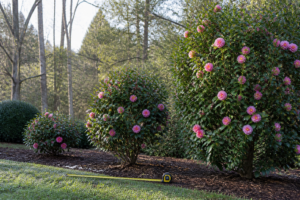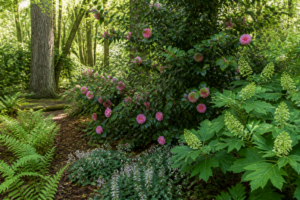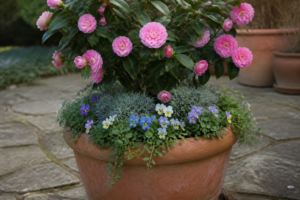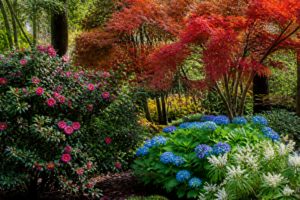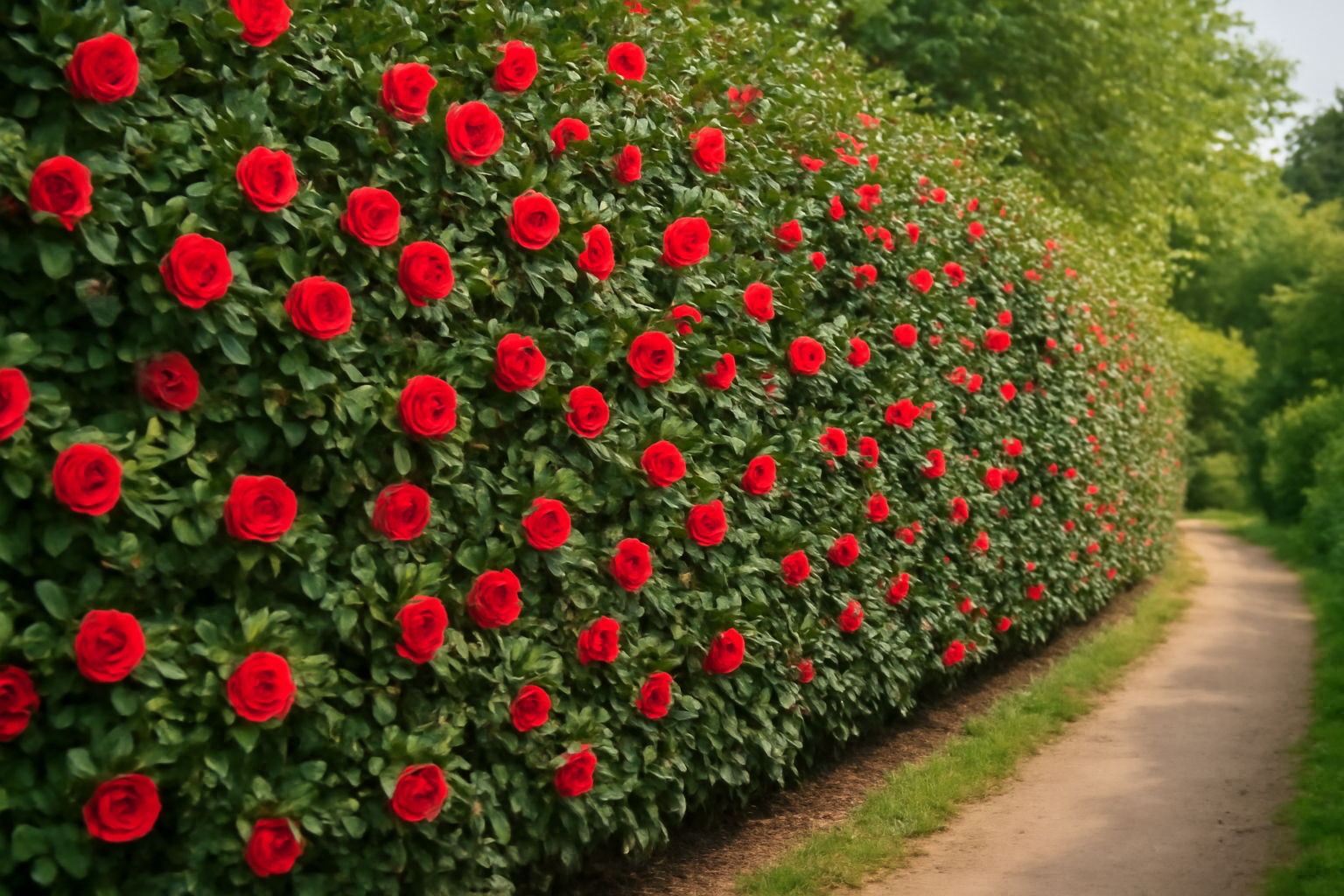
Back in the mid-2000s, I put a single ‘Kramers Supreme’ in the ground along a bare fence line, convinced it would somehow bulk up into a screen all on its own within a couple of seasons. It didn’t — not remotely, not without company, not without real planning. That gap in the fence stayed embarrassingly visible for years, and the fix taught me more about hedging with camellias than any book ever did. These days, when a neighbour glances over and asks how my garden manages to feel so enclosed and leafy while theirs sits exposed to every passing car, I point to the wall of dark green foliage along my eastern line and just say “camellias.” Most folks picture camellias as fussy potted specimens, not workhorse hedging material — but the right camellia hedge varieties will build you a tough, evergreen, genuinely gorgeous privacy screen. Two decades of trial, error, and the occasional lucky win later, here’s what I’ve actually figured out about using camellias this way.
What Makes Camellias Such Solid Hedge Candidates
Start with the fundamentals. These are broadleaf evergreens with a naturally tight, bushy growth pattern, and they keep their leaves through every season. That single trait puts them ahead of plenty of flowering hedge plants that go bare come winter and leave your boundary wide open.
From what I’ve seen firsthand, a mature camellia hedge doubles as a windbreak, a sound barrier, and a haven for wildlife all at once. My Sasanqua row along the west fence has become a nesting spot for wrens every year — a perk I never planned for and wouldn’t give up now.
None of that means camellias suit every yard, though. They want soil on the acidic side — a pH somewhere between 5.5 and 6.5 — and they hate sitting in wet feet. You’ll also need patience, since the first two years of growth are sluggish at best. Once they’re settled in, though, most varieties push out 12 to 18 inches of new growth annually, without ever turning aggressive or hard to manage.
Sasanquas: The Species I Reach for First When Screening
Skip everything else in this post if you have to, but read this part. In my book, Camellia sasanqua is simply the best species for building a hedge — no qualifiers needed. Sasanquas outpace japonicas in growth speed, shrug off far more sun, flower in autumn and early winter when the rest of the garden has gone quiet, and take pruning cuts without complaint.
I keep a handful of Sasanqua cultivars specifically for screening jobs. ‘Setsugekka’ is the one I lean on most. Large semi-double white blooms with ruffled edges appear from October into December, and the upright, vigorous habit gets you height fast — mine went from a two-gallon container to a solid six feet in just four years.
‘Yuletide’ earns its place too. It stays tighter and more compact than Setsugekka, showing off vivid red single flowers with bright yellow centres. I reserve it for the lower tiers of a mixed hedge, where I want to hold the height around four to five feet. It’s also among the toughest, cold-wise, of the Sasanquas I grow — it hasn’t let me down yet in my Zone 7b beds.
Want something with a gentler, more relaxed look? ‘Cleopatra’ fits the bill. Its stems arch naturally and carry semi-double pink flowers. I’ve woven it along a post-and-wire frame beside my driveway, and it’s paid off handsomely — the arching branches knit together over the years into something genuinely lovely.
Where and How Sasanquas Handle the Cold
As a rule, Sasanquas do best in USDA Zones 7 through 10. Most shrug off brief drops to roughly 10°F (-12°C), although a hard freeze can wreck the flower buds even if the plant itself survives fine. In my own Zone 7b garden, I tuck Sasanqua hedges against south- or west-facing walls, where the reflected warmth buys them a bit of extra protection.
Their appetite for sun is a real strength. Japonicas can’t take it, but Sasanquas will happily sit through four to six hours of direct sun daily without scorching. That makes them the better pick for exposed boundary lines that would leave a japonica hedge struggling.
Standout Japonica Choices for Hedge Rows
Growing a japonica hedge is an entirely different exercise. Growth comes slower and more measured, but what you get in exchange is a denser, more formal screen with far showier flowers. They also bloom later in the year — usually January through April — which stretches your garden’s interest deep into the tail end of winter.
When picking japonicas for hedging, I steer clear of the heavily bred show cultivars with their oversized blooms — save those for specimen spots. I’m after plants with a naturally upright, tight growth habit and blooms small or medium enough that they don’t drag the branches down.
The ‘April Series’ shines here. Bred purposefully for cold tolerance and an upright form, cultivars such as ‘April Kiss’, ‘April Blush’, and ‘April Snow’ hold up reliably down into Zone 6b with some winter protection. In my own Zone 8a beds, they’re about as trouble-free as camellias get. Because they grow in a naturally columnar shape, they need far less pruning to keep a neat hedge line.
More Japonicas That Earn a Spot in a Row
‘Survivor’ lives up to its name — it’s among the toughest japonicas out there, bred after coming through a brutal Georgia winter that took out a good number of other cultivars. I grow it in the coldest bed on my property, and it hasn’t skipped a February yet, turning out medium-sized red flowers like clockwork.
‘Mathotiana’ has been a hedging staple for generations, and it’s easy to see why — strong upright growth, dramatic double crimson flowers, and enough visual weight to make a real statement along a property line. The trade-off is that it demands regular pruning to look tidy. I cut mine back right after it finishes flowering each spring, a process I go into more fully in my post on pruning camellias for shape and size.
Looking for something a bit unexpected? ‘Kramers Supreme’ brings fragrance — rare among japonicas — plus bold red, peony-shaped flowers. It grows at a middling pace and takes hedging cuts well. I’ve found it makes a striking pairing with the white-flowered ‘Nuccio’s Gem’, alternating red and white along a hedge for a dramatic late-winter effect.
What Getting Spacing Wrong Taught Me
Here’s my biggest hedging blunder, shared so you can skip repeating it. When I put in my very first camellia hedge back in 2006, I set the plants a mere four feet apart. For years, the row looked thin and gappy, so the next spring I squeezed in extras between them — and by the following decade, the whole thing was jammed together, plants fighting each other for light and nutrients.
Proper spacing hinges on the variety you’re using and how tall you want the finished screen. For a Sasanqua screen reaching six feet or taller, I now space plants five to six feet apart, measured centre to centre. For compact japonicas aimed at around four feet, three to four feet apart does the job. Trust the numbers — the gaps close up faster than you’d guess once the roots take hold.
Don’t give in to the temptation to crowd plants for a quicker-looking result. I get the impulse. But tight spacing chokes off air circulation, and that’s an open invitation to fungal issues like petal blight and sooty mould. Give the roots and branches breathing room.
Williamsii Hybrids and Other Crosses Worth Screening With
Don’t skip past the williamsii hybrids and other modern crosses when you’re weighing hedge options. These often outperform both parent species on disease resistance, cold tolerance, and tidiness. As a bonus, spent blooms drop off cleanly on their own — no deadheading required.
‘Donation’ is a well-known williamsii hybrid I’ve kept as an informal screen for more than ten years now. It produces a flood of semi-double orchid-pink flowers between February and April and settles into a naturally rounded, full shape. Left completely unpruned, mine grew into a soft screen roughly six feet tall and five feet wide over eight years.
‘Jury’s Yellow’ stands out as unusual — a williamsii cross carrying creamy yellow centres inside white blooms. It stays more compact than Donation, which suits it well for shorter screens or hedges along the front boundary. I’ve also found it handles somewhat heavier soil better than expected, as long as drainage isn’t truly poor.
If you’re gardening at the coldest fringes of camellia territory — Zone 6b, or even Zone 6a with some shelter — it’s worth digging into the Ice Angels series and ‘Winter’s Star’ (a C. oleifera hybrid). I haven’t grown enough of either myself to vouch for them personally, but growers further north report good results.
Prepping Your Soil Properly Before Anything Goes in the Ground
Whichever camellia hedge varieties you settle on, soil prep will do more to decide your outcome than variety selection ever will. I’ve watched gorgeous cultivars fail outright in poorly prepped ground, and unremarkable ones flourish purely because the soil was right.
Check your soil’s pH before you plant anything — don’t skip this. A basic home kit or a lab test will tell you exactly where things stand; you’re aiming for 5.5 to 6.5. Push above 6.5 and camellias start struggling to take up iron and manganese, which shows up as yellowing leaves, or chlorosis. Sulphur can nudge pH downward over time, but it’s much simpler to handle this before you ever put a plant in the ground.
Dig in plenty of pine bark, composted pine needles, or ericaceous compost along the whole length of the hedge line — not just in isolated planting holes. Camellia roots run wide and shallow, and within a few years they’ll have spread well past any single amended hole. I typically dig a trench about two feet wide and 18 inches deep down the entire run, amending the full stretch before a single plant goes in.
Keeping a Hedge Fed and Mulched
Feed established hedges with an ericaceous or azalea fertiliser right as new growth kicks in each spring — that’s usually March in Zone 8 and closer to April in Zone 7. Stop feeding after July; feeding late pushes out soft new growth that’s an easy target for early frost.
Mulch heavily, but keep it clear of the stems themselves. I lay pine bark three to four inches deep along the whole hedge run. It holds moisture, keeps weeds down, and gradually acidifies the soil as it breaks down — three jobs done by one simple task each year.
Getting the Timing Right When Pruning a Hedge
A lot of gardeners shy away from hedging camellias out of worry over pruning them wrong. In truth, camellias take cutting back extremely well — timing is the only real variable that matters. Always prune right after flowering finishes, never beforehand, and never in late summer.
For Sasanqua hedges, that puts pruning in December or January, once the autumn bloom flush wraps up. For japonicas, it’s usually March or April. Cutting at these points gives the plant the full growing season ahead to set next year’s flower buds before dormancy sets in. Don’t be shy about cutting into last year’s wood — camellias sprout readily from old growth.
I rely on long-handled loppers for the broad shaping work and sharp bypass secateurs for the finer details. Electric hedge trimmers work fine for a light tidy-up on Sasanquas, though I stick to hand tools on japonicas, where I’m choosier about exactly which branches come off. For a more thorough breakdown of technique, I’ve written a complete guide on how and when to prune camellias.
A Quick-Reference Rundown of My Favourite Hedge Varieties
To keep this useful, here’s a condensed version of my personal picks, sorted by what you’re trying to achieve:
- Quick tall screen (6ft+): ‘Setsugekka’ (Sasanqua) — vigorous, upright, white flowers, blooms in autumn
- Low, compact hedge (4-5ft): ‘Yuletide’ (Sasanqua) — red, neat habit, cold-hardy to Zone 7
- Formal hedge with winter blooms: ‘April Kiss’ or ‘April Blush’ (Japonica) — upright, hardy to Zone 6b
- Relaxed, informal screen: ‘Donation’ (Williamsii hybrid) — pink, self-cleaning, naturally full form
- Dramatic statement hedge: ‘Mathotiana’ (Japonica) — crimson, bold, formal once pruned
- Best bet for cold climates: ‘Survivor’ (Japonica) — red, dependable, proven in Zone 7b
Wrapping Up: Settling on the Right Hedge Varieties
Picking the right camellia hedge varieties really boils down to three questions: What USDA zone are you gardening in? What height do you actually need the screen to reach? And how much sun will the site get? Be honest with yourself on all three, and the shortlist practically assembles itself.
Sasanquas bring speed, sun tolerance, and a burst of autumn colour. Japonicas bring formality, springtime drama, and dependable structure. Williamsii hybrids give you a bit of both, provided your climate cooperates. Choose a variety suited to your conditions, get the soil right from the start, and your camellia hedge will keep performing for decades to come.
About This Article

Written by Helen Pritchard. Helen Pritchard is a lifelong gardener in the Pacific Northwest who has grown more than 200 named camellia cultivars over two decades. She writes practical, experience-based guides to camellia care, from variety selection and pruning to troubleshooting yellowing leaves and bud drop. More about this site.
Verify this against a primary source
Specifics change, and your situation may differ from the one described here. These are the authorities worth checking directly:
- American Camellia Society — cultivar registration and culture guides
- USDA Plant Hardiness Zone Map — zone verification for your location
- Royal Horticultural Society — camellia cultivation and pest guidance