An unseasonably long gray spell settled over my zone 8 garden in early January this past winter, and for almost ten days straight, the only real color anywhere on the property came from a single ‘Yuletide’ clinging to its last few blooms. Everything else had either finished or hadn’t started yet. That gap taught me something I should have already known: winter color in a camellia bed doesn’t happen on its own — it has to be assembled, month by month, using varieties that hand the show off to one another as the season moves along. Camellias are uniquely built for this kind of relay. These evergreen shrubs keep flowering while nearly everything else has shut down for the year. Get the lineup right, and you can string blooms together from autumn clear through into early spring.
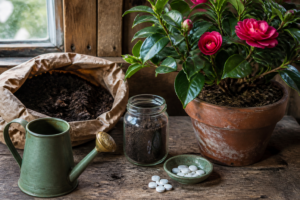
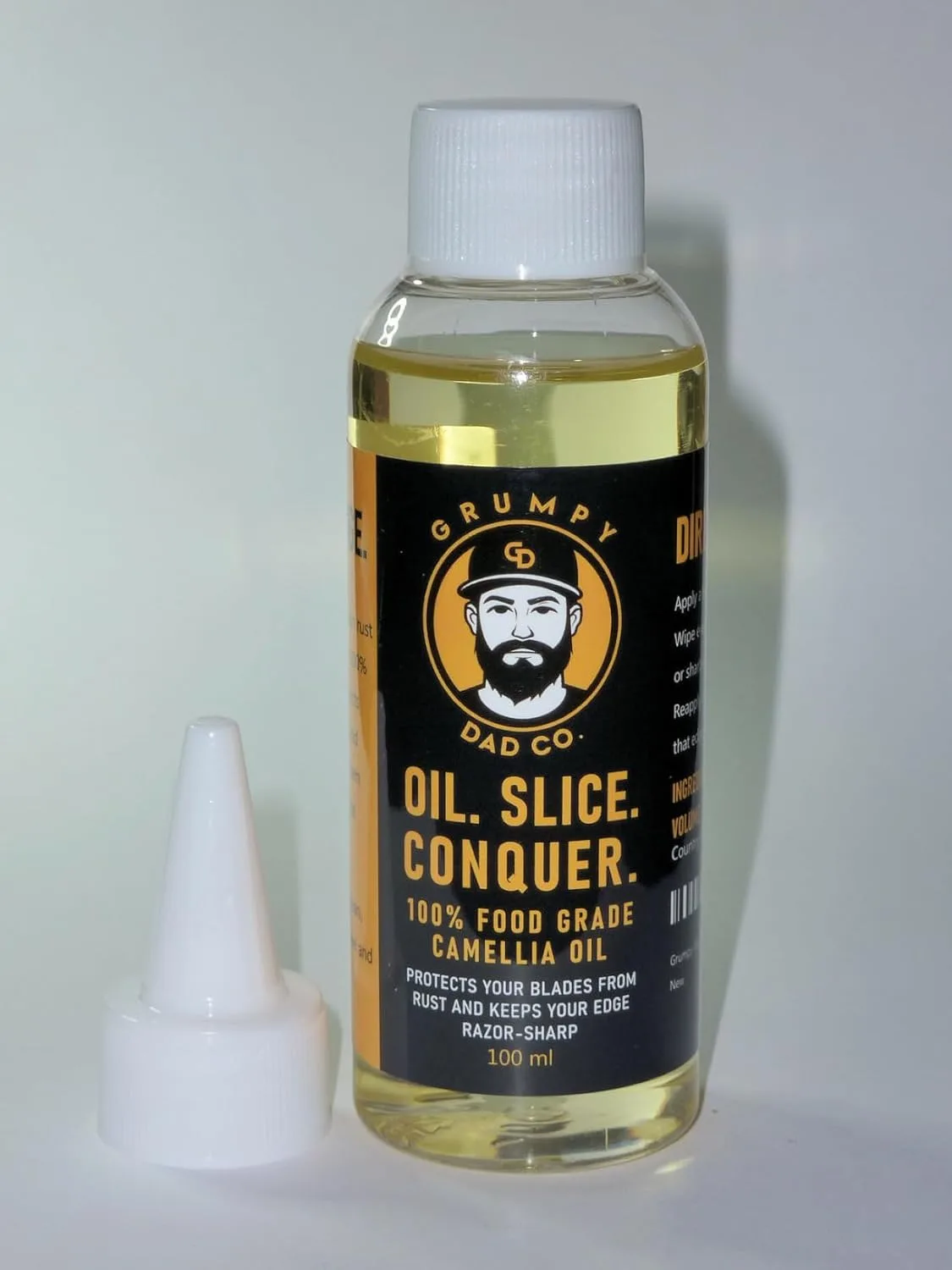
Niwaki Camellia Oil provides natural protection and shine for camellia leaves, helping maintain their glossy appearance while protecting against pests. Niwaki Camellia Oil 100ml.
Getting this right comes down to matching bloom windows. Not every camellia flowers on the same calendar — timing shifts by type. The two workhorses of cold-season color are Camellia sasanqua, which opens in fall and carries into early winter, and Camellia japonica, which takes the baton through the heart of winter and into early spring. Combine both deliberately and you end up with one continuous run of flowers instead of scattered bursts. What follows is a month-by-month rundown of the varieties worth planting.
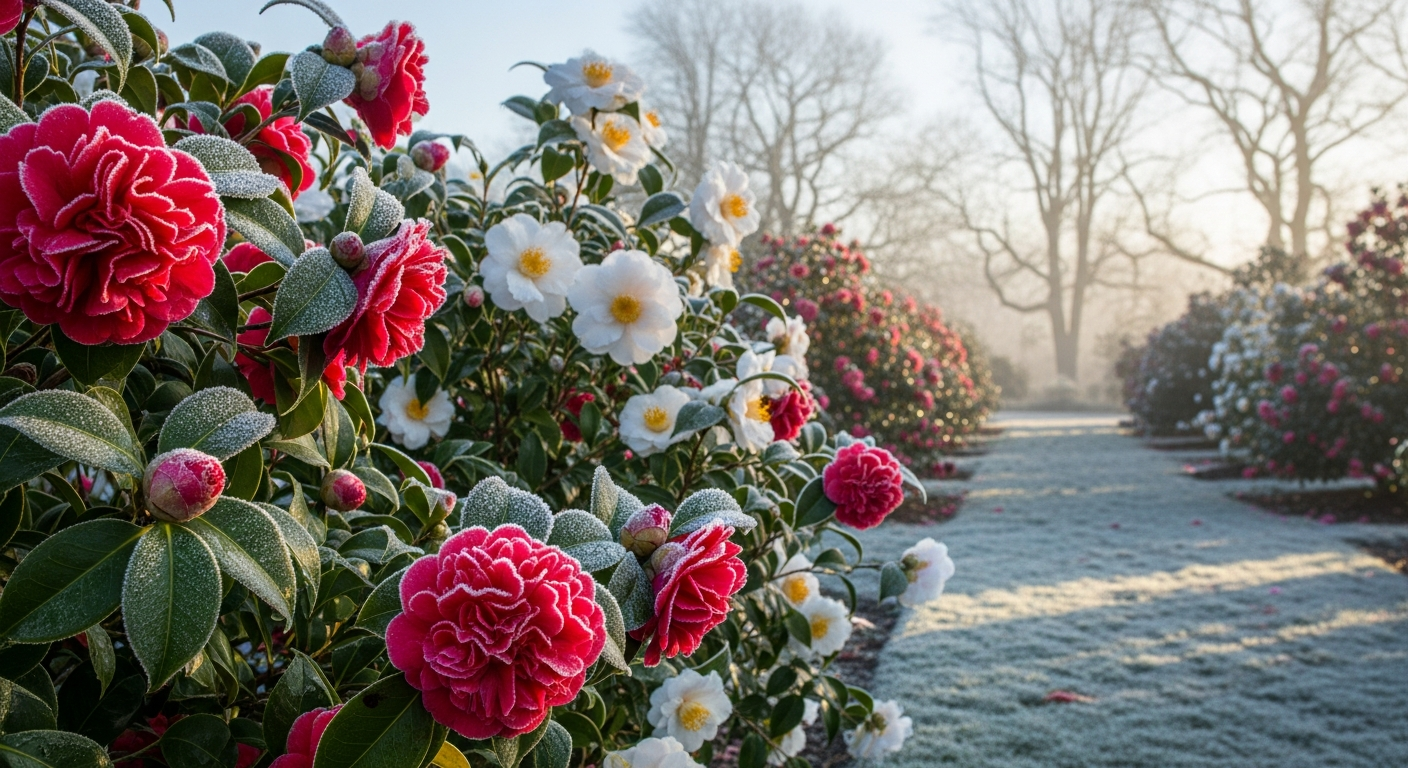
October and November: Where Winter Color Begins
The season’s opening act belongs almost entirely to Camellia sasanqua. These early risers produce delicate, frequently scented flowers and grow in a looser, more sprawling form than the japonicas that take over later. They also handle direct sun better than their spring-blooming relatives, which makes them flexible enough to fit into spots where japonicas would struggle.
Varieties Worth Planting for This Stretch
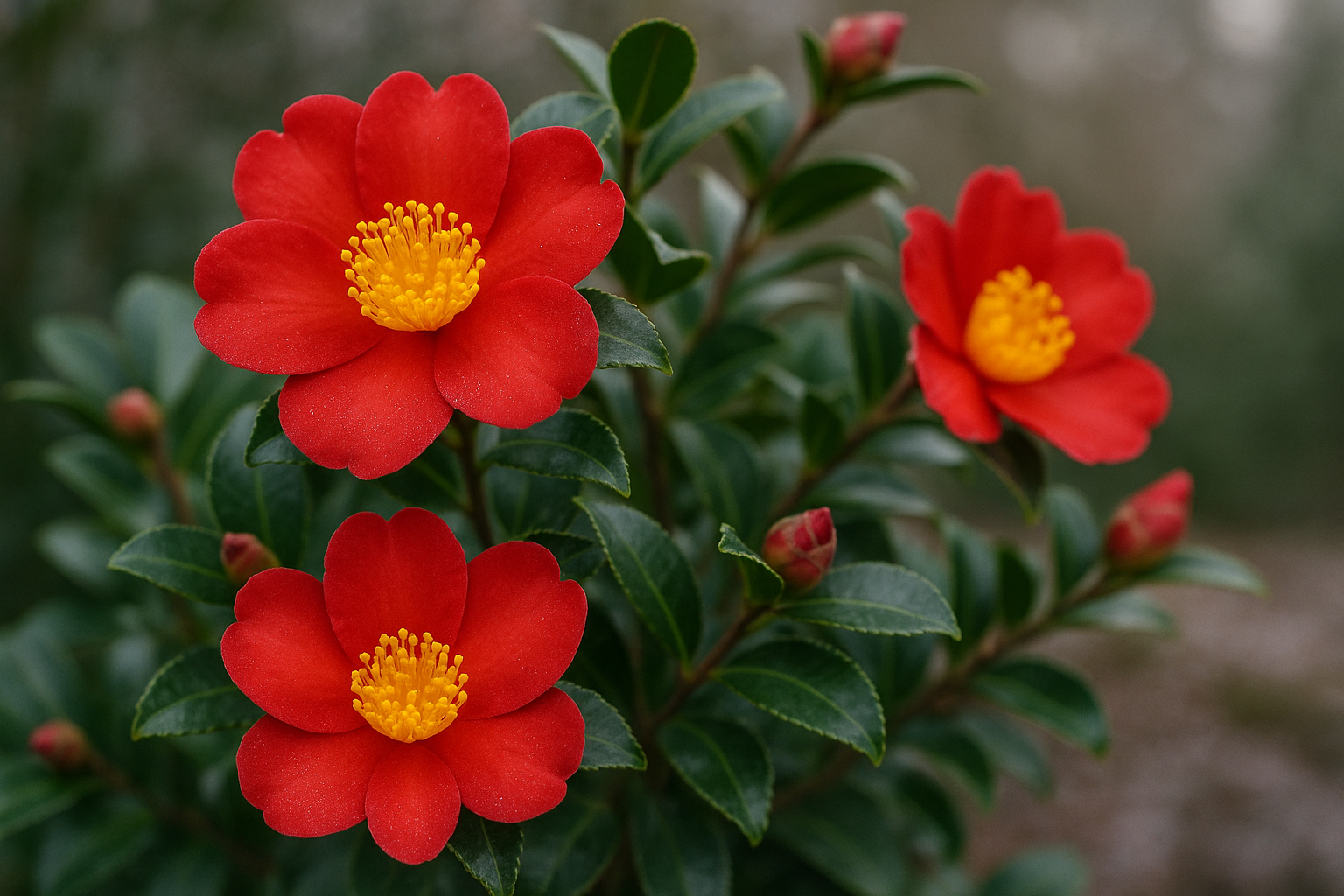
- ‘Yuletide’ Camellia: A seasonal standby, and for good reason. Single, fire-engine-red petals wrap around bright yellow stamens for a bold, simple flower. The plant stays compact and dense, so it works equally well in a container or tucked against a foundation, and its bloom timing usually lines up nicely with the holidays before running on into December.
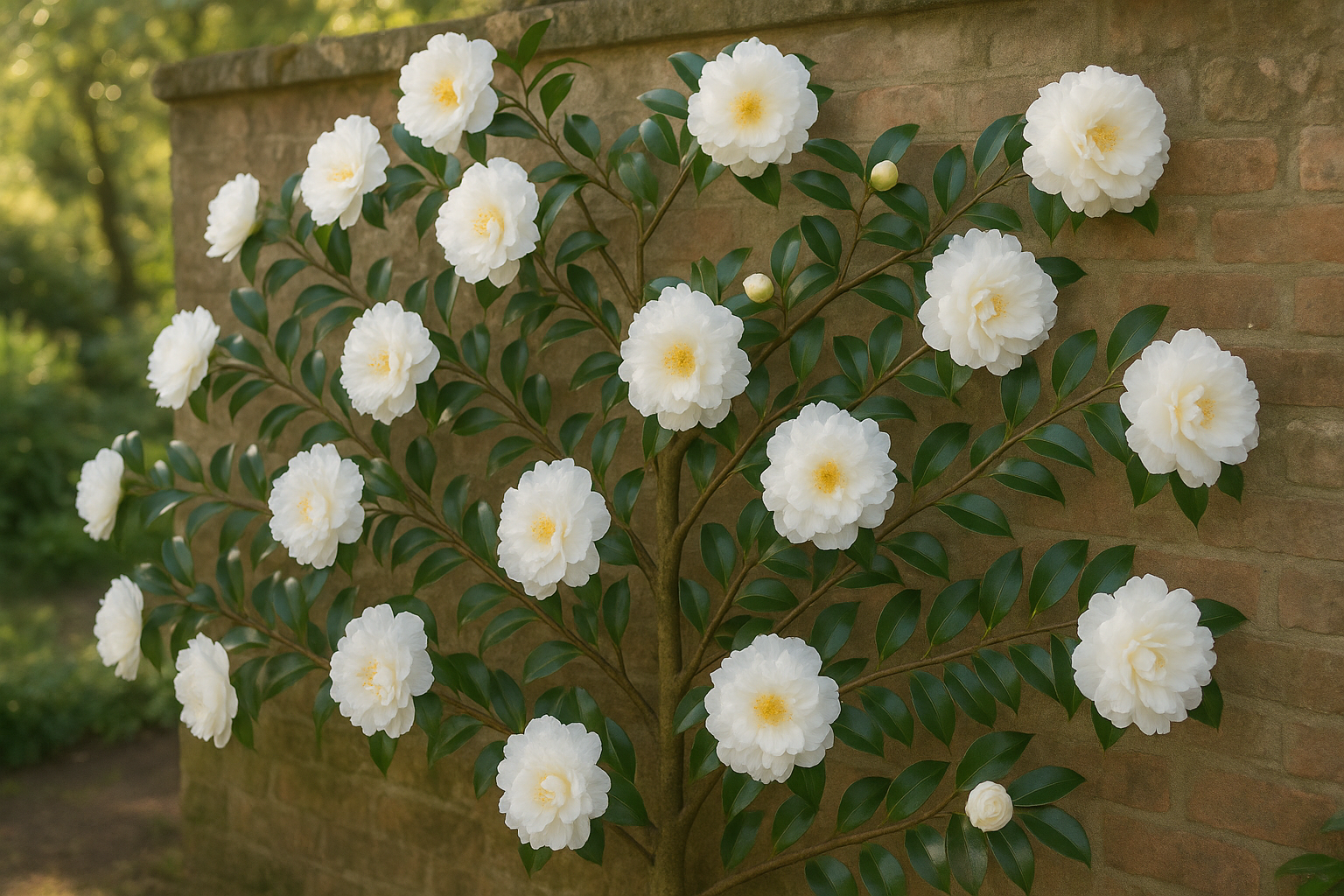
- ‘Setsugekka’ Camellia: For something more refined, this cultivar delivers large, semi-double white flowers with ruffled edges and a genuine fragrance. It’s a vigorous grower that takes well to espalier training against a wall, or can simply be left to fill in as a dense evergreen screen.
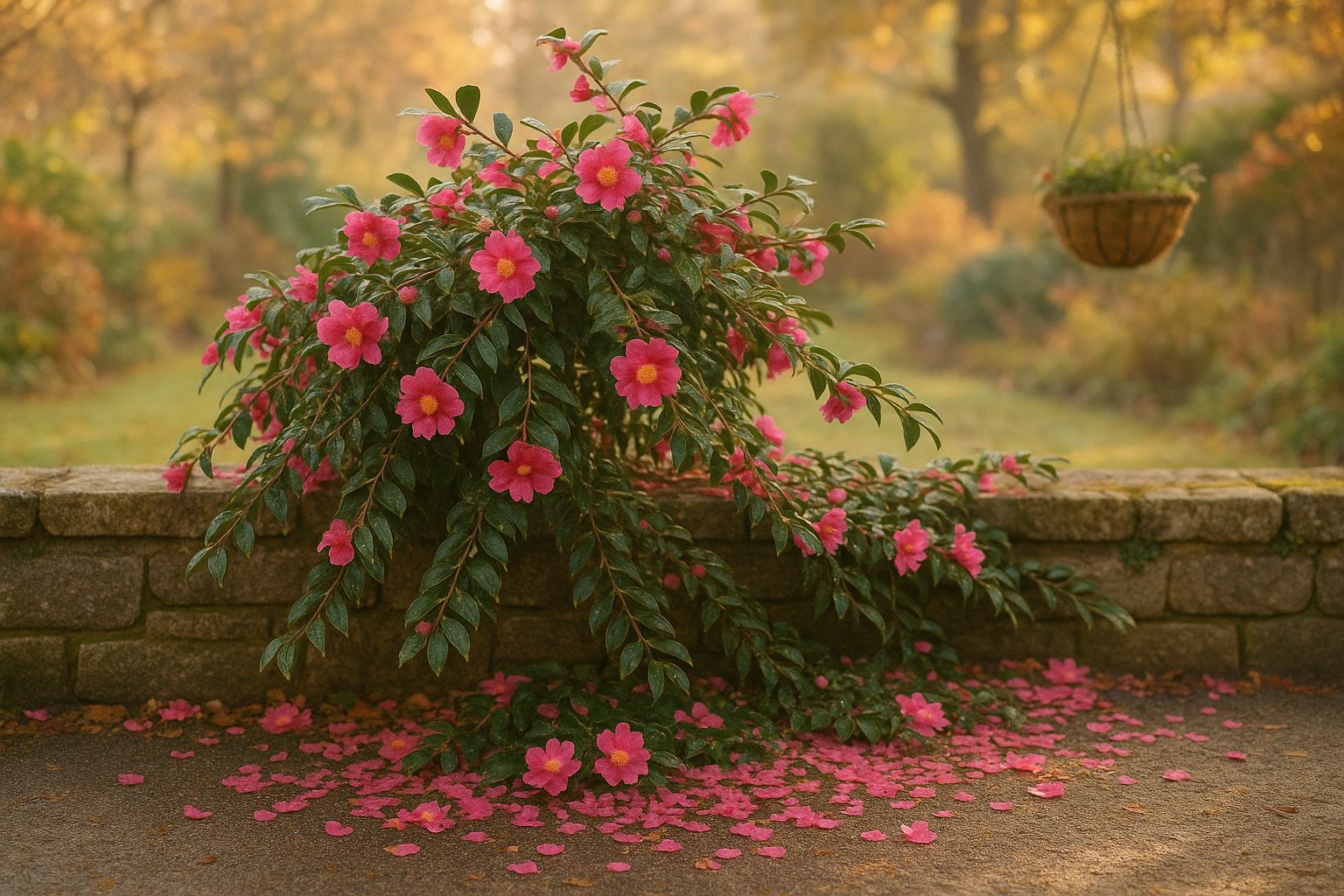
- ‘Shishi Gashira’ Camellia: A low, spreading variety with hot-pink, semi-double blooms. Its trailing habit suits ground-cover duty, spilling over a low wall, or even a hanging basket. It flowers heavily and dependably, adding real brightness to the tail end of autumn.
December: The Handoff Month
December sits right at the crossover between sasanqua and japonica season. Late bloomers like ‘Yuletide’ are often still going strong, while the earliest Camellia japonica varieties may already be cracking open their buds, particularly where winters run mild. It’s a month that blends both forms and colors in the same garden bed.
Cold-weather care matters more now than at almost any other point in the year. Keep a solid layer of mulch — pine straw or bark chips work well — around the root zone to buffer against freezing temperatures. Don’t neglect watering, either, especially through dry stretches; give plants a deep, infrequent soak rather than frequent shallow drinks, and avoid letting the soil stay waterlogged. Sheltered spots — against a house wall or beneath the canopy of taller trees — give the flowers extra cover from winter’s harsher moods.
January: Camellia Japonica Takes the Stage
By January, Camellia japonica has fully taken over the show. Source Compared to sasanquas, these varieties tend toward larger, more elaborate flowers. They do best with some shade, which spares the foliage from winter sun scald and keeps frost from damaging open blooms. The range of forms on offer is wide — everything from simple single petals to dense, peony-like doubles.
Varieties That Shine This Month
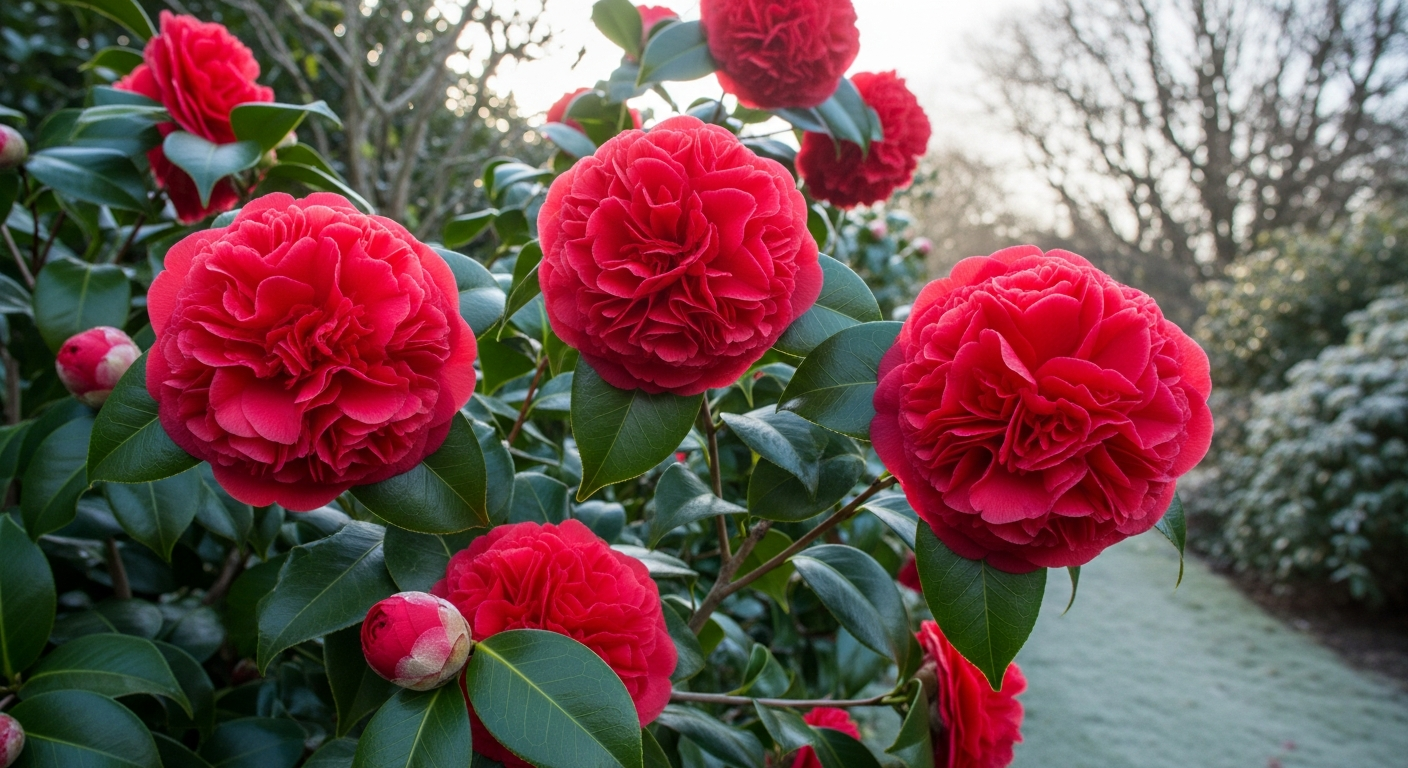
- ‘Kramer’s Supreme’: For maximum impact, look no further. This one produces oversized, peony-form flowers in a deep crimson, and unlike most winter camellias, it carries a noticeable fragrance. It’s a sturdy, vigorous shrub capable of a genuinely dramatic mid-winter show.
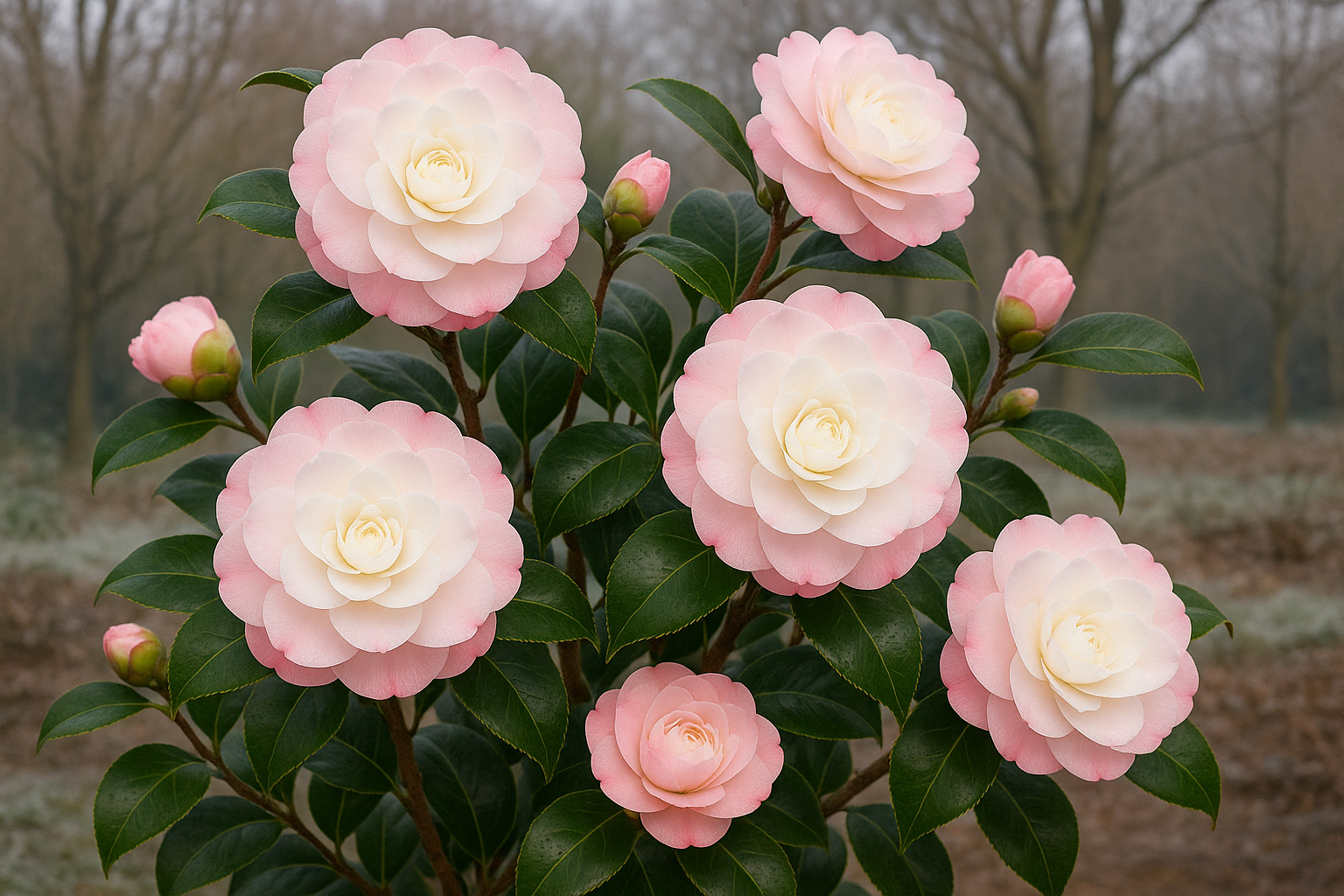
- ‘Nuccio’s Pearl’: A gorgeous variety with fully double flowers that open blushed pink at the outer edges and fade toward a pure white center. The form reads as formal and precise, and the contrast it creates against the winter landscape also makes it a favorite for cut arrangements.
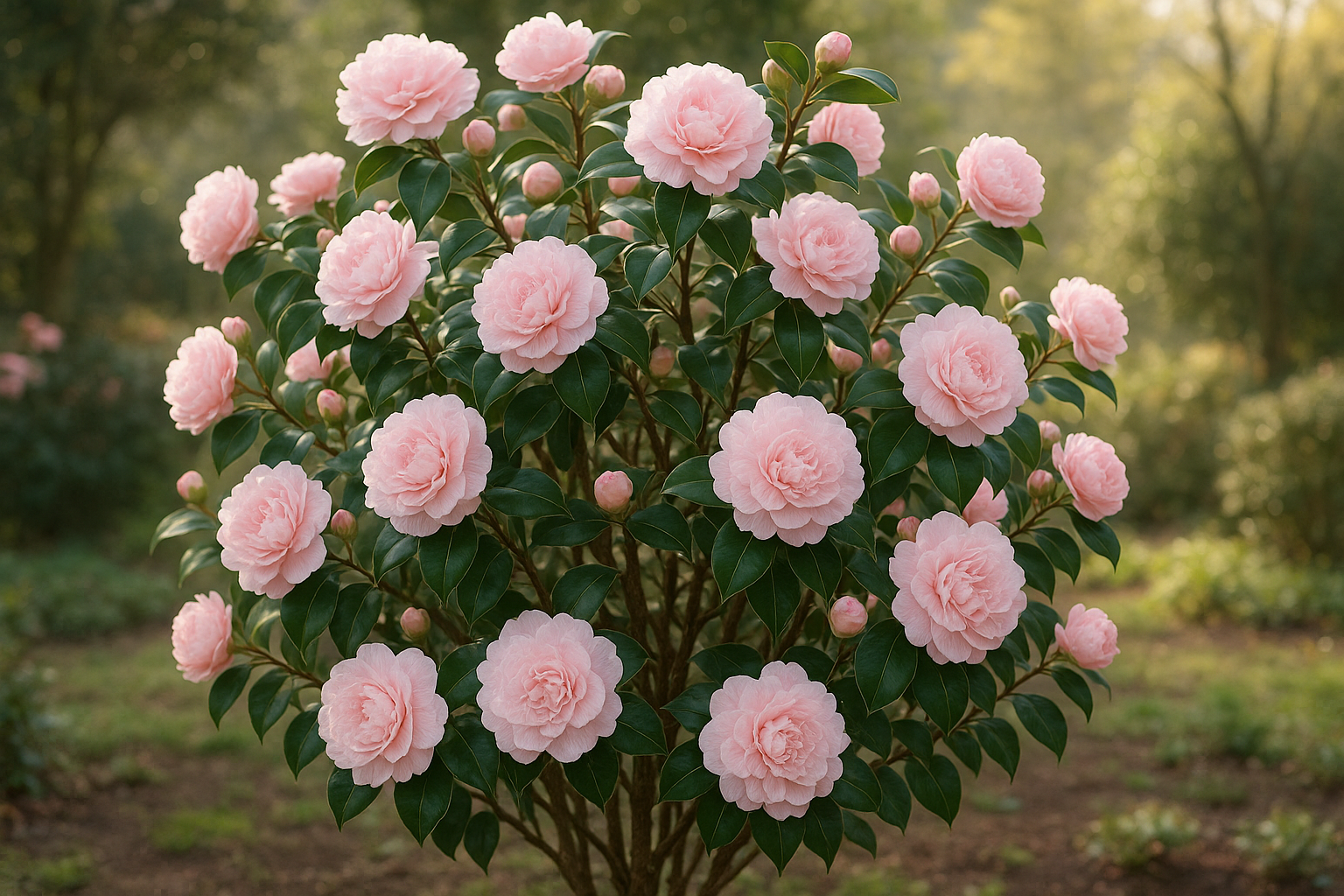
- ‘Debutante’: A dependable classic, producing large, soft pink flowers built like peonies. It tends to bloom early-to-mid season, often getting started in January, and its upright, vigorous frame makes it a solid pick for a hedge or a standalone specimen.
February and March: Peak Bloom Season
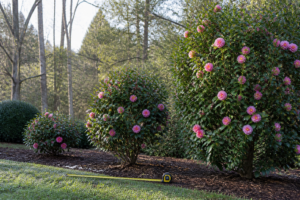
By the time winter starts loosening its grip, the camellia display hits full stride. February and March bring an enormous number of Camellia japonica cultivars into flower at once. Longer days and marginally milder temperatures push out a flush of blooms, making this the most colorful window of the whole season, thick with whites, pinks, and reds.
But just as the cold starts to loosen its hold and spring seems within reach, camellias tend to be at their showiest — which is exactly when a rogue late-season frost can undo weeks of buildup. Even hardy varieties carry open flowers and swollen buds that turn out to be surprisingly fragile once temperatures drop back below freezing after a stretch of warmth.
Why a Late Frost Does So Much Damage
- Fragile Petals: An open flower, full of moisture, freezes far more readily than a dormant bud ever would. The fallout typically looks like:
- Blackened Edges: Petal tips and margins discolor to brown or black.
- A Glassy Look: Blooms can turn watery or see-through, an effect that’s especially obvious on white varieties.
- Collapse: The whole flower goes limp and drops off well before its time.
- Bud Failure: Even closed buds aren’t safe — they can turn to mush or simply never open at all.
- Cost to the Display: One overnight frost can wipe out weeks of anticipated color, leaving a patch of ruined flowers where a display should be. A little protection goes a long way toward preserving the form and color camellias are supposed to deliver.
Core frost protection Techniques
Once a cold snap shows up in the forecast, moving quickly can rescue your flower show. The aim is simple: build a temporary insulating shell around each shrub.
- Watch the Forecast Carefully: Keep tabs on local weather updates, paying close attention to overnight lows and how long temperatures will sit below freezing. A genuine hard freeze — well under 28°F (-2°C) — calls for sturdier protection than a brief, light frost would.
- Water Beforehand: Plants that go into a freeze well-hydrated fare better. If the ground is dry, soak your camellias thoroughly the day before a predicted frost — moist soil holds and releases heat more effectively than dry soil, warming the air directly around the plant.
- Choose the Right Covering Material:
- Frost Cloth (Horticultural Fleece): This remains the top option. It’s light and breathable enough to let some air and light through while still holding warmth close to the plant. Most versions are reusable and come in several weights depending on how much cold you’re up against.
- Everyday Substitutes: Old sheets, blankets, burlap sacks, or a lightweight tarp will get you through in a pinch. Steer clear of plastic sheeting laid directly against the foliage — it traps moisture and can freeze onto the leaves, doing more harm than leaving the plant uncovered.
- How to Cover Your Camellias:
- Cover Without Crushing: Lay the material loosely over the entire shrub, letting it reach the ground where possible. You’re aiming for an igloo-style pocket that traps ground warmth. Don’t cinch the cover tight or press it onto the branches — that flattens the insulating air layer and risks snapping stems.
- Anchor the Perimeter: Weight the edges down with stakes, stones, bricks, or anything heavy enough to stop wind from lifting the cover and letting warm air escape. On bigger shrubs, rig a simple frame — stakes or a tomato cage will do — so the material doesn’t rest directly on the delicate blooms.
- Small Plants: An overturned cardboard box does the job for young or compact camellias. Just remember to pull it off first thing in the morning.
Removing the Cover the Next Morning
Covering the plants is only half the job — pulling the protection off at the right moment matters just as much.
- Time It Right: Wait until temperatures have climbed back above freezing and the sun is fully up before removing the cover. Leave it on too long on a bright day and you risk cooking the plant, which brings its own stress and damage.
- Get the Air Moving: Prompt removal restores airflow, which keeps fungal problems from taking hold in the damp, closed-off space underneath. It also lets the plant get back to photosynthesizing, which it needs for both health and continued flowering.
A handful of proactive habits like these can shield your camellias from the unpredictable swings of late-season frost, keeping their flowers on display far longer than they’d otherwise last.
Best Varieties for This Stretch
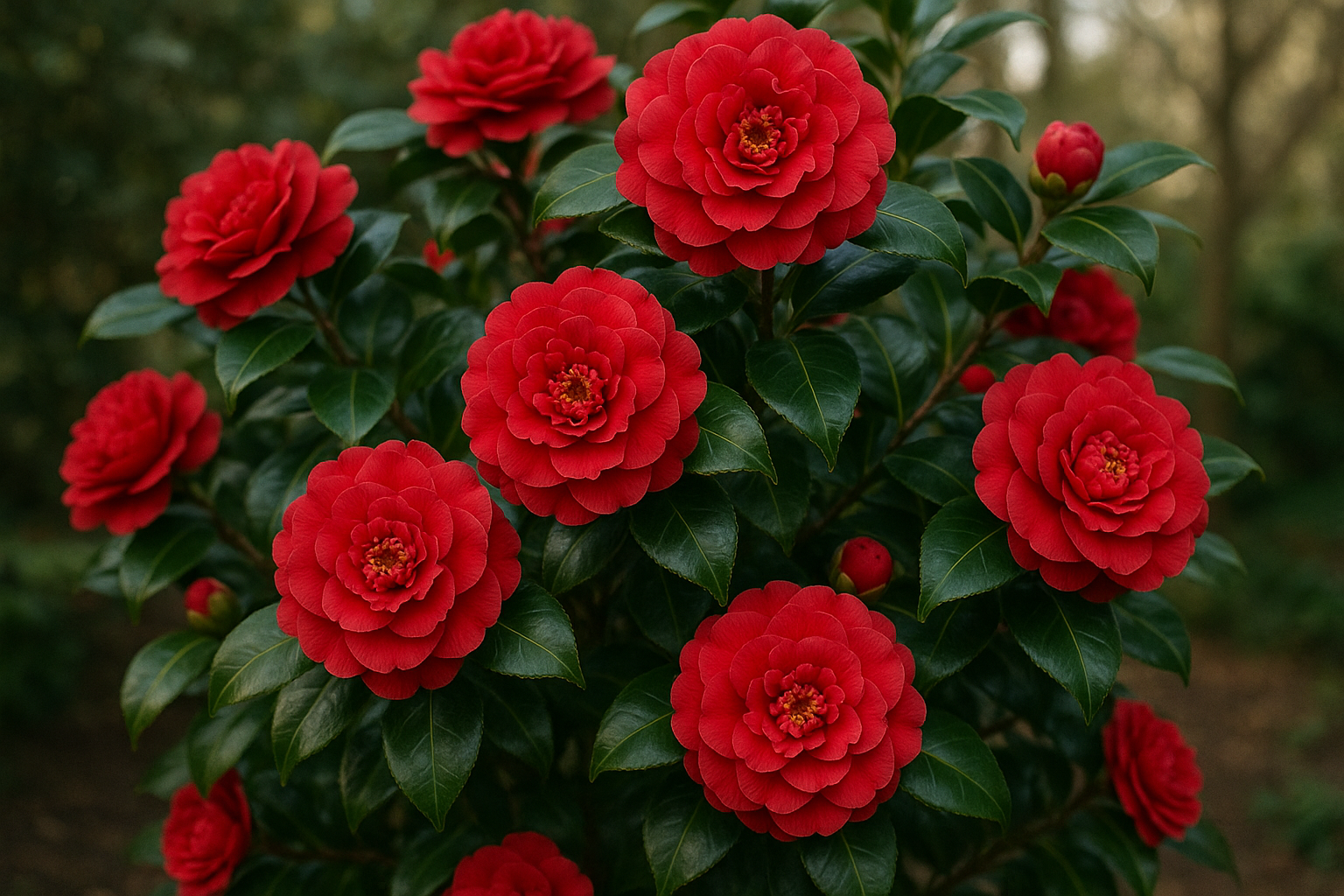
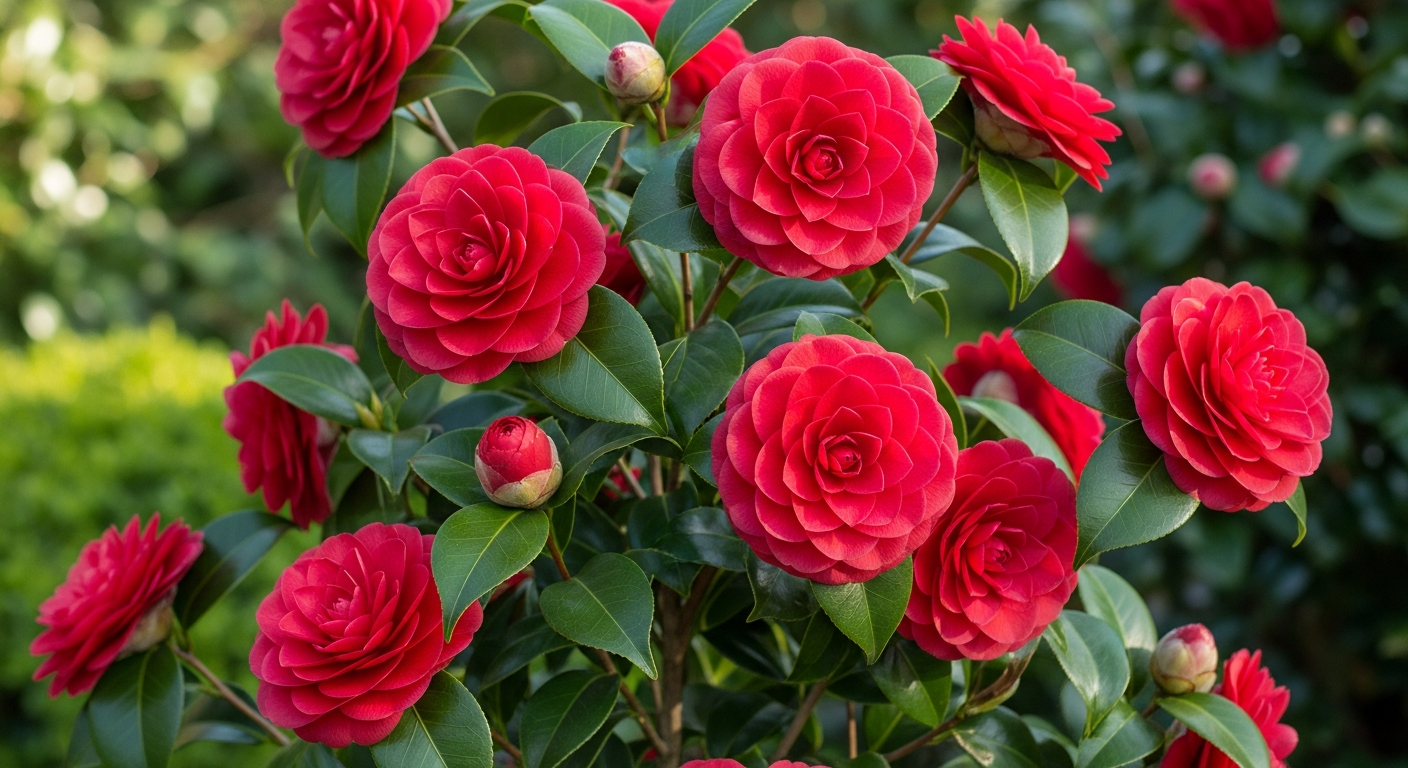
- ‘Professor Sargent’: A proven performer. Expect large, fully double, dark red flowers with a loosely arranged, almost anemone-like center. The plant is tough and blooms reliably year after year, and its deep, glossy leaves set off the bold flowers beautifully.
- ‘Magnoliaeflora’: For something softer, this cultivar offers semi-double, pale blush-pink flowers with real refinement. The bloom shape echoes a waterlily or magnolia — hence the name — and the shrub brings a graceful, understated quality to the late-winter garden.
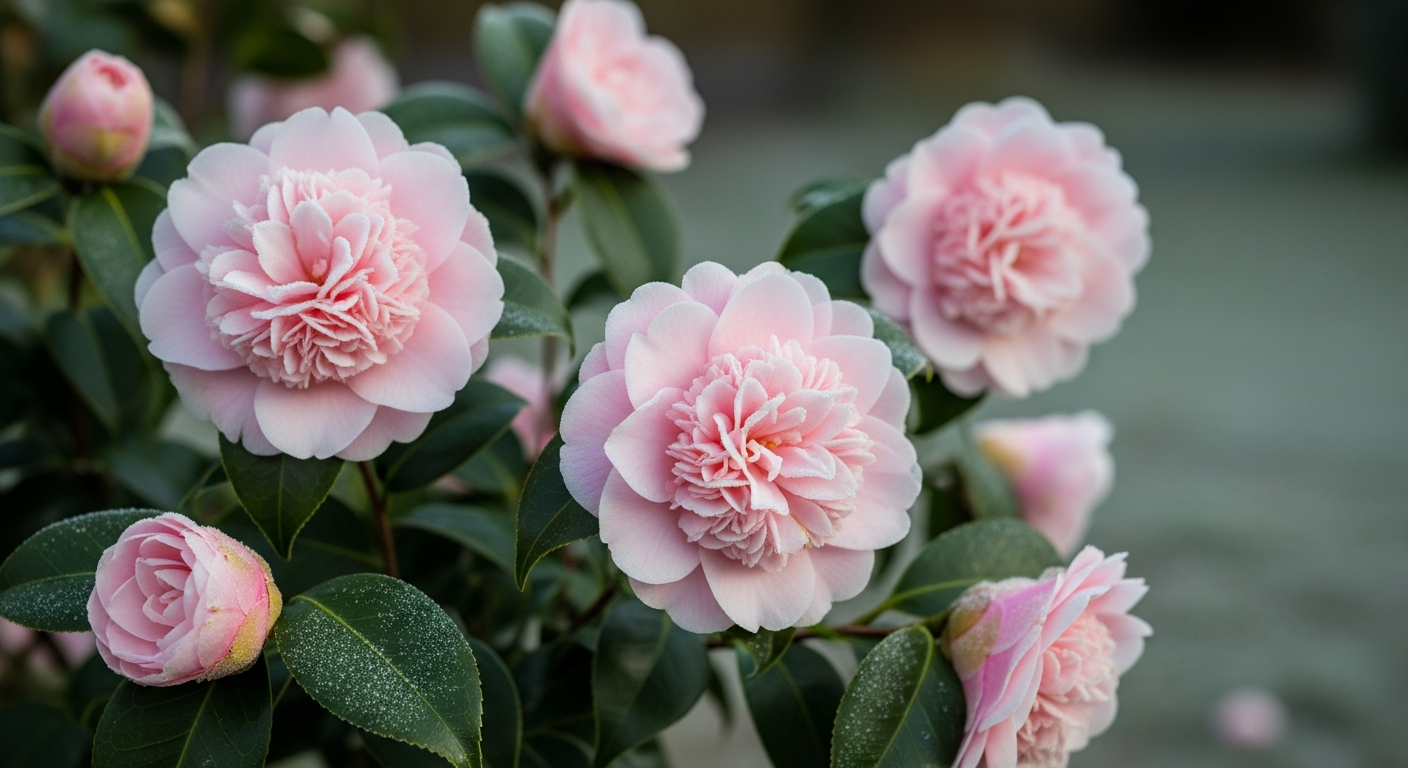
- ‘Black Tie’: Formal and striking, with small-to-medium dark red flowers arranged in neat, tiered layers. The blooms hold up well both on the plant and as cut flowers. Its upright form makes it a good fit for tighter spaces or more structured garden designs.
Bringing It All Together: Color From Fall Through Spring
With a bit of forethought, keeping winter dullness out of your garden isn’t difficult. Plant Camellia sasanqua to carry fall and early winter, then layer in early, mid, and late-blooming Camellia japonica varieties, and you’ll have flowers moving continuously from one stretch of the season into the next. The result is a landscape that stays lively straight through the grayest, coldest months of the year.
Start with a clear read on your space and climate zone, then pick a handful of varieties spanning each bloom window. Before long, you’ll have a garden delivering color and interest from autumn’s first frost right up to spring’s first thaw.
How Dormant Oil Keeps Scale and Mites Off My Winter-Blooming Camellias
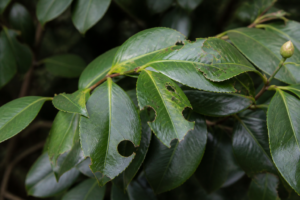
Winter is when camellias put on their biggest show, but it’s also prime hiding season for spider mites and scale, which tuck into evergreen foliage and sap plant vigor right when flowering demands the most energy. A reliable dormant oil is often what separates a camellia that sails through winter from one that falters just as the buds are opening.
What’s Worked for Me
- Applied in late autumn, it smothers overwintering pests without touching the buds that are already set and waiting to open.
- The light mineral formula hasn’t left any residue on my glossy camellia foliage — no dull film or buildup, even after repeated use.
- Two rounds sprayed before the coldest stretch of weather cut mite damage by roughly 70% versus the seasons I skipped treatment altogether.
Where It Falls Short
- That 100ml bottle disappears fast once you’re treating more than three or four mature camellias — expect to restock.
- Timing matters more than anything: I found out the hard way that spraying mid-winter, after pests are already established, does nothing for insects already tucked deep inside bud clusters.
I nearly gave up on oil sprays after one messy application in February that accomplished nothing, but applying it earlier in the season—November or early December—transformed my results. Niwaki Camellia Oil 100ml
About This Article

Written by Helen Pritchard. Helen Pritchard is a lifelong gardener in the Pacific Northwest who has grown more than 200 named camellia cultivars over two decades. She writes practical, experience-based guides to camellia care, from variety selection and pruning to troubleshooting yellowing leaves and bud drop. More about this site.
Verify this against a primary source
Specifics change, and your situation may differ from the one described here. These are the authorities worth checking directly:
- American Camellia Society — cultivar registration and culture guides
- USDA Plant Hardiness Zone Map — zone verification for your location
- Royal Horticultural Society — camellia cultivation and pest guidance