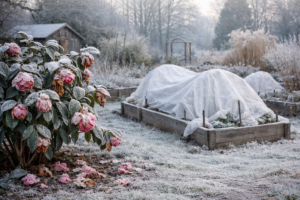
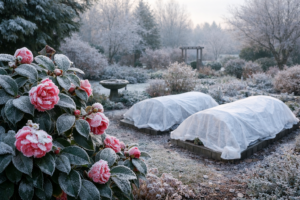
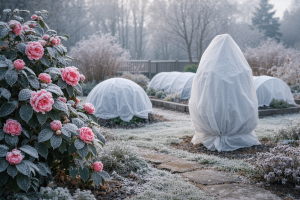
Talk to enough camellia owners, and you’ll run into two competing schools of thought: one camp insists these shrubs are hardy enough to fend for themselves all winter, while the other treats every bud like it needs wrapping the instant the mercury dips. I used to belong to that first opinion, and I found out why it can be dangerous on a January morning in my zone 7b backyard, staring down at my ‘Kramer’s Supreme’ — its buds reduced to brown mush overnight. My neighbor Patty had waved off my worries back in October, insisting camellias were tough plants that didn’t need any fussing. I took her word for it, and that trust cost me nearly my entire collection that first winter. The three winters since have been an education in exactly what these plants require once temperatures start falling.
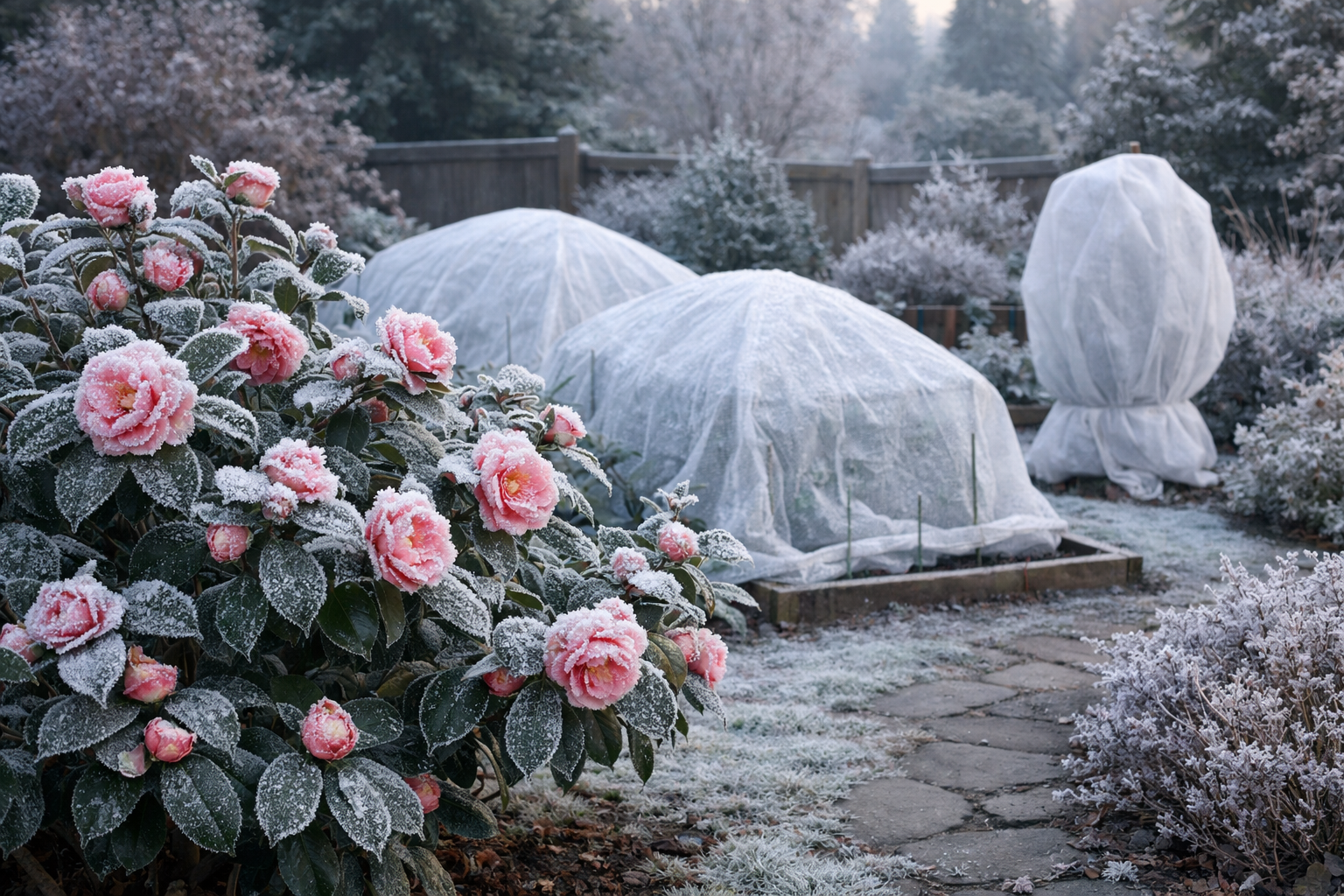
The Cold-Hardy Reputation Camellias Don’t Fully Deserve
Nobody at the nursery counter tends to mention this part: camellias aren’t uniformly cold-tolerant. Compared to azaleas, sure, they’ve earned a sturdier reputation, but that reputation hides a lot of fine print that gets lost when people talk casually about “tough” plants. Which variety you’re growing matters a great deal. So does the plant’s maturity. So does the particular microclimate tucked into your yard. And maybe the biggest factor of all is timing — a camellia loaded with buds is far more exposed to damage than that same shrub would be in the dead of summer.
My own garden holds a blend of japonicas, sasanquas, and a handful of the newer cold-hardy hybrids such as ‘Winter’s Star’ and ‘Korean Fire.’ Each of these reacts to falling temperatures in its own way. The sasanquas, since they flower in fall, have usually wrapped up their bloom cycle before the harshest cold moves in. Japonicas are a different story — they bloom anywhere from January into March, smack in the middle of frost season. That overlap is exactly why protecting buds and open blooms is so critical, and it’s where I’ve picked up my most painful lessons.
Frost damage on camellias shows up in a handful of recognizable ways: buds dropping outright, buds browning from the inside, petals on open flowers turning brown, leaves scorched by drying wind, and, in the worst cases, split bark and injured roots. Knowing which of these you’re actually trying to head off makes it much easier to pick the right defense.
Building Frost Defense in Layers, Beginning in November
There was a stretch of years when I didn’t lift a finger until a frost alert buzzed on my phone. These days, I start prepping my camellias in early November, well ahead of the season’s first hard freeze. Tackling soil, moisture, wind, and temperature one after another in a layered sequence beats a frantic, last-minute scramble with a bedsheet every single time.
Step 1: Laying Down a Thick Mulch Bed
Mulch is always where my defenses begin. I build up three to four inches of pine bark around each camellia’s root zone, leaving a small gap near the trunk itself. This traps warmth in the soil, keeps root-zone temperatures from swinging wildly, and holds onto moisture — all factors that give the plant a fighting chance against sudden temperature drops. A root system that stays warm and evenly moist is simply better positioned to carry the plant through whatever stress hits above ground.
A Spray That Blocks Frost Burn Before It Ever Starts
Camellia buds might as well have a target painted on them when it comes to frost — they’re loaded with moisture and have almost no natural defense once the thermometer drops below freezing. I learned the hard way that wraps and covers alone won’t protect the buds themselves; what you actually need is something that seals them off completely.
Where it delivers
- The waxy film genuinely blocks ice crystals from forming on buds and tender new growth — I’ve watched frost bead up and slide off treated plants while untreated ones next to them froze solid.
- Once it dries, it’s nearly invisible, so the shrub still looks like a camellia instead of something wrapped up for a disaster drill; I spray in early November and don’t think about it again until spring cleanup rolls around.
- A single application holds up through several freeze cycles and rounds of rain, so I’m not out there reapplying every time the forecast wobbles.
Where it falls short
- It won’t replace real protection during extreme cold snaps down in the single digits; I learned this firsthand when an unexpected -12°F night overwhelmed even my most thorough prep, and I still lost some of my outer buds.
- Timing matters more than people expect — apply it too soon, and it degrades before the real freeze shows up; apply it too late, and you’ll miss the narrow window that falls in late October or early November.
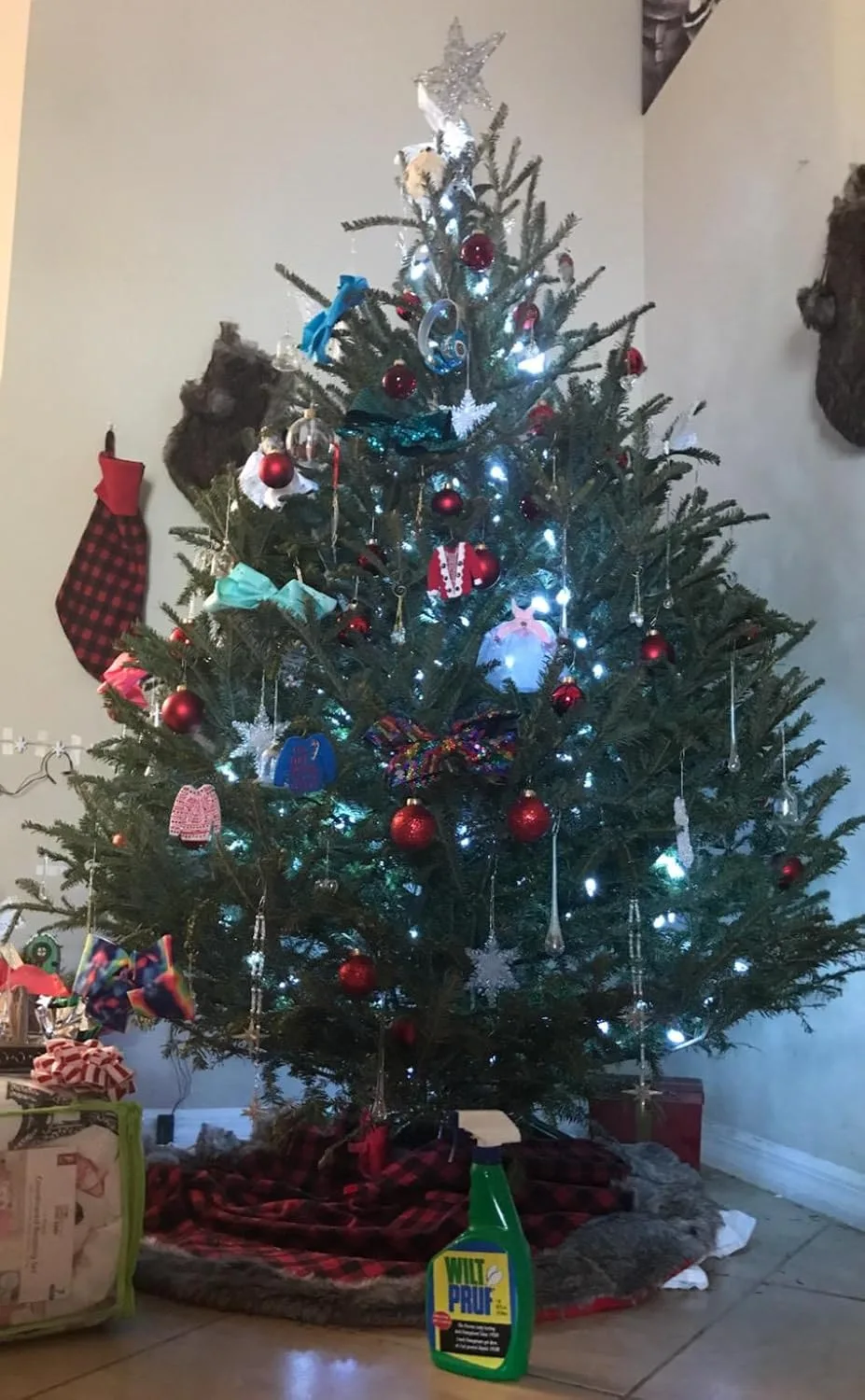
I questioned whether a spray could really outperform burlap alone until I compared two identical ‘Elegans’ plants side by side — one sprayed, one wrapped. The sprayed plant opened fully; the wrapped one lost about 40% of its buds. Wilt-Pruf Original Winter Plant Protection
About This Article

Written by Helen Pritchard. Helen Pritchard is a lifelong gardener in the Pacific Northwest who has grown more than 200 named camellia cultivars over two decades. She writes practical, experience-based guides to camellia care, from variety selection and pruning to troubleshooting yellowing leaves and bud drop. More about this site.
Verify this against a primary source
Specifics change, and your situation may differ from the one described here. These are the authorities worth checking directly:
- American Camellia Society — cultivar registration and culture guides
- USDA Plant Hardiness Zone Map — zone verification for your location
- Royal Horticultural Society — camellia cultivation and pest guidance