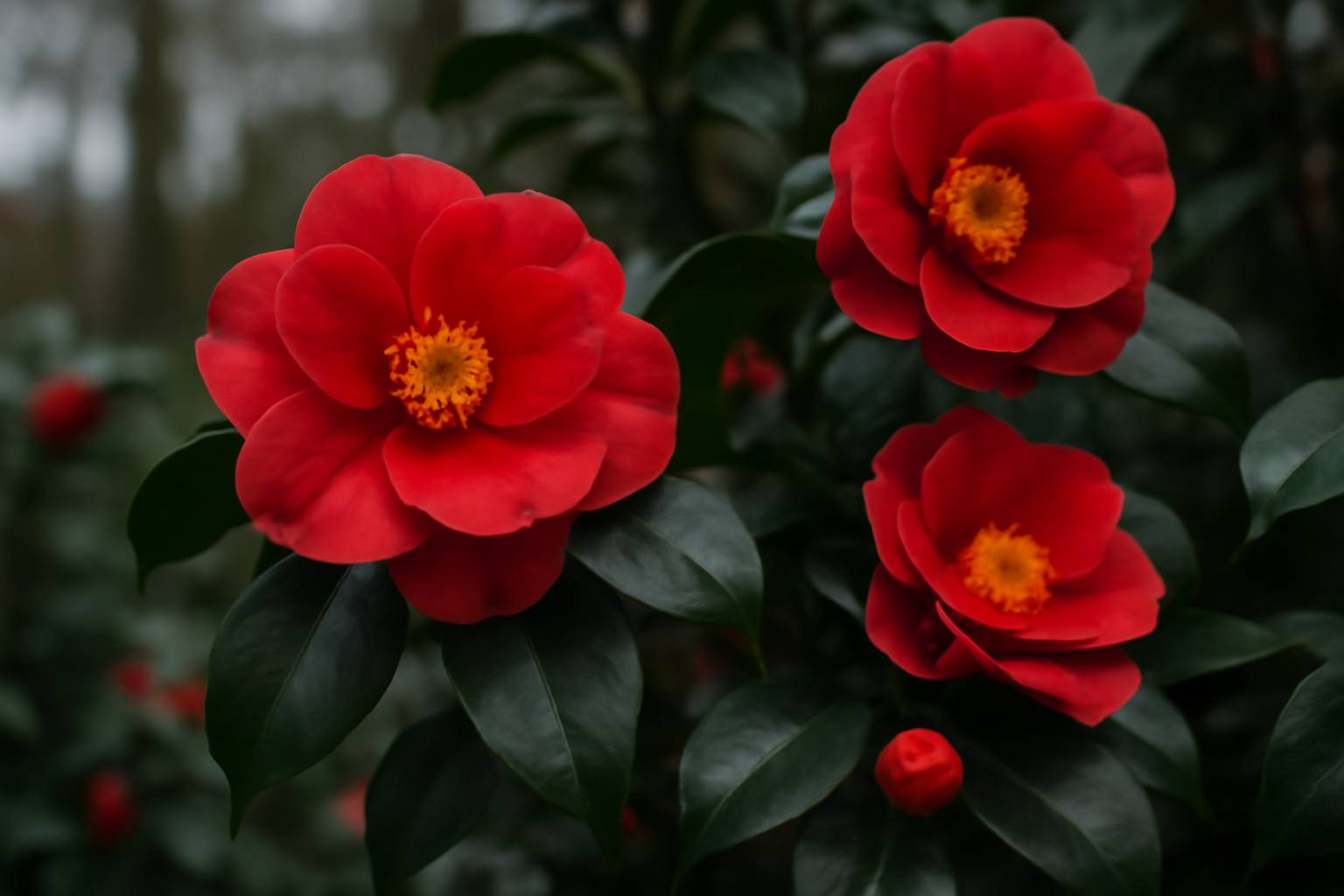
The day I finally noticed it, ‘Ville de Nantes’ had maybe four buds left on the whole shrub, and its lower leaves had gone that dull yellow-green that tells you a camellia is struggling, not resting. That was the moment I stopped trusting glossy nursery photos and started paying attention to what a red camellia japonica actually needs to thrive here, across the three zones I garden in — 7b, 8a, and 8b. Twenty-plus years of trial and error later, I’ve narrowed things down to a handful of red japonicas that consistently earn their space, and I want to walk you through exactly which ones, and why, with none of the marketing gloss.
What Makes Red Japonicas Worth the Winter Garden Space
Most people design their gardens around spring and summer color, treating anything that blooms in winter as a lucky surprise. Grow one genuinely good red japonica, though, and that thinking flips — suddenly the whole layout gets built around it.
Camellia japonica generally flowers somewhere between November and March, with exact timing shifting by cultivar and climate. Here in my zone 8a Pacific Northwest garden, the earliest bloomers open before Thanksgiving, and the stragglers are still going strong in April. Few flowering shrubs give you that kind of stretch.
Reds in particular bring a kind of visual heat that pink or white blooms just don’t deliver on a flat, colorless morning. They stand out against dark evergreen foliage almost like they’re lit from within. And on those milder winter days, they’ll pull in pollinators still active despite the cold — something I catch myself watching from the kitchen window more often than I’d admit.
The Red Japonica Cultivars I Keep Coming Back To
Every cultivar below has spent real years in my own soil, not just a season in a catalog photo. What follows is drawn from watching these plants perform, fail, recover, and bloom.
1. ‘Professor Charles S. Sargent’
Call this one my reliable red. ‘Professor Charles S. Sargent’ throws deep crimson, fully double flowers packed tight like a peony. It blooms mid-season for me, typically January through February, slotting neatly between my earliest and latest performers.
Of everything I grow, this cultivar shrugs off cold better than nearly any other japonica in my collection. It shows no complaints in my 7b garden, even when temperatures fall to 5°F. The blooms themselves hold up reasonably well against weather, too — they don’t collapse into brown mush the instant frost touches them, unlike a few flashier varieties I could name.
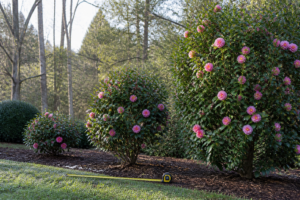
Its habit runs upright and dense, which makes it a strong pick for screening or standing alone as a specimen plant. Mine has sat in a north-facing bed catching morning light for twelve straight years without a single complaint.
2. ‘Adolphe Audusson’
There’s a reason ‘Adolphe Audusson’ has stuck around as a favorite. The flowers run large — up to four inches across at times — in a saturated blood-red, punctuated by bold yellow stamens. That flash of stamen gives it a theatrical quality the fully double reds simply don’t have.
Here in my zone 8a garden, this one leans mid-to-late season, usually starting late January and running well into March. Its one soft spot: open blooms don’t tolerate hard freezes well. Anything under 28°F will mar them. Fortunately, fresh buds keep pushing out behind the damaged flowers, so the overall show rarely falls flat.
I also grow its variegated sport, ‘Adolphe Audusson Variegated,’ which scatters unpredictable streaks of white across the red petals. Given the room, both versions are worth having.
3. ‘Kramer’s Supreme’
This is the fragrant one in my collection. Scent is rare in this species — most camellia japonicas offer little to none. ‘Kramer’s Supreme’ breaks that pattern, releasing a soft, sweet perfume that catches visitors off guard when they lean in.
Its blooms are large, ranging from semi-double to peony form, in a clean turkey-red. They open mid-season and hold well once open. The plant itself grows vigorously and upright, though in my experience it’s fussier about drainage than most camellias on this list — I lost an early specimen to root rot before I learned that lesson. I’ll say more on that under the soil section further down.
4. ‘Governor Mouton’
‘Governor Mouton’ takes a different approach: a semi-double flower in rich carmine-red, often streaked irregularly with white or blush. That variegation occurs naturally, so no two blooms come out identical — a trait I personally never tire of.
This one blooms early-to-mid season. In my zone 8b container garden, flowers begin opening as early as November. It also shrugs off heat better than most japonicas I’ve grown, which matters if you’re gardening near the southern edge of where camellias will grow at all.
5. ‘Dr. Burnside’
Nothing on this list beats ‘Dr. Burnside’ for raw size and presence. Blooms stretch up to five inches, fully double, in a deep red that holds steady even under strong sun — unlike some reds that wash out to an unflattering pinkish-orange in full afternoon exposure.
It flowers mid-to-late season and grows with real vigor, easily reaching eight feet or taller at maturity if left unpruned. I’ve covered camellia size management in more depth in another post on this site — worth checking before you site something this ambitious near your house.
One Costly Mistake I Made With Red Camellias
Let me spare you a bit of frustration. For a stretch of years, I chased the flashiest, most dramatic show-form reds — the ones that photograph like magazine covers. Plenty of them turn into high-maintenance disappointments once they’re actually in the ground.
One of my earliest mistakes was ‘Ville de Nantes,’ a striking semi-double red with heavily fringed petals, which I planted somewhere it got afternoon sun and only so-so drainage. It sulked through three miserable years, managed maybe a dozen blooms total, and gave out entirely after one particularly soggy winter. I took that loss hard.
Here’s what I took from it: gorgeous flowers count for nothing if the plant doesn’t fit your actual site. Every cultivar on my list above pairs real beauty with real garden performance — and that combination beats a flower-show ribbon every time.
The Growing Conditions Red Japonicas Actually Need
Camellia japonicas aren’t fussy plants overall, but they do hold firm preferences. Nail these down and you’re the difference between a struggling shrub and a real showpiece.
Getting the Soil pH Right
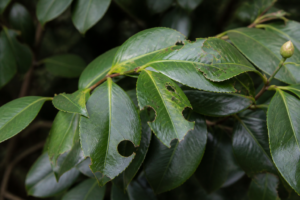
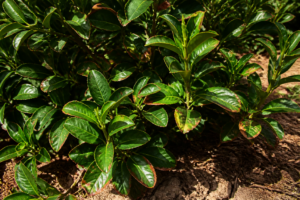
There’s no bargaining on soil pH. Camellias need acidic conditions, ideally somewhere between 5.5 and 6.5. Push past 6.5 and the plant can no longer take up iron and manganese properly, which shows up as yellowing leaves and stalled growth — a condition called chlorosis, and one I see constantly in gardens where nobody’s bothered testing the soil first.
Test before you plant. If your pH runs too high, work in elemental sulfur to bring it down. Add plenty of organic matter while you’re at it — composted pine bark is what I reach for every time with camellias. It supports the beneficial mycorrhizal fungi these plants rely on, improves how water moves through the soil, and gently acidifies things over time.
How Much Light They Actually Need
Most camellia japonicas want dappled shade, or morning sun with cover in the afternoon. Reds, though, have surprised me by tolerating more direct light than white or pale pink types — I suspect the darker pigment offers some built-in protection.
Even so, steer clear of full afternoon sun if you’re gardening in zone 8b or warmer. Heat stress leads to bud drop and a shorter bloom window. Morning sun works best — it dries overnight dew off the foliage, which cuts down on fungal problems, while keeping the flowers away from the roughest afternoon heat.
Water Needs and Drainage
Once established — generally after two or three years in the ground — camellias handle drought better than most people expect. That establishment window, though, is where the real work happens. Water deeply and on a consistent schedule through the first two summers. Skip that consistency while buds are forming, roughly late summer into fall, and you’ll see bud drop.
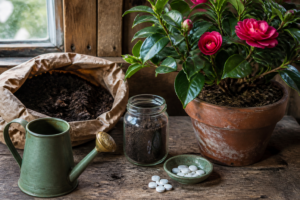
Drainage matters just as much. Wet feet are a dealbreaker for camellias. If water tends to pool in your soil after a heavy rain, raise the bed or shape a berm before planting. I set every camellia I plant two to three inches proud of the surrounding grade — a small habit that’s spared me plenty of root rot headaches in my heavier clay spots.
Zone Hardiness and Bloom Timing: Setting Expectations
Camellia japonica typically holds up across USDA zones 7 through 10. Gardening in zone 7a or colder doesn’t rule it out, but site selection stops being optional — tucking a plant against a south-facing wall, for instance, can push hardiness nearly a full zone further than the label suggests.
Among the reds I grow, ‘Professor Charles S. Sargent’ and ‘Governor Mouton’ are the two I’d trust most against hard cold. Both have come through temperatures in the upper single digits in my 7b garden with barely any bud damage, provided the cold set in gradually rather than crashing overnight.
Exact bloom timing shifts depending on cultivar and location. In zone 8a, early varieties start in October or November, the mid-season group peaks between December and February, and late bloomers carry things into March and April. If you want color for the longest possible stretch, pick one early, one mid-season, and one late red — that combination alone can keep something blooming for five months or better.
Plants That Pair Well With Red Camellia Japonicas
Red camellias don’t share the spotlight easily. Whatever you plant nearby needs to complement them, not fight them for attention.
Here’s what I’ve settled on pairing with my red japonicas:
- Hellebores — Their nodding blooms in plum, white, and blush tones echo the camellia bloom season without stealing focus.
- Mahonia — Its yellow winter flowers create sharp contrast beside red camellia blooms, and the blue-black berries afterward are a nice extra.
- Snowdrops and winter aconite — Low bulbs that thread beautifully through the ground beneath camellia shrubs.
- Camellia sasanqua varieties — Early sasanquas such as ‘Yuletide’ (itself red, handily enough) help bridge the calendar gap before my japonicas hit their stride.
- Evergreen ferns — Their fine texture and deep green color make the red blooms pop straight through winter.
Steer clear of planting big-leaved plants like hostas right at the base of camellias — they’ll compete for the same slightly acidic, well-drained soil camellias depend on. Shade-loving groundcovers like Liriope or Ajuga, on the other hand, tuck in nicely once the camellias are established.
Quick-Reference: My Recommended Red Camellia Japonica Varieties
- ‘Professor Charles S. Sargent’ — Deep crimson, fully double, cold-hardy, mid-season. Best all-around choice for zones 7b–9a.
- ‘Adolphe Audusson’ — Rich blood-red, semi-double, large blooms, mid-to-late season. Ideal for zones 8a–9b.
- ‘Kramer’s Supreme’ — Turkey-red, peony form, fragrant, mid-season. Excellent for zones 7b–9a with good drainage.
- ‘Governor Mouton’ — Carmine-red with natural variegation, early-to-mid season. Good heat tolerance for zones 8b–10.
- ‘Dr. Burnside’ — Very large deep-red blooms, fully double, mid-to-late season. Vigorous grower for zones 7b–9b.
Pick One Red Camellia Japonica and Plant It This Year
Still undecided about adding a red camellia japonica to your garden? Here’s my push: begin with ‘Professor Charles S. Sargent.’ It forgives a less-than-perfect spot, shrugs off cold across most temperate climates, and produces exactly the kind of deep crimson bloom that makes a winter garden feel alive instead of bare. Get one well-placed red camellia japonica in the ground, and the whole season changes.
About This Article

Written by Helen Pritchard. Helen Pritchard is a lifelong gardener in the Pacific Northwest who has grown more than 200 named camellia cultivars over two decades. She writes practical, experience-based guides to camellia care, from variety selection and pruning to troubleshooting yellowing leaves and bud drop. More about this site.
Verify this against a primary source
Specifics change, and your situation may differ from the one described here. These are the authorities worth checking directly:
- American Camellia Society — cultivar registration and culture guides
- USDA Plant Hardiness Zone Map — zone verification for your location
- Royal Horticultural Society — camellia cultivation and pest guidance