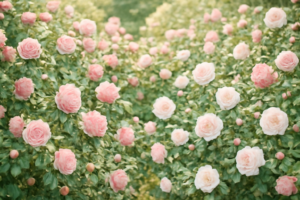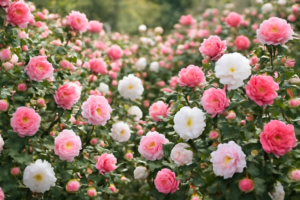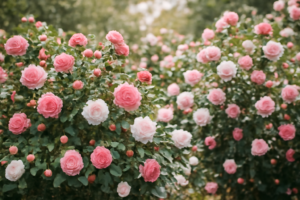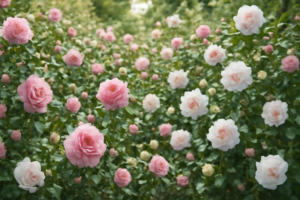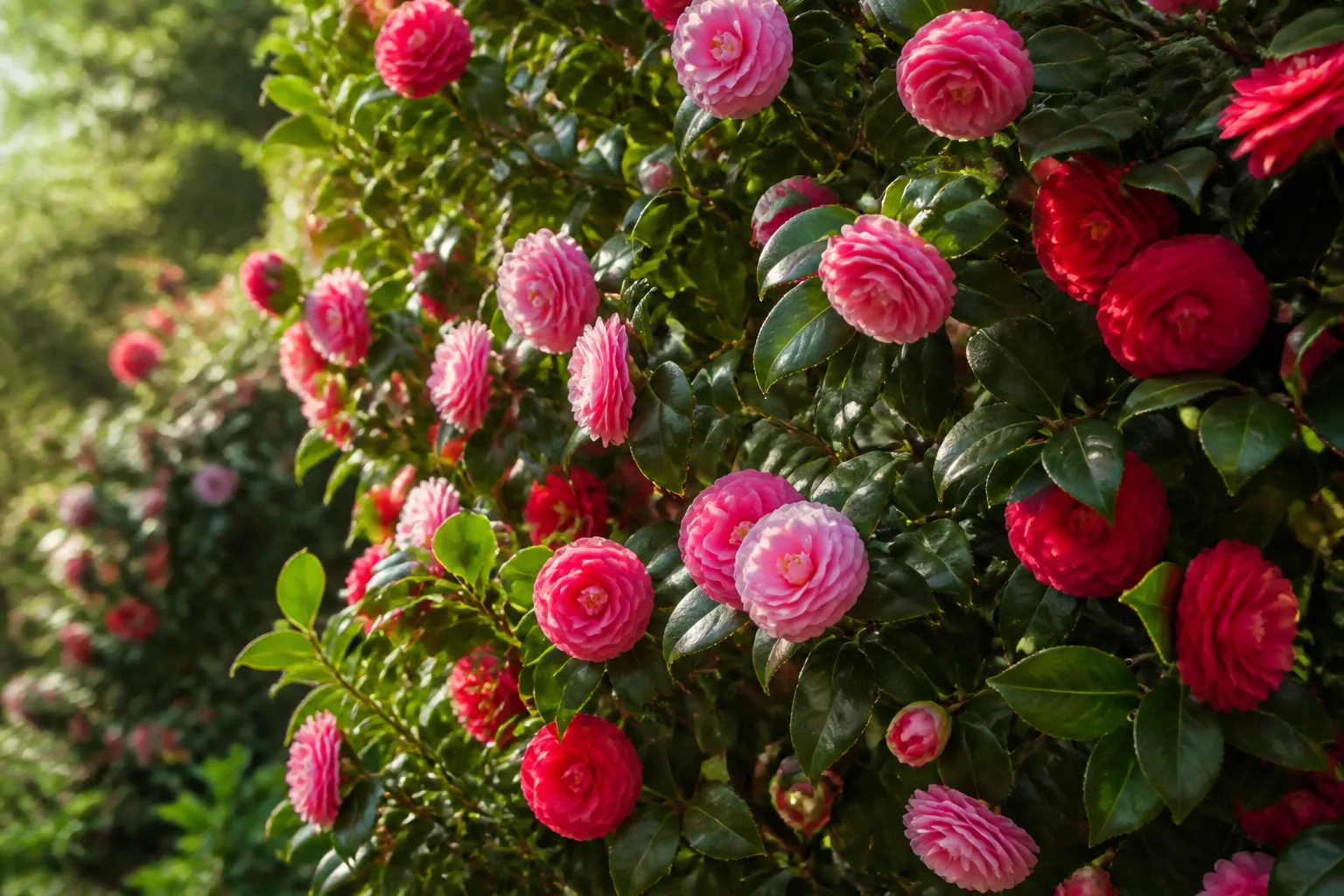
Nearly every new camellia grower carries the same assumption into their first purchase: that these plants are temperamental, finicky things reserved for people with decades of experience. It’s wrong, and I can say so with some authority — I killed two of them myself before I understood what they actually wanted. Bad drainage, the wrong soil chemistry, and a watering habit that drowned the roots did the damage, not any inherent difficulty in the plant. Two decades and more than 200 named cultivars later, here in the Pacific Northwest, I’ve landed on a different conclusion entirely: camellias aren’t hard. They’re particular. Learn their handful of preferences and the whole thing stops feeling mysterious.
This guide exists because I’ve watched the same preventable errors play out over and over among people just starting down this road. Someone falls for a gorgeous Camellia japonica at the garden center, sets it in the ground incorrectly, watches it decline, and quietly writes off the whole genus. That outcome bothers me — these shrubs rank among the finest flowering plants you can grow in a temperate climate. Handle the fundamentals correctly from day one, though, and you’ll own a plant that flowers reliably for generations, quite possibly longer than you’ll be around to enjoy it.
Consider this my master reference on the subject. I’m going to cover cultivar selection, soil groundwork, correct planting technique, watering and feeding schedules, pruning timing, pest and disease management, and how care shifts across all four seasons. Save it somewhere you’ll find it again. Revisit it whenever you need to. And drop your questions in the comments below — I go through every single one.
Sorting Out Camellia Species and Cultivars
Before any purchase happens, you’ll want a working knowledge of the three species you’re most apt to run into at nurseries. Sorting this out ahead of time spares you both wasted money and letdown later. Each of the three brings its own character to the garden — distinct flowering window, distinct cold tolerance, distinct growth habit.
Camellia Japonica — The Traditional Favorite
When someone conjures a mental image of “camellia,” it’s usually Camellia japonica they’re picturing — bold, formal blossoms running through reds, pinks, whites, and bicolors. Growers worldwide have named over 2,000 japonica cultivars. My own ‘Adolphe Audusson,’ a rich blood-red semi-double, hasn’t skipped a February in the eighteen years I’ve had it in the ground. One caveat, though: of the three species covered here, japonicas handle cold the worst. Most tolerate down to roughly 10°F (-12°C), while a few cold-bred selections manage lower still.
Camellia Sasanqua — The Fall-Flowering Option
Camellia sasanqua puts on its show in fall and early winter — October through December where I garden. Its blooms run smaller and more delicate than a japonica’s, are frequently scented, and shrug off sun exposure much more readily. Sasanquas also grow a bit faster and tolerate cold slightly better. I’ve planted several along a south-facing fence line — a spot that would scorch a japonica outright. ‘Yuletide’ remains the go-to red sasanqua, and ‘Setsugekka,’ with its white, semi-double, softly fragrant flowers, is another I’d recommend without hesitation.
Camellia Sinensis — The Species Behind Your Tea
Camellia sinensis is the plant your morning cup comes from. Its flowers are modest — small and white, nothing showy. What it lacks in floral drama, though, it makes up for in toughness: some selections shrug off temperatures down to 0°F (-18°C). It works beautifully as a hedge. I keep a small stand of it purely for fun, and each autumn I actually harvest and process the leaves myself.
Picking the Right Location — Light, Cover, and Airflow
Location is usually the first thing beginners get wrong. Nursery labeling tends to push camellias as shade-loving shrubs, and while they’ll survive shade, that description sells them short. What I’ve found works best is dappled morning sun paired with afternoon coverage. Picture their native habitat — the forest margins of eastern Asia — where light filters down through a canopy overhead rather than disappearing into deep shadow.
Skip an east-facing wall if late frosts are common where you live. It’s the rapid thaw of frost-hit buds — not the freeze itself — that causes the worst bud loss. A north- or west-facing spot lets frozen buds thaw gradually, which protects them. I found this out the hard way, losing an entire flowering season on my ‘Nuccio’s Gem’ after a sharp March frost hit its east-facing corner. Relocating it that following autumn solved the problem permanently — not a single bud lost to frost since.
Wind is the other piece of the puzzle. Drying winter wind scorches foliage and damages buds just as effectively as cold alone. Positioning a fence, wall, or established hedge on the windward side makes a measurable difference. What you’re after is a spot with decent airflow — never a stagnant, airless pocket, which invites fungal trouble — while still being shielded from the harshest gusts.
Getting the Soil Right — The Step That Matters Most
Here’s the plain truth: nail the soil, and a camellia practically takes care of itself. Miss it, and no combination of feeding, watering, or careful pruning will compensate. What camellias need is acidic, well-drained soil rich in organic matter, sitting somewhere between pH 5.5 and 6.5. Push above 7.0 and you’ll see interveinal chlorosis show up — leaves yellowing between veins that stay green — a symptom of the plant losing access to iron and manganese.
Checking and Correcting Soil pH
Pick up a dependable pH meter or test kit and use it before a single plant goes in the ground — I test every new bed without exception. Land between 6.5 and 7.0? Work sulfur into the soil, somewhere around 1 to 2 pounds per 100 square feet depending on your soil composition, and do it several months ahead of planting. Clay demands more amendment than sandy ground does. If your reading tops 7.0, skip the uphill battle against native soil altogether and go with raised beds or containers filled with purpose-built ericaceous mix.
Constructing a Proper Planting Bed
Drainage isn’t optional. Camellia roots sitting in water simply won’t survive. Even short spells of standing water during winter open the door to root rot, particularly from Phytophthora cinnamomi, a water mold that’s brutally hard to reverse once it takes hold. Test your site by digging a hole 12 inches deep, filling it with water, and watching what happens. Still pooled after an hour? Fix the drainage before planting anything.
On heavy clay, I mix in coarse grit and composted bark — roughly one part grit, one part bark, two parts native soil. That combination transforms the structure noticeably. Set the rootball slightly above grade, no more than 2 inches higher than the surrounding soil, and build a gentle mound around it instead of nestling it into a low spot. Finish with 3 inches of composted bark or pine needle mulch, holding it back 3 to 4 inches from the stem itself.
Planting a Camellia — The Process, Step by Step
Autumn planting wins out in most temperate climates, giving roots a full stretch of cool weather to settle in before summer heat tests them. Spring works too, though with a bit more risk. Summer planting is the gamble — the plant faces heat stress before its root system has had any chance to establish. Container-grown plants can technically go in whenever the ground is workable, but autumn plantings have consistently outperformed the rest in my own experience.
The Planting Sequence
- Excavate a hole at minimum twice as wide as the rootball, but no deeper than its height.
- Scrape the hole’s sides with a fork so clay doesn’t glaze over and seal shut.
- Skip fertilizer in the planting hole entirely — it will scorch fresh roots.
- Give the rootball a thorough soak before sliding it out of its container.
- Confirm the rootball’s top sits even with, or just barely above, the surrounding ground.
- Fill in with your amended soil, firming it down gradually in layers.
- Water thoroughly — enough to settle everything in, not enough to flood the roots.
- Ring the base with 3 inches of mulch, keeping it clear of the stem.
How far apart you space plants depends on the effect you’re after. Standalone specimens want 5 to 6 feet of breathing room minimum. Hedging or wall-trained plants can go as tight as 3 feet apart. My own garden runs the gamut — compact selections barely topping 4 feet alongside an aging japonica near the back boundary that’s now pushing 14 feet tall. Look up your cultivar’s mature size before it ever touches soil.
Watering, Feeding, and Keeping Plants Thriving
A freshly planted camellia needs steady moisture through its first two years in the ground. Beyond that, mature plants turn out to be far more drought-tolerant than most people expect. Still, one stretch of the calendar matters more than any other for watering: late summer, roughly July through September in the Northern Hemisphere. This is the window when the following year’s flower buds are actually forming. Let the plant dry out during this stretch and you’ll see the consequence months later — bud drop in the dead of winter, right when those buds should be opening. I’ve watched gardeners point fingers at disease or frost damage when the true cause was a bone-dry August, three months earlier.
Watering Volume and Frequency
Once a plant is established, one deep weekly soaking beats daily light sprinkling every time. “Deep” here means saturating down to roughly 12 to 18 inches — the actual root zone. A drip line or soaker hose run for 45 to 60 minutes weekly gets you there without waste. Skip overhead watering if your climate runs humid; it invites fungal problems, so aim water at the base of the plant instead. In my cooler Zone 7b mountain garden, watering basically stops after September. Warmer or drier regions will need to adjust that timeline accordingly.
Getting Fertilizer Right
Camellias don’t ask for much in the way of nutrients. Overdo it — especially with nitrogen — and you’ll push soft, lush growth that practically invites aphids and folds under frost. Stick to an acid-formulated ericaceous fertilizer. One application in spring as growth resumes is enough; a second, lighter dose in early summer is optional. Never feed past July. Late feeding forces tender growth that has no time to harden before cold arrives — I’ve personally watched plants take serious frost damage after an August fertilizing session.
Each spring I also spread composted pine bark over the root zone. It slowly acidifies the soil, improves texture, and feeds whatever’s happening in the soil biologically. Outside of watering, it’s the one habit I’ve stuck with most consistently.
Pruning Camellias — Restraint Beats Aggression
New growers tend to fall into one of two traps: either they never pick up the shears at all, leaving the plant to grow leggy and tangled, or they prune at the wrong moment and slice off every bud for the coming year. Both deserve a closer look. Camellias form their flower buds in late summer, on wood that grew that same season. Cut in fall or winter, and those buds go with it. The window to prune correctly opens right after flowering wraps up, before the next growth flush kicks in. For japonicas, that typically lands in March or April. Sasanquas, blooming in autumn, should be pruned in January or February instead.
Deciding What Gets Cut
Regular maintenance pruning boils down to three goals: clearing away dead or crossing wood, thinning the interior to keep air moving through the plant, and refining its overall shape. On young plants, I also tip-prune during their first two or three years to encourage a bushier habit — just pinching or snipping the growing tips on new shoots once the spring flush has hardened. Do this consistently and you build a denser, more floriferous plant over time.
If a camellia has gotten out of hand — too tall, too sparse, too leggy — hard renovation pruning is an option, and camellias take to it surprisingly well. Old wood, even substantial stems, can be cut back hard. The tradeoff is one to two seasons with fewer flowers while the plant rebuilds. Rather than doing it all at once, I stretch the process across two years, cutting away roughly a third of the old framework each spring so there’s always some bloom happening along the way.
Pests, Diseases, and Trouble Signs to Know
By and large, camellias hold up well. Given decent growing conditions, they don’t invite much trouble. Even so, a short list of issues crops up often enough that every grower ought to be able to spot them on sight.
Petal Blight
Of everything you might encounter, petal blight — caused by the fungus Ciborinia camelliae — does the most damage. Infected blooms show brown veining that spreads fast, browning the entire flower within a matter of days. The foliage stays untouched even as the flowers rot in place. The critical detail is that the fungus survives winter in dropped petals lying on the ground. Rigorous cleanup — bagging and discarding fallen blooms rather than composting them — is your single best defense. Never let infected petals sit and accumulate beneath the shrub.
Vine Weevils
Vine weevils pose a real threat, particularly to camellias growing in containers. The adults chew notches along leaf edges — cosmetically annoying but not dangerous on their own. The larvae are the real problem: they feed on roots below ground, and a plant can be killed outright before any warning signs surface above soil. A container camellia that suddenly collapses in late summer, seemingly without cause, is often hiding vine weevil larvae in the rootball — check it right away. Applying beneficial nematodes in late summer, while the soil’s still warm, gives reliable preventive protection for potted specimens.
Scale and Aphids
Tea scale shows up as crusty white or brown patches clustered on leaf undersides, and heavy infestations leave yellow mottling visible on top. Aphids, meanwhile, go after tender new spring growth. Horticultural oil handles both when applied at the first sign of pests. Strong airflow and holding back on fertilizer both cut down on vulnerability considerably — plants growing under proper conditions with modest nutrition simply don’t tempt sucking insects the way soft, nitrogen-fed growth does.
A Season-by-Season Care Calendar
The question I hear on repeat is some version of: “What should I actually be doing right now?” Here’s how the calendar year breaks down in my own garden.
Spring — March through May
- Prune japonicas the moment flowering stops.
- Feed with spring fertilizer once new growth appears.
- Refresh mulch with a new layer of composted bark.
- Tip-prune younger plants to build fullness.
- Keep an eye on new growth for aphid activity.
Summer — June through August
- Water on a consistent schedule — bud formation is happening now.
- If you want, add a light second feeding in early June.
- Cut off all fertilizing by the end of July, no exceptions.
- Treat containers with nematodes against vine weevil come August.
- Inspect leaf undersides for signs of tea scale.
Autumn — September through November
- Keep watering until fall rains become dependable.
- Put new camellias in the ground now — it’s prime planting season.
- Enjoy sasanqua flowers starting in October.
- Prune sasanquas once their bloom cycle ends.
- Wrap newly planted specimens in horticultural fleece if an early frost is forecast.
Winter — December through February
- Take in the japonica blooms — many start flowering as early as December in milder areas.
- Clear away fallen petals right away to stop petal blight from overwintering.
- Cover buds on cold-sensitive varieties with fleece during hard freezes.
- Put the pruners away — buds are set and ready to open.
- Plan out new additions and note what’s performing well this season.
Where Beginners Go Wrong — And the Fixes
Mistake 1: Setting the Plant Too Deep
Of all the errors I see, this one comes up most. The rootball’s crown ends up buried below the soil surface, water pools around the stem, and the plant fades over the following one to two years — yellowing foliage, sluggish growth, and eventually stem rot set in. Always plant with the rootball’s top sitting at or just above the surrounding soil grade. If you’re unsure which way to err, err high.
Mistake 2: Cutting at the Wrong Moment
Pruning in autumn strips away exactly the buds you spent the whole year waiting on. I get the impulse — the plant looks scraggly after a long summer and the pruners are right there in your hand. Hold off anyway. Note each plant’s bloom timing on a garden label. Prune within four to six weeks after flowering wraps up, then step back and leave it be.
Mistake 3: Pinning Yellow Leaves on Cold Weather
Yellow foliage showing up in spring or summer is almost never frost damage — it’s usually a soil pH issue. Real cold damage presents differently: blackened, papery, or limp tissue on new growth after a freeze. Interveinal chlorosis — yellow tissue between veins that stay green — points to iron deficiency triggered by alkaline soil. Check your pH before reaching for a foliar iron treatment. Addressing the symptom while ignoring the underlying pH only buys you a temporary fix.
Mistake 4: Drowning Plants That Are Already Settled In
I made exactly this error with a lovely ‘Bob Hope’ japonica in my second year growing these plants. I kept it watered religiously through a wet Pacific Northwest autumn and winter, and by spring, root rot had claimed it. In mild, rain-fed climates, an established camellia frequently needs zero supplemental water from October through April. Know your local conditions. Far more camellias are lost to overwatering than to drought.
Mistake 5: Buying Blind to Mature Size
A little 2-gallon nursery pot tells you almost nothing about what that plant becomes fifteen years down the line. Some japonica cultivars climb past 20 feet, while others cap out around 4 feet and suit foundation plantings perfectly. Always dig into a cultivar’s mature dimensions before buying it. Putting a plant in the wrong spot costs you real labor later — or costs you the plant entirely.
Wrapping Up — Your Camellia Journey Starts Right Here
Everything above covers the essentials of growing camellias well, but the real learning happens once plants are actually in the ground and you’re watching them closely, season after season. No two gardens behave the same way. What works in my Pacific Northwest conditions won’t necessarily translate to yours. The cultivars thriving in my zone 8b garden may be entirely wrong choices for zone 6 or zone 10. That said, the core principles — correct pH, strong drainage, thoughtful siting, light feeding, pruning at the right moment — hold true no matter where you garden.
Begin with two or three plants instead of twenty. Get to know them thoroughly. Learn to tell the difference between a camellia that’s thriving and one that’s struggling. From what I’ve seen, the gardeners who stick with camellias long-term are the ones who watch closely before acting. Pay attention, and the plants will tell you exactly what they need.
Camellias don’t demand a lot of maintenance — what they demand is precision about a few specific things. Meet those few conditions and you’re rewarded with decades of remarkable flowers, blooming through late autumn into early spring, exactly when the rest of the garden has gone quiet. That’s no small gift. Twenty years in, I’m still grateful for it every single season, and I don’t plan on stopping anytime soon.
Consider yourself officially hooked. I hope this guide earns its keep for you.
About This Article

Written by Helen Pritchard. Helen Pritchard is a lifelong gardener in the Pacific Northwest who has grown more than 200 named camellia cultivars over two decades. She writes practical, experience-based guides to camellia care, from variety selection and pruning to troubleshooting yellowing leaves and bud drop. More about this site.
Verify this against a primary source
Specifics change, and your situation may differ from the one described here. These are the authorities worth checking directly:
- American Camellia Society — cultivar registration and culture guides
- USDA Plant Hardiness Zone Map — zone verification for your location
- Royal Horticultural Society — camellia cultivation and pest guidance