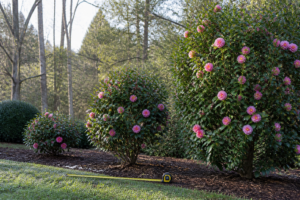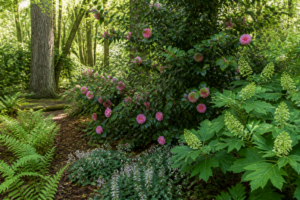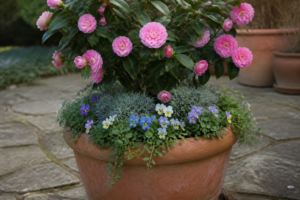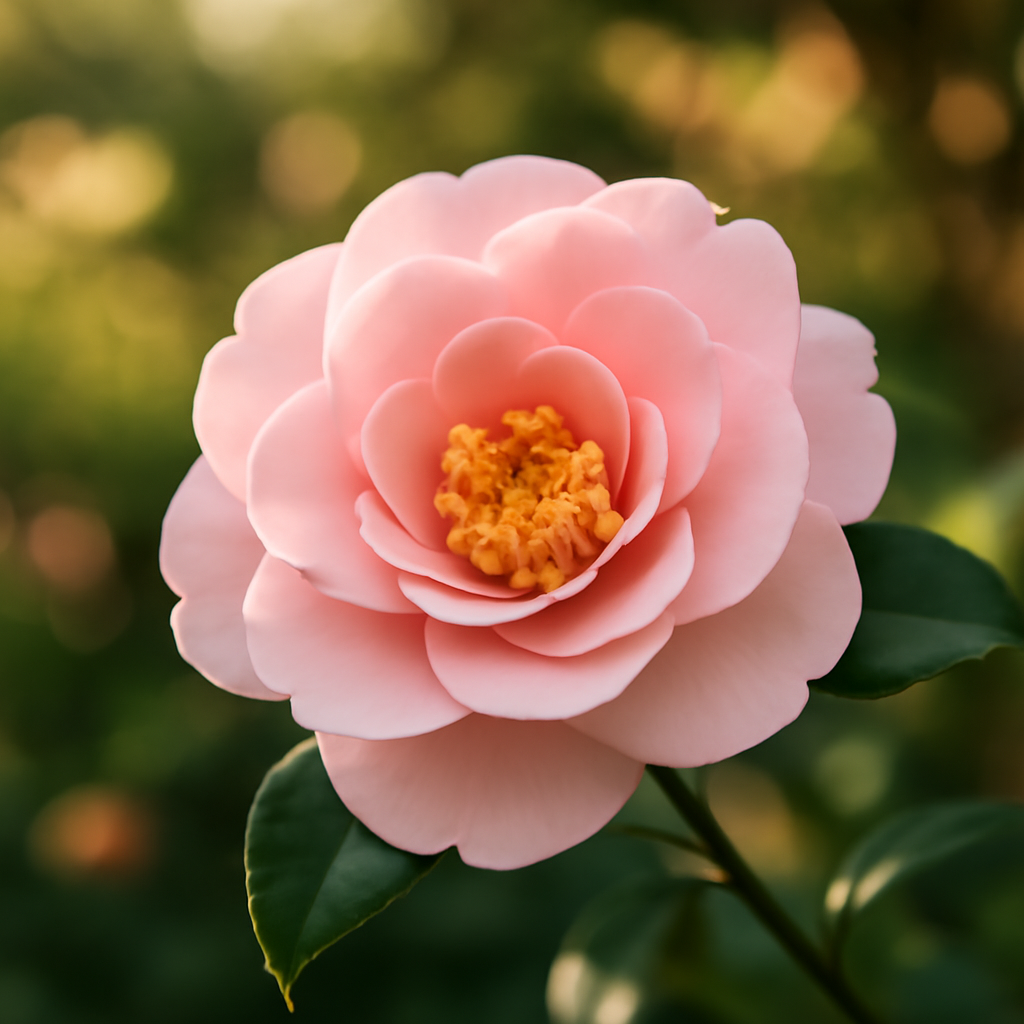

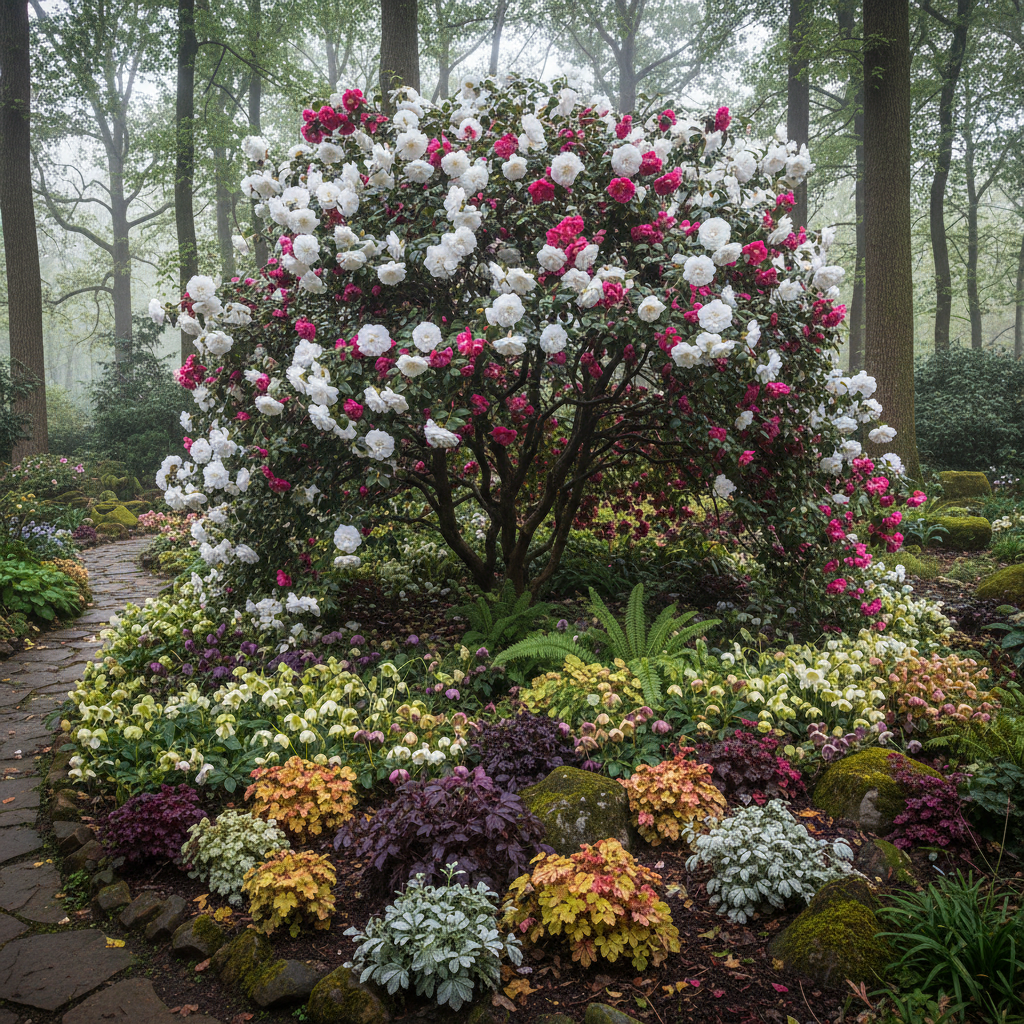
“Why is my pieris turning yellow when it’s sitting right next to a camellia that looks fantastic?” a woman at a regional plant swap asked me, holding up a phone photo of a sickly-looking shrub. Camellias hold that queenly status in the cool-season garden — glossy foliage, blooms shaped like small roses, elegance while everything around them naps for winter. Yet her question is one version of something I hear constantly: a gardener does the homework, picks a companion that every list swears is compatible, spaces it properly, waters on schedule, and still watches it decline.
Two decades into this hobby, I’ve learned the actual fix rarely begins with swapping one companion plant for another. It begins with a soil test. Every companion planting guide out there, mine included, will point you toward azaleas, pieris, and gardenias as reliable neighbors for camellias. That advice isn’t wrong, but it quietly assumes your bed sits somewhere in the 5.0–6.5 pH window camellias want. A surprising number of beds miss that mark entirely, even in gardens where the camellia itself shows no signs of stress. So before a single companion goes in the cart, pull a soil reading first. Below is the method I actually use, along with what those numbers are telling you once you have them in hand.
The Meter Reading That Finally Explained My Struggling Companions
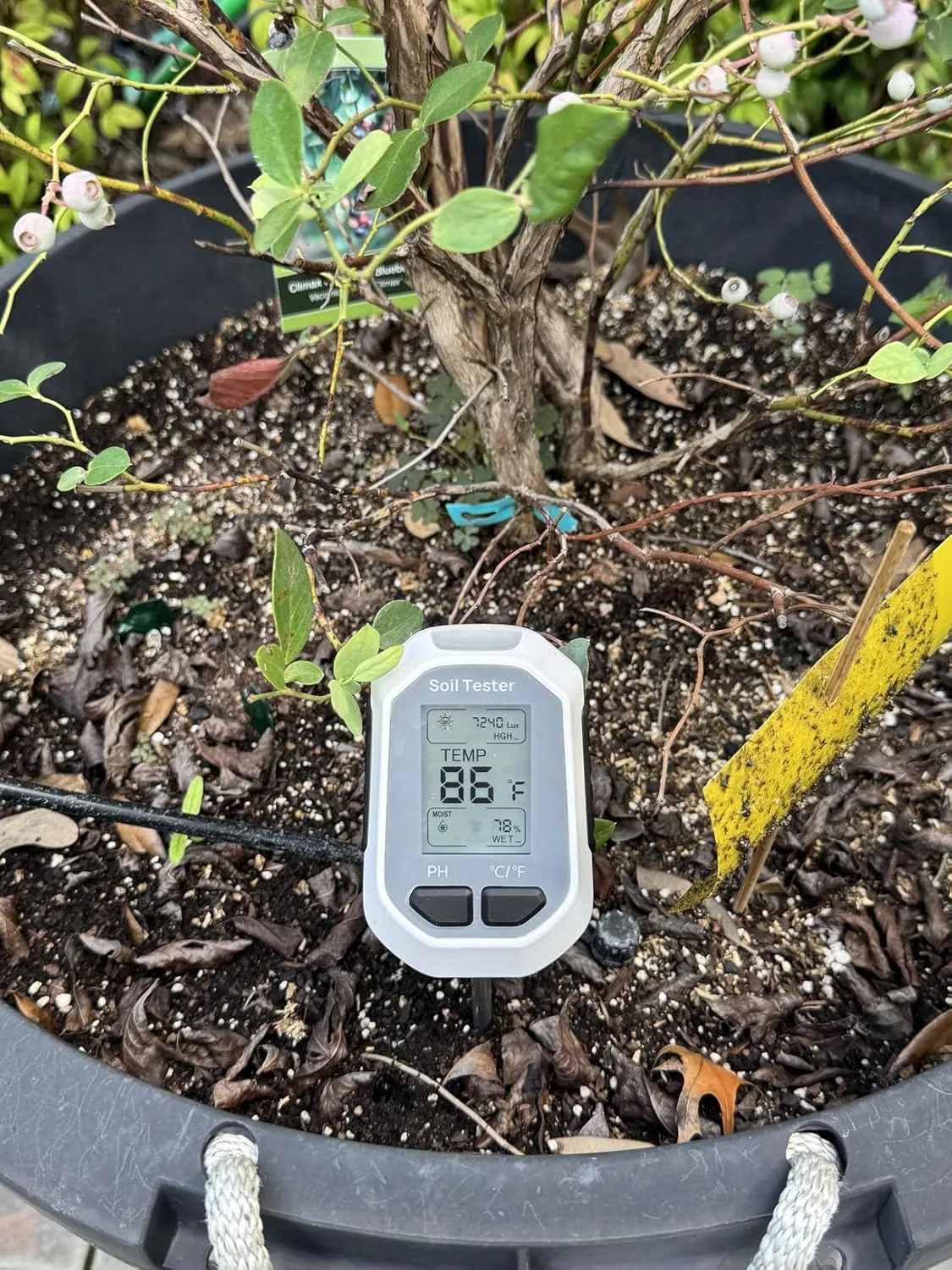
Camellias tolerate acidity extremely well, but the plants we tuck around them aren’t always built for the exact same range — and I burned through two growing seasons watching perfectly healthy-looking companions fade before I connected the dots back to soil pH rather than pests or watering habits. A digital pH tester cuts through the guesswork by showing you what’s actually happening in each bed, rather than what a nursery tag or a generic companion list assumes is true.
What works
- You get results on the spot, so checking several locations in one afternoon is realistic instead of waiting on lab turnaround — in my own yard, the camellia bed read 5.8 while a spot just ten feet off climbed to 6.9, which finally explained why azaleas planted “near” that same camellia were struggling despite the proximity.
- The slim probe lets you sample at different depths in one location; I found my amended topsoil tested nicely acidic while the subsoil underneath sat neutral, which reshaped both my mulching depth and which companions I felt confident letting root down deep.
- One battery carries you through an entire season of spot-testing, and getting it recalibrated takes almost no effort — there’s really no reason to skip a check before adding new companions.
What doesn’t
- The screen is small and washes out in direct sun, so you’ll end up crouching in shade or tilting the unit at an angle just to read the digits.
- Accuracy depends on the soil being properly damp, so testing right after rainfall or a good soak matters — skip that step and you’ll get erratic numbers that make you question whether the tool is broken.
I almost returned mine after getting three different readings from the same spot on a dry afternoon, convinced it was broken, but re-testing after watering proved the meter was right—I was just testing wrong. a digital pH tester is worth the investment if you’re serious about matching companions to your camellia’s acidic soil, rather than guessing and replanting twice.
Translating Your Number Into a Companion Decision
A pH reading by itself doesn’t do much good until you know what action it points to. Here’s the breakdown I use to turn a number into a real planting call, organized by the ranges that matter most for camellias and their neighbors:
Under 5.0 — too sour for anything, camellias included
This catches a lot of people off guard. Yes, camellias favor acid soil, but there’s a lower boundary they need too. Once pH drops under 5.0, aluminum and manganese become available in quantities that can actually harm roots, and even acid-loving plants start absorbing nutrients unevenly. If repeated readings land below that mark, hold off on companions entirely — work in a modest amount of dolomitic lime first, wait a few weeks, retest, and only then think about buying anything.
5.0–6.5 — the range camellias actually want
Here’s where the standard companion recommendations hold up. Azaleas, rhododendrons, gardenias, and Japanese pieris don’t merely survive in this band — they genuinely flourish. If your bed reads within this window both at planting depth and a bit further down, go ahead and plant any of the usual acid-loving suspects with confidence.
6.5–7.0 — a gray zone
You might already notice faint interveinal yellowing on the camellia at this level, even before it looks outright unhealthy. Ironically, azaleas and rhododendrons often suffer here worse than the camellia does — they tend to have less wiggle room with borderline pH. Groundcovers that handle shade well, like hellebores, ferns, and liriope, make a smarter pick in this zone since they care far less about hitting an exact pH than the traditional ericaceous shrubs do.
Over 7.0 — alkaline soil
At this stage it’s not just the companions in danger — the camellia itself is on shaky ground. Skip adding companions until sulfur amendments have been worked in and the bed has been retested. Putting acid-loving plants into alkaline soil just to “see what happens” burns a whole growing season and a plant along with it — I’ve learned that lesson the hard way, more than once.
Depth Counts Just as Much as Where You Test
Because the probe on a digital meter is narrow enough to sample at multiple depths in one spot, it’s changed which companions I’m willing to trust in any given bed. Shallow-rooted plants — liriope, hellebores, most groundcovers — really only interact with the top three or four inches of soil. But something like Japanese pieris or a young Japanese maple pulls from six to twelve inches down, and that lower layer doesn’t always match what you amended near the surface.
My current routine: check three separate spots across the bed, testing two depths at each — right beneath the mulch and roughly eight inches down — and I always do this after rain or a thorough soak, never on parched soil. When readings differ by more than half a point from one spot to another, I take that as a cue that the bed needs more uniform amending before I commit a companion to a particular spot, instead of assuming one test result speaks for the whole area.
Once the Range Checks Out, Here’s What to Explore
When your numbers land squarely in that 5.0–6.5 sweet spot, the familiar acid-loving companions — azaleas, rhododendrons, gardenias, pieris — stop being a gamble and become genuinely dependable choices. I go through the full plant-by-plant details, bloom timing and spacing included, in my complete camellia companion planting guide. The point of this post is the step that has to happen before you ever open that list: verify the pH actually suits the companions you have in mind, rather than assuming the soil under your camellia matches the soil a few feet away just because they’re neighbors.
Testing Errors That Quietly Skew Your Numbers
In my earliest seasons of soil testing, I made a handful of predictable mistakes that threw off my readings — and cost me companion plants as a result. Testing soil that’s bone dry gives you numbers disconnected from reality, so always test following rain or a deep watering session. Assuming one test spot represents the entire bed is another common misstep; I’ve measured swings of more than a full point across just ten feet, easily enough to explain why one azalea does beautifully while another three feet away limps along.
There’s a less obvious pitfall too: thick camellia canopies create pockets of dry shade beneath them, meaning a bed that tests perfectly fine on the day you check it can still dry out fast between rain events — and parched soil throws off both later readings and how well companions actually take up nutrients. Keep mulch generous and add supplemental water during dry stretches, even in beds where the pH itself already checks out.
Make Retesting a Habit, Not a One-Time Task
Soil pH shifts over time — it doesn’t stay put. Pine bark mulch and regular rainfall push soil more acidic over the years, while fertilizer and irrigation water, particularly if it leans hard or alkaline, can pull it back the other direction. I retest each planting bed at least annually, and always before slipping a new companion into an established one — one bed that measured 5.8 three years back now reads closer to 6.3 since I switched what mulch I use. Spending five minutes testing before you plant costs far less than replacing a companion that was doomed from the start.
About This Article

Written by Helen Pritchard. Helen Pritchard is a lifelong gardener in the Pacific Northwest who has grown more than 200 named camellia cultivars over two decades. She writes practical, experience-based guides to camellia care, from variety selection and pruning to troubleshooting yellowing leaves and bud drop. More about this site.
Verify this against a primary source
Specifics change, and your situation may differ from the one described here. These are the authorities worth checking directly:
- American Camellia Society — cultivar registration and culture guides
- USDA Plant Hardiness Zone Map — zone verification for your location
- Royal Horticultural Society — camellia cultivation and pest guidance