I’ve been growing camellias for over twenty years. In that time, I’ve made plenty of mistakes — wrong soil pH, wrong pruning timing, wrong everything. However, nothing frustrated me more than watching my potted camellias slowly decline despite my best efforts. Last spring, I decided to overhaul my entire fertilizing approach for Osmocote potted camellias. That single decision changed everything about how my container plants looked by midsummer.
My problem was painfully specific. I had six camellias growing in large terra cotta and glazed ceramic containers on my back patio here in Zone 8b. Three were Japonicas — ‘Kramer’s Supreme,’ ‘Elegans,’ and a dwarf called ‘Minato-no-Akari.’ The other three were Sasanquas: ‘Setsugekka,’ ‘Shishi Gashira,’ and ‘Kanjiro.’ All six were technically alive. None of them were thriving.
The foliage looked dull. New growth was sparse and yellowish rather than that glossy deep green I love. Bloom counts had dropped two seasons in a row. I was using a liquid acidic fertilizer on a schedule I thought was consistent — but container gardening, I’ve learned, punishes inconsistency far more harshly than in-ground growing does.
The Slow-Release Fertilizer That Finally Stopped My Potted Camellias From Fading Midseason
Container camellias are heavy feeders, and hand-watering with liquid fertilizer every few weeks wasn’t cutting it — nutrient levels would spike, then crash, leaving my plants looking pale and exhausted by July. Osmocote’s granular, temperature-activated release finally gave me consistent nutrition without the guesswork.
What works
- Foliage stayed deep green all summer instead of fading to that dull yellowish tone I used to see by August — the 11 essential nutrients, especially the iron, actually showed on the leaves.
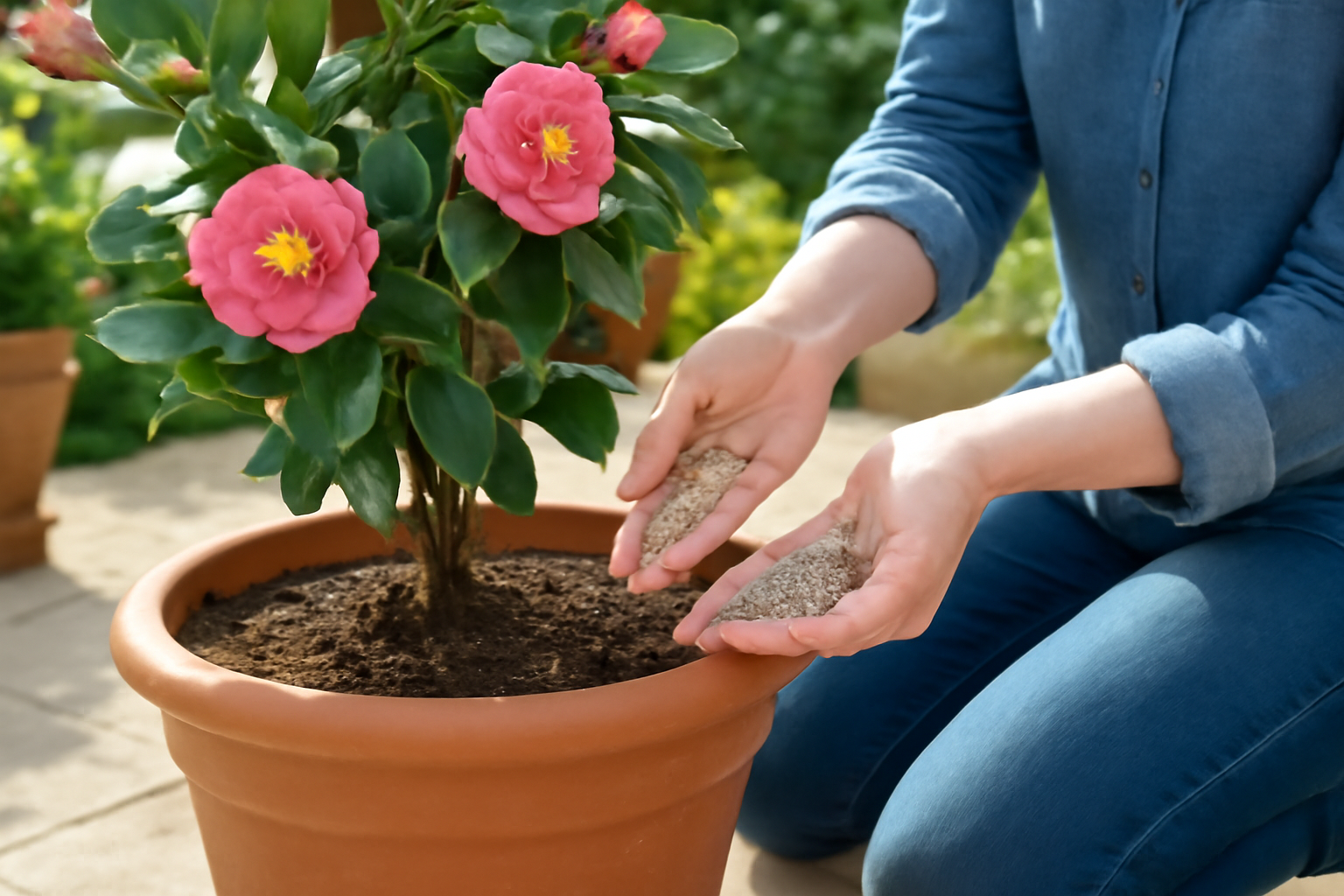
- No more feast-or-famine cycles; I mixed it into the top inch of potting soil once in spring and essentially forgot about it, which meant no accidental over-fertilizing that would burn roots.
- The granules break down gradually as soil temperature rises, so feeding matched my plants’ actual growth phase instead of my watering schedule.
What doesn’t
- You can’t see what you’re applying the way you can with liquid — I had to trust the label dosage, which meant my first attempt involved some nervous guesswork about how much to actually use.
- In cooler climates or during a cold spring, release slows dramatically, so if your camellias are in a shaded spot or your region stays chilly, you might not see the same mid-season boost.
I almost ditched it after three weeks because I didn’t see the dramatic leaf color shift I expected — then mid-June hit and suddenly my camellias looked alive again. Osmocote Smart-Release Plant Food Plus Outdoor & Indoor – Granular, Continuous Release Plant Fertilizer with 11 Essential Nutrients, 2 lbs.
This post contains affiliate links. As an Amazon Associate, I earn from qualifying purchases at no extra cost to you.
Osmocote Smart-Release Plant Food Plus Outdoor & Indoor
I mixed it in once in spring and stopped worrying about burning roots or watching my foliage fade by August.
Check Price on Amazon →