I Used a Soaker Hose Around My Camellia Roots All Summer

This post contains affiliate links. As an Amazon Associate, I earn from qualifying purchases at no extra cost to you.
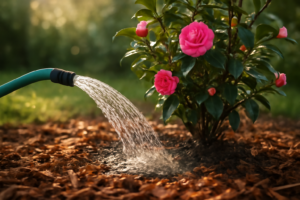
Last June, I nearly lost two of my most prized camellias to summer drought stress. I’ve been growing camellias in Zone 7b for over two decades, so you’d think I’d have the watering thing figured out. But that summer hit differently. Temperatures pushed into the upper 90s for weeks on end, and my hand-watering routine simply couldn’t keep up. That’s when I started seriously researching soaker hose camellias as a solution — and what I found genuinely changed how I manage my entire camellia bed.

Camellias are not drought-tolerant plants. Their fibrous, shallow root systems sit just a few inches below the mulch line, and they need consistent, even moisture — especially during bud development in late summer and early fall. Inconsistent watering leads to bud drop, leaf scorch, and in severe cases, root dieback. I’d watched my ‘Debutante’ Japonica drop nearly every bud two summers in a row. Something had to change.

After a lot of research and some honest conversations with other camellia growers in my local garden club, I decided to try a drip-style soaker hose system around my beds. Specifically, I landed on the Soaker Hose 100FT, Thickened Flat Soaker Hoses For Garden 100 ft 2 pack. Here’s everything that happened over the following months.

Why I Chose This Soaker Hose for My Camellias

I didn’t just grab the first soaker hose I saw. Honestly, I spent about a week reading reviews, watching YouTube videos, and comparing specs. My requirements were specific. I needed enough hose to loop through two large beds — roughly 80 linear feet of camellia plantings. I also needed something durable enough to survive a full Georgia summer under mulch without cracking or clogging.

The Soaker Hose 100FT, Thickened Flat Soaker Hoses For Garden 100 ft 2 pack stood out immediately. The “thickened” designation caught my attention because thin-walled hoses are notorious for blowing out under typical household water pressure. Two 50-foot sections also gave me flexibility to cover both beds independently, with separate shutoff points for each. That kind of zone control matters when one bed gets afternoon shade and the other is in full morning sun.

The claim of 80% water savings also resonated with me. Overhead watering camellias is actually counterproductive — wet foliage can encourage fungal issues like camellia petal blight, and most of the water evaporates before reaching the root zone anyway. Slow, deep watering directly at the root level is exactly what the science recommends. Camellias thrive in well-drained, acidic soil with a pH between 5.5 and 6.5, and consistent soil moisture supports nutrient uptake at that pH range.

First Impressions Out of the Box

The package arrived quickly and was well-organized. Both 50-foot hose sections were rolled neatly and labeled clearly. My first physical impression was positive — the hose walls felt noticeably thicker than a cheap soaker I’d tried years ago that split within a month.

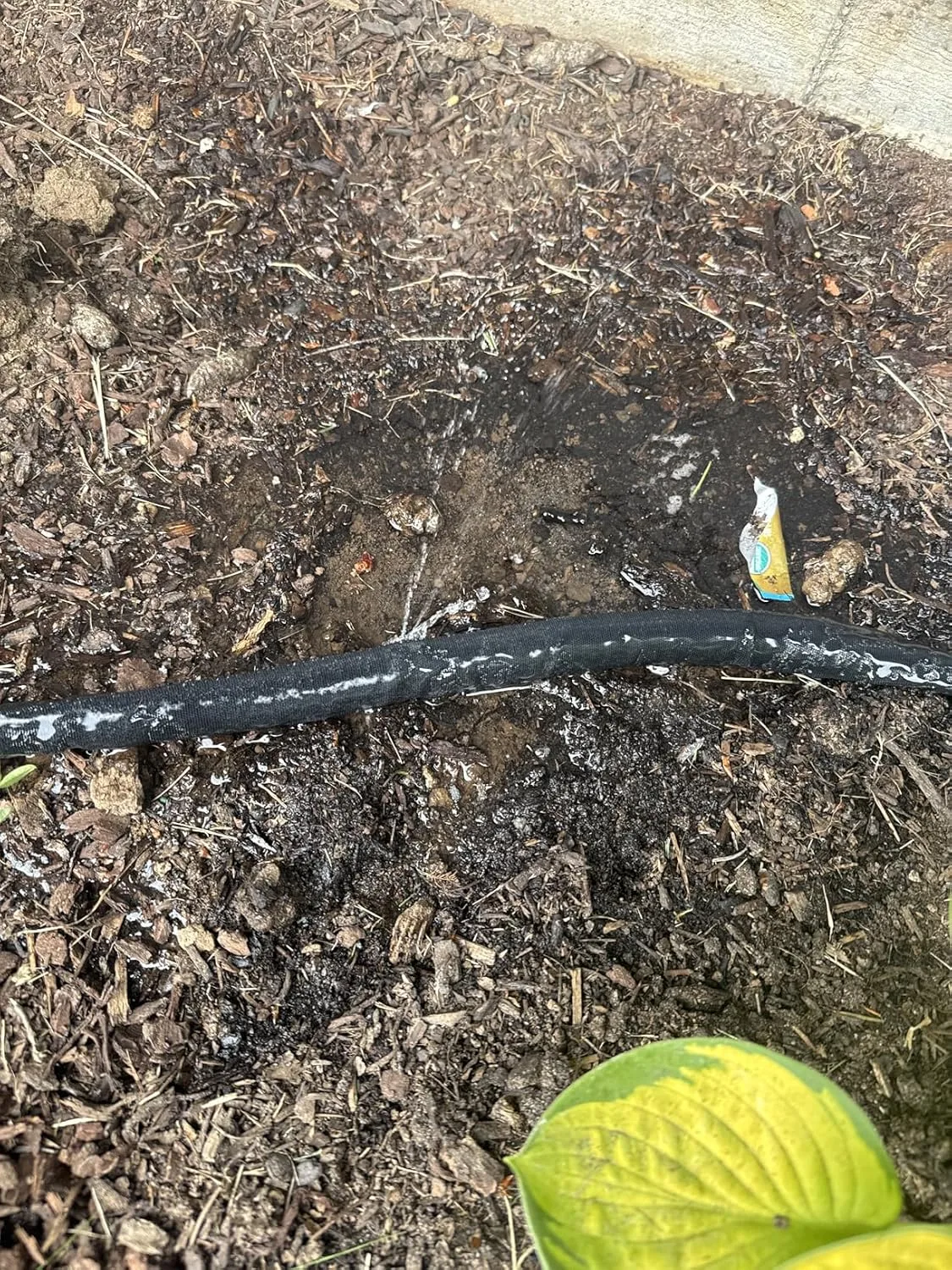
The flat design was new to me. Most soakers I’ve used in the past are round and porous throughout. This one is flat when off and expands slightly under pressure, sweating moisture evenly along its length. That design actually made it much easier to snake through my established camellia plantings without disturbing the root zone. Established camellias have root systems that spread wide and shallow — the last thing I wanted to do was dig around them.

Connecting to my standard garden hose faucet was simple. The fittings threaded on without any special tools. However, I did notice the hose needed about 10 to 15 minutes of running before it moistened evenly end-to-end. That’s worth knowing upfront — don’t assume the far end is getting water just because the near end is sweating nicely.

My Testing Approach: Which Camellias, What Conditions

I ran this system from mid-June through early October — essentially the entire hot season in Zone 7b. My test beds included a mix of varieties I’ve grown for years. The main bed featured three Camellia japonica cultivars: ‘Debutante’ (the bud-dropper I mentioned), ‘Kramer’s Supreme,’ and ‘Professor Charles S. Sargent.’ The second bed held two Camellia sasanqua shrubs — ‘Setsugekka’ and ‘Kanjiro’ — which are generally more heat-tolerant but still benefit from consistent moisture during bloom development.

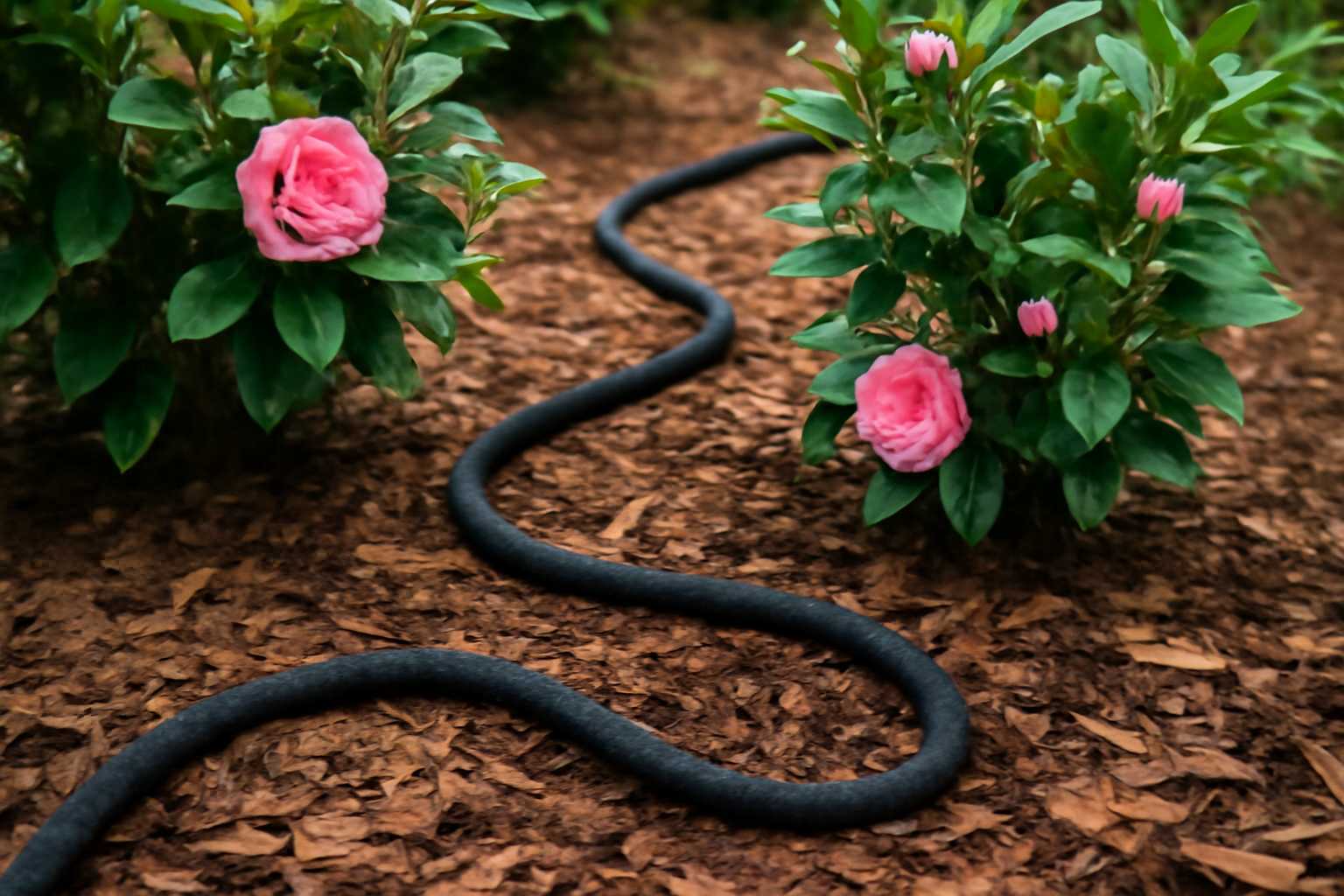
All beds are mulched with about 3 inches of pine bark fines, which is my standard practice for maintaining soil acidity. I laid the Soaker Hose 100FT, Thickened Flat Soaker Hoses For Garden 100 ft 2 pack directly on the soil surface beneath the mulch, looping it in a rough oval about 12 to 18 inches out from each plant’s trunk. That placement targets the feeder root zone without saturating right at the crown.

My watering schedule was simple: 45 minutes every other morning during weeks with no rain, and no supplemental watering during any week that received an inch or more of rainfall. I tracked soil moisture with a basic probe meter to stay objective about what was actually happening underground.

Water Pressure Settings I Used

Soaker hoses work best at low water pressure — typically 10 PSI is ideal, though most home systems run 40 to 60 PSI. I added a simple inline pressure regulator (under $10 at any hardware store) to keep things consistent. Without it, the hose sweat too aggressively near the faucet end and barely dripped at the far end. With it, the moisture distribution was noticeably more even.

What Actually Changed in My Camellia Beds

The first thing I noticed — within about two weeks — was that the soil in both beds stayed consistently moist 2 to 3 inches down, even through 95-degree days. Before the soaker system, I was losing that moisture by midday. In fact, I’d check with my probe and find bone-dry conditions below the mulch layer just hours after hand-watering.

By mid-July, the foliage on all five plants looked noticeably healthier. ‘Debutante’ in particular had a deep, glossy green color I hadn’t seen on her in two summers. New growth was emerging steadily, which is a good indicator of a plant that isn’t struggling with water stress. Heat-stressed camellias typically stall their growth entirely during peak summer.

The real payoff came in fall bloom. My Sasanquas started flowering in September as usual, but the bud set was significantly fuller than prior years. ‘Kanjiro’ produced dozens more buds than the previous season. By October, ‘Setsugekka’ was covered in those gorgeous white semi-double flowers — the best show I’ve seen from that plant in years.

As for the Japonicas, bud drop was essentially eliminated. ‘Debutante’ held every bud she set. ‘Kramer’s Supreme’ produced its largest bloom count since I planted it. That result alone made the entire experiment worthwhile.

Water Bill Impact

I can’t give you an exact percentage, but my summer water usage was meaningfully lower than prior years. Hand-watering those beds used to take 20 to 25 minutes of active hose time each session. With the soaker system on a timer, I wasn’t standing there at all — and the water went exactly where it was needed rather than spraying across mulch, walkways, and neighboring plants.

The Downsides You Should Know About Soaker Hose Camellias

I want to be straightforward here, because this product is not perfect. There were a few frustrations worth knowing before you buy.

First, the pressure regulator is not optional. I made the mistake of running the hose without one for the first three days. The near-faucet end oversaturated the soil noticeably while the far end of the 50-foot run was barely damp. That’s a design limitation of flat soaker hoses in general, not unique to this product — but the instructions don’t emphasize this enough.

Second, I had a moment of real doubt around the six-week mark. One section of hose — about 8 feet in the middle of the Japonica bed — seemed to stop sweating entirely. I pulled it out from under the mulch and found a small kink I hadn’t noticed at installation. Once I straightened it, flow resumed normally. However, that week of reduced moisture to ‘Professor Charles S. Sargent’ caused some minor leaf edge browning that took a month to fully grow out.

Third, the flat hose design, while convenient for installation, is slightly harder to inspect once it’s buried under mulch. I now recommend marking the hose path with small garden stakes so you can periodically check for kinks or critter damage without digging around blindly.

Finally, this system is best for established plantings. If your camellias are newly planted — less than two years in the ground — I’d still recommend hand-watering to monitor individual plant needs more carefully during establishment.

Final Verdict: Who Should Buy This for Soaker Hose Camellias

After a full summer of testing, my overall rating is a strong 4.5 out of 5. The Soaker Hose 100FT, Thickened Flat Soaker Hoses For Garden 100 ft 2 pack delivered genuinely impressive results on my established camellias, and the two-pack format at 100 feet total is smart value for anyone with multiple beds.

Here’s who I’d recommend this for:

  • Gardeners with established camellia beds in Zones 6b through 9a who struggle with summer drought stress
  • Anyone who’s experienced repeated bud drop on Japonica varieties during hot, dry summers
  • Gardeners who want to reduce hand-watering time without sacrificing plant health
  • Those with large beds requiring 50 to 100 feet of coverage — the two-pack format is ideal

On the other hand, this product may not be right for you if:

  • You’re watering newly planted camellias that need individualized monitoring
  • Your water pressure isn’t adjustable and you can’t add a pressure regulator
  • You need something for a very small, single-plant situation where 50 feet of hose is excessive

A Quick Word on the Runner-Up Option

Before I committed to the two-pack, I also seriously considered the Gilmour 50′ Black Flat Weeper Soaker Hose. Gilmour is a well-established name in garden irrigation, and their flat weeper design is well-regarded. For a single small bed or a gardener who just needs one 50-foot run, it’s a solid, trustworthy choice. However, the value proposition of the two-pack ultimately swayed me — more total footage for a lower per-foot cost, with the flexibility of two independent sections. That said, if Gilmour goes on sale or you only need one hose, I wouldn’t hesitate to recommend it as an alternative.

In my two-plus decades of growing camellias, consistent moisture management has been the single biggest factor separating struggling plants from thriving, floriferous ones. This soaker hose system finally gave me a reliable, low-effort way to deliver that consistency — and my camellias bloomed better this fall than they have in years. That’s about as strong an endorsement as I can give.