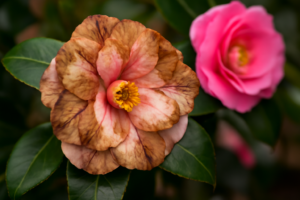
Nearly every camellia grower operates on the same assumption the moment petal blight shows up: that spraying is a waste of effort because the fungus has already won. I believed that too, until one February morning proved the assumption only half true. My ‘Kramer’s Supreme’ japonicas, plants I’d fussed over for more than ten years in my Zone 8 beds, had turned overnight into a mess of brown, water-soaked blotches. Anyone who has typed Daconil fungicide camellia petal blight into a search bar at two in the morning already knows the particular flavor of dread I’m describing. Just days before, those same flowers had been a rich, flawless red — now they were collapsing into a soggy brown ruin.
The culprit, Ciborinia camelliae, ranks among the most disheartening fungal diseases a camellia can catch. It spreads quickly, overwinters in the soil, and conventional advice basically shrugs — once it’s established, there’s supposedly not much left to try. More than two decades of growing camellias have taught me that lesson the hard way, more than once; I’ve watched whole seasons collapse to this fungus while doing nothing but watch. This time around, I decided to treat it as a problem worth working through, rather than another loss to just absorb.
My Go-To RTU Daconil for Fighting Petal Blight Once Bloom Season Is Underway
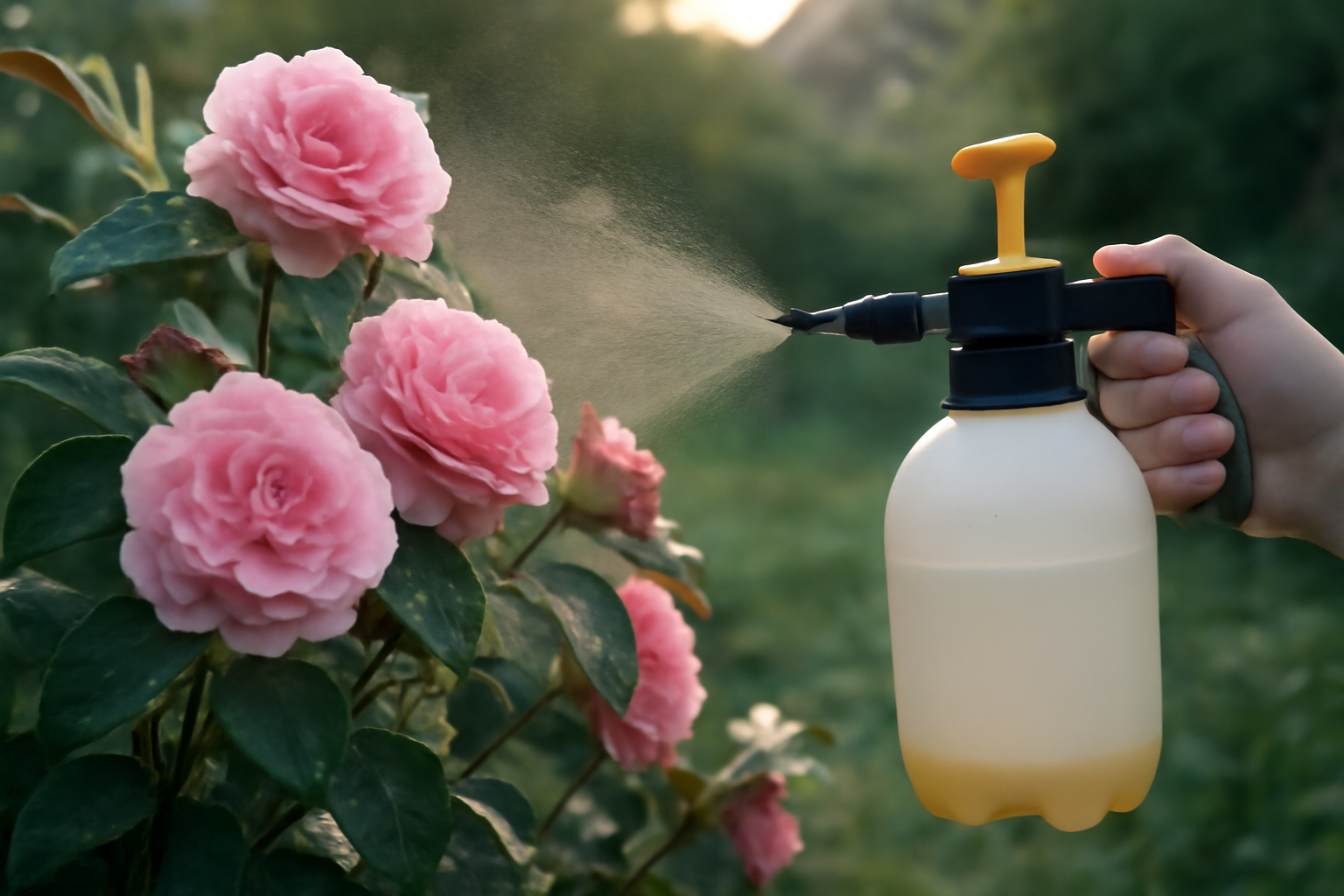
Petal blight doesn’t pause while you measure out concentrate and stir up a batch — every minute spent mixing is a minute more blooms are lost. A ready-to-spray bottle skips that step altogether, letting you go from spotting the damage to treating it almost in the same motion, which matters enormously when you’re racing to save whatever’s left of a camellia’s short peak bloom.
Where it earned its keep
- No stirring, no guessing at dilution ratios — I could aim straight at individual affected blooms and the surrounding canopy and get instant, even coverage every time.
- The fine mist reaches into the tight branch crotches where blight loves to hide, settling onto petal surfaces instead of sliding off the way a heavier liquid would.
- Within roughly 48 hours, fresh brown spotting on the treated flowers had visibly slowed, though I had to accept that the petals already damaged were never coming back.
Where it fell short
- Ounce for ounce, the RTU bottle runs pricier than concentrate, and that difference adds up quickly once you’re treating several plants through a season of sustained infection pressure.
- Spraying alone won’t solve everything — infected blooms and dropped petals still have to be cleared from the ground, or the fungus simply cycles back regardless of how often you treat.
I almost gave up after the second week when fresh blight appeared on new buds, wondering if I was spraying too late in the day or hitting the flowers at the wrong stage—but I realized I hadn’t been removing the old infected blooms consistently enough. If you’re ready to commit to the full approach, grab a Central Garden Gulfstream Gardentech Daconil Fungicide Rtu Spray and start pulling those damaged petals.
About This Article

Written by Helen Pritchard. Helen Pritchard is a lifelong gardener in the Pacific Northwest who has grown more than 200 named camellia cultivars over two decades. She writes practical, experience-based guides to camellia care, from variety selection and pruning to troubleshooting yellowing leaves and bud drop. More about this site.
Verify this against a primary source
Specifics change, and your situation may differ from the one described here. These are the authorities worth checking directly:
- American Camellia Society — cultivar registration and culture guides
- USDA Plant Hardiness Zone Map — zone verification for your location
- Royal Horticultural Society — camellia cultivation and pest guidance