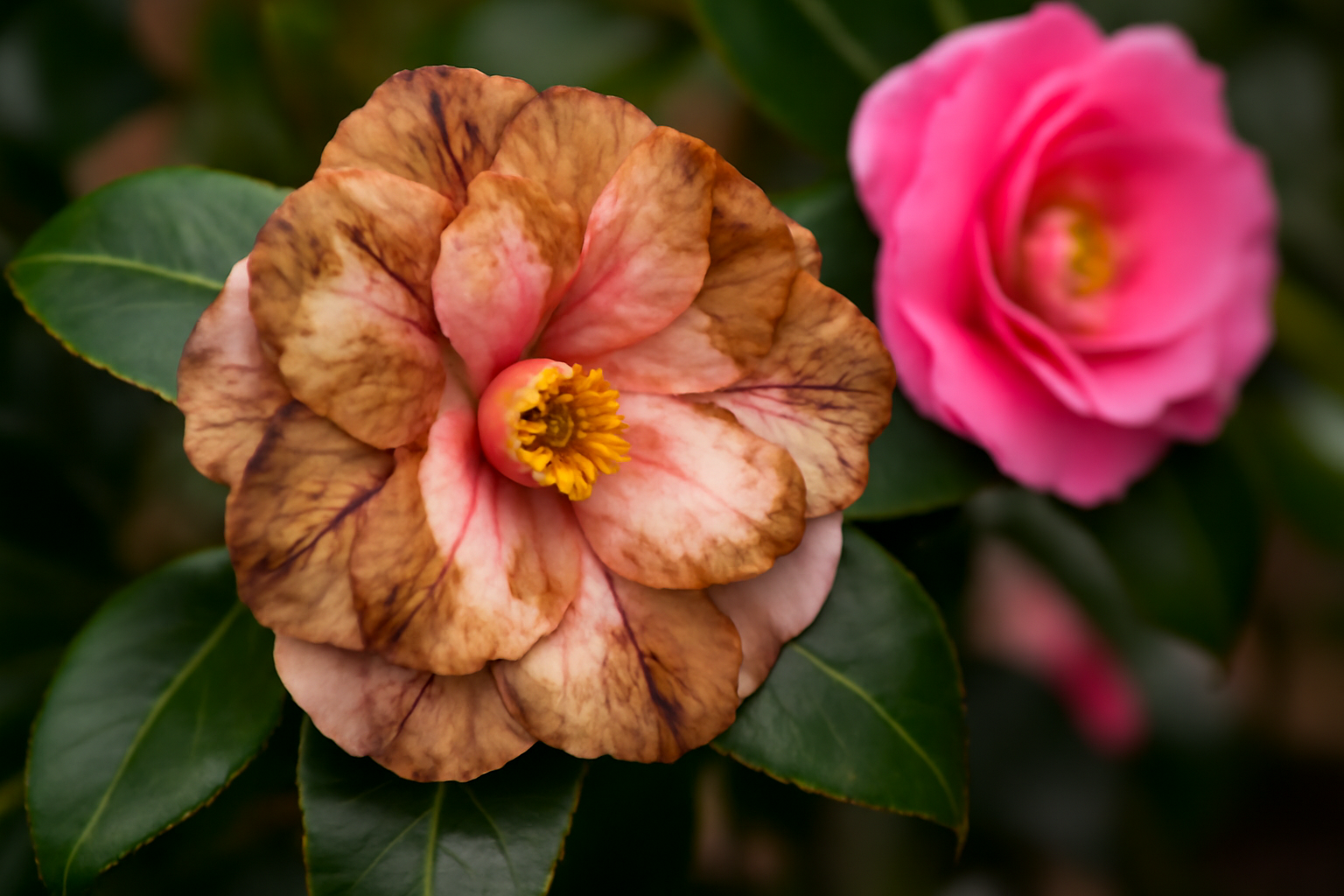
Back in the winter of my fifth year growing camellias seriously, I nearly lost an entire bed because I misread what was happening in front of me. I’d stepped out with a mug of tea to admire ‘Debutante’ — a soft blush japonica that had anchored my Zone 8a border for over a decade at that point — and found her blooms gone an ugly, muddy brown, almost overnight. This wasn’t the tidy, crisp brown edge you get from a hard frost. It was slick, dark, and spreading fast. That morning was my introduction to camellia petal blight, and I’ll admit the lesson was expensive: before I got a handle on it, four more plants had caught it too.
Chances are, if this topic brought you here, you’ve watched the same thing happen — flowers that looked perfectly fine yesterday collapsing into a wet brown pulp today. It stings, particularly after a whole autumn and winter of waiting for those buds to open. But take heart: once you understand how this fungus operates, camellia petal blight becomes something you can actually manage.
So What Exactly Is Camellia Petal Blight?
The culprit behind this mess is a fungus called Ciborinia camelliae. Unlike a lot of camellia problems, this one is remarkably picky — it goes after flowers exclusively, leaving stems and leaves alone. That narrow focus is actually helpful for diagnosis. Brown, mushy petals paired with perfectly green, healthy foliage is a strong signal that blight, not something else, is at play.
This fungus spends the off-season tucked into the soil in the form of small, hardened black structures known as sclerotia. Come late winter and early spring — exactly when your camellias are gearing up to bloom — those sclerotia sprout tiny mushroom-like structures called apothecia. These release spores into the air, and those spores can settle on an open flower and establish infection within just a few hours if conditions cooperate.
Cool, damp weather is exactly what this disease wants. My Zone 8b beds, sitting through winters with temperatures lingering in the 40s and 50s Fahrenheit under frequent rainfall, essentially roll out the red carpet for this fungus.
Spotting Camellia Petal Blight: The Telltale Signs
Correct identification matters more than people realize. I’ve watched fellow gardeners chase entirely wrong theories — pests, watering issues, you name it — when the actual problem had been lurking in the soil the whole time. Here’s what you’re actually looking for:
- A webbed or netted brown pattern. Examine the discolored tissue up close. Blight leaves behind a brown stain threaded with darker veins, almost resembling the skeleton of a decaying leaf.
- The whole flower gives out fast. Frost damage stalls after browning just the outer petals — blight doesn’t. It pushes inward quickly until the entire bloom is compromised.
- A slimy, damp base. Pick a dropped bloom off the ground. If the base feels wet or slightly slick to the touch, that points to fungal activity rather than cold injury.
- A hardened brown ring near the base. Some infected flowers develop a firmer, darker band right where the petals attach to the calyx — another giveaway.
- Foliage that stays untouched. This fungus never bothers leaves. If your leaves are browning as well, look elsewhere — root rot or canker are more likely suspects.
To put it in context: frost injury usually browns just the outer petal tips in a clean, contained way. Wind damage looks dry and papery. Petal blight, by contrast, is wetter, quicker, and takes the whole bloom down.
Which Cultivars Take the Biggest Hit?
Truthfully, nothing in my garden is completely immune. But the large-flowered japonicas seem to bear the brunt of it. ‘Debutante,’ ‘Governor Mouton,’ and ‘Professor Charles S. Sargent’ have each broken out with blight in my own collection during particularly rainy winters. Their generous, densely packed blooms hold moisture wonderfully well — which, unfortunately, also makes them excellent spore traps.
Sasanquas, which flower in fall rather than the depths of winter, tend to dodge the worst outbreaks purely because of when they bloom. My ‘Setsugekka’ and ‘Yuletide’ are typically finished flowering before fungal pressure peaks. Reticulata hybrids fall somewhere in between — their oversized flowers give spores plenty of surface to land on, yet their bloom windows shift enough year to year that some seasons they come through unscathed.
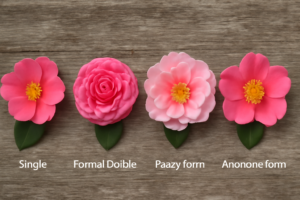
From what I’ve observed, single-flowered varieties bounce back visually much faster than doubles. Lose one single bloom and there are plenty more buds waiting behind it. A heavily petaled double like ‘Midnight Magic,’ though, can look like a disaster zone after losing just a handful of flowers.
The Error I Made — So You Won’t Have To
Here’s the lesson that cost me. The very first season I diagnosed petal blight correctly, I was faithful about snipping off every infected bloom while it was still on the plant. I even felt a bit proud of my diligence. What I completely overlooked was picking up the blooms that had already fallen to the ground.
Those discarded flowers, quietly rotting away on the mulch, were busy forming sclerotia right in my own beds. Without meaning to, I’d built a fungal breeding ground that would haunt me the following year. Sure enough, by the next winter, the infection pressure had spread noticeably wider and hit harder.
So here’s the takeaway: pulling infected blooms off the plant only handles half of the problem. You have to also gather up every single fallen flower from the soil and remove it entirely from your property. Skip the compost pile — bag it up and put it in the trash.
Slowing the Spread of Camellia Petal Blight
There isn’t one magic fix for this. Keeping camellia petal blight under control, in my experience, takes a mix of good habits plus, in tough years, a well-timed fungicide. Here’s what I’ve found genuinely makes a difference.
Cultural Habits That Actually Move the Needle
Pull infected and spent flowers off right away. During peak flowering, I walk my beds every two to three days without fail. Any bloom showing brown gets removed on the spot. Doing this cuts down on how many spores are released into the air to land on your remaining healthy flowers.
Collect every single dropped bloom. I can’t stress this enough — it’s not optional. Bend down, gather them up. I keep a small bucket handy and wear gloves while doing it. Seal them in bags for disposal rather than tossing them onto the compost.
Swap out surface mulch each year. Because sclerotia hide out in the soil and mulch layer over winter, refreshing that mulch annually shrinks the fungal reservoir waiting there. Every early spring, I clear the old mulch out from beneath my camellias and lay down fresh pine bark or pine straw — both of which also help keep the soil in that slightly acidic 5.5 to 6.5 pH range camellias favor.
Give plants room to breathe. Crowded plantings create the muggy microclimate Ciborinia camelliae loves. Thinning out interior growth and keeping proper spacing between shrubs genuinely helps. I’ve written a separate post on pruning fundamentals for camellias if you’d like to dig deeper into that topic.
Skip overhead watering while blooms are open. Damp petals practically roll out a welcome mat for spores. Water the base of the plant instead. Watering earlier in the day also gives moisture time to dry off before the cooler evening air sets in.
When to Reach for Fungicide
Good sanitation habits won’t always be enough during a brutal blight year — especially if neighboring camellia growers aren’t staying on top of their own beds. That’s when fungicide can help hold the line.
Keep your hopes realistic, though: the American Phytopathological Society notes that neither chemical fungicides nor biological controls have managed to bring Ciborinia camelliae down to a level most camellia growers would consider acceptable, and states plainly that good sanitation is still the most reliable control method available. Products built around myclobutanil are occasionally used as a protective measure, though you should expect only partial results rather than a real cure. Thiophanate-methyl is another choice some growers report reasonable success with. The catch, though, is timing — these treatments only work as protectants applied before infection sets in, ideally right as the first buds start opening.
The right window shifts depending on your zone and cultivar. In my Zone 7b beds, where japonicas typically open between late February and March, I’ll consider spraying around mid-February if a wet, mild spell is forecast. Down in Zone 8b, where some japonicas can open as early as January, I move that whole calendar earlier.
Read every label thoroughly and stick to your local regulations. Since fungicide resistance can build over repeated seasons, rotating between different chemistries is a smart habit. It’s also worth checking whether your regional cooperative extension office has tailored advice — that resource tends to go underused.
Do Soil Drenches Actually Help?
There’s been some research into soil drenches designed to suppress sclerotia formation, but results in home gardens have been all over the map. From my own experience, aggressively removing infected material has produced far more dependable results than any soil treatment I’ve experimented with.
That said, if a particular bed has a rough track record with blight, refreshing the top few inches of soil alongside your mulch replacement could meaningfully cut down the sclerotial population there. I wouldn’t count on it as a standalone fix, but folded into a broader strategy, it earns its place.
Is Long-Term Prevention Actually Achievable?
Fully eliminating this disease is unlikely once it’s established in your region — and Ciborinia camelliae has already made itself at home across camellia-growing pockets of the southeastern US, the Pacific Northwest, and the UK. Its spores drift on air currents, so if there’s a camellia growing within a mile of your garden, you’re probably facing some spore pressure no matter what precautions you take.
Still, not being able to eradicate it completely doesn’t mean your efforts are wasted. Sticking with consistent sanitation season after season genuinely lowers disease pressure over time — I’ve watched it happen in my own garden. The plants nearest my original outbreak still get a touch of blight each year, but the severity has dropped considerably since I got serious about cleanup.
Some growers opt for cultivars that bloom especially early or late in the season, largely sidestepping the window of heaviest spore activity. My ‘Kanjiro’ sasanqua, flowering through October and November here in Zone 8a, hasn’t shown a hint of petal blight in ten years. Timing genuinely counts for a lot.
Choosing varieties with fewer petals — singles and semi-doubles instead of heavily doubled blooms — can also lessen the damage. Less petal surface means fewer landing spots for spores, and single blooms tend to drop cleanly, leaving behind less debris to clean up.
My Step-by-Step Response Plan for Petal Blight
If camellia petal blight has already shown up in your garden, here’s the exact sequence I’d follow:
- Right now: Walk through your camellia beds. Strip every infected flower off the plants and pick up every dropped one from the soil. Bag them and throw them out — no composting.
- Within the week: Rake out the surface mulch under any affected plants and get rid of it. Lay down a fresh 2-3 inch layer of pine bark or pine straw in its place.
- All through bloom season: Inspect your plants every two to three days. Pull off any browning flowers as soon as you spot them. Don’t let fallen blooms sit on the ground.
- Ahead of next season: Think about a preventative fungicide spray right as buds start showing color, especially if this year’s blight pressure was heavy.
- For the long haul: Reassess spacing between plants for better airflow. Consider planting more fall-blooming sasanquas to stretch your season while lowering blight risk.
Camellia petal blight is a genuine nuisance, and I won’t sugarcoat that. Watching a bloom that took an entire year to form turn to brown mush within forty-eight hours never stops being disappointing. Even so, with steady management, you can keep it from wrecking your whole flowering season — and over time, you really can bring the overall disease pressure down.
All the effort is worth it in the end. My ‘Debutante’ has rewarded me with three gorgeous flowering seasons since that first rough outbreak, once I got serious about staying ahead of sanitation. Give your garden the same attention at the right moments, and it will bounce back too.
About This Article

Written by Helen Pritchard. Helen Pritchard is a lifelong gardener in the Pacific Northwest who has grown more than 200 named camellia cultivars over two decades. She writes practical, experience-based guides to camellia care, from variety selection and pruning to troubleshooting yellowing leaves and bud drop. More about this site.
Verify this against a primary source
Specifics change, and your situation may differ from the one described here. These are the authorities worth checking directly:
- American Camellia Society — cultivar registration and culture guides
- USDA Plant Hardiness Zone Map — zone verification for your location
- Royal Horticultural Society — camellia cultivation and pest guidance