This post contains affiliate links. As an Amazon Associate, I earn from qualifying purchases at no extra cost to you.
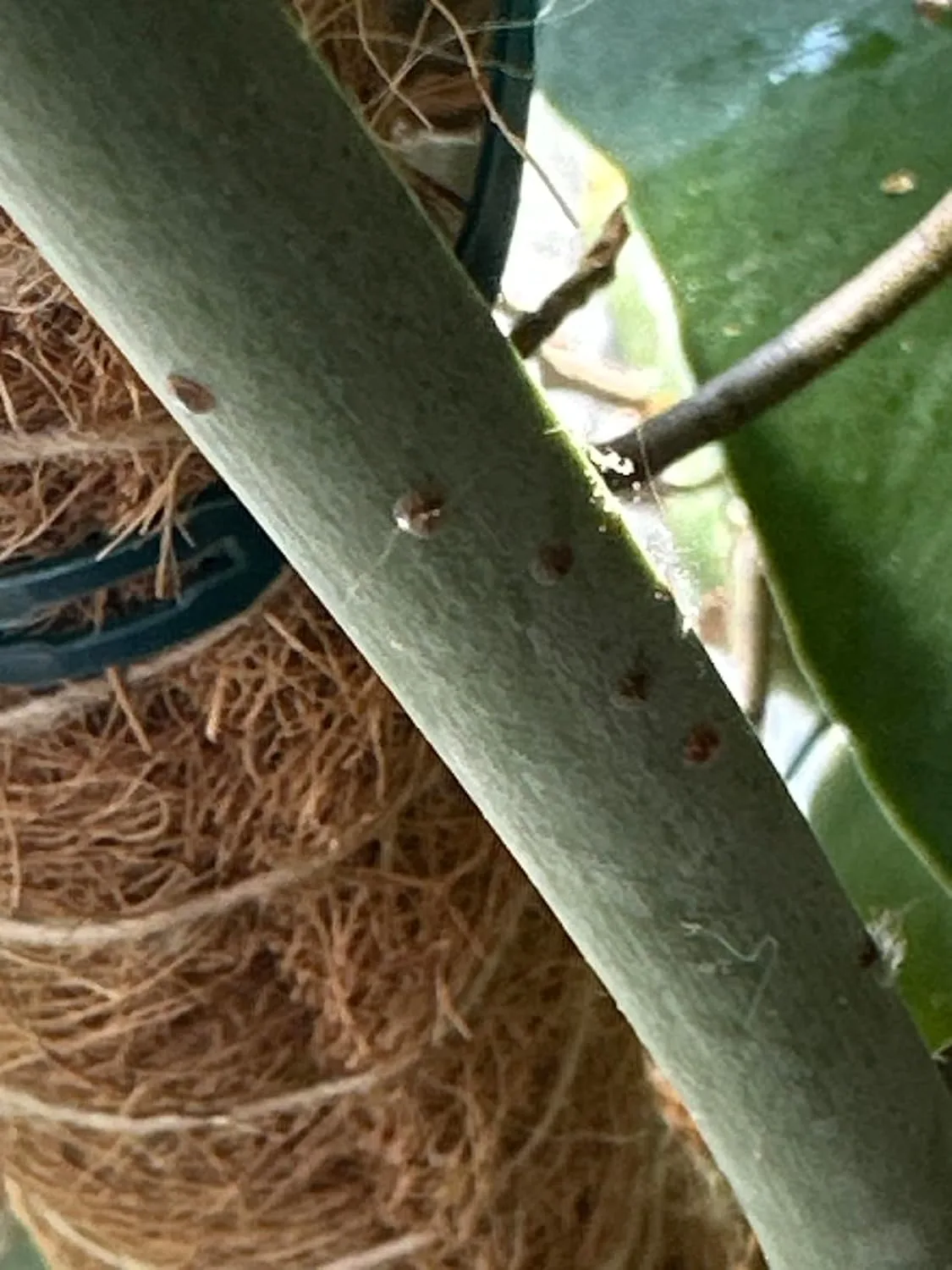
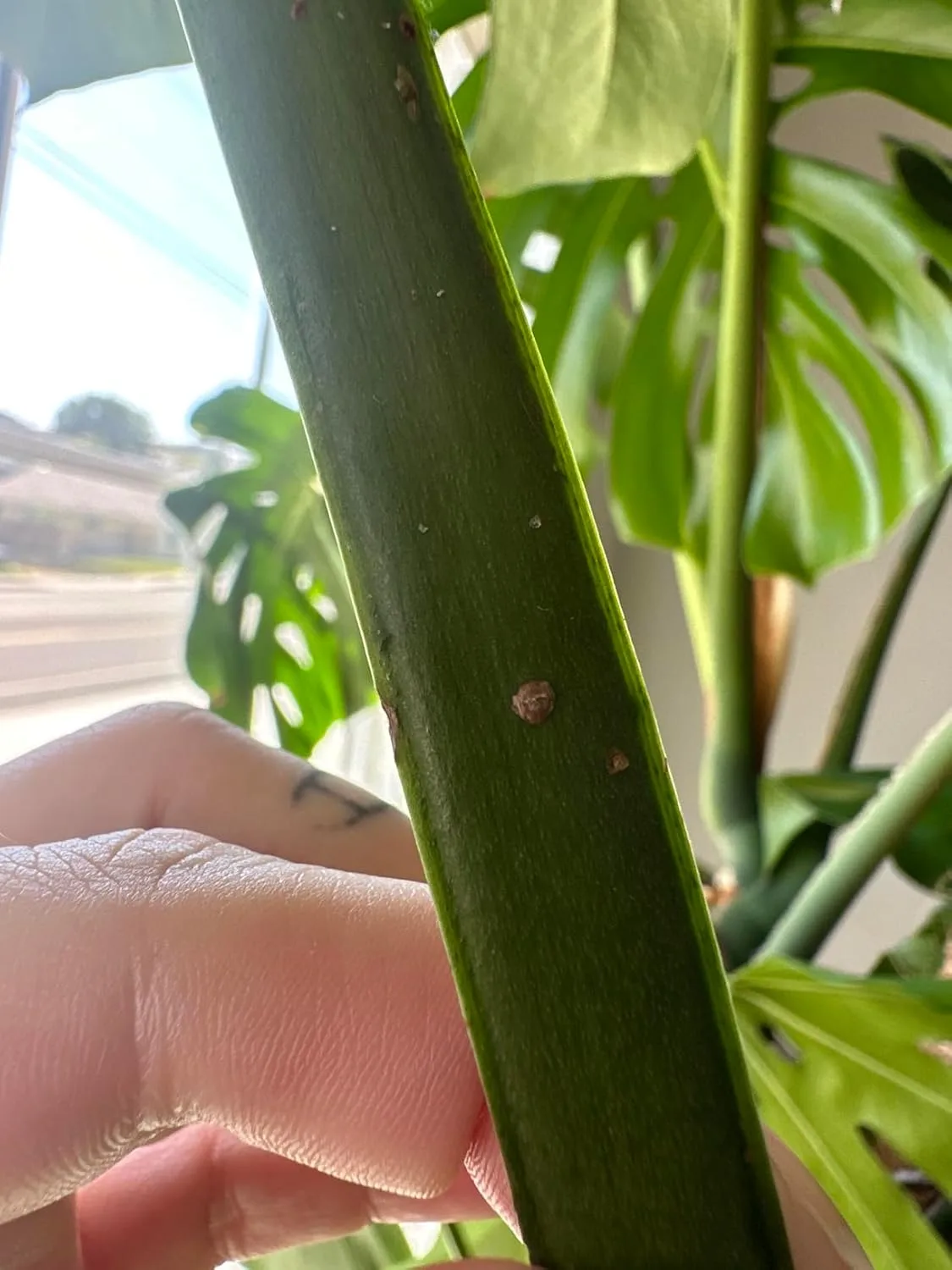
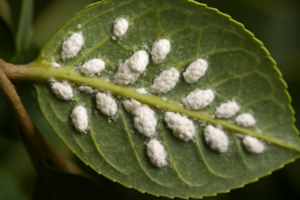
Last November, I walked out to check on my camellias and noticed something that made my stomach drop. A white, waxy crust had built up along the stems of my oldest Japonica — ‘Kramer’s Supreme,’ a plant I’ve been nurturing for nearly two decades. Scale insects. And not just a light dusting of them, either. Using horticultural oil on camellias for scale is something experienced growers swear by, and I’d been putting it off for too long. That oversight was now staring me in the face.
I grow camellias in Zone 7b, in the Piedmont region of North Carolina. My soil runs slightly acidic — right in that sweet spot between 5.5 and 6.5 pH that camellias love. I’ve grown Japonicas, Sasanquas, and a few hybrid varieties over the years with mostly great results. But that autumn, scale had quietly spread from ‘Kramer’s Supreme’ to two nearby Sasanquas: ‘Yuletide’ and ‘Setsugekka.’ I also spotted early aphid colonies on fresh growth. It was time to act.
I’ve dealt with scale before using various treatments. Some worked. Many didn’t. This time, I wanted something I could trust — something with a track record and organic credentials. That search led me to Bonide All Season Horticultural & Dormant Spray Oil, 32 oz Ready-to-Use Spray.
Why I Chose This Product for Horticultural Oil on Camellias Scale Treatment
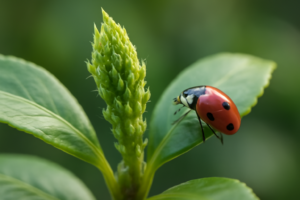
My research started, as it often does, on gardening forums. Camellia Society discussions kept pointing toward oil-based sprays as the gold standard for overwintering scale on broadleaf evergreens. The science makes sense. Horticultural oils work by smothering insects and their eggs rather than poisoning them chemically. That means no resistance buildup, no harsh residues, and no harm to the beneficial insects that return in spring.
Several gardeners I respect online specifically named Bonide products. I appreciated that the Bonide All Season Horticultural & Dormant Spray Oil is approved for organic gardening. That matters to me. I have dogs that roam the garden, and I’m cautious about what I apply near anything they might brush against or sniff around.
I also liked the “all season” designation. Many dormant oils are strictly for bare-wood application. However, camellias are evergreen — they don’t drop their leaves in winter. Using a traditional dormant oil on leafed-out camellias risks serious phytotoxicity. An all-season formula is designed to be gentler on foliage while still being effective. That distinction is critical for camellia growers specifically.
First Impressions: Packaging and Setup
The bottle arrived well-packaged. No leaks, no mess. The 32-ounce ready-to-use format comes with a built-in trigger sprayer, which I appreciated immediately. No mixing, no measuring, no separate sprayer needed. That convenience matters when you’re working outside in November cold with stiff fingers.
The trigger mechanism felt sturdy. Some budget sprayers feel flimsy after a few pumps — this one had a satisfying resistance that suggested it would last. The nozzle adjusts from a fine mist to a steady stream, which proved genuinely useful when trying to reach the undersides of camellia leaves and into dense stem junctions where scale loves to hide.
The label is detailed and clearly written. Honestly, I read the whole thing before applying — something I always recommend to fellow gardeners. It lists application rates, timing guidelines, and a specific caution: don’t apply when temperatures exceed 90°F or when plants are drought-stressed. Good to know, and easy to follow in late fall conditions.
My Testing Approach
I treated three separate camellia plants over a six-week period from mid-November through late December. My subjects were:
- ‘Kramer’s Supreme’ (Japonica) — heaviest scale infestation, some aphid damage on new flush
- ‘Yuletide’ (Sasanqua) — moderate scale, actively blooming at the start of treatment
- ‘Setsugekka’ (Sasanqua) — lighter scale presence, mostly on older woody stems
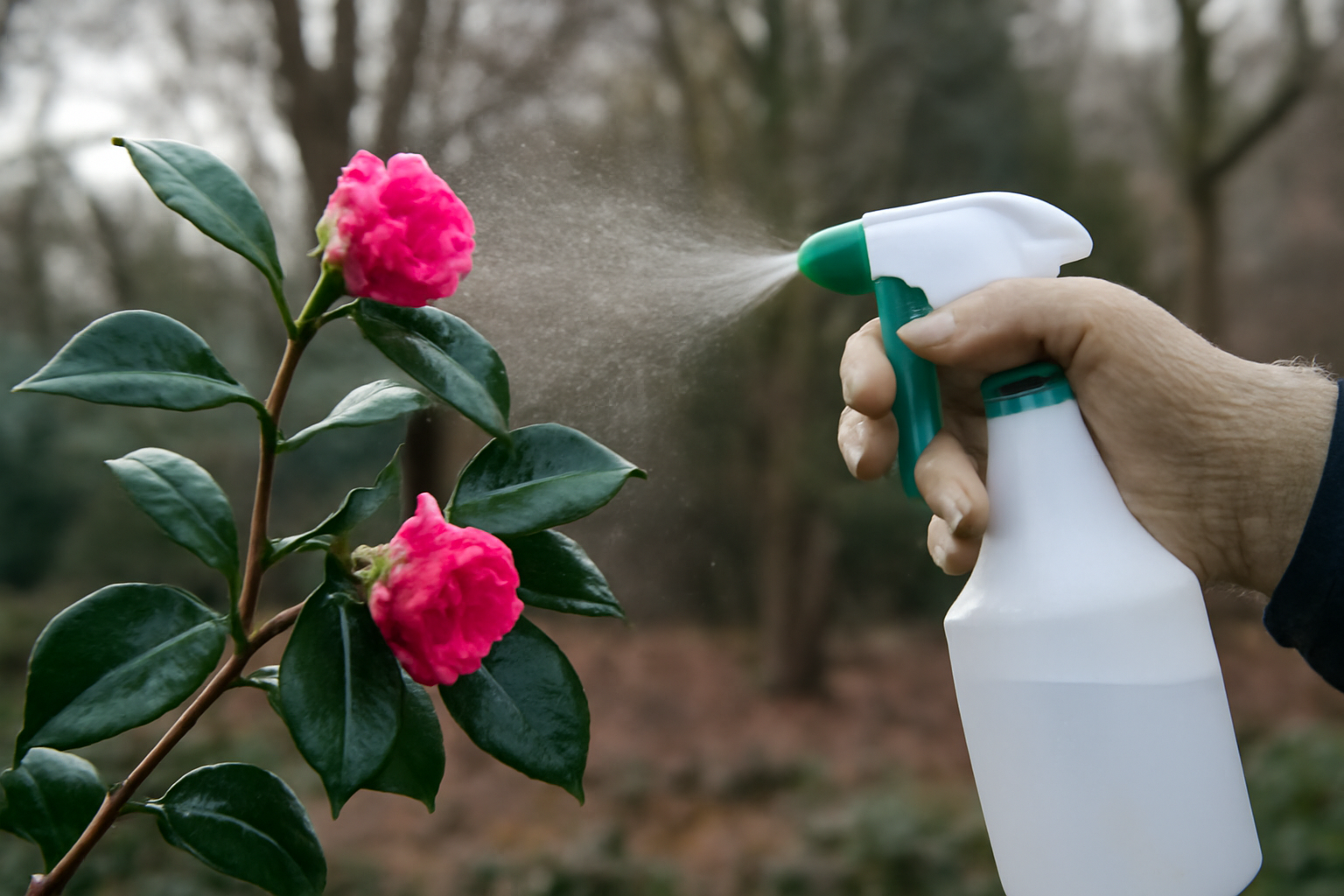
I applied three treatments total, spacing them roughly 14 days apart. Application days were all above 40°F and below 80°F — the label’s recommended temperature window. I chose overcast mornings to avoid any potential leaf-scorch from sunlight hitting the wet oil spray.
My technique was thorough. I worked stem by stem, targeting the visible waxy deposits directly. Then I covered the undersides of leaves, where both scale and aphid eggs tend to cluster. Each plant took about 10 to 15 minutes to treat properly. I used almost the full 32-ounce bottle across three applications on three medium-sized shrubs.
A Note on ‘Yuletide’ Blooms
One decision point deserves mention. ‘Yuletide’ was in active bloom when I started treating. The label advises caution around open flowers. I made a judgment call: I sprayed stems and foliage but avoided direct spray on open blooms. The flowers seemed unaffected. That said, I wouldn’t recommend being cavalier about this. If your Sasanqua is in peak bloom, consider waiting or being extremely selective with your application.
What Actually Changed: Honest Results With a Timeline
After the first application, I’ll be honest — I didn’t see dramatic results immediately. The scale insects don’t vanish overnight. They die in place and eventually dislodge or wash off with rain. By day five or six, I noticed the waxy deposits on ‘Kramer’s Supreme’ were starting to look different. Less shiny. More brittle. That’s the sign the oil has done its work.
By the second application two weeks later, the improvement was meaningful. The heavy scale coverage on ‘Kramer’s Supreme’ had reduced by what I’d estimate to be 60 to 70 percent. The aphid colonies were gone entirely — no survivors visible on any of the three plants. That was the faster, more satisfying win.
After the third treatment in late December, the scale situation on all three camellias was dramatically better. ‘Setsugekka’ looked essentially clean. ‘Yuletide’ was the same. ‘Kramer’s Supreme,’ with its heavier initial infestation, still showed some residual scale on the thickest, most congested interior stems. However, new growth in late winter showed no reinfestation — a meaningful sign that the egg population had been disrupted.
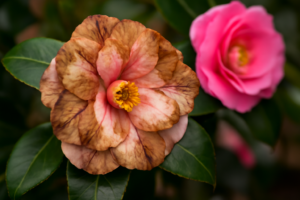
By March, all three plants were putting out healthy new flushes. ‘Kramer’s Supreme’ bloomed beautifully in early spring — large, fragrant, deep red blooms with no visible pest damage on the foliage. That felt like a real vindication of the treatment program.
Aphid Control Was Impressive
The aphid results genuinely exceeded my expectations. One treatment essentially eliminated the colonies. In my experience, aphids on camellias are often a secondary problem — they move in when plants are stressed. Clearing them out over winter gave my plants a cleaner start heading into the growing season.
The Downsides You Should Know
No product review from me will be all sunshine. Here’s where the Bonide All Season Horticultural & Dormant Spray Oil fell short or where I had genuine doubts.
First, the coverage of 32 ounces is limited. Three medium camellias used most of a bottle over three treatments. If you have a larger collection — say, six to ten mature plants — you’ll need multiple bottles. The cost adds up quickly. For larger-scale applications, a concentrate formula might make more financial sense.
Second, heavy infestations require patience and persistence. I had a moment around week three where I questioned whether the product was working at all on ‘Kramer’s Supreme.’ The dense inner stems still looked rough. That doubt was real. Looking back, the biology simply takes time. Horticultural oil isn’t a contact killer with instant knockdown — it’s a suffocant that works over days. Managing expectations matters here.
Third, the ready-to-use format — while convenient — does limit control over concentration. Some situations (very heavy scale, for example) might benefit from a slightly stronger application. With a ready-to-use product, you get what you get. On the other hand, that predictability also means you’re less likely to cause phytotoxicity from accidental over-concentration.
Finally, the spray nozzle began to clog slightly by the third application. It wasn’t a dealbreaker, but I had to clear it a couple of times mid-session. A minor frustration, not a product failure.
Who This Product Won’t Work For
If you have a significant camellia collection of more than six or seven plants, the 32-ounce ready-to-use size will likely frustrate you on cost and logistics. Similarly, if your scale infestation is severe and long-established, one product alone may not be enough. You may need to combine oil treatment with a systemic option or significant physical removal first.
Final Verdict: Is Horticultural Oil on Camellias Scale the Right Solution?
Yes — with appropriate expectations. Using horticultural oil on camellias for scale control genuinely works when applied correctly, consistently, and at the right time of year. The Bonide All Season Horticultural & Dormant Spray Oil, 32 oz Ready-to-Use Spray is a well-formulated, organic-approved product that I’d confidently recommend to home camellia growers dealing with moderate scale or aphid pressure.
It earned a solid 4 out of 5 stars from me. The missing star is purely about the quantity-to-cost ratio at the ready-to-use size.
Buy this if:
- You have two to five camellia plants with scale or aphid issues
- You want an organic-approved, ready-to-use solution with no mixing
- You’re willing to commit to two or three applications over four to six weeks
- You grow evergreen camellias (Japonica, Sasanqua, hybrids) and need a foliage-safe formula
Look elsewhere if:
- You have a large planting of ten or more shrubs and need volume
- You want instant knockdown results — this is not that product
- Your infestation is severe enough to require systemic intervention first
The Runner-Up Alternative Worth Knowing About
If you prefer a hose-end applicator setup over a standalone trigger sprayer, consider the Bonide All Seasons Horticultural & Dormant Spray Oil, 32 oz Ready-to-Spray. This version attaches directly to a garden hose, making it more practical for treating larger shrubs or multiple plants quickly. The active formula is essentially equivalent — you’re really choosing based on application method and scale of your garden. For smaller collections and targeted treatment, I prefer the standalone ready-to-use bottle I reviewed here. For broader coverage across a larger landscape, the hose-end format could save you significant time and effort.
Either way, committing to an oil-spray overwintering routine has genuinely transformed how healthy my camellias look heading into each spring. After twenty-plus years of growing these plants, that’s not something I say lightly.