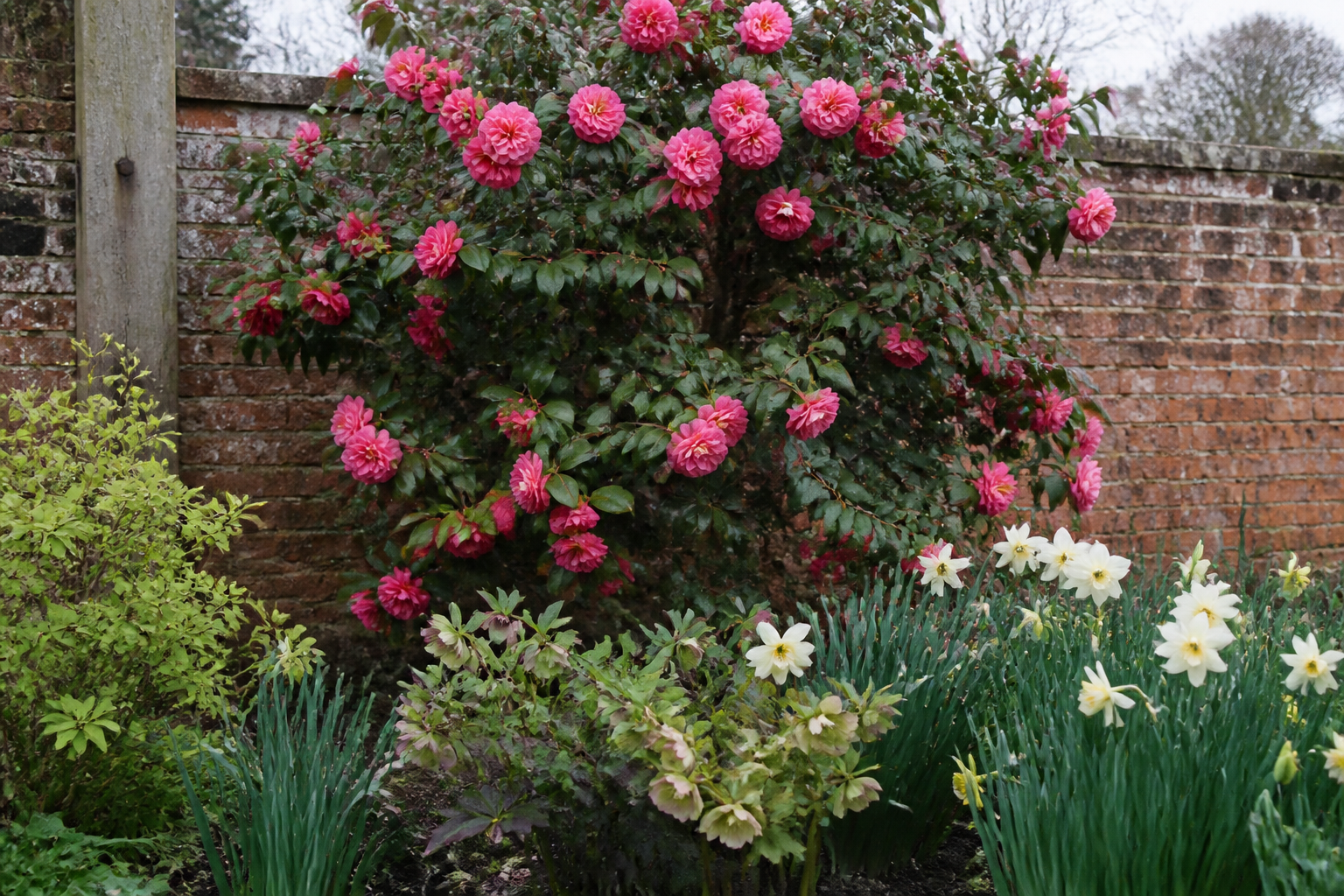
I garden in the American South—USDA zones 7b, 8a, and 8b—where I keep over two hundred named camellia cultivars. I do not garden in the UK. However, I have toured gardens in Cornwall, the Cotswolds, and Surrey, and I correspond regularly with British growers who have taught me that growing camellias in the UK is a genuinely different craft from what we do here. The climate, the timing, the water chemistry, even the siting rules are distinct enough that American advice can actually steer you wrong. This post translates what I have learned from those British gardeners into practical guidance. Where UK practice diverges from mine, I defer to it entirely.
What Makes UK Camellia Growing Different
Most of Britain sits in USDA zone 8 to 9 equivalent—mild and wet. Winter cold is almost never your limiting factor. That might sound like an advantage. It is not.
The real enemies of UK camellias are frost on open flowers, waterlogging, alkaline tap water, and insufficient light. A camellia in southern England will rarely die from sub-zero temperatures. Instead, it will sit in a cold, dark, damp corner, drop its buds in spring, and carry brown dead flowers on its branches through May. That is the British camellia complaint I hear over and over.
Unlike the American Southeast—where drought stress in July kills next year’s buds—British gardens often fail to water adequately in summer precisely because the climate feels wet and cool. Then those underfed buds abort in spring. The seasonal rhythm is different. The solutions must be too.
When Do Camellias Flower in the UK?
Bloom timing matters because it determines whether your flowers will survive to open or fall victim to frost.
Sasanquas, Japonicas, and Williamsii Hybrids Month by Month
Sasanquas (October to December) are far less reliable in British gardens than in the American South. They need autumn warmth to set buds and open flowers properly. In the UK, they often sit tight until spring, defeating the purpose of their early season. I know British gardeners who grow them and succeed—but only in favoured Cornish or southwest coastal positions with genuine autumn sunshine.
Japonicas flower February through May, with the main flush in March and April. Varieties like Adolphe Audusson and Nobilissima are workhorses in British gardens. They are elegant, reliable, and their timing suits the UK climate. The trade-off is that they hold spent blooms on the bush—browning flowers persist into summer unless you remove them manually or position the plant where you do not notice.
Camellia x williamsii hybrids (November through May, depending on cultivar) are, in my assessment and the assessment of every British grower I know, the best all-round choice for UK gardens. Donation, Anticipation, Debbie, and St Ewe are proven performers. Their defining trait is that they drop their spent flowers cleanly instead of holding brown blooms on the bush for months. For a British gardener, that single feature is worth its weight in gold.
The East-Facing Wall Problem
This is the single most important piece of UK-specific camellia advice I can give you. I see it misunderstood repeatedly.
UK camellia damage in spring is not caused by frost itself. It is caused by rapid thawing. When a camellia bud freezes overnight on an east-facing wall, it sits there until the sun rises. First light hits the frozen buds directly. Rapid thawing ruptures the cell walls from the inside. By nine o’clock in the morning, your buds are blackened and lost.
On a north-facing wall, or behind a screen of deciduous trees, or anywhere with dappled shelter, buds thaw slowly as the air warms. The damage does not occur. This is standard RHS-aligned guidance, and it is genuinely different from the American advice to “give it morning sun to dry the dew.”
The mistake I see British gardeners make most often is siting for maximum sun to encourage flowering. It is exactly backwards for frost protection. Choose west-facing, north-facing, or sheltered positions. Accept that the plant may flower a little later or less abundantly. In the UK, late and modest flowers that survive to open are infinitely better than abundant buds that blacken in February.
Water, Rainwater, and Hard Tap Water
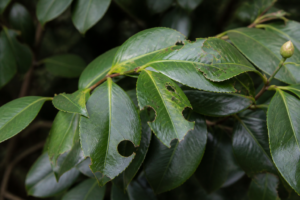
UK tap water in the south and east is frequently hard and alkaline. Repeated watering with tap water will push container compost pH upward over time. Chlorosis—yellowing of the leaves while the veins stay dark green—follows. Your camellia is locked out of iron and magnesium even when those nutrients are present in the soil.
Collect rainwater wherever possible, especially for potted plants. A simple water butt at the garden’s edge solves most of this problem. If you must use tap water, do so occasionally, but rely on rainwater as your main source. This matters far more in Britain than in the acid-soil regions of the American Southeast, where alkalinity is rarely an issue.
The second water-related mistake I encounter is under-watering in summer. The British climate feels wet and cool. Gardeners assume the compost is moist enough. In July and August—when next year’s buds are being set—a dry spell will cause catastrophic bud drop the following spring. Water camellias consistently from June through September, especially container plants. Soil should feel moist, not waterlogged.
Fertilising Camellias the British Way
Feed camellias with an ericaceous or rhododendron/azalea fertiliser applied in two doses: once after flowering finishes (April or May), and again in June. Stop by the end of July so growth hardens before autumn. This timing avoids lush growth in late summer, which is frost-tender and delays dormancy.
Use a product formulated for acid-loving plants. These are widely available in the UK under brands like Chempak or similar. Follow the label rate. Over-feeding encourages soft growth and discourages flowering.
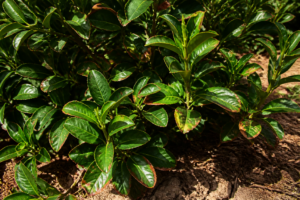
Container camellias need feeding every year. In-ground camellias in ericaceous soil may need it only every two or three years if the soil is naturally acid and rich in organic matter. Watch the leaves. Yellowing between the veins signals magnesium or iron deficiency—a sign of alkalinity or over-feeding. Scale back if this occurs.
When to Move a Camellia in the UK
Transplanting timing in the UK is distinct from American practice. In the American South, we plant camellias in autumn so they establish roots through winter and into spring. British soil is too wet and cold for that to work reliably.
In the UK, move a camellia after flowering finishes and before growth hardens. April into May is the standard window. Alternatively, September into October, while soil is still warm and moist, works well. Avoid midsummer entirely. The mild, wet British spring makes post-flowering moves workable—the plant has time to settle and root before dormancy.
Prepare the planting site with ericaceous compost or leaf mould worked into the top six to eight inches of soil. Camellias are shallow-rooted. They do not need deep digging, but they need loose, acid, well-draining topsoil. Water in thoroughly after planting, then maintain consistent moisture through the first summer.
What to Plant With Camellias in a UK Garden
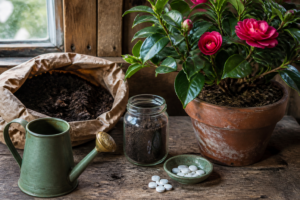
Camellias thrive under the same cool, shaded, acid, damp conditions as their woodland companions. The natural partners in British gardens are hellebores, snowdrops, pulmonaria, ferns, skimmia, pieris, and epimedium. These plants share the same cultural needs and extend interest through the year.
Spring bulbs that suit acid shade—snowdrops, trillium, and erythronium—bloom beneath and between camellias without competition. Hydrangeas are a natural British pairing. Both are acid-lovers, both need shelter from harsh sun, and both resent waterlogging yet need consistent moisture. If you are planning a larger shade garden, a camellia underplanted with hellebores and surrounded by hydrangeas creates a sophisticated, labour-light display that flowers for months.
Avoid dry-loving plants: cistus, santolina, rosemary, and other Mediterranean types despise the wet. They will rot. Your camellia needs companions that accept—or prefer—the cool, damp conditions of a British garden.
Cultivars That Earn Their Place in British Gardens
Not all camellias perform equally in the UK. Some need more sun than you can safely give them. Others are prone to bud drop. Stick with proven British performers.
Camellia x williamsii hybrids are the top tier for reliability. Donation (semi-double, cerise-red, February to April) and Anticipation (peony-form, deep pink, February to May) are bulletproof. Debbie (semi-double, rose-red, lasting from November through March) bridges the seasons. St Ewe (single, rose-pink, December to February) is perfect for early colour. All drop their spent flowers cleanly.
Japonicas for British conditions include Adolphe Audusson (semi-double, dark red, March to April) and Nobilissima (semi-double, red, February to April). They are elegant, hardy, and widely grown. Accept that their brown flowers will persist on the plant into summer.
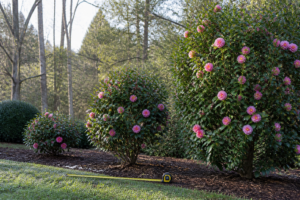
Camellias thrive best in the Cornish gardens and western coastal regions where rainfall is higher, days are milder, and the climate genuinely suits them. If you garden inland or in the south and east, stick to these proven varieties. Experimentation with lesser-known cultivars is rewarding—but only after you have mastered the fundamentals with reliable performers.
Ericaceous Compost for Container Camellias
If you are growing camellias in pots, ericaceous compost is essentially compulsory in the UK. Multipurpose compost will alkalinise quickly under British watering regimes and cause chlorosis.
For larger containers (fifteen litres or more), use John Innes ericaceous compost. It is more stable and better-draining than peat-based or coir-based mixes. Smaller pots can use proprietary ericaceous composts, but check the label. Avoid anything labelled for general use.
Water containers with rainwater if possible. In pots, the risk of alkalinity build-up is higher than in open ground. Refresh the top two inches of compost annually to reduce salt accumulation.
The Two Things That Matter Most
If you take nothing else from this post, remember these two points.
One: site for frost protection, not sun. North-facing, west-facing, or dappled shade is better than full sun. Frost damage is the classic British camellia complaint. A plant that flowers late in shelter beats one that blackens in February on an east wall.
Two: water consistently in summer. July and August drought causes next year’s bud drop. British gardeners under-water in summer because the climate feels damp. It is the most common mistake I see, and it is entirely preventable. Soil should feel moist, not dry, from June through September.
Follow those two rules, choose williamsii hybrids or proven japonicas, use ericaceous compost for pots, collect rainwater, and feed lightly after flowering. You will grow camellias successfully in the UK. It is not difficult—but it is different from what American gardeners do. Honour that difference, and your camellias will reward you with reliable, beautiful flowers year after year.
About This Article

Written by Helen Pritchard. Helen Pritchard is a lifelong gardener in the Pacific Northwest who has grown more than 200 named camellia cultivars over two decades. She writes practical, experience-based guides to camellia care, from variety selection and pruning to troubleshooting yellowing leaves and bud drop. More about this site.
Verify this against a primary source
Specifics change, and your situation may differ from the one described here. These are the authorities worth checking directly:
- American Camellia Society — cultivar registration and culture guides
- USDA Plant Hardiness Zone Map — zone verification for your location
- Royal Horticultural Society — camellia cultivation and pest guidance