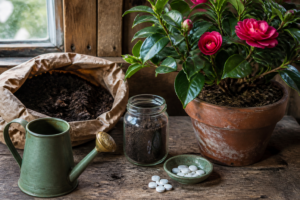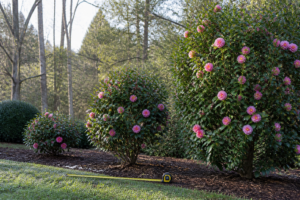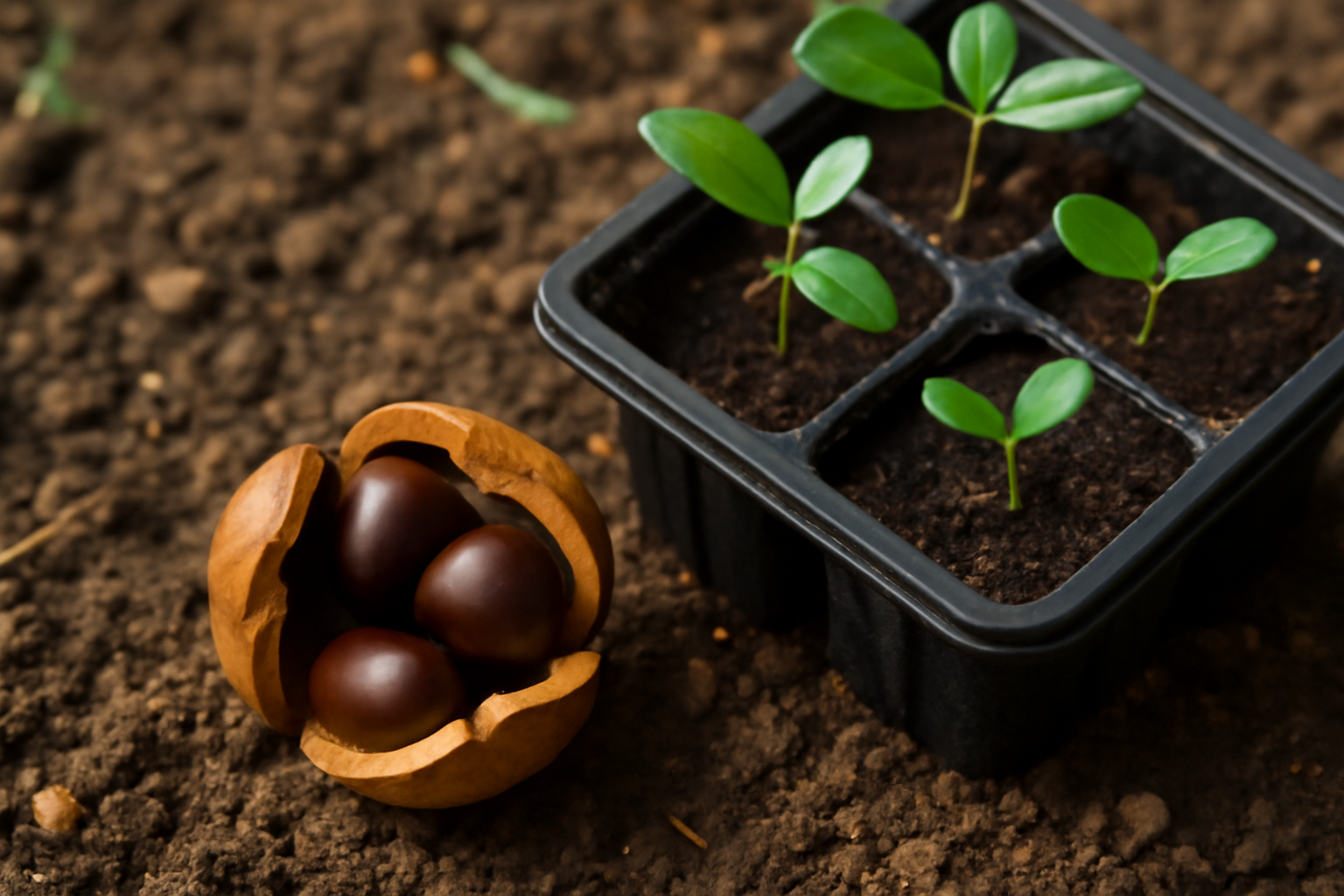
There’s a wooden potting bench tucked against the fence line on the east side of my property, and most Novembers you’ll find me hunched over it, thumbnail working into a fat, leathery seedpod I’ve just pulled from my Camellia japonica ‘Adolphe Audusson’. Three dark seeds rolled into my palm the last time I did this, and my husband, passing by with an armload of firewood, asked what exactly I intended to do with them. “Something that takes forever,” I told him — only half joking. That exchange sums up seed-grown camellias better than any tidy definition could. Patience isn’t a nice-to-have here; it’s the entire price of admission. If you came looking for a fast payoff, I’ll say so upfront: this is a slow, unhurried pursuit. It’s also one of the most satisfying things I’ve taken on across two decades of growing these plants.
The Case for Starting Camellias from Seed
It’s a reasonable question to ask upfront. Cuttings and grafting remain the go-to propagation routes for most growers, and for good reason — you end up with a clone identical to the parent, so the flower is never a mystery. Seedlings can’t promise that kind of certainty. What they offer instead is something cuttings simply cannot: the thrill of not knowing.
Think of each seed as a small genetic gamble. When cultivars cross-pollinate, the resulting seedlings can surprise you with flower shapes, hues, or growth patterns that neither parent showed. This, from what I’ve observed, is precisely how so many of our named cultivars first appeared — breeders I’ve corresponded with over the years have let bees handle the crossing and then simply grown out whatever seed followed. Realistically, though, the majority of seedlings turn out unremarkable. Expect a lot of plain, ordinary plants for every rare standout.
Money matters too. If you’re gathering seed off your own shrubs, the cost is essentially nothing, and raising a whole batch of seedlings comes in far cheaper than buying mature grafted stock. That low cost of entry is exactly why I keep tinkering with this method, particularly when trying species types like Camellia reticulata or those fragrant Camellia lutchuensis crosses.
Nailing the Timing for Seed Collection
Getting the harvest window right is the first thing you need to master. Camellia seedpods mature between late summer and the start of fall — roughly August into October across zones 7b through 8b, which is where most of my plantings live. The pod’s color shifts from green to a dry brown or tan, and eventually the seams give way and split. Once you hear that faint cracking, that’s your signal.
Don’t dawdle once a pod starts opening. Seed drops fast, and squirrels treat it like a snack bar. One September, I lost an entire pod of seed from my ‘Nuccio’s Gem’ japonica simply because I hadn’t checked on it in two days. These days I slip small mesh bags over pods that look nearly ripe — a ten-minute task that has spared me a lot of frustration since.
Sasanquas such as ‘Setsugekka’ and ‘Kanjiro’ generally ripen a bit ahead of the japonicas in my beds. My reticulatas, by contrast, usually lag a week or two behind. I keep a dated log for this reason — once you know your own plants’ rhythms, the guesswork mostly disappears in later years.
Testing Whether Seed Is Actually Viable
A newly harvested camellia seed wears a tough outer shell, but underneath it should feel firm and solid, not hollow. My method is low-tech: drop them in a glass of water. Any that sink are likely good; floaters are usually empty or underdeveloped, so I toss them. It’s not a perfect science, but it weeds out the obvious losers before you waste pots and mix on them.
Germination odds fall off a cliff once seeds dry out. Unlike a lot of garden seed, camellia seed has no patience for storage — get it into soil within a few days of picking if you possibly can. From what I’ve tracked, seeds left sitting at room temperature past the two-week mark show a noticeable drop in sprouting success.
Planting Camellia Seed: My Exact Process
This is the routine I follow every fall with freshly gathered seed, and there’s nothing elaborate about it — no special gear required.
- Get the medium right. You want something acidic that drains quickly. My blend is equal parts peat (or coir), perlite, and fine pine bark, aiming for a pH between 5.5 and 6.0. Camellias crave acidity, and skipping this step early on creates problems that only worsen down the line.
- Pick a suitable pot. Deep four-inch containers or plug trays are ideal. Because camellias push down a taproot early on, depth counts for more than width right now.
- Set the seed at the correct depth. About an inch down is right, one seed to a cell or pot. Cover with a light layer of mix and press gently to settle it.
- Water with restraint. Soak the mix well right after planting, then keep it evenly moist afterward — soggy soil invites the fungal rot that’s the real threat at this stage.
- Give the roots some warmth. A seedling heat mat set around 70–75°F does the trick for me. Consistent bottom heat noticeably speeds germination — skip it, especially through a zone 7b winter, and sprouting turns slow and unpredictable.
- Hold steady. Sprouting usually happens somewhere between four and eight weeks, though a few laggards have surprised me at the twelve-week mark. Resist tossing a pot too soon.
An Early Blunder Worth Mentioning
Honesty time: early on, I planted a batch of seedlings from my ‘Professor Sargeant’ japonica in generic big-box potting soil. Its pH sat around 6.8 — nowhere close to what camellias want. The seeds sprouted just fine, but the little plants soon turned yellow and stopped in their tracks. I burned weeks hunting for a disease before it even occurred to me to test the soil. The remedy turned out to be straightforward — repot into properly acidic mix and drench with a diluted acidifying fertilizer — but by then I’d lost nearly a whole growing season. Save yourself the trouble and test your mix before planting. A basic pH meter costs less than a single bag of seed-starting soil.
How Long It Actually Takes to Get a Bloom
Here’s where newcomers usually get blindsided. Coaxing a camellia from seed to its first flower is never a one-season affair. Realistically, you’re committing three to seven years before a single bloom shows up. I mention this bluntly because I’ve watched gardeners quit around year two, convinced they’d botched something. Nothing’s wrong — camellias just move at their own pace.
Below is a loose timeline drawn from what I’ve seen with my own japonica and sasanqua seedlings:
- Year 1: Sprouting happens sometime in fall or winter, followed by the first set of true leaves. Growth crawls — figure on two to four inches of height by season’s end. Bump plants into bigger pots once roots crowd their starter cells.
- Year 2: Growth becomes steadier now. Healthy seedlings under good conditions typically add six to twelve inches. Keep them potted, or move to a protected nursery bed if you garden in zone 8a or milder.
- Years 3–4: Roots deepen and thicken, and growth speeds up noticeably. A vigorous sasanqua seedling might even try setting a bud here, though nothing’s certain yet.
- Years 5–7: This is when the bulk of japonica seedlings deliver their first flower. Reticulata hybrids frequently push that further out — seven to ten years isn’t rare. This is the payoff moment: finally learning what that genetic gamble produced.
Does the Species — Sasanqua, Japonica, or Reticulata — Change the Wait?
Definitely, and the difference is easy to spot. In my own beds, Camellia sasanqua seedlings consistently reach bloom fastest. The quickest one I ever grew came from open-pollinated ‘Yuletide’ — it flowered in year four with a bright single red bloom nearly indistinguishable from its parent. Not groundbreaking, but genuinely satisfying to see.
Japonicas are far less predictable — some of mine bloomed by year five, others held out until year seven. Reticulatas and their hybrids drag things out longest of all. But the reward can be spectacular, since reticulata blooms tend to be oversized and dramatic. Waiting that long feels a lot more worthwhile once one finally unfurls.
Tending Seedlings Through the Years-Long Wait
Keeping young seedlings thriving over multiple years comes down to a handful of consistent habits — none of them complicated.
Feeding: I begin with a diluted, balanced feed (something along the lines of 10-10-10) in the spring of year two. From there, I switch over to an acid-forming fertilizer — the kind marketed for azaleas and rhododendrons works well, since it feeds the plant while helping hold soil pH where it needs to be. I fertilize monthly from March through August, then stop completely so the plant can toughen up ahead of winter.
Watering: Steadiness beats volume here. Let the top inch of the mix dry before rewatering, but never allow the root zone to go bone-dry. Potted seedlings demand far more frequent checking than plants already in the ground — through hot zone 8b summers, I walk my seedling benches every single day.
Repotting: Move each seedling up one or two container sizes every spring. A root-bound plant simply stalls — I’ve had three-year-old seedlings stuck in their original four-inch pots, barely six inches tall. Give those same plants fresh acidic mix and real room to spread, and they can double in size in a single season.
Protecting Young Plants Through Cold Winters
Seedlings can’t handle cold the way mature camellias can. Here in zone 7b, anything under two years old gets moved into my unheated greenhouse for the winter. Brief dips to around 28°F won’t hurt them, but sustained cold below 25°F can kill a small plant outright. By year three and beyond, most seedlings can weather the outdoors with just a layer of frost cloth thrown over them on the harshest nights.
Gardening in zone 6b or 7a? My honest advice is to keep seed-grown plants containerized for their first three years, wintering them somewhere frost-free. That head start builds the root mass they’ll need before facing your winters unprotected. I go into more depth on this in my post about overwintering camellias, if cold hardiness is something you’re wrestling with.
The First Flower: Now What?
Honestly, this ranks among the best moments this hobby offers. Record everything — snap photos, jot the bloom date, note the flower form (single, semi-double, formal double, peony), the color, the size. If you know the parent plants, compare notes. This documentation matters if you ever decide to register and name the cultivar, which is genuinely possible through the American Camellia Society.
Most seedlings won’t earn a name, and that’s perfectly okay — they’re still lovely, one-of-a-kind plants with a story attached. But if you happen to land on something truly unusual — an unexpected color, a striking flower form, standout cold tolerance — it’s worth chasing further. I currently have two unnamed seedlings growing in my zone 7b garden that I keep a close eye on. One, from open-pollinated ‘Dr. Tinsley,’ shows a richer pink shade and a tighter growth habit than its parent. Time will tell.
Closing Thoughts on Raising Camellias from Seed
This method isn’t built for anyone in a hurry. It asks for years of steady attention and a real willingness to sit with uncertainty. To me, that’s the whole appeal. Some of the plants I treasure most started as seed I planted over ten years back — no name, no catalog entry, nothing beyond “open-pollinated ‘Nuccio’s Jewel,’ fall 2012” scrawled in a notebook. They belong to me in a way no purchased plant ever quite manages.
Ready to give it a shot? Begin this fall. Gather ripe pods from your healthiest plants — or a neighbor’s, if theirs look promising. Run the float test. Get your soil pH sorted before you plant a single seed. Use bottom heat. Then park the pots somewhere you’ll pass by often — a greenhouse shelf, a cold frame, even a bright windowsill — and let time handle the rest.
Watching that first true leaf unfold from seed you planted with your own hands never stops being a small thrill. I’ve witnessed it more times than I can count, and it still stops me in my tracks. That’s really the heart of growing camellias from seed — the slowness isn’t a downside to tolerate. It’s the whole point.
About This Article

Written by Helen Pritchard. Helen Pritchard is a lifelong gardener in the Pacific Northwest who has grown more than 200 named camellia cultivars over two decades. She writes practical, experience-based guides to camellia care, from variety selection and pruning to troubleshooting yellowing leaves and bud drop. More about this site.
Verify this against a primary source
Specifics change, and your situation may differ from the one described here. These are the authorities worth checking directly:
- American Camellia Society — cultivar registration and culture guides
- USDA Plant Hardiness Zone Map — zone verification for your location
- Royal Horticultural Society — camellia cultivation and pest guidance