
Camellias offer stunning blooms when many other plants are dormant. Their glossy, evergreen leaves provide year-round structure in the garden. However, the key to enjoying these flowers for months is choosing the right varieties. Different camellias bloom at different times, from autumn all the way through spring. Understanding these bloom periods helps you create a continuous floral display.
Creating a thriving camellia garden requires carefully selected products and specialized tools designed to meet the unique needs of these acid-loving flowering shrubs. Acidic Soil Amendment provides the ideal growing medium for camellias. Perlite Soil Amendment provides the ideal growing medium for camellias. Holly Tone Fertilizer supplies essential nutrients for healthy growth and vibrant blooms. Miracle Gro Azalea supplies essential nutrients for healthy growth and vibrant blooms. Pine Bark Mulch helps maintain soil acidity and moisture retention. Soil Ph Meter provides the ideal growing medium for camellias. Bypass Pruning Shears is essential for maintaining camellia shape and health. Pruning Loppers Long is essential for maintaining camellia shape and health. Garden Hose Watering ensures consistent moisture for optimal camellia growth. Soaker Hose Garden ensures consistent moisture for optimal camellia growth. Neem Oil Insecticide supports successful camellia cultivation. Copper Fungicide Organic supports successful camellia cultivation. Plant Stakes Supports supports successful camellia cultivation. Garden Shovel Spade supports successful camellia cultivation. Garden Gloves Durable supports successful camellia cultivation. Garden Kneeler Pad supports successful camellia cultivation. Camellia Growing Guide supports successful camellia cultivation.
This guide will walk you through the main types of camellias. We will explore their unique bloom seasons. Additionally, we will cover the essential care tips you need for healthy plants and abundant flowers.
Unlocking the Camellia Blooming Calendar
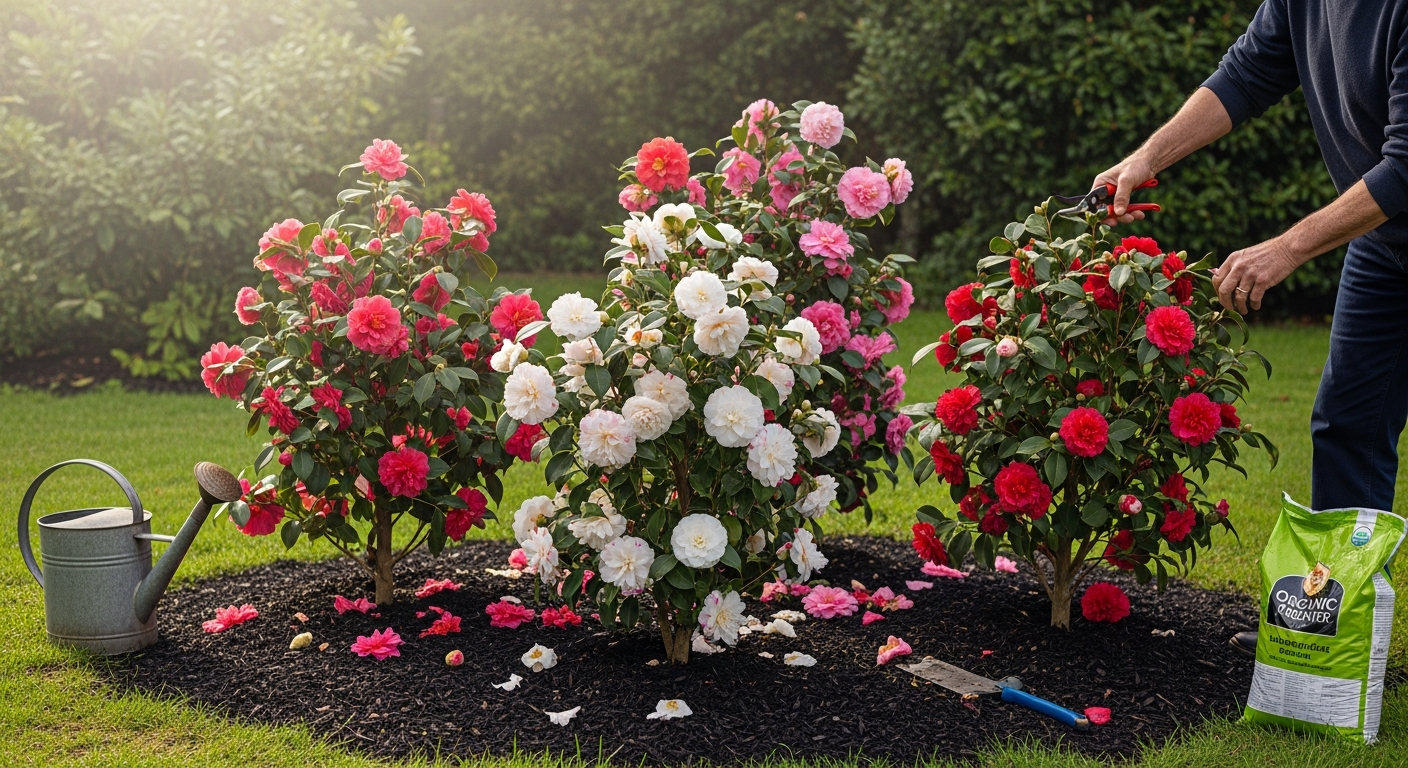
Not all camellias flower at once. Gardeners classify their bloom times into three main seasons: early, mid, and late. Early season varieties typically start in fall. Mid-season bloomers take over during the heart of winter. Finally, late-season camellias carry the show into early spring. By planting a mix of cultivars from each group, you can have flowers for six months or more.
The two most popular species are Camellia sasanqua and Camellia japonica. Sasanquas are generally the first to bloom. They often start in October and continue into December. Japonicas have a much wider bloom window. Some start in November, while others wait until March. Knowing this distinction is the first step in planning your camellia garden.
Early Bloomers: Fall & Early Winter Flowers
Camellia sasanqua varieties are the stars of the autumn garden. They typically have smaller leaves and more open, airy growth habits than their Japonica cousins. Many Sasanquas are also more tolerant of sun. Plus, a large number of them offer a lovely fragrance. Their flowers are often simpler, with single or semi-double petals that create a delicate look.
These plants are perfect for brightening up the landscape as other flowers fade. For example, ‘Yuletide’ is a classic choice with its single, fiery-red blossoms and bright yellow stamens. It provides a festive display around the holidays. Another popular option is ‘Setsugekka’, which produces large, white, semi-double flowers. Its graceful, slightly weeping branches make it an elegant addition to any space.
Mid-Season Stars: The Heart of Winter
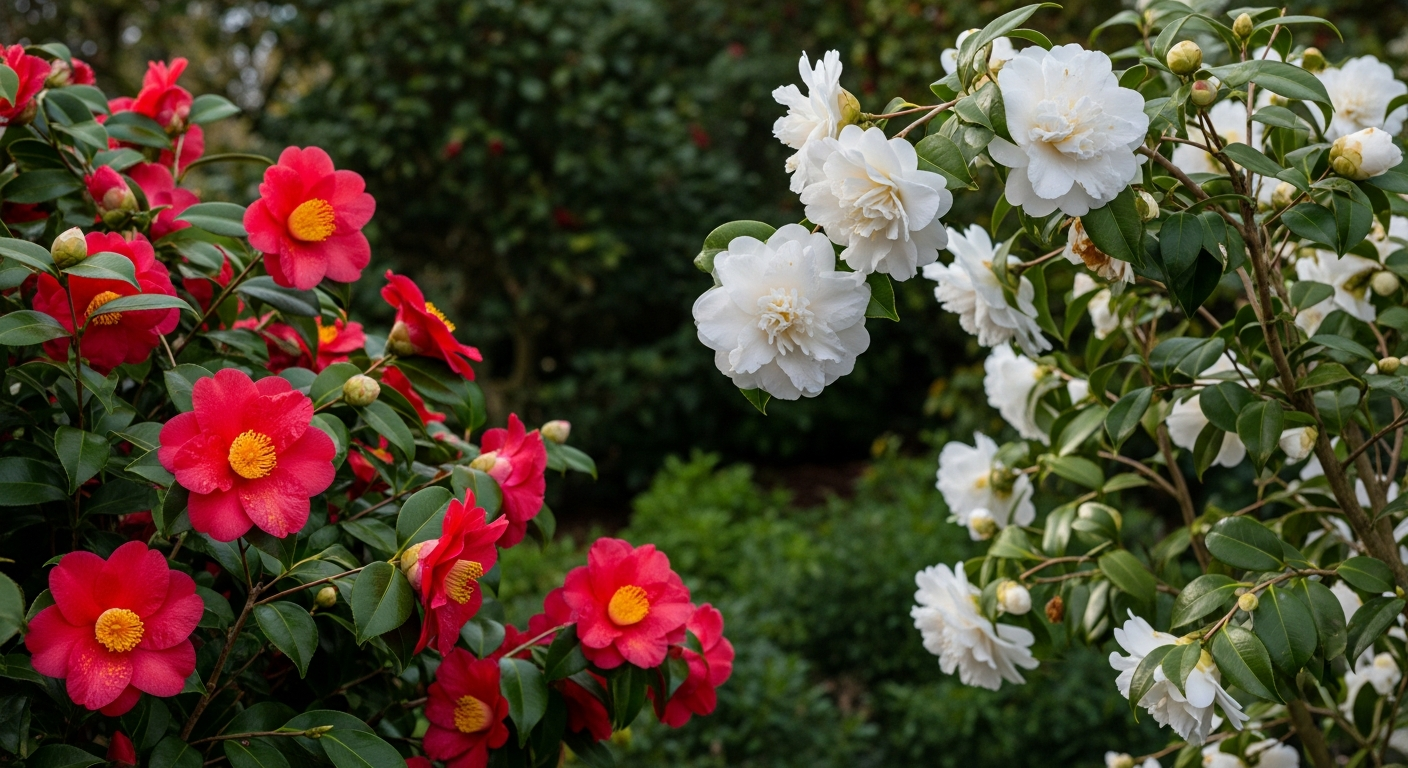
As the Sasanqua blooms begin to drop, Camellia japonica varieties start their magnificent display. These are the iconic camellias that many people picture. They feature large, lush flowers in a vast array of colors and forms. You can find everything from simple singles to complex formal doubles. Most Japonicas prefer partial shade to protect their leaves and flowers from sun scorch.
Many popular mid-season bloomers provide color from January through February. For instance, ‘Kramer’s Supreme’ is a beloved variety known for its huge, peony-form red flowers and delightful fragrance. It is a vigorous grower that puts on a reliable show each year. In contrast, ‘Nuccio’s Pearl’ offers exquisite, formal double flowers. The petals are a pristine white with a delicate pink blush on the edges, creating a truly sophisticated look. Selecting a few of these mid-winter varieties ensures your garden remains vibrant during the coldest months.
Late-Season Beauties: Waking Up for Spring
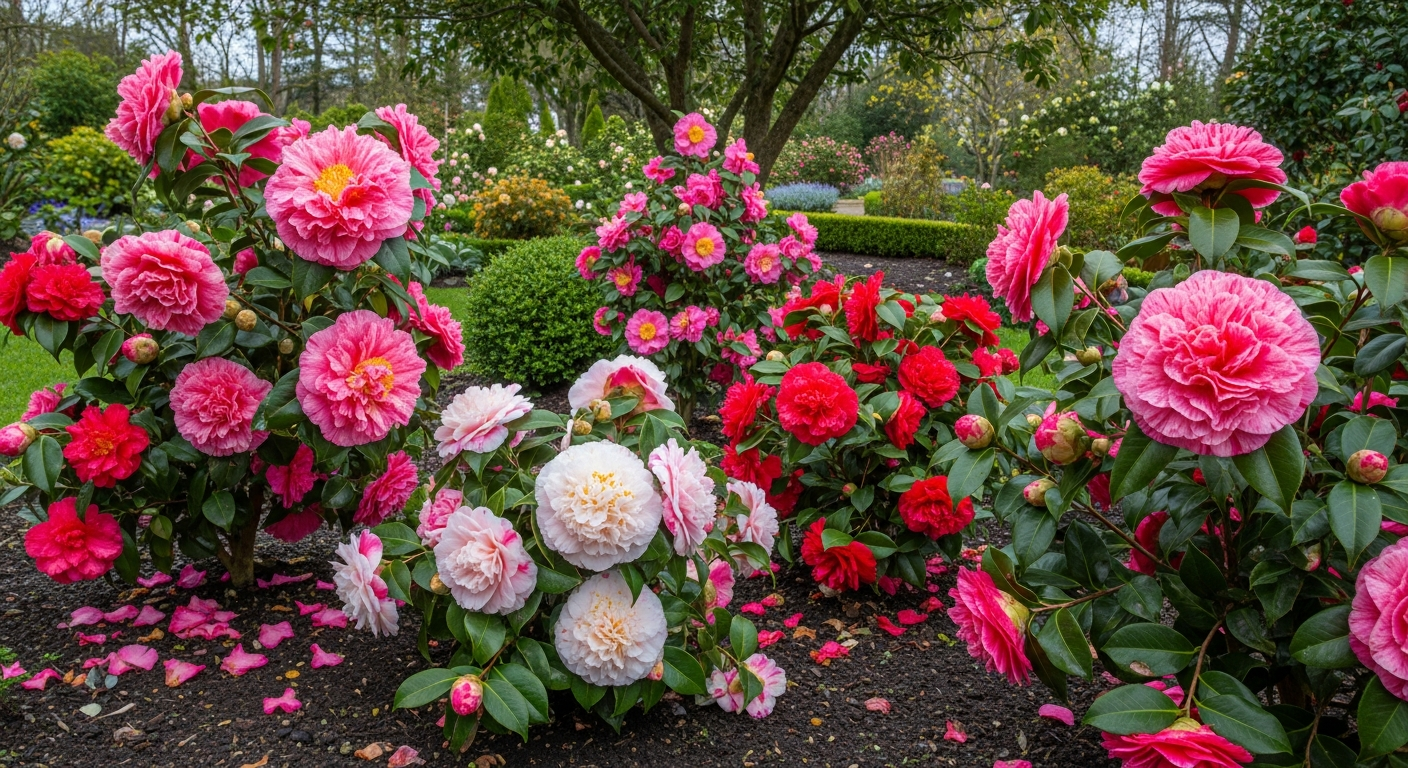
The final act of the camellia season belongs to the late-blooming Japonicas and other species like Camellia reticulata. These varieties start flowering in late February or March, sometimes continuing into April. They bridge the gap between winter and the full burst of spring perennials. This ensures your garden never has a dull moment. These late bloomers are crucial for extending the season of color.
‘Debutante’ is a wonderful example of a late-blooming Japonica. Source It produces large, light pink flowers that resemble peonies. It is a vigorous plant that blooms profusely. For those seeking truly massive flowers, Camellia reticulata hybrids are an excellent choice. Cultivars like ‘Frank Houser’ can produce flowers over six inches across. By incorporating these late-season plants, you guarantee a spectacular floral finale.
Essential Care for Maximum Blooms
Choosing the right camellia is only half the battle. Proper care ensures your plants thrive and produce a stunning number of flowers year after year. Fortunately, camellias are not overly demanding once they are established. Following a few key principles will set you up for success.
Planting and Soil Preparation
Success starts with the right location and soil. Most camellias, especially Japonicas, prefer a spot with partial shade or dappled sunlight. Morning sun with afternoon shade is ideal. This protects them from the harsh midday sun, which can scorch their leaves. Sasanquas can often handle more direct sun once established.
Camellias demand acidic, well-draining soil. If you have heavy clay or alkaline soil, you must amend it. Incorporate organic matter like compost, pine bark fines, or aged manure to improve drainage and lower the pH. When planting, be sure to set the root ball slightly high. The top of the root ball should be an inch or two above the surrounding soil level. This simple step prevents root rot, a common issue for camellias.
Watering, Fertilizing, and Pruning
Mastering Camellia Watering: The Foundation of Year-Round Blooms
Deep Watering Techniques for Optimal Growth
Establishing a proper watering routine goes far beyond simply turning on the sprinkler. Deep, infrequent watering encourages camellias to develop robust root systems that can better withstand seasonal fluctuations and support abundant flowering throughout their blooming months.
The Finger Test Method:
- Insert your finger 3-4 inches into the soil near the base of the plant
- If the soil feels dry at this depth, it’s time to water
- Moist soil should feel cool and slightly sticky, not soggy or bone dry
- Check multiple spots around the plant’s drip line for accuracy
Seasonal Watering Strategies
Summer Hydration (June-August): During peak summer heat, camellias enter a critical phase where they’re simultaneously managing current foliage while developing next season’s flower buds. This dual demand means:
- Water requirements can double compared to spring months
- Morning watering (6-8 AM) reduces evaporation and prevents fungal issues
- Expect to water 2-3 times per week in hot, dry conditions
Fall Preparation (September-November): This period represents the most crucial watering window for camellia enthusiasts seeking spectacular blooms:
- Bud formation intensifies – inadequate water now means fewer flowers later
- Root activity peaks as plants prepare for winter dormancy
- Consistent moisture prevents bud drop, a common frustration for growers
Advanced Mulching Strategies
The right mulch application creates a moisture-retaining microclimate that can reduce watering frequency by up to 50%:
Premium Mulch Options:
- Pine straw: Naturally acidic, ideal for camellias’ pH preferences
- Shredded hardwood bark: Long-lasting, excellent moisture retention
- Leaf mold: Free option that improves soil structure over time
- Pine bark nuggets: Attractive appearance, good drainage properties
Application Guidelines:
- Maintain a 3-4 inch depth for optimal moisture retention
- Keep mulch 6 inches away from the trunk to prevent pest issues
- Refresh annually in early spring before active growth begins
- Create a saucer-shaped depression around young plants to capture rainfall
Fertilize your plants after they finish blooming in the spring. Using a fertilizer formulated for acid-loving plants is the best approach. Avoid fertilizing late in the summer or fall. This can stimulate new growth that may be damaged by an early frost. Pruning should also be done right after the flowering season ends. This timing allows you to shape the plant without sacrificing the next year’s blooms, since camellias form their flower buds on old wood during the summer.
In Conclusion: Your Year-Round Camellia Garden
Creating a garden filled with continuous camellia blooms is an achievable goal. It all begins with smart selection. By choosing a mix of Camellia sasanqua for fall color, mid-season Camellia japonica for winter interest, and late-blooming varieties for a spring preview, you can design a dynamic and beautiful landscape. These plants offer a tremendous return for relatively little effort.
Combine this strategic planting with proper care. Source Provide them with the acidic, well-draining soil they love. Give them consistent water and the right amount of shade. Consequently, you will be rewarded with a spectacular show of flowers from autumn through spring. With this guide, you are now equipped to choose the perfect camellias for your garden and enjoy their timeless elegance for years to come.
Growing beautiful, healthy camellias requires the right products and tools to create the optimal growing conditions these elegant flowering shrubs need to thrive, and having the right gardening supplies can make all the difference between struggling plants and stunning camellias that produce abundant, vibrant blooms season after season. The foundation of successful camellia growing begins with creating the right soil environment, which makes acidic soil amendments like peat moss or ericaceous compost absolutely essential for camellias, which require acidic soil with a pH between 5.5 and 6.5 to absorb nutrients properly and produce their beautiful flowers, ensuring your camellias have the foundation they need for healthy growth. For improving soil drainage and aeration, which is crucial for preventing root rot in camellias, perlite soil amendment enhances soil structure, prevents compaction, and promotes strong root development, making it an invaluable addition to your camellia planting mix that ensures excess water drains away properly. For fertilizing your camellias with the nutrients they need, organic Holly-tone fertilizer is specifically formulated for acid-loving plants like camellias, providing essential nutrients in a slow-release form that supports vibrant blooms and healthy foliage throughout the growing season, while water-soluble azalea, camellia, and rhododendron plant food offers quick nutrient delivery that encourages lush foliage and abundant blooms when applied during the growing season. For maintaining the acidic soil environment that camellias prefer, pine bark mulch helps retain soil moisture, suppress weeds, and gradually acidify the soil as it decomposes, creating the perfect growing conditions for camellias while also protecting the shallow root system from temperature extremes. For monitoring your soil conditions to ensure optimal camellia growth, a 3-in-1 soil pH meter that measures pH, moisture, and light levels helps you maintain the acidic conditions camellias need, ensuring you can adjust your soil as necessary and prevent problems before they affect your plants’ health and blooming. For pruning your camellias to maintain their shape and promote healthy growth, high-quality bypass pruning shears with sharp, precision-ground blades ensure clean cuts that promote plant health and prevent disease, allowing you to shape your camellias, remove dead or damaged branches, and encourage new growth that will produce more flowers. For larger pruning tasks on mature camellias, pruning loppers with long handles allow you to reach higher branches and make clean cuts on thicker stems, ensuring your camellias maintain their desired shape and size while staying healthy and productive. For watering your camellias properly, which is essential for their health, a garden hose with watering wand provides gentle, controlled watering that prevents soil compaction and ensures water reaches the root zone without damaging the shallow roots, while a soaker hose provides deep, consistent watering that’s perfect for established camellia beds, ensuring your plants receive the moisture they need without overwatering. For protecting your camellias from pests and diseases, organic neem oil insecticide provides natural pest control that’s safe for your plants and the environment, helping to prevent common camellia pests like scale insects and aphids, while copper fungicide helps prevent fungal diseases that can affect camellias, especially in humid conditions. For supporting your camellias if they need structural support, plant stakes or supports help maintain the shape of your camellias and prevent branches from breaking under the weight of flowers, especially important for larger varieties or plants in windy locations. For planting and transplanting camellias, a quality garden shovel or spade makes it easier to dig proper planting holes that are wide and shallow, which is ideal for camellias’ shallow root systems, ensuring your plants get off to the best possible start. For maintaining your camellia garden, durable garden gloves protect your hands while working with your camellias, while a garden kneeler pad provides comfort when working close to the ground, making maintenance tasks more pleasant and allowing you to spend more time enjoying your beautiful camellias. For learning about camellia care and getting expert advice, a camellia growing guide or book provides comprehensive information about planting, pruning, fertilizing, and troubleshooting common problems, helping you become a successful camellia gardener and ensuring your plants thrive for years to come. With these essential camellia gardening products and tools, you’ll be fully equipped to create the perfect growing environment for these beautiful flowering shrubs, whether you’re planting new camellias, maintaining established plants, or troubleshooting problems, ensuring you have everything you need to grow stunning camellias that will be the pride of your garden and provide years of beautiful blooms.
As an Amazon Associate, we earn from qualifying purchases.