
Camellias offer stunning blooms when many other plants are dormant. Their glossy, evergreen leaves provide year-round structure in the garden. However, the real show is their flowers. Understanding their bloom times helps you plan a garden with continuous color. Different camellia types flower at different times. Some bloom in fall, while others wait for winter or spring. This guide explores the flowering seasons for the most popular camellia species.
Creating a thriving camellia garden requires carefully selected products and specialized tools designed to meet the unique needs of these acid-loving flowering shrubs. Acidic Soil Amendment provides the ideal growing medium for camellias. Perlite Soil Amendment provides the ideal growing medium for camellias. Holly Tone Fertilizer supplies essential nutrients for healthy growth and vibrant blooms. Miracle Gro Azalea supplies essential nutrients for healthy growth and vibrant blooms. Pine Bark Mulch helps maintain soil acidity and moisture retention. Soil Ph Meter provides the ideal growing medium for camellias. Bypass Pruning Shears is essential for maintaining camellia shape and health. Pruning Loppers Long is essential for maintaining camellia shape and health. Garden Hose Watering ensures consistent moisture for optimal camellia growth. Soaker Hose Garden ensures consistent moisture for optimal camellia growth. Neem Oil Insecticide supports successful camellia cultivation. Copper Fungicide Organic supports successful camellia cultivation. Plant Stakes Supports supports successful camellia cultivation. Garden Shovel Spade supports successful camellia cultivation. Garden Gloves Durable supports successful camellia cultivation. Garden Kneeler Pad supports successful camellia cultivation. Camellia Growing Guide supports successful camellia cultivation.
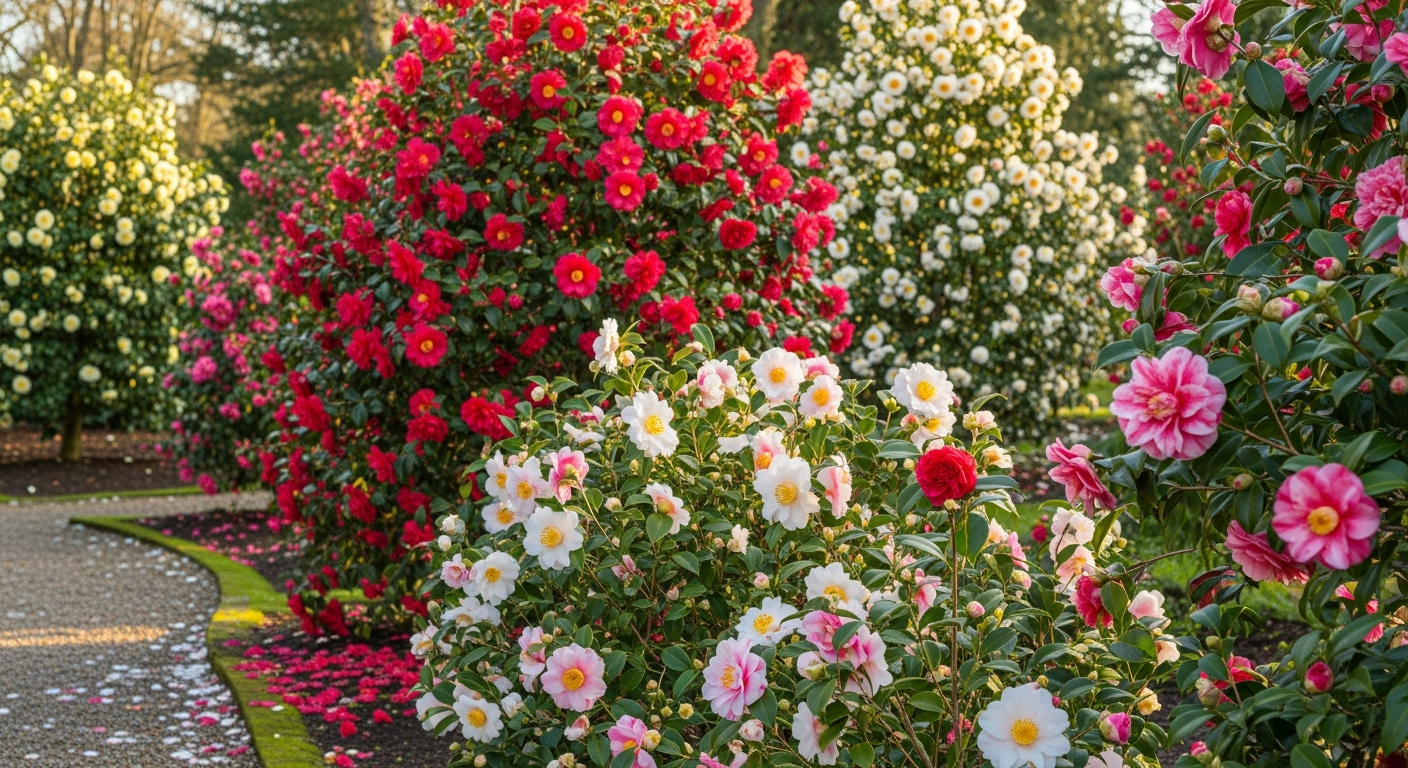
The Autumn Stars: Camellia Sasanqua
Camellia sasanqua varieties kick off the blooming season. They bring welcome color to the autumn landscape. These plants typically begin flowering in mid-fall. Their bloom period often extends into early winter. Sasanquas are native to Japan. They generally have smaller leaves and more open, airy growth habits than other types. Many varieties also offer a pleasant fragrance, a delightful bonus in the cool autumn air.
Because they bloom early, Sasanquas are excellent choices for gardeners in colder climates. Their flowers usually appear and fade before the harshest winter freezes arrive. This timing reduces the risk of bud damage from extreme cold. Furthermore, Sasanquas tend to tolerate more direct sun than their Japonica cousins. This makes them a versatile option for various garden spots. Popular varieties like ‘Yuletide’ and ‘Setsugekka’ showcase the classic beauty of this group.
The Winter and Spring Queens: Camellia Japonica
When Sasanqua flowers begin to fade, Camellia japonica takes center stage. Source This is perhaps the most well-known group of camellias. Experts have cultivated thousands of unique varieties from this single species. Japonicas feature large, dark green, glossy leaves. Their flowers come in a breathtaking array of forms. You can find single, semi-double, anemone, peony, and formal double flower shapes.
Their extended blooming season is a major advantage. Gardeners classify Japonica varieties into three main bloom periods. This allows for strategic planting for months of continuous flowers.
Early, Mid, and Late Season Bloomers
Early-season Japonicas begin to flower in late fall or early winter. They often overlap with the last of the Sasanquas. Varieties like ‘Alba Plena’ and ‘Daikagura’ are reliable early performers. They provide color from November through January in many regions.
Mid-season Japonicas represent the peak of camellia season. These varieties typically bloom from January through March. They create a massive floral display during the coldest months. This group includes many popular and iconic cultivars. For example, ‘Kramer’s Supreme’ and ‘Nuccio’s Pearl’ are stunning mid-season choices.
Late-season Japonicas round out the show. They start blooming in March and can continue into April or even May. These plants ensure your garden has vibrant color as spring fully arrives. ‘Bob Hope’ and the classic ‘Pink Perfection’ are excellent late-blooming selections. By planting a mix of these three types, you can enjoy Japonica flowers for nearly six months.
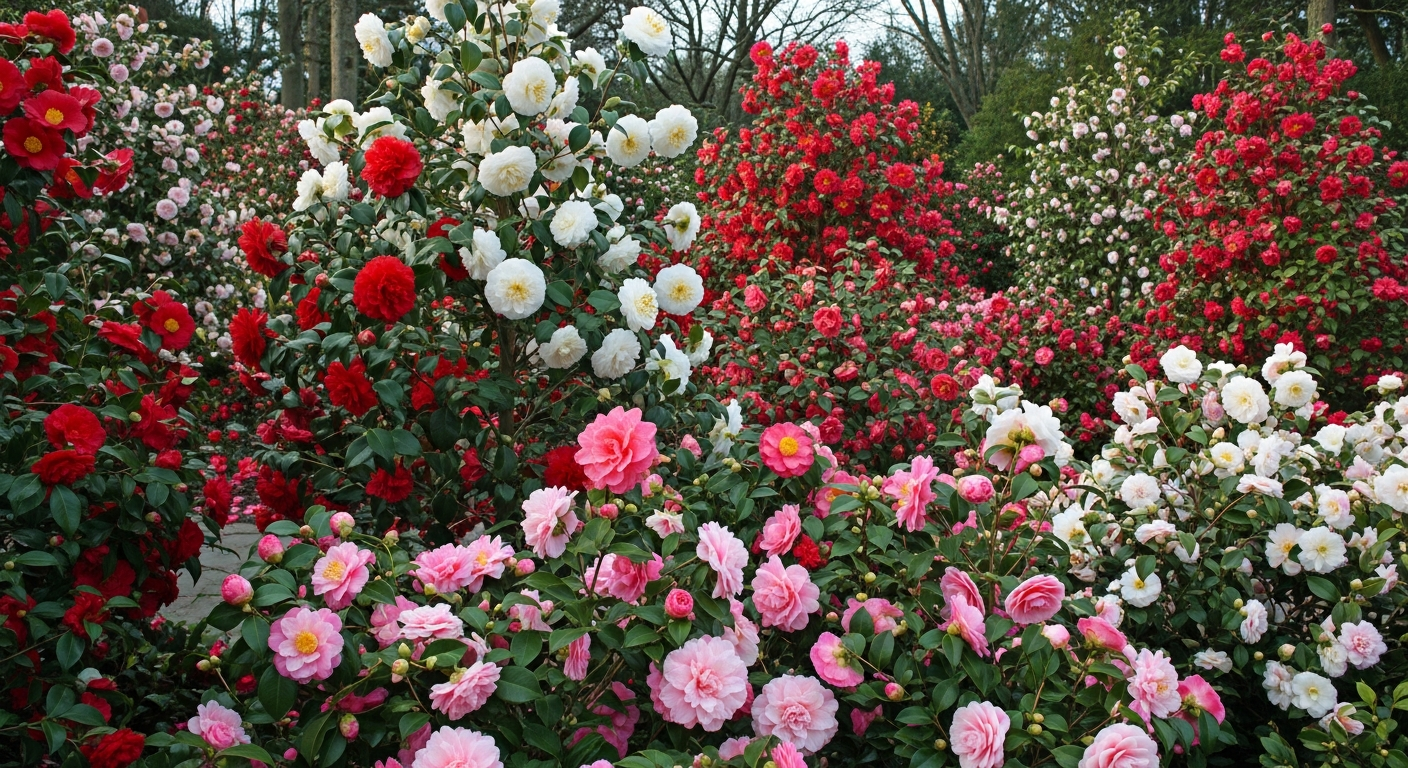
The Showstoppers: Camellia Reticulata and Hybrids
For those seeking the most dramatic flowers, Camellia reticulata is the answer. These camellias produce enormous blooms, some reaching over six inches in diameter. The flowers often have a distinct wavy or ruffled texture. Reticulatas typically have an upright, tree-like growth habit. Their leaves are often larger and more matte than those of Japonicas. Their bloom time generally falls in the late winter to mid-spring period, from February to April.
Plant breeders have also created countless hybrids. They cross different camellia species to combine the best traits of each. For instance, Williamsii hybrids (C. japonica x C. saluenensis) are known for their hardiness and profuse blooming. They shed their spent flowers cleanly, which keeps the plant looking tidy. Other hybrids aim to introduce new colors, like yellow, or extend the bloom season even further. These hybrids often flower between the main Japonica and Reticulata seasons, bridging any gaps in your garden’s color calendar.
Planning Your Camellia Garden for Year-Round Blooms
Creating a continuous floral display is simple with careful planning. Start with a few Sasanqua varieties for beautiful fall color. Choose ‘Yuletide’ for its brilliant red single blooms around the holidays. Next, select a mix of early, mid, and late-season Japonicas. An early ‘Alba Plena’ provides pure white flowers in winter. A mid-season ‘Kramer’s Supreme’ offers fragrant red peony-form blooms. Then, a late-season ‘Taylor’s Perfection’ can give you beautiful light pink flowers in spring. Finally, add a Reticulata or another late-blooming hybrid. This strategy ensures you have stunning camellia flowers from October through April.
In conclusion, understanding the different camellia bloom times is key to maximizing their impact. Sasanquas light up the fall garden. Japonicas provide the backbone of winter and early spring color. Finally, Reticulatas and various hybrids deliver a showstopping finale. By selecting a thoughtful mix of species and cultivars, you can enjoy the unparalleled beauty of camellia blooms for more than half the year.
As an Amazon Associate, we earn from qualifying purchases.