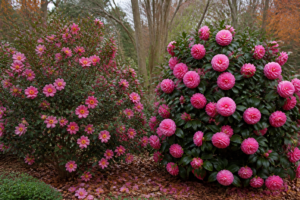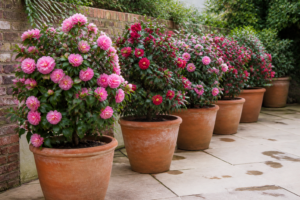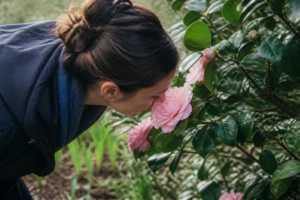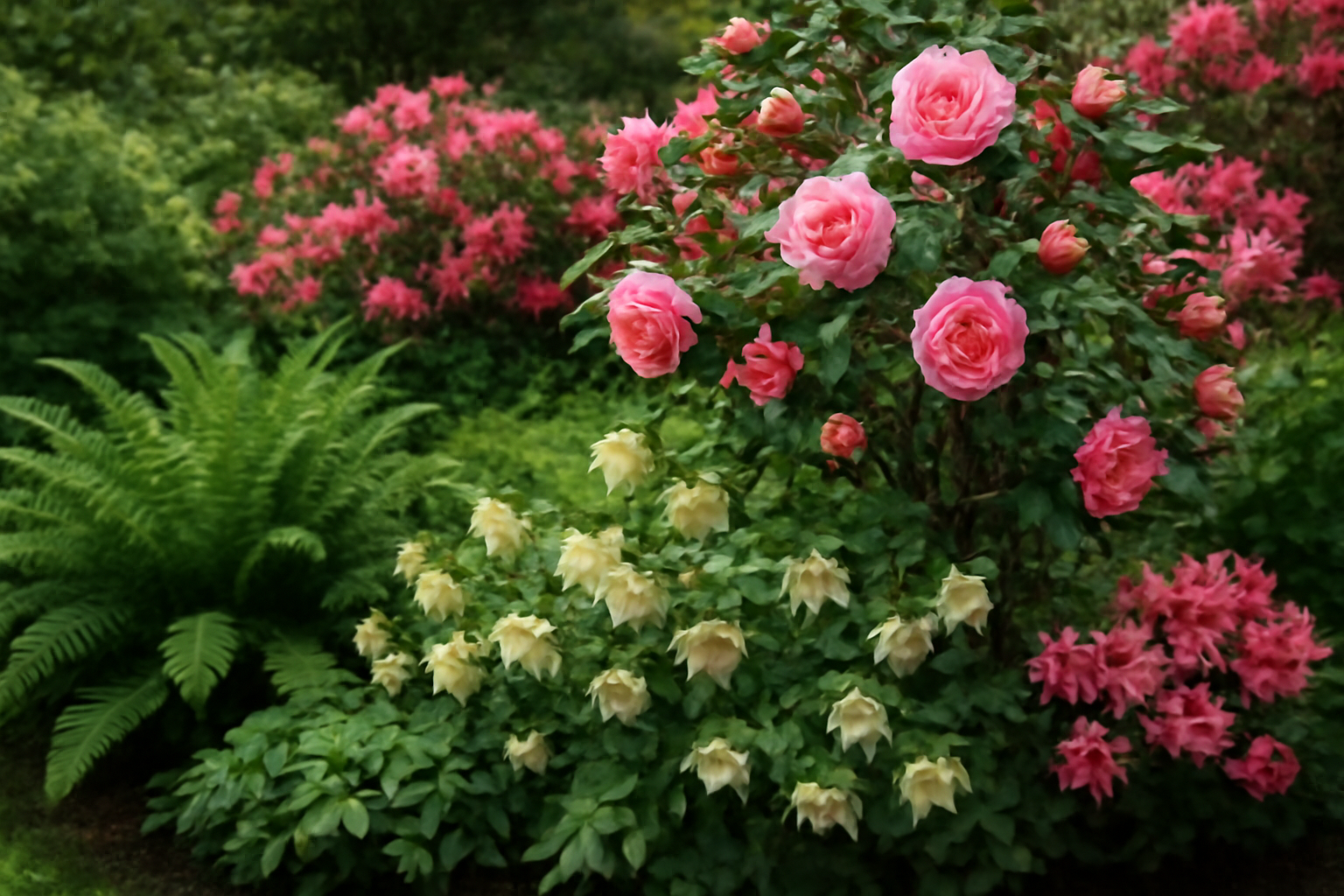
A few springs ago, I made the mistake of planting a gorgeous ‘Kramer’s Supreme’ japonicaall by itself in the centre of a new border. It bloomed magnificently. However, the rest of the season it just sat there — a dark, glossy lump surrounded by bare mulch. That embarrassing patch of empty garden taught me everything I now know about choosing the right companion plants for camellias. Get the combinations right, and your camellias look spectacular twelve months of the year. Get them wrong, and you’re staring at that lonely lump.
Over the past twenty-plus years, I’ve trialled dozens of companions across my three gardens, which span USDA zones 7b, 8a, and 8b. Not every combination worked. Some were disasters. However, I’ve landed on a core group of plants that genuinely earn their space alongside my 200-plus named cultivars. This guide shares exactly what I plant, why I plant it, and how to avoid the blunders I made along the way.
Why Companion Planting with Camellias Actually Matters
Camellias are not the easiest plants to companion plant around. They have specific soil requirements — a pH of 5.5 to 6.5 is the sweet spot — and they resent root disturbance. Their surface feeder roots sit surprisingly close to the top of the soil. As a result, any companion you choose must tolerate acidic conditions and be planted carefully to avoid competing for resources.
That said, the rewards are real. Good companions can extend seasonal interest, suppress weeds, improve soil structure, and even support pollinators that visit your camellia blooms. In my experience, the right companions make the whole planting feel intentional and designed, rather than just a collection of individual shrubs.
Best Companion Plants for Camellias: My Tried-and-Tested Picks
Rhododendrons and Azaleas
These are the obvious starting point, and for good reason. Rhododendrons and azaleas share nearly identical soil preferences with camellias. Both love that 5.5–6.5 pH range, both prefer well-drained but moisture-retentive acidic soil, and both benefit from similar fertiliser timing in spring.
I grow several Kurume azaleas alongside my early-season sasanquas in my zone 8a garden. ‘Setsugekka’, one of my favourite sasanquas for its large semi-double white blooms, opens from October into December. By the time it finishes, the nearby azaleas are already forming buds. The handoff of colour is almost seamless. Specifically, I find evergreen azaleas work better than deciduous types here, because the foliage continues to provide structure through winter.
Hellebores
Hellebores are, honestly, one of my secret weapons. They bloom from late winter into early spring — exactly when my japonicas like ‘Nuccio’s Gem’ and ‘Debutante’ are at their peak. The timing overlap is magical.
Hellebores also thrive in partial shade, which is precisely the condition many camellias prefer. They handle acidic soil well, require minimal maintenance, and their bold, leathery foliage provides excellent ground-level interest for the rest of the year. In my zone 7b garden, where winters are harsher, hellebores have proved tougher than expected. I plant them in drifts of five or seven beneath my taller japonicas, and they reliably return every season.
Ferns
Few plants look more at home beside a camellia than a well-chosen fern. The soft, feathery texture contrasts beautifully with the camellia’s glossy, structured foliage. For my shaded beds, I rely heavily on Japanese painted fern (Athyrium niponicum ‘Pictum’) and autumn fern (Dryopteris erythrosora).
Both handle the acidic soil well and spread slowly without becoming aggressive. Autumn fern, in particular, produces copper-red new growth in spring that echoes the warm tones of certain camellia blooms beautifully. I’ve used it repeatedly alongside ‘Donation’ — a well-known reticulata hybrid with large, silvery-pink flowers — and the combination always draws comments from visitors.
Hostas
Hostas are another workhorse companion. They thrive in the same dappled shade that most camellias appreciate. Their bold foliage emerges just as the last japonica blooms are fading in spring, effectively taking over the visual interest until autumn.
In my zone 8a garden, I grow large-leaved varieties like ‘Sum and Substance’ and ‘Halcyon’ in front of my mid-season japonicas. They create a lush, layered look that reads well from a distance. However, be careful not to plant them too close. Hostas can spread quite generously, and I once had a particularly vigorous clump encroaching on the feeder roots of a ‘Jury’s Yellow’ — a lesson I learned the hard way. Keep at least 18 inches of clearance from the camellia’s drip line.
Structural Companions for Year-Round Interest
Japanese Maples
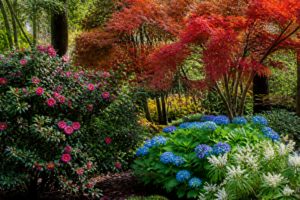
Japanese maples and camellias were practically made for each other. Both originate from similar woodland environments in Asia. Both prefer morning sun with afternoon shade, and both respond well to acidic, well-drained soil.
The airy, delicate structure of a Japanese maple provides exactly the dappled light that camellia foliage gleams best in. I have a mature ‘Sango Kaku’ (coral bark maple) planted behind a large specimen of the reticulata hybrid ‘Leonard Messel’. In autumn, the maple’s golden-yellow foliage and brilliant red stems create a stunning backdrop as ‘Leonard Messel’ holds its last pink blooms. In spring, the maple’s emerging red-tinged leaves complement the final flush of japonicas perfectly.
Nandina
Nandina — heavenly bamboo — is sometimes overlooked, but I think it’s one of the most underrated structural companions for camellias. It handles acidic soil extremely well. Its fine, ferny foliage offers a strong textural contrast to the broad camellia leaves.
I use the compact variety ‘Firepower’ extensively in my zone 8b garden. It turns brilliant red in cooler months, coinciding neatly with the bloom season of my October-flowering sasanquas like ‘Yuletide’. The red berries on taller nandina varieties also provide winter interest that stretches into the jasonica bloom window. That said, do check whether nandina is considered invasive in your region before planting. In some southern US states it can naturalise aggressively.
Bulbs and Perennials to Weave Through Camellia Beds
Snowdrops and Winter Aconites
For early winter and late winter interest in zones 7b and 8a, I weave snowdrops (Galanthus spp.) and winter aconites (Eranthis hyemalis) through the ground beneath my sasanquas. They naturalise happily in slightly acidic soil and require essentially zero maintenance once established.
Snowdrops work particularly well beneath ‘Survivor’ — a cold-hardy sasanqua that can withstand temperatures down to around 0°F with protection. The tiny white nodding flowers mirror the camellia’s white and soft-pink tones. The effect is delicate and genuine. There’s nothing forced about it.
Liriope and Mondo Grass
For edging and ground cover, I consistently return to liriope and mondo grass. Both handle acidic soil and dry shade — conditions that can exist beneath established camellia canopies. Liriope muscari ‘Big Blue’ produces lavender flower spikes in late summer and early autumn that bridge the gap between summer quietness and the autumn sasanqua season.
Black mondo grass (Ophiopogon planiscapus ‘Nigrescens’) offers something even more dramatic. I plant it in small clusters at the feet of pale-flowered camellias. Against the white blooms of ‘Survivor’ or the blush-pink of ‘Mine-No-Yuki’, the near-black foliage creates a striking, modern contrast. It’s one of my favourite small-scale tricks.
What to Avoid Planting Near Camellias
This section matters as much as the positive recommendations. Some plants will actively cause problems near your camellias.
- Shallow-rooted aggressive spreaders like mint, lemon balm, or creeping Jenny can invade the surface root zone and compete directly for moisture and nutrients.
- Heavy feeders with opposite pH preferences, such as lavender and rosemary, prefer alkaline to neutral soil (pH 6.5–7.5). Planting them alongside camellias creates an impossible compromise for both plants.
- Large, greedy-rooted trees like silver maples or Norway maples compete aggressively for moisture and will out-compete camellias in dry conditions.
- Plants needing full sun and dry conditions, such as salvias, catmint, or most Mediterranean herbs, simply won’t thrive in the shadier, moister conditions ideal for camellias.
In my experience, the biggest mistake gardeners make is choosing companions based purely on aesthetics without checking soil and light compatibility first. It never ends well for either plant.
A Quick Note on Soil Preparation
When I introduce any new companion plant near an established camellia, I never dig deeply. I repeat: never dig deeply. Camellia feeder roots spread widely and sit close to the surface, sometimes within the top two to four inches of soil.
Instead, I plant companions using a trowel, disturbing as little soil as possible. I always amend the planting hole with ericaceous compost to maintain that critical 5.5–6.5 pH. After planting, I top-dress the area with a two-to-three-inch layer of pine bark mulch. This regulates soil temperature, retains moisture, and gently acidifies the soil as it breaks down. It also ties the whole bed together visually, which never hurts.
If you’d like more detail on soil preparation for camellias specifically, I wrote a full post on getting camellia soil conditions right that covers pH testing, amendment rates, and mulching in much more depth.
Putting It All Together: My Favourite Camellia Companion Planting Combinations
Here are three complete combinations I’ve used successfully in my own gardens, if you want a starting point:
- Woodland shade combination: ‘Nuccio’s Gem’ japonica + hellebores + Japanese painted fern + snowdrops. Works beautifully in zones 7b–8a in dappled shade under tall trees.
- Autumn colour combination: ‘Yuletide’ sasanqua + Nandina ‘Firepower’ + black mondo grass + liriope ‘Big Blue’. Peaks in October–December in zones 8a–8b.
- Layered border combination: ‘Leonard Messel’ reticulata hybrid + Japanese maple ‘Sango Kaku’ + autumn fern + hosta ‘Halcyon’. Multi-season interest from late winter through autumn, ideal for zone 8a.
Final Thoughts on Choosing Companion Plants for Camellias
Choosing the right companion plants for camellias comes down to three simple rules that I’ve refined over decades of trial and error. First, match soil and light requirements before anything else. Second, think in seasons — aim for at least three seasonal moments of interest across the year. Third, protect those surface feeder roots like they’re precious, because they genuinely are.
When you get it right, a camellia planting stops being a single-season spectacle and becomes a year-round garden experience. My ‘Kramer’s Supreme’ still grows in that same border, by the way. However, it’s now surrounded by hellebores, Japanese painted fern, and a ribbon of snowdrops. It never looks like a lonely lump anymore.
Your action step: Walk your camellia beds this week and identify one seasonal gap — a period when nothing much is happening.