I get the email almost weekly. “Helen, can I grow camellias in Zone 6? I’ve always loved them, but I thought they were off-limits for me.” My answer is always the same: yes—but only if you choose wisely. Most camellias are born gardeners of warm climates. Yet after two decades collecting and growing over 200 named cultivars across multiple zones, I can tell you with absolute certainty that cold hardy camellias for Zone 6 do exist. They’re tougher than you’d think, and they’re worth every bit of effort to grow.
The key is knowing which varieties survive Zone 6 winters, how to protect them in their critical first years, and how to position them in your garden for maximum advantage. I’ve made mistakes along the way. I’ve lost beautiful plants to late-spring freezes and waterlogged soil. But I’ve also discovered that gardeners in Zone 6 can absolutely succeed with camellias—if they choose the right ones.
Understanding Zone 6: What Your Camellias Face in Winter
Let’s start with the hard facts about your climate. Zone 6 means winter lows between -10°F and 0°F (-23°C to -18°C). That’s significant cold. But Zone 6 isn’t monolithic. Zone 6a dips to -10°F to -5°F, while Zone 6b stays slightly milder at -5°F to 0°F.
This distinction matters more than you might realize. Zone 6b gives you more options than 6a. A cultivar that survives reliably at 0°F might fail at -10°F. Before you select any variety, know where your garden sits within Zone 6.
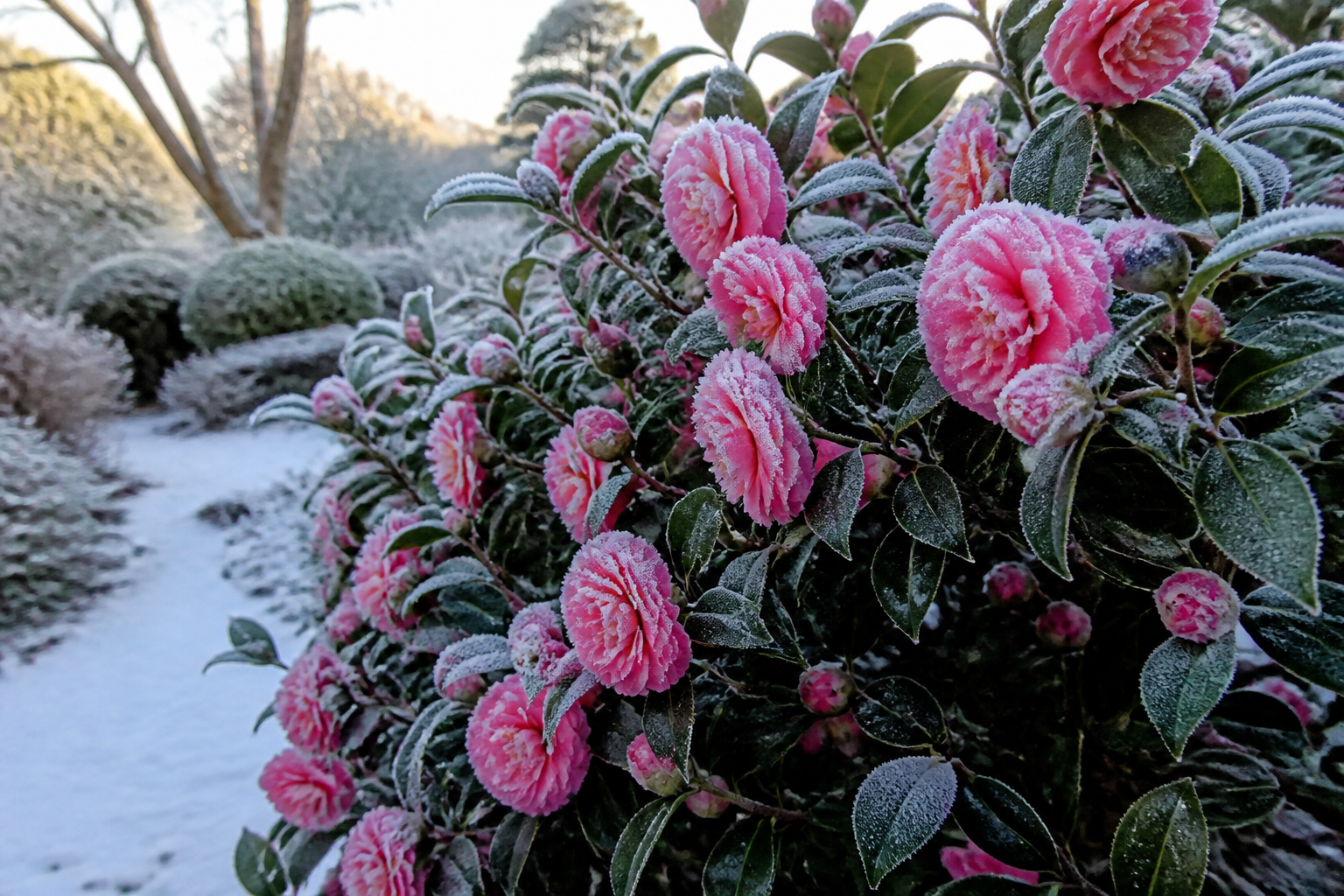
Beyond raw temperature, your Zone 6 winters include freeze-thaw cycles, wind exposure, and rapid temperature swings. A plant can handle -5°F if conditions remain stable. Early spring sun hitting frozen buds? That kills them. Waterlogged soil that freezes solid? Camellia roots suffocate. Your zone isn’t just about thermometer readings—it’s about the whole winter picture.
Why Most Camellias Die in Zone 6—and What Makes the Hardy Ones Different
Standard camellias—the Camellia japonica varieties beloved in Southern gardens—are hardy only to Zone 7 (0–10°F). Zone 7 gardeners enjoy abundant choices. Zone 6 gardeners face a narrower field. Understanding the difference is crucial.
The hardiest camellia species isn’t what most people expect. It’s Camellia oleifera, the tea oil plant native to northern China. This species tolerates temperatures that would kill a standard japonica. Its wood is tougher. Its metabolism is adapted to genuine cold.
Since the 1970s, plant breeders—particularly the USDA program at Beltsville and the legendary Dr. William Ackerman—have crossed C. oleifera with ornamental japonica and sasanqua varieties. The goal was simple: create beautiful camellias that actually survive Zone 6 and colder. Those breeding programs gave us the cold hardy camellias we can grow today.
The “Winter’s” series emerged from this work. These cultivars carry C. oleifera genes that confer genuine cold hardiness while maintaining the showy flowers we love about camellias. It’s not magic—it’s genetics meeting horticultural ambition.
The Best Cold Hardy Camellia Varieties for Zone 6
If you’re planting a camellia in Zone 6, you need a cultivar that’s proven itself in sustained cold. I’m going to walk you through the best performers I know. Some I’ve grown personally for over a decade.
The Ackerman “Winter’s” Series—Bred for the Cold
‘Winter’s Snowman’ is one of the most reliably cold hardy camellias available. It produces semi-double white flowers on a japonica-type plant. In sheltered spots, it survives to -10°F. I’ve seen it thrive in Zone 6a gardens with simple protection in the establishment years.
‘Winter’s Star’ is my personal benchmark. Deep pink-purple single flowers, Ackerman hybrid with C. oleifera parentage, hardy to -10°F. In my Zone 7b garden, I’ve grown this variety for 12 consecutive seasons without winter loss or protection. Every single year, it flowers beautifully. That’s the kind of reliability Zone 6 gardeners should demand.
‘Winter’s Charm’ rounds out the series with light orchid-pink peony-form flowers. Also an Ackerman hybrid, it achieves -10°F hardiness. All three of these “Winter’s” cultivars were bred specifically for gardeners like you. They’re not second-choice plants—they’re purpose-built cold warriors.
Spring-Blooming Varieties—the Smart Workaround
Here’s something many Zone 6 gardeners overlook: timing matters enormously. Winter-blooming camellias form their flower buds in fall. By mid-winter, those buds are exposed to deep cold. A hard freeze can blast them before they open.
Spring-blooming varieties sidestep this problem entirely. Their buds develop after winter’s worst has passed. ‘April Kiss’ (rose-red, semi-double) and ‘April Tryst’ (red, anemone form) bloom in April and May, when Zone 6 nights rarely dip below freezing.
This is a genuine advantage. You avoid the bud-drop heartbreak that kills buds on winter-flowering types. If you’re new to Zone 6 camellia growing, I’d honestly recommend starting with a spring-blooming variety. You’ll get flowers reliably, even in your first difficult winters.
Camellia oleifera and Its Hybrids—the Hardiest of All
‘Korean Fire’ is a single-form red variety selected from wild populations in South Korea. It proved its natural cold hardiness in its native habitat. Growing it feels like you’re tapping into millions of years of adaptation. These plants don’t just tolerate Zone 6 cold—they’re shaped by it.
‘Survivor’ is another exceptional choice. Semi-double pink flowers, bred in Australia but proving excellent cold hardiness in Zone 6 trials. The name is apt. This plant genuinely survives where less hardy types falter.
The pure species, Camellia oleifera, deserves mention. Its flowers are small, white, and fragrant. Growth habit is more shrubby than the typical japonica. But this is the hardiest camellia on Earth. In Zone 6, it’s essentially bulletproof. Some gardeners grow it as rootstock for grafting. Others value it for breeding experiments. If you want to push the absolute limits of camellia cultivation in your zone, oleifera is your species.
The white C. oleifera hybrids—’Polar Ice,’ ‘Snow Flurry,’ and ‘Frost Prince’—represent the cutting edge of cold hardiness breeding. These plants can potentially survive Zone 5–6a conditions. They’re newer to cultivation, so long-term Zone 6 track records are still building. But early results are genuinely impressive.
What About Zone 5? The Honest Answer
I get Zone 5 inquiries too. Can you grow camellias there? The honest answer is: maybe, but it’s experimental. Zone 5 winters reach -20°F to -10°F. That’s a different beast entirely.
‘Polar Ice,’ ‘Snow Flurry,’ and ‘Frost Prince’ are your best bets if you’re pushing Zone 5 boundaries. These oleifera hybrids show real promise. But they’re still being tested. Success isn’t guaranteed. You’d need an exceptional microclimate—a south-facing wall, excellent drainage, and significant winter protection.
For Zone 5 gardeners, I’d honestly recommend focusing on Camellia oleifera itself or starting with the hardiest selections available, understanding that you’re pioneering rather than gardening conservatively. That’s not wrong—it’s just a different commitment level.
Microclimate—Sometimes More Important Than Your Zone
Here’s what many gardening books won’t tell you: your actual microclimate often matters more than your official USDA zone. I know a Zone 6b gardener growing standard C. japonica against a warm brick wall facing south. That wall radiates retained heat. It blocks wind. It creates microclimatic conditions closer to Zone 8.
Her standard japonicas thrive there. They’d die 30 feet away in open garden. Microclimate explains this paradox.
In your Zone 6 garden, identify your microclimates. A south-facing wall, a fence that blocks winter wind, a low spot where cold air pools downslope—these all create different conditions. Plant your most tender camellia against that warm south-facing wall. Position hardier selections in more exposed spots. Your garden’s topography and structure can shift effective hardiness by 1–2 full zones.
How to Protect Camellias in Zone 6 (Especially in the First Few Years)
Cold hardy camellias for Zone 6 still benefit from protection, particularly in their establishment years. A newly planted camellia hasn’t developed the deep root system and hardened wood of a mature plant. Give it support through its first 1–3 winters.
Site selection is your first defense. Plant in a sheltered location with a south-facing wall or fence nearby. Avoid low-lying frost pockets where cold air settles. Choose a spot with afternoon sun exposure—this helps wood harden in fall. Equally important: ensure excellent drainage. Waterlogged soil that freezes kills camellia roots faster than air temperature alone ever could. This is a mistake I made early on. I lost a beautiful plant to root rot after a wet winter freeze, not to cold itself.
Physical protection matters. In the establishment years, wrap young plants with burlap or fleece. This reduces wind exposure and moderates temperature swings. Don’t wrap too tightly—you want air circulation. Remove protection by spring so the plant hardens naturally as it matures.
Spring timing is critical. Your Zone 6 camellias don’t die from February cold. They die from April sun hitting frozen buds. In early spring, when temperatures fluctuate wildly, consider morning shade cloth if a late freeze threatens. The goal is preventing rapid thaw of frozen buds, which causes them to drop.
Building Your Zone 6 Camellia Garden
If you live in Zone 6, growing camellias isn’t a fantasy—it’s an achievable goal. You won’t have the abundance of choices that Zone 8 gardeners enjoy. That’s reality. But you can grow beautiful, reliable camellias. You can have winter flowers from ‘Winter’s Star,’ spring blooms from ‘April Kiss,’ or push the limits with ‘Polar Ice.’
Start with one of the proven Ackerman hybrids or a spring-blooming variety. Plant it in a sheltered south-facing spot with excellent drainage. Wrap it in burlap for the first winter. Watch it establish. By year three, you’ll have a cold hardy camellia that requires no special winter care. That’s when you plant your second one.
After 20 years of growing camellias across three zones, I can tell you this: the hardiest cultivars are worth their weight in gold. ‘Winter’s Star’ has taught me more about perseverance than any gardening failure. Your Zone 6 camellia garden is entirely possible. Go build it.
“` —