Start with prevention: healthy soil, proper spacing, good drainage, and regular scouting. If pests appear, identify them accurately, then choose your treatment thoughtfully. Horticultural oil and insecticidal soap solve 95% of camellia pest problems. There’s rarely a need for aggressive chemicals.
Early Detection and Plant Health Are Your Best Defence
Camellia pests and diseases are manageable. None of them are mysterious or unbeatable. What they demand is attention and consistency. A dormant oil spray in late winter, a weekly garden walk, daily petal sweeps during bloom season, and prompt treatment of any infestations you spot—these habits keep my collection of 200+ camellias thriving across three climate zones.
Start with prevention: healthy soil, proper spacing, good drainage, and regular scouting. If pests appear, identify them accurately, then choose your treatment thoughtfully. Horticultural oil and insecticidal soap solve 95% of camellia pest problems. There’s rarely a need for aggressive chemicals.
Most importantly, don’t delay. That’s the mistake I made, and I won’t repeat it. A few aphids or a small cottony scale infestation caught today is a five-minute problem. The same infestation ignored for a month becomes a five-week project. Watch your camellias closely, act early, and camellia scale treatment—or any pest problem—becomes a minor management task rather than a crisis.
Now, dormant oil spray is non-negotiable on my calendar. It’s a 30-minute job in late winter that saves weeks of treatment later. That lesson alone has made my camellia-growing dramatically less stressful.
Early Detection and Plant Health Are Your Best Defence
Camellia pests and diseases are manageable. None of them are mysterious or unbeatable. What they demand is attention and consistency. A dormant oil spray in late winter, a weekly garden walk, daily petal sweeps during bloom season, and prompt treatment of any infestations you spot—these habits keep my collection of 200+ camellias thriving across three climate zones.
Start with prevention: healthy soil, proper spacing, good drainage, and regular scouting. If pests appear, identify them accurately, then choose your treatment thoughtfully. Horticultural oil and insecticidal soap solve 95% of camellia pest problems. There’s rarely a need for aggressive chemicals.
Most importantly, don’t delay. That’s the mistake I made, and I won’t repeat it. A few aphids or a small cottony scale infestation caught today is a five-minute problem. The same infestation ignored for a month becomes a five-week project. Watch your camellias closely, act early, and camellia scale treatment—or any pest problem—becomes a minor management task rather than a crisis.
My mistake with that ‘Donation’ camellia taught me that early attention beats late intervention. I’d been busy that spring and skipped my usual February dormant oil spray. By May, I was spraying every week and still losing leaves. That single oversight cost me countless hours of work and left three neighbouring plants infested.
Now, dormant oil spray is non-negotiable on my calendar. It’s a 30-minute job in late winter that saves weeks of treatment later. That lesson alone has made my camellia-growing dramatically less stressful.
Early Detection and Plant Health Are Your Best Defence
Camellia pests and diseases are manageable. None of them are mysterious or unbeatable. What they demand is attention and consistency. A dormant oil spray in late winter, a weekly garden walk, daily petal sweeps during bloom season, and prompt treatment of any infestations you spot—these habits keep my collection of 200+ camellias thriving across three climate zones.
Start with prevention: healthy soil, proper spacing, good drainage, and regular scouting. If pests appear, identify them accurately, then choose your treatment thoughtfully. Horticultural oil and insecticidal soap solve 95% of camellia pest problems. There’s rarely a need for aggressive chemicals.
Most importantly, don’t delay. That’s the mistake I made, and I won’t repeat it. A few aphids or a small cottony scale infestation caught today is a five-minute problem. The same infestation ignored for a month becomes a five-week project. Watch your camellias closely, act early, and camellia scale treatment—or any pest problem—becomes a minor management task rather than a crisis.
The Lesson I Learned
My mistake with that ‘Donation’ camellia taught me that early attention beats late intervention. I’d been busy that spring and skipped my usual February dormant oil spray. By May, I was spraying every week and still losing leaves. That single oversight cost me countless hours of work and left three neighbouring plants infested.
Now, dormant oil spray is non-negotiable on my calendar. It’s a 30-minute job in late winter that saves weeks of treatment later. That lesson alone has made my camellia-growing dramatically less stressful.
Early Detection and Plant Health Are Your Best Defence
Camellia pests and diseases are manageable. None of them are mysterious or unbeatable. What they demand is attention and consistency. A dormant oil spray in late winter, a weekly garden walk, daily petal sweeps during bloom season, and prompt treatment of any infestations you spot—these habits keep my collection of 200+ camellias thriving across three climate zones.
Start with prevention: healthy soil, proper spacing, good drainage, and regular scouting. If pests appear, identify them accurately, then choose your treatment thoughtfully. Horticultural oil and insecticidal soap solve 95% of camellia pest problems. There’s rarely a need for aggressive chemicals.
Most importantly, don’t delay. That’s the mistake I made, and I won’t repeat it. A few aphids or a small cottony scale infestation caught today is a five-minute problem. The same infestation ignored for a month becomes a five-week project. Watch your camellias closely, act early, and camellia scale treatment—or any pest problem—becomes a minor management task rather than a crisis.
Sterilize pruning tools between plants. Dip secateurs in 10% bleach solution or use a commercial disinfectant. This prevents accidental disease spread.
The Lesson I Learned
My mistake with that ‘Donation’ camellia taught me that early attention beats late intervention. I’d been busy that spring and skipped my usual February dormant oil spray. By May, I was spraying every week and still losing leaves. That single oversight cost me countless hours of work and left three neighbouring plants infested.
Now, dormant oil spray is non-negotiable on my calendar. It’s a 30-minute job in late winter that saves weeks of treatment later. That lesson alone has made my camellia-growing dramatically less stressful.
Early Detection and Plant Health Are Your Best Defence
Camellia pests and diseases are manageable. None of them are mysterious or unbeatable. What they demand is attention and consistency. A dormant oil spray in late winter, a weekly garden walk, daily petal sweeps during bloom season, and prompt treatment of any infestations you spot—these habits keep my collection of 200+ camellias thriving across three climate zones.
Start with prevention: healthy soil, proper spacing, good drainage, and regular scouting. If pests appear, identify them accurately, then choose your treatment thoughtfully. Horticultural oil and insecticidal soap solve 95% of camellia pest problems. There’s rarely a need for aggressive chemicals.
Most importantly, don’t delay. That’s the mistake I made, and I won’t repeat it. A few aphids or a small cottony scale infestation caught today is a five-minute problem. The same infestation ignored for a month becomes a five-week project. Watch your camellias closely, act early, and camellia scale treatment—or any pest problem—becomes a minor management task rather than a crisis.
Daily petal sweeps during bloom season, fallen debris removal, and proper spacing prevent petal blight far better than any fungicide. I view sanitation as pest control—it removes the environment where disease thrives.
Sterilize pruning tools between plants. Dip secateurs in 10% bleach solution or use a commercial disinfectant. This prevents accidental disease spread.
The Lesson I Learned
My mistake with that ‘Donation’ camellia taught me that early attention beats late intervention. I’d been busy that spring and skipped my usual February dormant oil spray. By May, I was spraying every week and still losing leaves. That single oversight cost me countless hours of work and left three neighbouring plants infested.
Now, dormant oil spray is non-negotiable on my calendar. It’s a 30-minute job in late winter that saves weeks of treatment later. That lesson alone has made my camellia-growing dramatically less stressful.
Early Detection and Plant Health Are Your Best Defence
Camellia pests and diseases are manageable. None of them are mysterious or unbeatable. What they demand is attention and consistency. A dormant oil spray in late winter, a weekly garden walk, daily petal sweeps during bloom season, and prompt treatment of any infestations you spot—these habits keep my collection of 200+ camellias thriving across three climate zones.
Start with prevention: healthy soil, proper spacing, good drainage, and regular scouting. If pests appear, identify them accurately, then choose your treatment thoughtfully. Horticultural oil and insecticidal soap solve 95% of camellia pest problems. There’s rarely a need for aggressive chemicals.
Most importantly, don’t delay. That’s the mistake I made, and I won’t repeat it. A few aphids or a small cottony scale infestation caught today is a five-minute problem. The same infestation ignored for a month becomes a five-week project. Watch your camellias closely, act early, and camellia scale treatment—or any pest problem—becomes a minor management task rather than a crisis.
Sanitation Prevents Fungal Disease
Daily petal sweeps during bloom season, fallen debris removal, and proper spacing prevent petal blight far better than any fungicide. I view sanitation as pest control—it removes the environment where disease thrives.
Sterilize pruning tools between plants. Dip secateurs in 10% bleach solution or use a commercial disinfectant. This prevents accidental disease spread.
The Lesson I Learned
My mistake with that ‘Donation’ camellia taught me that early attention beats late intervention. I’d been busy that spring and skipped my usual February dormant oil spray. By May, I was spraying every week and still losing leaves. That single oversight cost me countless hours of work and left three neighbouring plants infested.
Now, dormant oil spray is non-negotiable on my calendar. It’s a 30-minute job in late winter that saves weeks of treatment later. That lesson alone has made my camellia-growing dramatically less stressful.
Early Detection and Plant Health Are Your Best Defence
Camellia pests and diseases are manageable. None of them are mysterious or unbeatable. What they demand is attention and consistency. A dormant oil spray in late winter, a weekly garden walk, daily petal sweeps during bloom season, and prompt treatment of any infestations you spot—these habits keep my collection of 200+ camellias thriving across three climate zones.
Start with prevention: healthy soil, proper spacing, good drainage, and regular scouting. If pests appear, identify them accurately, then choose your treatment thoughtfully. Horticultural oil and insecticidal soap solve 95% of camellia pest problems. There’s rarely a need for aggressive chemicals.
Most importantly, don’t delay. That’s the mistake I made, and I won’t repeat it. A few aphids or a small cottony scale infestation caught today is a five-minute problem. The same infestation ignored for a month becomes a five-week project. Watch your camellias closely, act early, and camellia scale treatment—or any pest problem—becomes a minor management task rather than a crisis.
This approach protects pollinators, beneficial insects, and soil microorganisms that keep my garden ecosystem healthy.
Sanitation Prevents Fungal Disease
Daily petal sweeps during bloom season, fallen debris removal, and proper spacing prevent petal blight far better than any fungicide. I view sanitation as pest control—it removes the environment where disease thrives.
Sterilize pruning tools between plants. Dip secateurs in 10% bleach solution or use a commercial disinfectant. This prevents accidental disease spread.
The Lesson I Learned
My mistake with that ‘Donation’ camellia taught me that early attention beats late intervention. I’d been busy that spring and skipped my usual February dormant oil spray. By May, I was spraying every week and still losing leaves. That single oversight cost me countless hours of work and left three neighbouring plants infested.
Now, dormant oil spray is non-negotiable on my calendar. It’s a 30-minute job in late winter that saves weeks of treatment later. That lesson alone has made my camellia-growing dramatically less stressful.
Early Detection and Plant Health Are Your Best Defence
Camellia pests and diseases are manageable. None of them are mysterious or unbeatable. What they demand is attention and consistency. A dormant oil spray in late winter, a weekly garden walk, daily petal sweeps during bloom season, and prompt treatment of any infestations you spot—these habits keep my collection of 200+ camellias thriving across three climate zones.
Start with prevention: healthy soil, proper spacing, good drainage, and regular scouting. If pests appear, identify them accurately, then choose your treatment thoughtfully. Horticultural oil and insecticidal soap solve 95% of camellia pest problems. There’s rarely a need for aggressive chemicals.
Most importantly, don’t delay. That’s the mistake I made, and I won’t repeat it. A few aphids or a small cottony scale infestation caught today is a five-minute problem. The same infestation ignored for a month becomes a five-week project. Watch your camellias closely, act early, and camellia scale treatment—or any pest problem—becomes a minor management task rather than a crisis.
When treatment is needed, I start with organic methods: horticultural oil, insecticidal soap, neem oil, and water spray. These work for 90% of my pest problems. Only in rare cases—severe infestations on prize plants—do I consider conventional insecticides. And even then, I use contact sprays rather than systemic soil drenches.
This approach protects pollinators, beneficial insects, and soil microorganisms that keep my garden ecosystem healthy.
Sanitation Prevents Fungal Disease
Daily petal sweeps during bloom season, fallen debris removal, and proper spacing prevent petal blight far better than any fungicide. I view sanitation as pest control—it removes the environment where disease thrives.
Sterilize pruning tools between plants. Dip secateurs in 10% bleach solution or use a commercial disinfectant. This prevents accidental disease spread.
The Lesson I Learned
My mistake with that ‘Donation’ camellia taught me that early attention beats late intervention. I’d been busy that spring and skipped my usual February dormant oil spray. By May, I was spraying every week and still losing leaves. That single oversight cost me countless hours of work and left three neighbouring plants infested.
Now, dormant oil spray is non-negotiable on my calendar. It’s a 30-minute job in late winter that saves weeks of treatment later. That lesson alone has made my camellia-growing dramatically less stressful.
Early Detection and Plant Health Are Your Best Defence
Camellia pests and diseases are manageable. None of them are mysterious or unbeatable. What they demand is attention and consistency. A dormant oil spray in late winter, a weekly garden walk, daily petal sweeps during bloom season, and prompt treatment of any infestations you spot—these habits keep my collection of 200+ camellias thriving across three climate zones.
Start with prevention: healthy soil, proper spacing, good drainage, and regular scouting. If pests appear, identify them accurately, then choose your treatment thoughtfully. Horticultural oil and insecticidal soap solve 95% of camellia pest problems. There’s rarely a need for aggressive chemicals.
Most importantly, don’t delay. That’s the mistake I made, and I won’t repeat it. A few aphids or a small cottony scale infestation caught today is a five-minute problem. The same infestation ignored for a month becomes a five-week project. Watch your camellias closely, act early, and camellia scale treatment—or any pest problem—becomes a minor management task rather than a crisis.
Organic Options First, Conventional Only If Necessary
When treatment is needed, I start with organic methods: horticultural oil, insecticidal soap, neem oil, and water spray. These work for 90% of my pest problems. Only in rare cases—severe infestations on prize plants—do I consider conventional insecticides. And even then, I use contact sprays rather than systemic soil drenches.
This approach protects pollinators, beneficial insects, and soil microorganisms that keep my garden ecosystem healthy.
Sanitation Prevents Fungal Disease
Daily petal sweeps during bloom season, fallen debris removal, and proper spacing prevent petal blight far better than any fungicide. I view sanitation as pest control—it removes the environment where disease thrives.
Sterilize pruning tools between plants. Dip secateurs in 10% bleach solution or use a commercial disinfectant. This prevents accidental disease spread.
The Lesson I Learned
My mistake with that ‘Donation’ camellia taught me that early attention beats late intervention. I’d been busy that spring and skipped my usual February dormant oil spray. By May, I was spraying every week and still losing leaves. That single oversight cost me countless hours of work and left three neighbouring plants infested.
Now, dormant oil spray is non-negotiable on my calendar. It’s a 30-minute job in late winter that saves weeks of treatment later. That lesson alone has made my camellia-growing dramatically less stressful.
Early Detection and Plant Health Are Your Best Defence
Camellia pests and diseases are manageable. None of them are mysterious or unbeatable. What they demand is attention and consistency. A dormant oil spray in late winter, a weekly garden walk, daily petal sweeps during bloom season, and prompt treatment of any infestations you spot—these habits keep my collection of 200+ camellias thriving across three climate zones.
Start with prevention: healthy soil, proper spacing, good drainage, and regular scouting. If pests appear, identify them accurately, then choose your treatment thoughtfully. Horticultural oil and insecticidal soap solve 95% of camellia pest problems. There’s rarely a need for aggressive chemicals.
Most importantly, don’t delay. That’s the mistake I made, and I won’t repeat it. A few aphids or a small cottony scale infestation caught today is a five-minute problem. The same infestation ignored for a month becomes a five-week project. Watch your camellias closely, act early, and camellia scale treatment—or any pest problem—becomes a minor management task rather than a crisis.
I treat all my camellias, even those without visible scale. It’s insurance, and it’s cheap. A bottle of quality horticultural oil costs £10–15 and covers dozens of plants.
Organic Options First, Conventional Only If Necessary
When treatment is needed, I start with organic methods: horticultural oil, insecticidal soap, neem oil, and water spray. These work for 90% of my pest problems. Only in rare cases—severe infestations on prize plants—do I consider conventional insecticides. And even then, I use contact sprays rather than systemic soil drenches.
This approach protects pollinators, beneficial insects, and soil microorganisms that keep my garden ecosystem healthy.
Sanitation Prevents Fungal Disease
Daily petal sweeps during bloom season, fallen debris removal, and proper spacing prevent petal blight far better than any fungicide. I view sanitation as pest control—it removes the environment where disease thrives.
Sterilize pruning tools between plants. Dip secateurs in 10% bleach solution or use a commercial disinfectant. This prevents accidental disease spread.
The Lesson I Learned
My mistake with that ‘Donation’ camellia taught me that early attention beats late intervention. I’d been busy that spring and skipped my usual February dormant oil spray. By May, I was spraying every week and still losing leaves. That single oversight cost me countless hours of work and left three neighbouring plants infested.
Now, dormant oil spray is non-negotiable on my calendar. It’s a 30-minute job in late winter that saves weeks of treatment later. That lesson alone has made my camellia-growing dramatically less stressful.
Early Detection and Plant Health Are Your Best Defence
Camellia pests and diseases are manageable. None of them are mysterious or unbeatable. What they demand is attention and consistency. A dormant oil spray in late winter, a weekly garden walk, daily petal sweeps during bloom season, and prompt treatment of any infestations you spot—these habits keep my collection of 200+ camellias thriving across three climate zones.
Start with prevention: healthy soil, proper spacing, good drainage, and regular scouting. If pests appear, identify them accurately, then choose your treatment thoughtfully. Horticultural oil and insecticidal soap solve 95% of camellia pest problems. There’s rarely a need for aggressive chemicals.
Most importantly, don’t delay. That’s the mistake I made, and I won’t repeat it. A few aphids or a small cottony scale infestation caught today is a five-minute problem. The same infestation ignored for a month becomes a five-week project. Watch your camellias closely, act early, and camellia scale treatment—or any pest problem—becomes a minor management task rather than a crisis.
My single most important pest management tool is a dormant oil spray in late February or early March. This kills overwintering scale and eggs before the season begins. One application prevents months of struggle.
I treat all my camellias, even those without visible scale. It’s insurance, and it’s cheap. A bottle of quality horticultural oil costs £10–15 and covers dozens of plants.
Organic Options First, Conventional Only If Necessary
When treatment is needed, I start with organic methods: horticultural oil, insecticidal soap, neem oil, and water spray. These work for 90% of my pest problems. Only in rare cases—severe infestations on prize plants—do I consider conventional insecticides. And even then, I use contact sprays rather than systemic soil drenches.
This approach protects pollinators, beneficial insects, and soil microorganisms that keep my garden ecosystem healthy.
Sanitation Prevents Fungal Disease
Daily petal sweeps during bloom season, fallen debris removal, and proper spacing prevent petal blight far better than any fungicide. I view sanitation as pest control—it removes the environment where disease thrives.
Sterilize pruning tools between plants. Dip secateurs in 10% bleach solution or use a commercial disinfectant. This prevents accidental disease spread.
The Lesson I Learned
My mistake with that ‘Donation’ camellia taught me that early attention beats late intervention. I’d been busy that spring and skipped my usual February dormant oil spray. By May, I was spraying every week and still losing leaves. That single oversight cost me countless hours of work and left three neighbouring plants infested.
Now, dormant oil spray is non-negotiable on my calendar. It’s a 30-minute job in late winter that saves weeks of treatment later. That lesson alone has made my camellia-growing dramatically less stressful.
Early Detection and Plant Health Are Your Best Defence
Camellia pests and diseases are manageable. None of them are mysterious or unbeatable. What they demand is attention and consistency. A dormant oil spray in late winter, a weekly garden walk, daily petal sweeps during bloom season, and prompt treatment of any infestations you spot—these habits keep my collection of 200+ camellias thriving across three climate zones.
Start with prevention: healthy soil, proper spacing, good drainage, and regular scouting. If pests appear, identify them accurately, then choose your treatment thoughtfully. Horticultural oil and insecticidal soap solve 95% of camellia pest problems. There’s rarely a need for aggressive chemicals.
Most importantly, don’t delay. That’s the mistake I made, and I won’t repeat it. A few aphids or a small cottony scale infestation caught today is a five-minute problem. The same infestation ignored for a month becomes a five-week project. Watch your camellias closely, act early, and camellia scale treatment—or any pest problem—becomes a minor management task rather than a crisis.
Dormant Oil in Late Winter
My single most important pest management tool is a dormant oil spray in late February or early March. This kills overwintering scale and eggs before the season begins. One application prevents months of struggle.
I treat all my camellias, even those without visible scale. It’s insurance, and it’s cheap. A bottle of quality horticultural oil costs £10–15 and covers dozens of plants.
Organic Options First, Conventional Only If Necessary
When treatment is needed, I start with organic methods: horticultural oil, insecticidal soap, neem oil, and water spray. These work for 90% of my pest problems. Only in rare cases—severe infestations on prize plants—do I consider conventional insecticides. And even then, I use contact sprays rather than systemic soil drenches.
This approach protects pollinators, beneficial insects, and soil microorganisms that keep my garden ecosystem healthy.
Sanitation Prevents Fungal Disease
Daily petal sweeps during bloom season, fallen debris removal, and proper spacing prevent petal blight far better than any fungicide. I view sanitation as pest control—it removes the environment where disease thrives.
Sterilize pruning tools between plants. Dip secateurs in 10% bleach solution or use a commercial disinfectant. This prevents accidental disease spread.
The Lesson I Learned
My mistake with that ‘Donation’ camellia taught me that early attention beats late intervention. I’d been busy that spring and skipped my usual February dormant oil spray. By May, I was spraying every week and still losing leaves. That single oversight cost me countless hours of work and left three neighbouring plants infested.
Now, dormant oil spray is non-negotiable on my calendar. It’s a 30-minute job in late winter that saves weeks of treatment later. That lesson alone has made my camellia-growing dramatically less stressful.
Early Detection and Plant Health Are Your Best Defence
Camellia pests and diseases are manageable. None of them are mysterious or unbeatable. What they demand is attention and consistency. A dormant oil spray in late winter, a weekly garden walk, daily petal sweeps during bloom season, and prompt treatment of any infestations you spot—these habits keep my collection of 200+ camellias thriving across three climate zones.
Start with prevention: healthy soil, proper spacing, good drainage, and regular scouting. If pests appear, identify them accurately, then choose your treatment thoughtfully. Horticultural oil and insecticidal soap solve 95% of camellia pest problems. There’s rarely a need for aggressive chemicals.
Most importantly, don’t delay. That’s the mistake I made, and I won’t repeat it. A few aphids or a small cottony scale infestation caught today is a five-minute problem. The same infestation ignored for a month becomes a five-week project. Watch your camellias closely, act early, and camellia scale treatment—or any pest problem—becomes a minor management task rather than a crisis.
Pay special attention in spring and early summer. This is when scale crawlers hatch and aphids appear. Early intervention prevents exponential population growth.
Dormant Oil in Late Winter
My single most important pest management tool is a dormant oil spray in late February or early March. This kills overwintering scale and eggs before the season begins. One application prevents months of struggle.
I treat all my camellias, even those without visible scale. It’s insurance, and it’s cheap. A bottle of quality horticultural oil costs £10–15 and covers dozens of plants.
Organic Options First, Conventional Only If Necessary
When treatment is needed, I start with organic methods: horticultural oil, insecticidal soap, neem oil, and water spray. These work for 90% of my pest problems. Only in rare cases—severe infestations on prize plants—do I consider conventional insecticides. And even then, I use contact sprays rather than systemic soil drenches.
This approach protects pollinators, beneficial insects, and soil microorganisms that keep my garden ecosystem healthy.
Sanitation Prevents Fungal Disease
Daily petal sweeps during bloom season, fallen debris removal, and proper spacing prevent petal blight far better than any fungicide. I view sanitation as pest control—it removes the environment where disease thrives.
Sterilize pruning tools between plants. Dip secateurs in 10% bleach solution or use a commercial disinfectant. This prevents accidental disease spread.
The Lesson I Learned
My mistake with that ‘Donation’ camellia taught me that early attention beats late intervention. I’d been busy that spring and skipped my usual February dormant oil spray. By May, I was spraying every week and still losing leaves. That single oversight cost me countless hours of work and left three neighbouring plants infested.
Now, dormant oil spray is non-negotiable on my calendar. It’s a 30-minute job in late winter that saves weeks of treatment later. That lesson alone has made my camellia-growing dramatically less stressful.
Early Detection and Plant Health Are Your Best Defence
Camellia pests and diseases are manageable. None of them are mysterious or unbeatable. What they demand is attention and consistency. A dormant oil spray in late winter, a weekly garden walk, daily petal sweeps during bloom season, and prompt treatment of any infestations you spot—these habits keep my collection of 200+ camellias thriving across three climate zones.
Start with prevention: healthy soil, proper spacing, good drainage, and regular scouting. If pests appear, identify them accurately, then choose your treatment thoughtfully. Horticultural oil and insecticidal soap solve 95% of camellia pest problems. There’s rarely a need for aggressive chemicals.
Most importantly, don’t delay. That’s the mistake I made, and I won’t repeat it. A few aphids or a small cottony scale infestation caught today is a five-minute problem. The same infestation ignored for a month becomes a five-week project. Watch your camellias closely, act early, and camellia scale treatment—or any pest problem—becomes a minor management task rather than a crisis.
Walk your garden weekly during the growing season. Look carefully at new growth, leaf undersides, and stems. Catch infestations when they’re small. A few aphids on one shoot are easy to handle. A thousand aphids spread across half the plant is a week-long battle.
Pay special attention in spring and early summer. This is when scale crawlers hatch and aphids appear. Early intervention prevents exponential population growth.
Dormant Oil in Late Winter
My single most important pest management tool is a dormant oil spray in late February or early March. This kills overwintering scale and eggs before the season begins. One application prevents months of struggle.
I treat all my camellias, even those without visible scale. It’s insurance, and it’s cheap. A bottle of quality horticultural oil costs £10–15 and covers dozens of plants.
Organic Options First, Conventional Only If Necessary
When treatment is needed, I start with organic methods: horticultural oil, insecticidal soap, neem oil, and water spray. These work for 90% of my pest problems. Only in rare cases—severe infestations on prize plants—do I consider conventional insecticides. And even then, I use contact sprays rather than systemic soil drenches.
This approach protects pollinators, beneficial insects, and soil microorganisms that keep my garden ecosystem healthy.
Sanitation Prevents Fungal Disease
Daily petal sweeps during bloom season, fallen debris removal, and proper spacing prevent petal blight far better than any fungicide. I view sanitation as pest control—it removes the environment where disease thrives.
Sterilize pruning tools between plants. Dip secateurs in 10% bleach solution or use a commercial disinfectant. This prevents accidental disease spread.
The Lesson I Learned
My mistake with that ‘Donation’ camellia taught me that early attention beats late intervention. I’d been busy that spring and skipped my usual February dormant oil spray. By May, I was spraying every week and still losing leaves. That single oversight cost me countless hours of work and left three neighbouring plants infested.
Now, dormant oil spray is non-negotiable on my calendar. It’s a 30-minute job in late winter that saves weeks of treatment later. That lesson alone has made my camellia-growing dramatically less stressful.
Early Detection and Plant Health Are Your Best Defence
Camellia pests and diseases are manageable. None of them are mysterious or unbeatable. What they demand is attention and consistency. A dormant oil spray in late winter, a weekly garden walk, daily petal sweeps during bloom season, and prompt treatment of any infestations you spot—these habits keep my collection of 200+ camellias thriving across three climate zones.
Start with prevention: healthy soil, proper spacing, good drainage, and regular scouting. If pests appear, identify them accurately, then choose your treatment thoughtfully. Horticultural oil and insecticidal soap solve 95% of camellia pest problems. There’s rarely a need for aggressive chemicals.
Most importantly, don’t delay. That’s the mistake I made, and I won’t repeat it. A few aphids or a small cottony scale infestation caught today is a five-minute problem. The same infestation ignored for a month becomes a five-week project. Watch your camellias closely, act early, and camellia scale treatment—or any pest problem—becomes a minor management task rather than a crisis.
Regular Scouting Is Non-Negotiable
Walk your garden weekly during the growing season. Look carefully at new growth, leaf undersides, and stems. Catch infestations when they’re small. A few aphids on one shoot are easy to handle. A thousand aphids spread across half the plant is a week-long battle.
Pay special attention in spring and early summer. This is when scale crawlers hatch and aphids appear. Early intervention prevents exponential population growth.
Dormant Oil in Late Winter
My single most important pest management tool is a dormant oil spray in late February or early March. This kills overwintering scale and eggs before the season begins. One application prevents months of struggle.
I treat all my camellias, even those without visible scale. It’s insurance, and it’s cheap. A bottle of quality horticultural oil costs £10–15 and covers dozens of plants.
Organic Options First, Conventional Only If Necessary
When treatment is needed, I start with organic methods: horticultural oil, insecticidal soap, neem oil, and water spray. These work for 90% of my pest problems. Only in rare cases—severe infestations on prize plants—do I consider conventional insecticides. And even then, I use contact sprays rather than systemic soil drenches.
This approach protects pollinators, beneficial insects, and soil microorganisms that keep my garden ecosystem healthy.
Sanitation Prevents Fungal Disease
Daily petal sweeps during bloom season, fallen debris removal, and proper spacing prevent petal blight far better than any fungicide. I view sanitation as pest control—it removes the environment where disease thrives.
Sterilize pruning tools between plants. Dip secateurs in 10% bleach solution or use a commercial disinfectant. This prevents accidental disease spread.
The Lesson I Learned
My mistake with that ‘Donation’ camellia taught me that early attention beats late intervention. I’d been busy that spring and skipped my usual February dormant oil spray. By May, I was spraying every week and still losing leaves. That single oversight cost me countless hours of work and left three neighbouring plants infested.
Now, dormant oil spray is non-negotiable on my calendar. It’s a 30-minute job in late winter that saves weeks of treatment later. That lesson alone has made my camellia-growing dramatically less stressful.
Early Detection and Plant Health Are Your Best Defence
Camellia pests and diseases are manageable. None of them are mysterious or unbeatable. What they demand is attention and consistency. A dormant oil spray in late winter, a weekly garden walk, daily petal sweeps during bloom season, and prompt treatment of any infestations you spot—these habits keep my collection of 200+ camellias thriving across three climate zones.
Start with prevention: healthy soil, proper spacing, good drainage, and regular scouting. If pests appear, identify them accurately, then choose your treatment thoughtfully. Horticultural oil and insecticidal soap solve 95% of camellia pest problems. There’s rarely a need for aggressive chemicals.
Most importantly, don’t delay. That’s the mistake I made, and I won’t repeat it. A few aphids or a small cottony scale infestation caught today is a five-minute problem. The same infestation ignored for a month becomes a five-week project. Watch your camellias closely, act early, and camellia scale treatment—or any pest problem—becomes a minor management task rather than a crisis.
Space plants generously to improve air circulation. Crowded plants stay too moist and become pest magnets. Prune out crossing branches and dense inner growth. These practices alone prevent 80% of my pest problems.
Regular Scouting Is Non-Negotiable
Walk your garden weekly during the growing season. Look carefully at new growth, leaf undersides, and stems. Catch infestations when they’re small. A few aphids on one shoot are easy to handle. A thousand aphids spread across half the plant is a week-long battle.
Pay special attention in spring and early summer. This is when scale crawlers hatch and aphids appear. Early intervention prevents exponential population growth.
Dormant Oil in Late Winter
My single most important pest management tool is a dormant oil spray in late February or early March. This kills overwintering scale and eggs before the season begins. One application prevents months of struggle.
I treat all my camellias, even those without visible scale. It’s insurance, and it’s cheap. A bottle of quality horticultural oil costs £10–15 and covers dozens of plants.
Organic Options First, Conventional Only If Necessary
When treatment is needed, I start with organic methods: horticultural oil, insecticidal soap, neem oil, and water spray. These work for 90% of my pest problems. Only in rare cases—severe infestations on prize plants—do I consider conventional insecticides. And even then, I use contact sprays rather than systemic soil drenches.
This approach protects pollinators, beneficial insects, and soil microorganisms that keep my garden ecosystem healthy.
Sanitation Prevents Fungal Disease
Daily petal sweeps during bloom season, fallen debris removal, and proper spacing prevent petal blight far better than any fungicide. I view sanitation as pest control—it removes the environment where disease thrives.
Sterilize pruning tools between plants. Dip secateurs in 10% bleach solution or use a commercial disinfectant. This prevents accidental disease spread.
The Lesson I Learned
My mistake with that ‘Donation’ camellia taught me that early attention beats late intervention. I’d been busy that spring and skipped my usual February dormant oil spray. By May, I was spraying every week and still losing leaves. That single oversight cost me countless hours of work and left three neighbouring plants infested.
Now, dormant oil spray is non-negotiable on my calendar. It’s a 30-minute job in late winter that saves weeks of treatment later. That lesson alone has made my camellia-growing dramatically less stressful.
Early Detection and Plant Health Are Your Best Defence
Camellia pests and diseases are manageable. None of them are mysterious or unbeatable. What they demand is attention and consistency. A dormant oil spray in late winter, a weekly garden walk, daily petal sweeps during bloom season, and prompt treatment of any infestations you spot—these habits keep my collection of 200+ camellias thriving across three climate zones.
Start with prevention: healthy soil, proper spacing, good drainage, and regular scouting. If pests appear, identify them accurately, then choose your treatment thoughtfully. Horticultural oil and insecticidal soap solve 95% of camellia pest problems. There’s rarely a need for aggressive chemicals.
Most importantly, don’t delay. That’s the mistake I made, and I won’t repeat it. A few aphids or a small cottony scale infestation caught today is a five-minute problem. The same infestation ignored for a month becomes a five-week project. Watch your camellias closely, act early, and camellia scale treatment—or any pest problem—becomes a minor management task rather than a crisis.
A healthy camellia resists pests better than a stressed one. Plant in well-draining soil rich in organic matter. Provide dappled shade—full sun stress makes plants vulnerable to pests. Water deeply during dry spells. Never let the root zone stay waterlogged.
Space plants generously to improve air circulation. Crowded plants stay too moist and become pest magnets. Prune out crossing branches and dense inner growth. These practices alone prevent 80% of my pest problems.
Regular Scouting Is Non-Negotiable
Walk your garden weekly during the growing season. Look carefully at new growth, leaf undersides, and stems. Catch infestations when they’re small. A few aphids on one shoot are easy to handle. A thousand aphids spread across half the plant is a week-long battle.
Pay special attention in spring and early summer. This is when scale crawlers hatch and aphids appear. Early intervention prevents exponential population growth.
Dormant Oil in Late Winter
My single most important pest management tool is a dormant oil spray in late February or early March. This kills overwintering scale and eggs before the season begins. One application prevents months of struggle.
I treat all my camellias, even those without visible scale. It’s insurance, and it’s cheap. A bottle of quality horticultural oil costs £10–15 and covers dozens of plants.
Organic Options First, Conventional Only If Necessary
When treatment is needed, I start with organic methods: horticultural oil, insecticidal soap, neem oil, and water spray. These work for 90% of my pest problems. Only in rare cases—severe infestations on prize plants—do I consider conventional insecticides. And even then, I use contact sprays rather than systemic soil drenches.
This approach protects pollinators, beneficial insects, and soil microorganisms that keep my garden ecosystem healthy.
Sanitation Prevents Fungal Disease
Daily petal sweeps during bloom season, fallen debris removal, and proper spacing prevent petal blight far better than any fungicide. I view sanitation as pest control—it removes the environment where disease thrives.
Sterilize pruning tools between plants. Dip secateurs in 10% bleach solution or use a commercial disinfectant. This prevents accidental disease spread.
The Lesson I Learned
My mistake with that ‘Donation’ camellia taught me that early attention beats late intervention. I’d been busy that spring and skipped my usual February dormant oil spray. By May, I was spraying every week and still losing leaves. That single oversight cost me countless hours of work and left three neighbouring plants infested.
Now, dormant oil spray is non-negotiable on my calendar. It’s a 30-minute job in late winter that saves weeks of treatment later. That lesson alone has made my camellia-growing dramatically less stressful.
Early Detection and Plant Health Are Your Best Defence
Camellia pests and diseases are manageable. None of them are mysterious or unbeatable. What they demand is attention and consistency. A dormant oil spray in late winter, a weekly garden walk, daily petal sweeps during bloom season, and prompt treatment of any infestations you spot—these habits keep my collection of 200+ camellias thriving across three climate zones.
Start with prevention: healthy soil, proper spacing, good drainage, and regular scouting. If pests appear, identify them accurately, then choose your treatment thoughtfully. Horticultural oil and insecticidal soap solve 95% of camellia pest problems. There’s rarely a need for aggressive chemicals.
Most importantly, don’t delay. That’s the mistake I made, and I won’t repeat it. A few aphids or a small cottony scale infestation caught today is a five-minute problem. The same infestation ignored for a month becomes a five-week project. Watch your camellias closely, act early, and camellia scale treatment—or any pest problem—becomes a minor management task rather than a crisis.
Prevention Comes First
A healthy camellia resists pests better than a stressed one. Plant in well-draining soil rich in organic matter. Provide dappled shade—full sun stress makes plants vulnerable to pests. Water deeply during dry spells. Never let the root zone stay waterlogged.
Space plants generously to improve air circulation. Crowded plants stay too moist and become pest magnets. Prune out crossing branches and dense inner growth. These practices alone prevent 80% of my pest problems.
Regular Scouting Is Non-Negotiable
Walk your garden weekly during the growing season. Look carefully at new growth, leaf undersides, and stems. Catch infestations when they’re small. A few aphids on one shoot are easy to handle. A thousand aphids spread across half the plant is a week-long battle.
Pay special attention in spring and early summer. This is when scale crawlers hatch and aphids appear. Early intervention prevents exponential population growth.
Dormant Oil in Late Winter
My single most important pest management tool is a dormant oil spray in late February or early March. This kills overwintering scale and eggs before the season begins. One application prevents months of struggle.
I treat all my camellias, even those without visible scale. It’s insurance, and it’s cheap. A bottle of quality horticultural oil costs £10–15 and covers dozens of plants.
Organic Options First, Conventional Only If Necessary
When treatment is needed, I start with organic methods: horticultural oil, insecticidal soap, neem oil, and water spray. These work for 90% of my pest problems. Only in rare cases—severe infestations on prize plants—do I consider conventional insecticides. And even then, I use contact sprays rather than systemic soil drenches.
This approach protects pollinators, beneficial insects, and soil microorganisms that keep my garden ecosystem healthy.
Sanitation Prevents Fungal Disease
Daily petal sweeps during bloom season, fallen debris removal, and proper spacing prevent petal blight far better than any fungicide. I view sanitation as pest control—it removes the environment where disease thrives.
Sterilize pruning tools between plants. Dip secateurs in 10% bleach solution or use a commercial disinfectant. This prevents accidental disease spread.
The Lesson I Learned
My mistake with that ‘Donation’ camellia taught me that early attention beats late intervention. I’d been busy that spring and skipped my usual February dormant oil spray. By May, I was spraying every week and still losing leaves. That single oversight cost me countless hours of work and left three neighbouring plants infested.
Now, dormant oil spray is non-negotiable on my calendar. It’s a 30-minute job in late winter that saves weeks of treatment later. That lesson alone has made my camellia-growing dramatically less stressful.
Early Detection and Plant Health Are Your Best Defence
Camellia pests and diseases are manageable. None of them are mysterious or unbeatable. What they demand is attention and consistency. A dormant oil spray in late winter, a weekly garden walk, daily petal sweeps during bloom season, and prompt treatment of any infestations you spot—these habits keep my collection of 200+ camellias thriving across three climate zones.
Start with prevention: healthy soil, proper spacing, good drainage, and regular scouting. If pests appear, identify them accurately, then choose your treatment thoughtfully. Horticultural oil and insecticidal soap solve 95% of camellia pest problems. There’s rarely a need for aggressive chemicals.
Most importantly, don’t delay. That’s the mistake I made, and I won’t repeat it. A few aphids or a small cottony scale infestation caught today is a five-minute problem. The same infestation ignored for a month becomes a five-week project. Watch your camellias closely, act early, and camellia scale treatment—or any pest problem—becomes a minor management task rather than a crisis.
After 20+ years of growing camellias across three zones and maintaining 200+ cultivars, I’ve settled on an integrated approach. It combines prevention, early detection, and targeted treatment while avoiding unnecessary chemicals.
Prevention Comes First
A healthy camellia resists pests better than a stressed one. Plant in well-draining soil rich in organic matter. Provide dappled shade—full sun stress makes plants vulnerable to pests. Water deeply during dry spells. Never let the root zone stay waterlogged.
Space plants generously to improve air circulation. Crowded plants stay too moist and become pest magnets. Prune out crossing branches and dense inner growth. These practices alone prevent 80% of my pest problems.
Regular Scouting Is Non-Negotiable
Walk your garden weekly during the growing season. Look carefully at new growth, leaf undersides, and stems. Catch infestations when they’re small. A few aphids on one shoot are easy to handle. A thousand aphids spread across half the plant is a week-long battle.
Pay special attention in spring and early summer. This is when scale crawlers hatch and aphids appear. Early intervention prevents exponential population growth.
Dormant Oil in Late Winter
My single most important pest management tool is a dormant oil spray in late February or early March. This kills overwintering scale and eggs before the season begins. One application prevents months of struggle.
I treat all my camellias, even those without visible scale. It’s insurance, and it’s cheap. A bottle of quality horticultural oil costs £10–15 and covers dozens of plants.
Organic Options First, Conventional Only If Necessary
When treatment is needed, I start with organic methods: horticultural oil, insecticidal soap, neem oil, and water spray. These work for 90% of my pest problems. Only in rare cases—severe infestations on prize plants—do I consider conventional insecticides. And even then, I use contact sprays rather than systemic soil drenches.
This approach protects pollinators, beneficial insects, and soil microorganisms that keep my garden ecosystem healthy.
Sanitation Prevents Fungal Disease
Daily petal sweeps during bloom season, fallen debris removal, and proper spacing prevent petal blight far better than any fungicide. I view sanitation as pest control—it removes the environment where disease thrives.
Sterilize pruning tools between plants. Dip secateurs in 10% bleach solution or use a commercial disinfectant. This prevents accidental disease spread.
The Lesson I Learned
My mistake with that ‘Donation’ camellia taught me that early attention beats late intervention. I’d been busy that spring and skipped my usual February dormant oil spray. By May, I was spraying every week and still losing leaves. That single oversight cost me countless hours of work and left three neighbouring plants infested.
Now, dormant oil spray is non-negotiable on my calendar. It’s a 30-minute job in late winter that saves weeks of treatment later. That lesson alone has made my camellia-growing dramatically less stressful.
Early Detection and Plant Health Are Your Best Defence
Camellia pests and diseases are manageable. None of them are mysterious or unbeatable. What they demand is attention and consistency. A dormant oil spray in late winter, a weekly garden walk, daily petal sweeps during bloom season, and prompt treatment of any infestations you spot—these habits keep my collection of 200+ camellias thriving across three climate zones.
Start with prevention: healthy soil, proper spacing, good drainage, and regular scouting. If pests appear, identify them accurately, then choose your treatment thoughtfully. Horticultural oil and insecticidal soap solve 95% of camellia pest problems. There’s rarely a need for aggressive chemicals.
Most importantly, don’t delay. That’s the mistake I made, and I won’t repeat it. A few aphids or a small cottony scale infestation caught today is a five-minute problem. The same infestation ignored for a month becomes a five-week project. Watch your camellias closely, act early, and camellia scale treatment—or any pest problem—becomes a minor management task rather than a crisis.
Helen’s Integrated Pest Management Approach
After 20+ years of growing camellias across three zones and maintaining 200+ cultivars, I’ve settled on an integrated approach. It combines prevention, early detection, and targeted treatment while avoiding unnecessary chemicals.
Prevention Comes First
A healthy camellia resists pests better than a stressed one. Plant in well-draining soil rich in organic matter. Provide dappled shade—full sun stress makes plants vulnerable to pests. Water deeply during dry spells. Never let the root zone stay waterlogged.
Space plants generously to improve air circulation. Crowded plants stay too moist and become pest magnets. Prune out crossing branches and dense inner growth. These practices alone prevent 80% of my pest problems.
Regular Scouting Is Non-Negotiable
Walk your garden weekly during the growing season. Look carefully at new growth, leaf undersides, and stems. Catch infestations when they’re small. A few aphids on one shoot are easy to handle. A thousand aphids spread across half the plant is a week-long battle.
Pay special attention in spring and early summer. This is when scale crawlers hatch and aphids appear. Early intervention prevents exponential population growth.
Dormant Oil in Late Winter
My single most important pest management tool is a dormant oil spray in late February or early March. This kills overwintering scale and eggs before the season begins. One application prevents months of struggle.
I treat all my camellias, even those without visible scale. It’s insurance, and it’s cheap. A bottle of quality horticultural oil costs £10–15 and covers dozens of plants.
Organic Options First, Conventional Only If Necessary
When treatment is needed, I start with organic methods: horticultural oil, insecticidal soap, neem oil, and water spray. These work for 90% of my pest problems. Only in rare cases—severe infestations on prize plants—do I consider conventional insecticides. And even then, I use contact sprays rather than systemic soil drenches.
This approach protects pollinators, beneficial insects, and soil microorganisms that keep my garden ecosystem healthy.
Sanitation Prevents Fungal Disease
Daily petal sweeps during bloom season, fallen debris removal, and proper spacing prevent petal blight far better than any fungicide. I view sanitation as pest control—it removes the environment where disease thrives.
Sterilize pruning tools between plants. Dip secateurs in 10% bleach solution or use a commercial disinfectant. This prevents accidental disease spread.
The Lesson I Learned
My mistake with that ‘Donation’ camellia taught me that early attention beats late intervention. I’d been busy that spring and skipped my usual February dormant oil spray. By May, I was spraying every week and still losing leaves. That single oversight cost me countless hours of work and left three neighbouring plants infested.
Now, dormant oil spray is non-negotiable on my calendar. It’s a 30-minute job in late winter that saves weeks of treatment later. That lesson alone has made my camellia-growing dramatically less stressful.
Early Detection and Plant Health Are Your Best Defence
Camellia pests and diseases are manageable. None of them are mysterious or unbeatable. What they demand is attention and consistency. A dormant oil spray in late winter, a weekly garden walk, daily petal sweeps during bloom season, and prompt treatment of any infestations you spot—these habits keep my collection of 200+ camellias thriving across three climate zones.
Start with prevention: healthy soil, proper spacing, good drainage, and regular scouting. If pests appear, identify them accurately, then choose your treatment thoughtfully. Horticultural oil and insecticidal soap solve 95% of camellia pest problems. There’s rarely a need for aggressive chemicals.
Most importantly, don’t delay. That’s the mistake I made, and I won’t repeat it. A few aphids or a small cottony scale infestation caught today is a five-minute problem. The same infestation ignored for a month becomes a five-week project. Watch your camellias closely, act early, and camellia scale treatment—or any pest problem—becomes a minor management task rather than a crisis.
Helen’s Integrated Pest Management Approach
After 20+ years of growing camellias across three zones and maintaining 200+ cultivars, I’ve settled on an integrated approach. It combines prevention, early detection, and targeted treatment while avoiding unnecessary chemicals.
Prevention Comes First
A healthy camellia resists pests better than a stressed one. Plant in well-draining soil rich in organic matter. Provide dappled shade—full sun stress makes plants vulnerable to pests. Water deeply during dry spells. Never let the root zone stay waterlogged.
Space plants generously to improve air circulation. Crowded plants stay too moist and become pest magnets. Prune out crossing branches and dense inner growth. These practices alone prevent 80% of my pest problems.
Regular Scouting Is Non-Negotiable
Walk your garden weekly during the growing season. Look carefully at new growth, leaf undersides, and stems. Catch infestations when they’re small. A few aphids on one shoot are easy to handle. A thousand aphids spread across half the plant is a week-long battle.
Pay special attention in spring and early summer. This is when scale crawlers hatch and aphids appear. Early intervention prevents exponential population growth.
Dormant Oil in Late Winter
My single most important pest management tool is a dormant oil spray in late February or early March. This kills overwintering scale and eggs before the season begins. One application prevents months of struggle.
I treat all my camellias, even those without visible scale. It’s insurance, and it’s cheap. A bottle of quality horticultural oil costs £10–15 and covers dozens of plants.
Organic Options First, Conventional Only If Necessary
When treatment is needed, I start with organic methods: horticultural oil, insecticidal soap, neem oil, and water spray. These work for 90% of my pest problems. Only in rare cases—severe infestations on prize plants—do I consider conventional insecticides. And even then, I use contact sprays rather than systemic soil drenches.
This approach protects pollinators, beneficial insects, and soil microorganisms that keep my garden ecosystem healthy.
Sanitation Prevents Fungal Disease
Daily petal sweeps during bloom season, fallen debris removal, and proper spacing prevent petal blight far better than any fungicide. I view sanitation as pest control—it removes the environment where disease thrives.
Sterilize pruning tools between plants. Dip secateurs in 10% bleach solution or use a commercial disinfectant. This prevents accidental disease spread.
The Lesson I Learned
My mistake with that ‘Donation’ camellia taught me that early attention beats late intervention. I’d been busy that spring and skipped my usual February dormant oil spray. By May, I was spraying every week and still losing leaves. That single oversight cost me countless hours of work and left three neighbouring plants infested.
Now, dormant oil spray is non-negotiable on my calendar. It’s a 30-minute job in late winter that saves weeks of treatment later. That lesson alone has made my camellia-growing dramatically less stressful.
Early Detection and Plant Health Are Your Best Defence
Camellia pests and diseases are manageable. None of them are mysterious or unbeatable. What they demand is attention and consistency. A dormant oil spray in late winter, a weekly garden walk, daily petal sweeps during bloom season, and prompt treatment of any infestations you spot—these habits keep my collection of 200+ camellias thriving across three climate zones.
Start with prevention: healthy soil, proper spacing, good drainage, and regular scouting. If pests appear, identify them accurately, then choose your treatment thoughtfully. Horticultural oil and insecticidal soap solve 95% of camellia pest problems. There’s rarely a need for aggressive chemicals.
Most importantly, don’t delay. That’s the mistake I made, and I won’t repeat it. A few aphids or a small cottony scale infestation caught today is a five-minute problem. The same infestation ignored for a month becomes a five-week project. Watch your camellias closely, act early, and camellia scale treatment—or any pest problem—becomes a minor management task rather than a crisis.
The fungus survives in fallen petals and debris. Spores splash from the ground onto flowers during rain or overhead watering. Prevention focuses entirely on sanitation.
Petal Blight Management Through Sanitation
Remove infected flowers immediately—before they fall. Place them in a sealed bag and bin them. Better yet, burn them if your municipality permits. Never, ever compost infected petals. Spores can survive composting temperatures.
During the camellia bloom season, remove all fallen petals daily. Rake and clear debris under and around affected plants. This single practice dramatically reduces blight pressure. In my garden, a daily petal sweep has cut petal blight incidents by 70% or more.
Avoid overhead watering during bloom season. Use soaker hoses or drip irrigation instead. Water at the base of the plant, keeping foliage and flowers dry. Wet petals provide the perfect environment for fungal spores to germinate.
What About Fungicides?
Here’s my honest assessment: no fungicide reliably prevents or treats petal blight once it’s established. Preventative fungicide sprays, applied before flowers open, offer some protection in severe disease years. But sanitation is far more effective and less toxic.
That said, in very wet springs or during heavy blight years, I’ve used preventative fungicide sprays on my most prized specimens. Always follow label directions precisely. Spray in the evening to minimize impact on pollinators. Stop spraying once flowers open.
For most home gardeners, the daily petal sweep wins the battle against petal blight. It’s free, effective, and requires only a few minutes of your time during bloom season.
Helen’s Integrated Pest Management Approach
After 20+ years of growing camellias across three zones and maintaining 200+ cultivars, I’ve settled on an integrated approach. It combines prevention, early detection, and targeted treatment while avoiding unnecessary chemicals.
Prevention Comes First
A healthy camellia resists pests better than a stressed one. Plant in well-draining soil rich in organic matter. Provide dappled shade—full sun stress makes plants vulnerable to pests. Water deeply during dry spells. Never let the root zone stay waterlogged.
Space plants generously to improve air circulation. Crowded plants stay too moist and become pest magnets. Prune out crossing branches and dense inner growth. These practices alone prevent 80% of my pest problems.
Regular Scouting Is Non-Negotiable
Walk your garden weekly during the growing season. Look carefully at new growth, leaf undersides, and stems. Catch infestations when they’re small. A few aphids on one shoot are easy to handle. A thousand aphids spread across half the plant is a week-long battle.
Pay special attention in spring and early summer. This is when scale crawlers hatch and aphids appear. Early intervention prevents exponential population growth.
Dormant Oil in Late Winter
My single most important pest management tool is a dormant oil spray in late February or early March. This kills overwintering scale and eggs before the season begins. One application prevents months of struggle.
I treat all my camellias, even those without visible scale. It’s insurance, and it’s cheap. A bottle of quality horticultural oil costs £10–15 and covers dozens of plants.
Organic Options First, Conventional Only If Necessary
When treatment is needed, I start with organic methods: horticultural oil, insecticidal soap, neem oil, and water spray. These work for 90% of my pest problems. Only in rare cases—severe infestations on prize plants—do I consider conventional insecticides. And even then, I use contact sprays rather than systemic soil drenches.
This approach protects pollinators, beneficial insects, and soil microorganisms that keep my garden ecosystem healthy.
Sanitation Prevents Fungal Disease
Daily petal sweeps during bloom season, fallen debris removal, and proper spacing prevent petal blight far better than any fungicide. I view sanitation as pest control—it removes the environment where disease thrives.
Sterilize pruning tools between plants. Dip secateurs in 10% bleach solution or use a commercial disinfectant. This prevents accidental disease spread.
The Lesson I Learned
My mistake with that ‘Donation’ camellia taught me that early attention beats late intervention. I’d been busy that spring and skipped my usual February dormant oil spray. By May, I was spraying every week and still losing leaves. That single oversight cost me countless hours of work and left three neighbouring plants infested.
Now, dormant oil spray is non-negotiable on my calendar. It’s a 30-minute job in late winter that saves weeks of treatment later. That lesson alone has made my camellia-growing dramatically less stressful.
Early Detection and Plant Health Are Your Best Defence
Camellia pests and diseases are manageable. None of them are mysterious or unbeatable. What they demand is attention and consistency. A dormant oil spray in late winter, a weekly garden walk, daily petal sweeps during bloom season, and prompt treatment of any infestations you spot—these habits keep my collection of 200+ camellias thriving across three climate zones.
Start with prevention: healthy soil, proper spacing, good drainage, and regular scouting. If pests appear, identify them accurately, then choose your treatment thoughtfully. Horticultural oil and insecticidal soap solve 95% of camellia pest problems. There’s rarely a need for aggressive chemicals.
Most importantly, don’t delay. That’s the mistake I made, and I won’t repeat it. A few aphids or a small cottony scale infestation caught today is a five-minute problem. The same infestation ignored for a month becomes a five-week project. Watch your camellias closely, act early, and camellia scale treatment—or any pest problem—becomes a minor management task rather than a crisis.
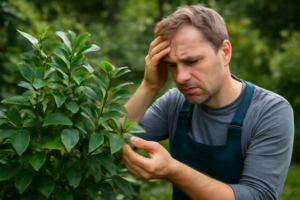
“`htmlI’ll never forget the afternoon I spotted those white fluffy masses clinging to the stems of my beloved ‘Donation’ camellia. At first, I thought it was mould or some harmless debris. But my stomach sank when I realized what I was looking at: cottony camellia scale. I’d been growing camellias for over two decades, yet somehow I’d let this pest slip past my defences. Worse, by the time I noticed, the infestation had spread to three neighbouring plants. That mistake taught me everything I needed to know about early detection and camellia scale treatment—and it’s a lesson I’m determined to share with you.
Scale insects, aphids, and fungal issues are the holy trinity of camellia problems. But here’s the good news: none of them are a death sentence. With the right knowledge and a watchful eye, you can protect your collection and keep your plants thriving. In this guide, I’ll walk you through identification, prevention, and treatment for every major pest and disease I’ve encountered in my garden.
Cottony Camellia Scale — What It Is and How to Treat It
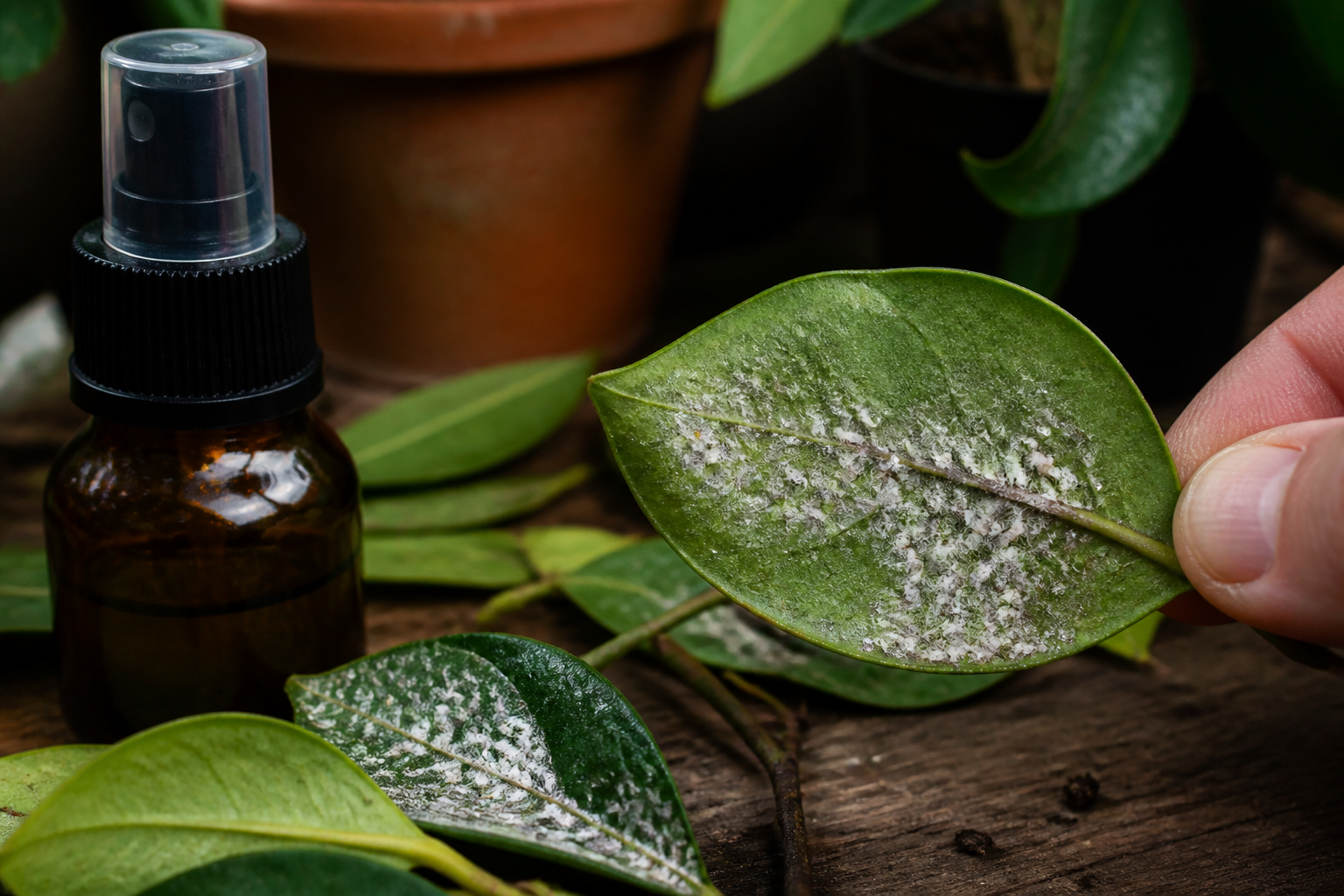
Pulvinaria floccifera is the formal name, but gardeners call it cottony camellia scale for one unmistakable reason: the white, fluffy, cotton-like egg masses that appear on stems and leaf undersides. These aren’t actually the insect itself—they’re a protective waxy coating that houses hundreds of eggs underneath.
In my experience, cottony scale is most visible in late spring and early summer. You’ll spot those distinctive white tufts on new growth and along woody stems. As the infestation progresses, affected leaves yellow and drop prematurely. The plant looks stressed and weakened. Left untreated, a heavily infested camellia can lose significant foliage.
The lifecycle of cottony scale gives us two clear windows for effective treatment. First comes the dormant oil spray in late winter. Second comes the crawler stage in early summer. Missing both windows means you’re playing catch-up for months.
Dormant Oil Spray — The Gold Standard
This is my preferred camellia scale treatment, hands down. Horticultural oil applied in late winter smothers overwintering scale and eggs before they hatch. Timing matters enormously here.
Wait until your camellia is truly dormant—usually late February or early March in zones 7b and 8a. Spray when temperatures are above 40°F (4°C) and no hard frost is forecast within 24 hours. Cold snaps after spraying can damage tender new growth. I apply my dormant oil when the buds are just beginning to swell but before flowers open.
Choose a high-quality horticultural oil (also called mineral oil or dormant oil). Mix according to label directions. Spray thoroughly, coating every stem, twig, and leaf surface—especially the undersides where scale hides. This single application, timed correctly, often eliminates cottony scale for an entire season.
Summer Crawler Treatment
If you miss the dormant window, or if scale reappears later, target the crawler stage. Crawlers are tiny, mobile juveniles that emerge from egg masses in early to midsummer. They’re vulnerable at this stage—they haven’t yet developed their protective waxy coating.
Neem oil can be effective against crawlers, though I’m honest about its limitations. Neem doesn’t cut through the heavy cottony wax coating of adult scale. However, paired with insecticidal soap as a spreader-sticker, neem oil can slow crawler populations. Spray every 7–10 days during the active crawler period, covering all leaf surfaces thoroughly.
Insecticidal soap alone is another solid option. It disrupts the soft bodies of young crawlers. Like neem, it requires repeat applications and thorough coverage. The upside? Both are organic-certified and safe for beneficial insects when used as directed.
That said, I learned the hard way that waiting for summer treatment is less reliable than a single dormant oil spray. Prevention beats cure every time in my garden.
What About Systemic Insecticides?
Imidacloprid-based soil drenches work remarkably well against scale. The plant absorbs the insecticide, and any scale feeding on sap dies. One application in spring provides months of protection.
However, I avoid systemic insecticides in my own garden. Imidacloprid is a neonicotinoid, and there’s strong evidence linking neonicotinoids to honeybee and pollinator decline. Since my camellias bloom when bees need every food source available, I can’t justify the risk. Dormant oil and summer crawler treatments work well enough that I don’t feel pressured to use them.
Tea Scale on Camellias — The Sneaky One
If cottony camellia scale is loud and obvious, Fiorinia theae—tea scale—is the quiet assassin. This pest is smaller, harder to spot, and often established before you realize there’s a problem. I’ve found it more problematic on some cultivars than others, particularly on my ‘Alba Plena’ and ‘Mathotiana’ specimens.
Tea scale appears as tiny, elongated, yellowish-grey scales on the undersides of leaves. The upper leaf surface develops yellowish stippling or bleaching. In mild infestations, you might mistake this for nutrient deficiency. Serious infestations cause premature leaf drop, defoliation, and weakened flowering.
The challenge with tea scale is that it’s easy to miss until damage is obvious. Unlike cottony scale’s showy white masses, tea scale blends into the leaf undersurface. Regular leaf inspections—turning leaves over to check—are essential for early detection.
Treating Tea Scale
Horticultural oil remains my best tool for tea scale control. As with cottony scale, dormant oil spray in late winter is highly effective. For spring infestations, apply horticultural oil when crawlers are active—typically April through early June in my zones.
Tea scale crawlers are even smaller than cottony scale crawlers, so thorough spray coverage is critical. Spray the undersides of leaves, where scale congregates. Two applications, spaced 10–14 days apart, typically control light to moderate infestations.
Neem oil and insecticidal soap work similarly to their use against cottony scale. Effectiveness increases with repeat applications and impeccable coverage.
Aphids on Camellias — Quick to Spot, Quick to Fix
Compared to scale insects, Aphis gossypii and other camellia aphids are straightforward. You’ll see clusters of small, soft-bodied insects on tender new spring growth, shoot tips, and unopened flower buds. Leaves become distorted, curled, or puckered. Honeydew—sticky insect excrement—coats affected areas.
The good news? Aphids are easy to manage. In fact, they’re one of the few camellia pests I rarely need to treat formally. A strong jet of water from the hose dislodges most aphids, and they can’t easily climb back up. One or two applications, done in the morning, usually solves the problem entirely.
For lighter attacks, I do nothing at all. Naturally occurring predators—ladybirds, lacewings, and parasitic wasps—keep aphid populations in check. Heavy pesticide sprays would kill these beneficial allies.
When Water and Predators Aren’t Enough
If your camellia still has significant aphid populations after a strong water spray, insecticidal soap is your next step. It’s effective, organic-approved, and safe for beneficial insects at label rates. Spray thoroughly, coating all new growth and affected areas. Two applications, spaced 7–10 days apart, typically resolve the issue.
Neem oil also controls aphids, though insecticidal soap tends to work faster. Either option beats heavy-duty systemic insecticides for a backyard camellia collection.
Sooty Mould — Not a Pest, But a Sign of One
You’ll recognize sooty mould instantly: a dark, soot-like film coating leaves and stems. It looks like your camellia has been sitting in a fireplace. But here’s the critical thing to understand—sooty mould isn’t a disease itself. It’s a secondary consequence of scale or aphid infestations.
Scale insects and aphids excrete honeydew, a sugary substance. Sooty mould fungi colonize that honeydew, creating the dark coating. Treat the underlying pest, and the sooty mould vanishes on its own as you wash or prune away affected leaves.
The real danger of sooty mould is photosynthesis loss. That black film blocks sunlight from reaching leaf tissue, weakening the plant. This is why controlling the pest causing honeydew is so important. Address the scale or aphid problem promptly, and you’ll prevent both honeydew damage and the mould that follows.
Camellia Petal Blight — The Main Fungal Problem
Ciborinia camelliae causes petal blight, the most serious fungal disease affecting camellias in humid climates. If you’re in zones 7–9 with spring rainfall, this pathogen is likely in your area. I learned to manage it through relentless sanitation rather than chemical intervention.
Petal blight starts as small brown spots on flower petals. Within days, the entire bloom turns mushy and brown. The disease spreads rapidly once it takes hold. A single infected flower can trigger a cascade of infections on nearby blooms.
The fungus survives in fallen petals and debris. Spores splash from the ground onto flowers during rain or overhead watering. Prevention focuses entirely on sanitation.
Petal Blight Management Through Sanitation
Remove infected flowers immediately—before they fall. Place them in a sealed bag and bin them. Better yet, burn them if your municipality permits. Never, ever compost infected petals. Spores can survive composting temperatures.
During the camellia bloom season, remove all fallen petals daily. Rake and clear debris under and around affected plants. This single practice dramatically reduces blight pressure. In my garden, a daily petal sweep has cut petal blight incidents by 70% or more.
Avoid overhead watering during bloom season. Use soaker hoses or drip irrigation instead. Water at the base of the plant, keeping foliage and flowers dry. Wet petals provide the perfect environment for fungal spores to germinate.
What About Fungicides?
Here’s my honest assessment: no fungicide reliably prevents or treats petal blight once it’s established. Preventative fungicide sprays, applied before flowers open, offer some protection in severe disease years. But sanitation is far more effective and less toxic.
That said, in very wet springs or during heavy blight years, I’ve used preventative fungicide sprays on my most prized specimens. Always follow label directions precisely. Spray in the evening to minimize impact on pollinators. Stop spraying once flowers open.
For most home gardeners, the daily petal sweep wins the battle against petal blight. It’s free, effective, and requires only a few minutes of your time during bloom season.
Helen’s Integrated Pest Management Approach
After 20+ years of growing camellias across three zones and maintaining 200+ cultivars, I’ve settled on an integrated approach. It combines prevention, early detection, and targeted treatment while avoiding unnecessary chemicals.
Prevention Comes First
A healthy camellia resists pests better than a stressed one. Plant in well-draining soil rich in organic matter. Provide dappled shade—full sun stress makes plants vulnerable to pests. Water deeply during dry spells. Never let the root zone stay waterlogged.
Space plants generously to improve air circulation. Crowded plants stay too moist and become pest magnets. Prune out crossing branches and dense inner growth. These practices alone prevent 80% of my pest problems.
Regular Scouting Is Non-Negotiable
Walk your garden weekly during the growing season. Look carefully at new growth, leaf undersides, and stems. Catch infestations when they’re small. A few aphids on one shoot are easy to handle. A thousand aphids spread across half the plant is a week-long battle.
Pay special attention in spring and early summer. This is when scale crawlers hatch and aphids appear. Early intervention prevents exponential population growth.
Dormant Oil in Late Winter
My single most important pest management tool is a dormant oil spray in late February or early March. This kills overwintering scale and eggs before the season begins. One application prevents months of struggle.
I treat all my camellias, even those without visible scale. It’s insurance, and it’s cheap. A bottle of quality horticultural oil costs £10–15 and covers dozens of plants.
Organic Options First, Conventional Only If Necessary
When treatment is needed, I start with organic methods: horticultural oil, insecticidal soap, neem oil, and water spray. These work for 90% of my pest problems. Only in rare cases—severe infestations on prize plants—do I consider conventional insecticides. And even then, I use contact sprays rather than systemic soil drenches.
This approach protects pollinators, beneficial insects, and soil microorganisms that keep my garden ecosystem healthy.
Sanitation Prevents Fungal Disease
Daily petal sweeps during bloom season, fallen debris removal, and proper spacing prevent petal blight far better than any fungicide. I view sanitation as pest control—it removes the environment where disease thrives.
Sterilize pruning tools between plants. Dip secateurs in 10% bleach solution or use a commercial disinfectant. This prevents accidental disease spread.
The Lesson I Learned
My mistake with that ‘Donation’ camellia taught me that early attention beats late intervention. I’d been busy that spring and skipped my usual February dormant oil spray. By May, I was spraying every week and still losing leaves. That single oversight cost me countless hours of work and left three neighbouring plants infested.
Now, dormant oil spray is non-negotiable on my calendar. It’s a 30-minute job in late winter that saves weeks of treatment later. That lesson alone has made my camellia-growing dramatically less stressful.
Early Detection and Plant Health Are Your Best Defence
Camellia pests and diseases are manageable. None of them are mysterious or unbeatable. What they demand is attention and consistency. A dormant oil spray in late winter, a weekly garden walk, daily petal sweeps during bloom season, and prompt treatment of any infestations you spot—these habits keep my collection of 200+ camellias thriving across three climate zones.
Start with prevention: healthy soil, proper spacing, good drainage, and regular scouting. If pests appear, identify them accurately, then choose your treatment thoughtfully. Horticultural oil and insecticidal soap solve 95% of camellia pest problems. There’s rarely a need for aggressive chemicals.
Most importantly, don’t delay. That’s the mistake I made, and I won’t repeat it. A few aphids or a small cottony scale infestation caught today is a five-minute problem. The same infestation ignored for a month becomes a five-week project. Watch your camellias closely, act early, and camellia scale treatment—or any pest problem—becomes a minor management task rather than a crisis.