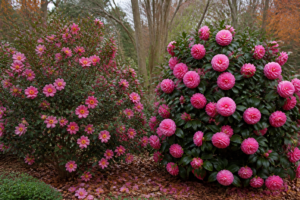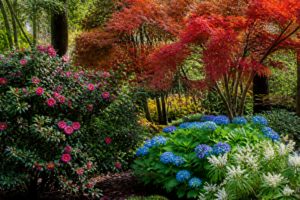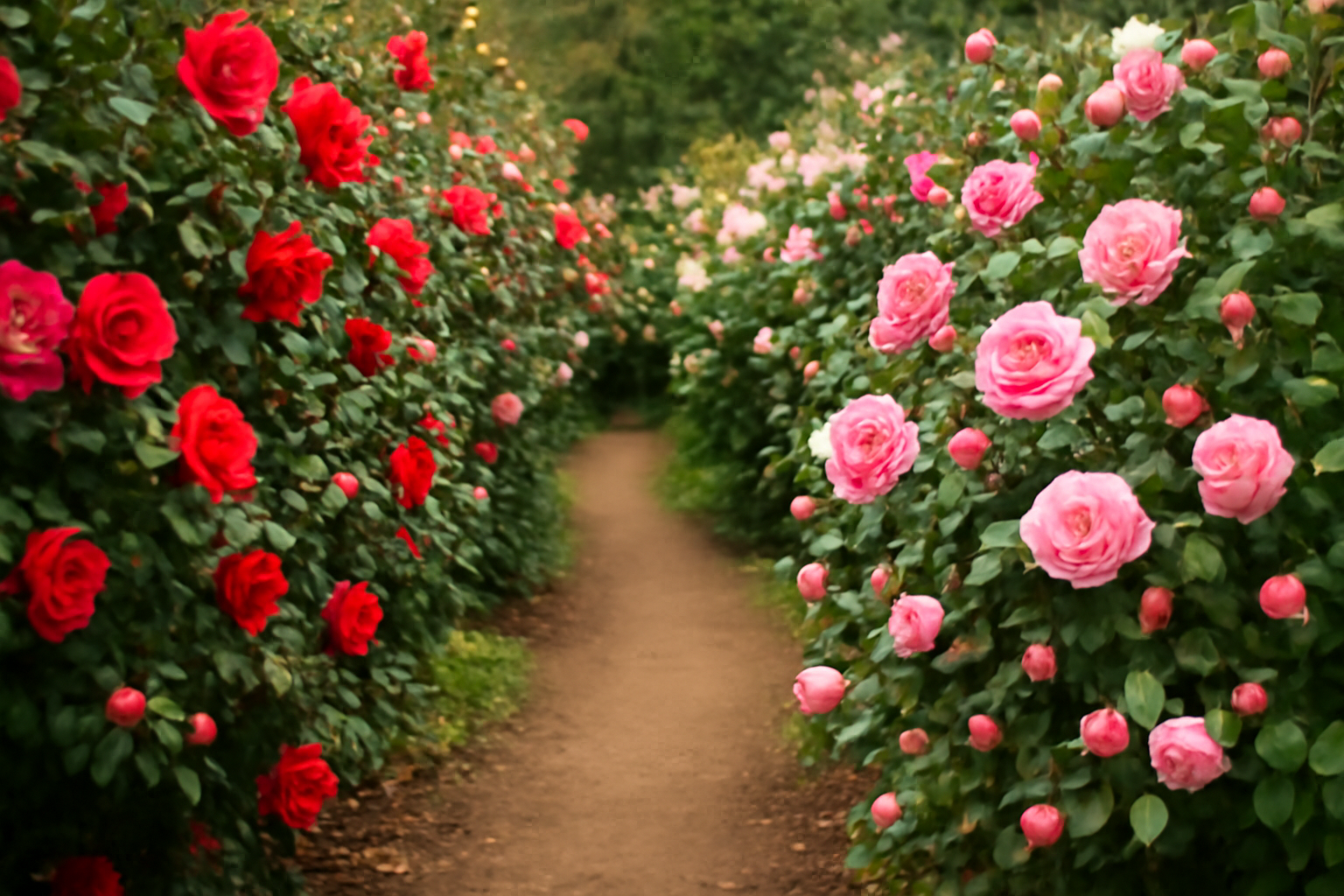
Every November, my neighbor stops at the fence and stares at my garden like I’ve broken some rule of nature. “How are those still blooming?” she asks. Honestly, I never get tired of that question. Designing a camellia garden that flowers for six consecutive months didn’t happen by accident. It took years of planning, a few expensive mistakes, and a deep obsession with matching the right cultivar to the right moment in the calendar. If you want a garden that peaks in October and keeps delivering fresh blooms all the way through April, camellia garden design is exactly the skill you need to develop. And the good news? It’s very learnable.
Why Camellias Are the Secret to a Winter-Blooming Garden
Most flowering shrubs go quiet in autumn. Camellias do the opposite. They’re one of the very few plants that treat winter as their main event. In my garden, the show begins in early October with the first sasanquas and doesn’t wind down until April, when the late-season japonicas finally drop their last petals.
That six-month window is not a happy accident. It’s the result of deliberately layering three species — Camellia sasanqua, Camellia japonica, and Camellia reticulata — along with their hybrids, so that as one group fades, another picks up. Think of it like conducting an orchestra. Each section has its moment, and your job is to keep the music going.
Understanding Bloom Seasons: The Foundation of Camellia Garden Design
Before you put a single plant in the ground, you need to understand when each type blooms. This is the non-negotiable starting point for any successful camellia garden design. Here’s how I break it down in my own collection of 200-plus named cultivars across USDA zones 7b, 8a, and 8b.
Early Season: October Through December (Camellia Sasanqua)
Sasanquas are your early openers. They’re tough, sun-tolerant, and they bloom prolifically in autumn when almost nothing else does. My go-to early performers include ‘Yuletide,’ which reliably opens bright red flowers in November with a cheerful yellow center, and ‘Setsugekka,’ a large white semi-double that practically glows on a grey November day.
‘Kanjiro’ is another one I lean on heavily. Its deep rose-pink flowers start in October and carry right through December in my zone 8a beds. For a cascading habit that works beautifully on slopes or over walls, I use ‘Mine-no-Yuki’ (also sold as ‘Snow on the Mountain’). Sasanquas generally handle more sun than japonicas, which gives you more flexibility in placement.
Mid Season: December Through February (Camellia Japonica)
Japonicas are the heart of the camellia world. The variety is staggering — formal doubles, anemone forms, peony forms, singles — in nearly every color imaginable. For mid-season color in December and January, I rely on ‘Debutante,’ a soft shell-pink peony form that’s wonderfully reliable even in cooler winters.
‘Professor Sargent’ blooms dark red from December into February and has never let me down in zone 7b, where winter temperatures occasionally dip to 5°F. For something showier, ‘Nuccio’s Gem’ produces perfect white formal double flowers that look almost artificial. However, I find it performs best in zone 8a and warmer. Cold snaps can brown those pristine petals quickly in harsher zones.
Late Season: February Through April (Reticulatas and Late Japonicas)
This is where the drama really builds. Reticulatas produce some of the largest camellia flowers on earth. ‘Francie L’ is a hybrid I grow in my zone 8b bed, and its semi-double rose-pink blooms can reach six inches across in a good year. Truly spectacular.
For late japonicas, ‘Kramer’s Supreme’ (a fragrant red peony form) blooms in March and April for me. ‘Survivor’ lives up to its name — it’s one of the hardiest late-blooming japonicas I’ve found, standing up to late frosts without the flower damage that frustrates so many gardeners. Pair these late bloomers with early bulbs like leucojum or late daffodils, and the combination is genuinely breathtaking.
Mapping Your Garden: Placement, Structure, and Microclimates
Knowing your cultivars is only half the battle. Knowing where to put them is equally important. In my experience, the biggest camellia garden design mistakes I see involve ignoring microclimates entirely. Camellias are more adaptable than people give them credit for, but placement still matters enormously.
Sun, Shade, and the Morning Frost Problem
Here’s a mistake I made early in my gardening life, and it cost me two beautiful ‘Adolphe Audusson’ plants. I positioned them facing east, which seemed logical — morning light, afternoon shade. The problem? In late January, frozen flowers thawed too rapidly in the early sun and turned brown before I could enjoy a single bloom.
North-facing or west-facing aspects protect flowers from that damaging rapid thaw. Dappled shade from tall pines or deciduous trees is ideal. That said, sasanquas genuinely prefer more sun than japonicas. I grow my ‘Yuletide’ and ‘Kanjiro’ in a south-facing border, and they thrive. My japonicas live under the high canopy of several old oaks — and that’s where they’re happiest.
Using Walls, Fences, and Structures as Climate Buffers
A south-facing or west-facing wall stores heat during the day and releases it overnight. This can effectively extend your hardiness by half a zone. Specifically, I train ‘Jury’s Yellow’ (a hybrid with cream-centered anemone flowers) against a sheltered west-facing fence in my zone 7b plot — a spot where it wouldn’t survive in an open bed. The wall makes the difference.
Reticulatas especially benefit from wall protection in marginal zones. They’re hardier than their reputation suggests when given the right microclimate. Don’t write off a cultivar until you’ve tried it in your warmest, most sheltered spot.
Soil Preparation: Getting the pH Right Before You Plant
I can’t stress this enough. No amount of clever design compensates for wrong soil chemistry. Camellias need acidic conditions — a pH of 5.5 to 6.5 is the sweet spot. Above pH 7.0, iron and manganese become chemically unavailable to the plant. As a result, you’ll see chlorotic (yellowing) leaves even if you’re fertilizing correctly.
Get a proper soil test before planting. Your local cooperative extension office can process one for a few dollars, or buy a decent home kit. I test my beds every two years without fail. To lower pH, I incorporate elemental sulfur into the planting area several months in advance. Aluminum sulfate works faster but can cause salt buildup if overused — I learned that lesson on a bed of young japonicas I was impatient with in my second year of serious camellia growing.
Drainage, Organic Matter, and Mulching
Camellias cannot tolerate waterlogged roots. Root rot from Phytophthora is one of the most common causes of camellia decline, and poor drainage is almost always the culprit. Raise beds by even four to six inches if your native soil drains slowly. Incorporate pine bark, composted leaf mold, or aged wood chips generously — these also feed the acid-loving mycorrhizal communities that help camellias thrive.
Mulch every bed to a depth of two to three inches. I use pine bark mini-nuggets almost exclusively. Mulch conserves moisture, moderates soil temperature, suppresses weeds, and slowly acidifies as it breaks down. Keep it pulled back a few inches from the stem base to prevent collar rot. This is a simple step that makes a real, measurable difference.
Designing for Visual Continuity: Color, Form, and Companion Planting
A garden that blooms for six months can still look disjointed if you haven’t thought about the visual experience. Specifically, I think about three things: color flow, flower form variety, and companion plants that support the camellias without competing with them.
Creating a Color Story Through the Seasons
In autumn, I let the warm tones lead — ‘Kanjiro’s’ deep pink, ‘Yuletide’s’ pillar-box red, and the peachy-salmon tones of ‘Showa-no-Sakae.’ Moving into winter, I shift toward cooler whites and pale pinks — ‘Nuccio’s Gem,’ ‘Debutante,’ the icy lavender-pink of ‘Lavinia Maggi.’ By late February and March, I let the big reticulata hybrids have their moment of full drama.
On the other hand, don’t feel locked into a rigid color scheme. Some of my most satisfying combinations came from happy accidents. ‘Professor Sargent’s’ deep red flowering simultaneously beside a white ‘Alba Plena’ is a combination I stumbled into — and now I wouldn’t change it.
Companion Plants That Work Well With Camellias
Choose companions that share the same love of acidic, well-drained, organic soil. In my garden, I weave in winter-flowering hellebores under the camellia canopy — they love the same dappled shade and bloom at exactly the same time as mid-season japonicas. The effect is layered and lush.
Ferns, pieris (andromeda), and enkianthus are all natural companions. Avoid planting shallow-rooted ground covers that compete directly with camellia feeder roots. Ajuga can work, but I keep it on the outer edges of my beds. For more on pairing camellias with other acid-loving plants, I wrote a detailed companion planting guide elsewhere on this site that’s worth a look.
Practical Design Tips for a Succession-Blooming Camellia Garden
After twenty-plus years of refining my approach, here are the principles I come back to every time I plan a new camellia bed.
- Plant in odd-numbered groups: Three or five of the same cultivar creates more visual impact than a single specimen. This is especially true for sasanquas used as hedging or screening.
- Stagger bloom times within each bed: Don’t cluster all your early bloomers in one corner. Spread them so there’s always something happening across the whole garden.
- Account for mature size: ‘Francie L’ can reach fifteen feet. ‘Yuletide’ stays compact. Plant to final size, not current size — overcrowding is the most common error I see in established camellia gardens.
- Leave access paths: You will want to get close to these flowers. Build in stepping stones or mulched paths from day one.
- Label everything: Cultivar names matter. Memory is unreliable. I use aluminum tags wired loosely to a low branch — they outlast plastic by decades.
A Note on Pruning and Long-Term Garden Structure
Pruning shapes the long-term bones of your camellia garden. Done right, it keeps plants at the size and shape you need while improving air circulation and flower quality. Done wrong, it can cost you an entire season’s blooms.
The golden rule: prune within six to eight weeks of the last bloom. For japonicas, that means late spring. Prune too late and you remove next year’s bud set. I’ve covered the full pruning process — timing, tools, and technique — in a separate post on pruning camellias that I’d encourage you to read before reaching for the loppers.
Start Your Camellia Garden Design With One Good Plan
If there’s one thing I want you to take away from this post, it’s that a successful camellia garden design is built on intentional sequencing. Know your bloom seasons. Layer your species. Match cultivars to your zone and your site conditions. Prepare your soil before you plant, not after problems appear.
You don’t need 200 cultivars to create something extraordinary. Even ten well-chosen plants, spanning early to late season, can give you five or six months of extraordinary color. Start with a solid plan, choose named cultivars from reputable nurseries, and let the camellias do what they do best.
My