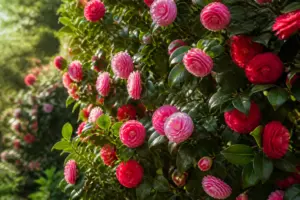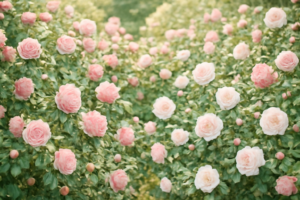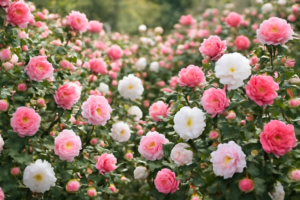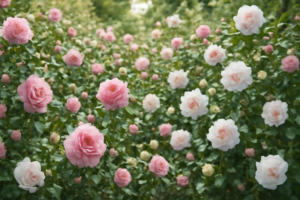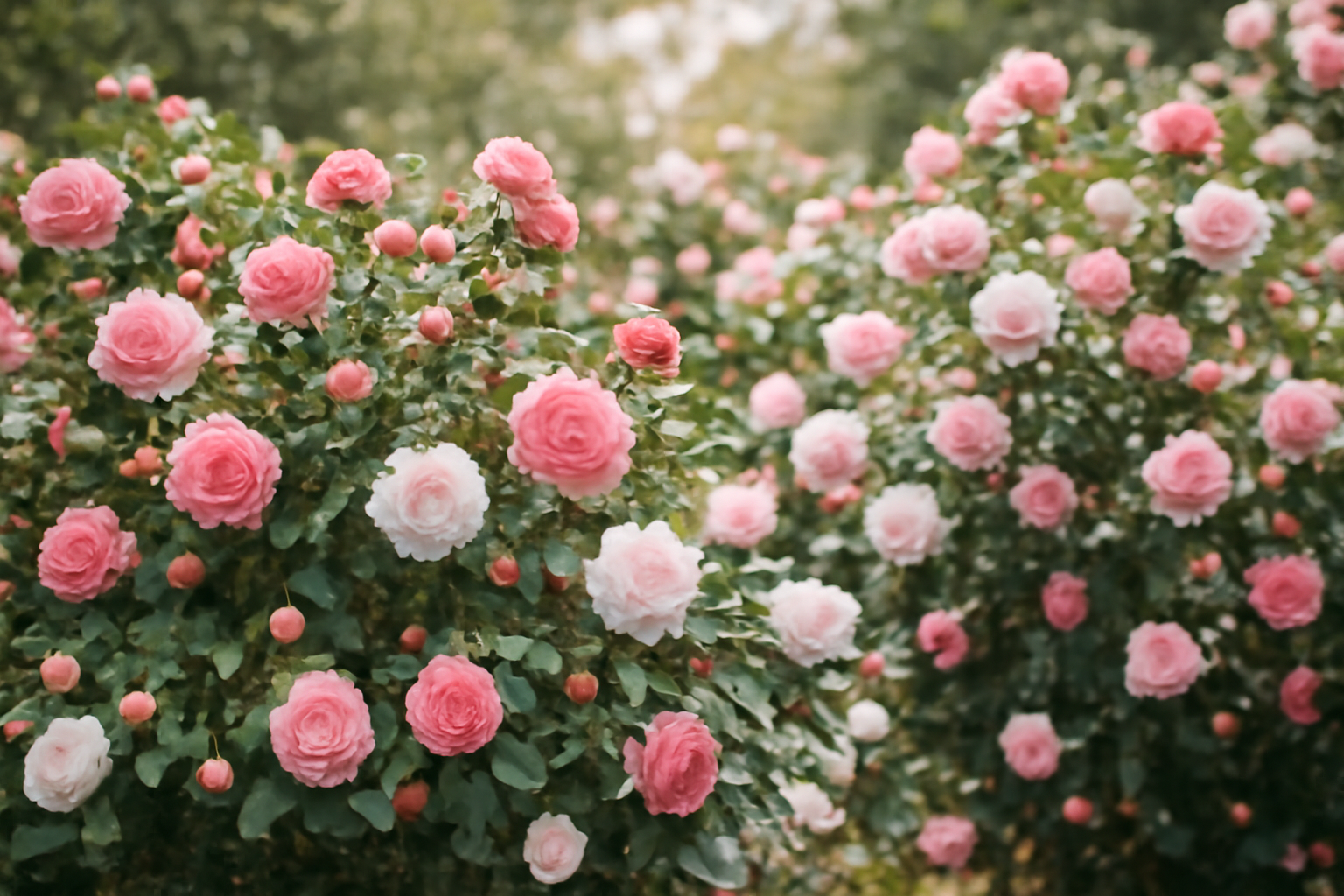
“How much nitrogen is too much in March?” a fellow member of my camellia society asked me last week while I stood over my fertilizer jug looking uncertain. I told her about the twelve-year-old ‘Survivor’ I lost during my fourth serious season growing camellias — a plant I fed too heavily, too early, right as a late frost rolled through and torched the tender growth that fertilizer had coaxed out of it. That fresh flush went black practically overnight. I never repeated the mistake, and that single loss taught me more about timing than any book on my shelf.
Two decades of tending camellias in my zone 7b garden — through ice storms, drought-parched summers, and every weather curveball in between — have left me with a spring feeding ritual I now follow almost like clockwork. Nothing about it is complicated, but the small details carry enormous weight. If you’ve been wondering when to fertilize camellias in spring without setting your plants back, here’s everything my garden has taught me.
Why Camellias Play by Different Feeding Rules in Spring
Treat a camellia like a tomato plant and you’ll regret it. These shrubs have no appetite for an aggressive feeding schedule. What they need instead is exact timing, appropriate nutrients, and a light touch. A mature camellia’s roots are surprisingly touchy about salt buildup, and the fine feeder roots stay close to the surface — usually within four to six inches of soil. Spring is when those roots are doing their most critical work, so hitting them with the wrong product, or feeding at the wrong moment, can cost you an entire season of growth.
Bloom timing is the other trait that sets camellias apart from typical landscape shrubs. Depending on the cultivar, most of my plants finish flowering anywhere between late January and April. Feed too early — while blooms are still going strong — and you divert energy away from the flowers, often triggering petals to drop before their time. I learned that lesson the hard way with a bud-covered ‘Pink Perfection’ one unseasonably warm February when my patience gave out.
Pinpointing the Right Moment: My Spring Fertilizing Window
My non-negotiable rule is this: hold off on fertilizer until blooming has finished and fresh new growth has only just begun to show.
In my Pacific Northwest zone 7b garden, that window usually opens sometime between late March and mid-April. I watch for the first bronzy-red leaves pushing out at the branch tips. That new growth is essentially the plant announcing that root activity has ramped back up and it’s ready to absorb nutrients. Feed before that signal appears, and you’re wasting effort at best — and courting frost damage at worst if cold weather is still possible.
The American Camellia Society has long advised waiting until after bloom drop but acting before the new growth hardens off — a fairly narrow window, typically three to six weeks depending on climate. I layer on one more personal test of my own: checking the ten-day forecast. If there’s any chance temperatures might fall below 28°F, I hold off. A hard frost landing on nitrogen-stimulated new growth is devastating, and it’s entirely avoidable.
How I Handle the First Spring Feeding
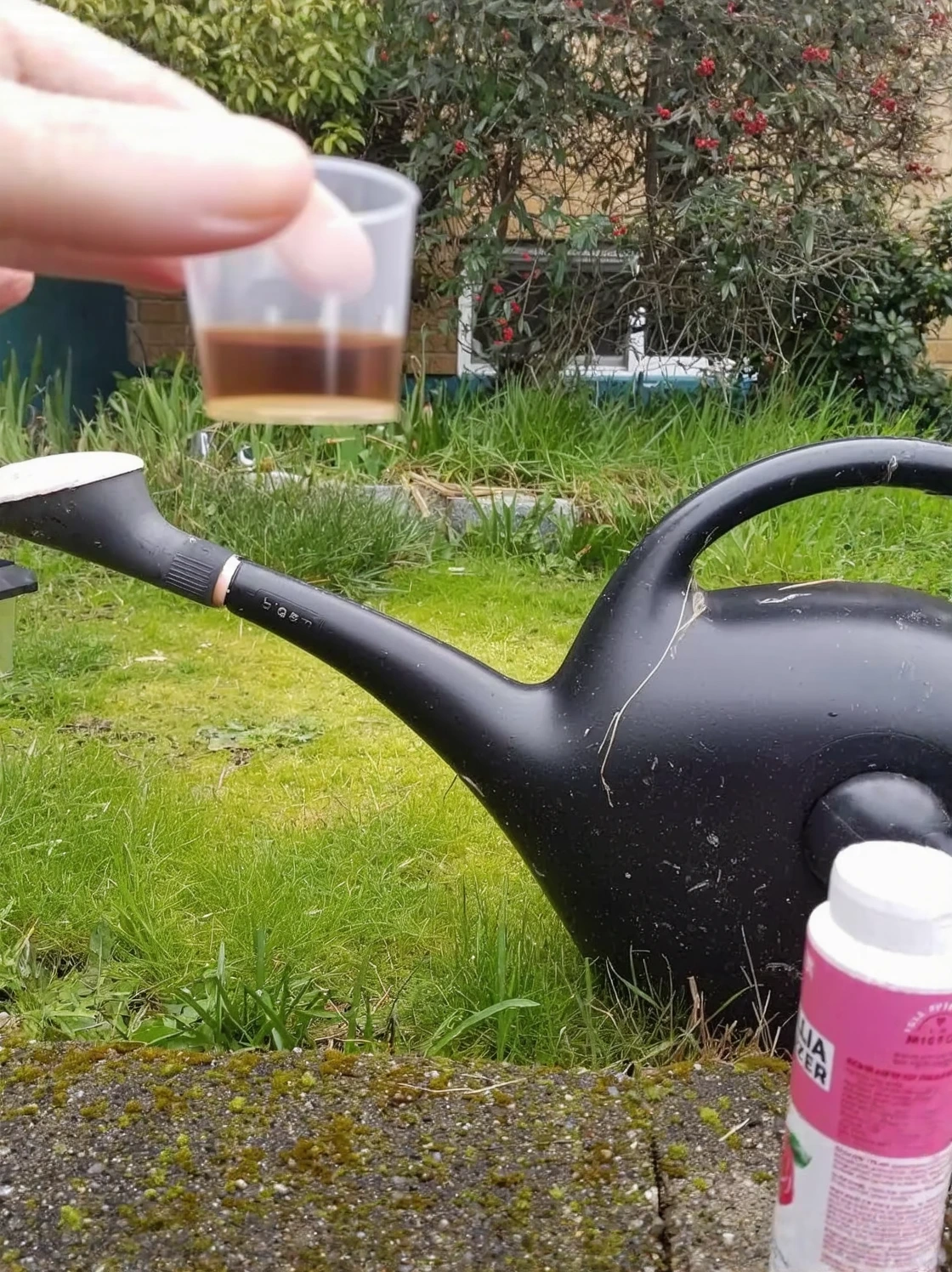
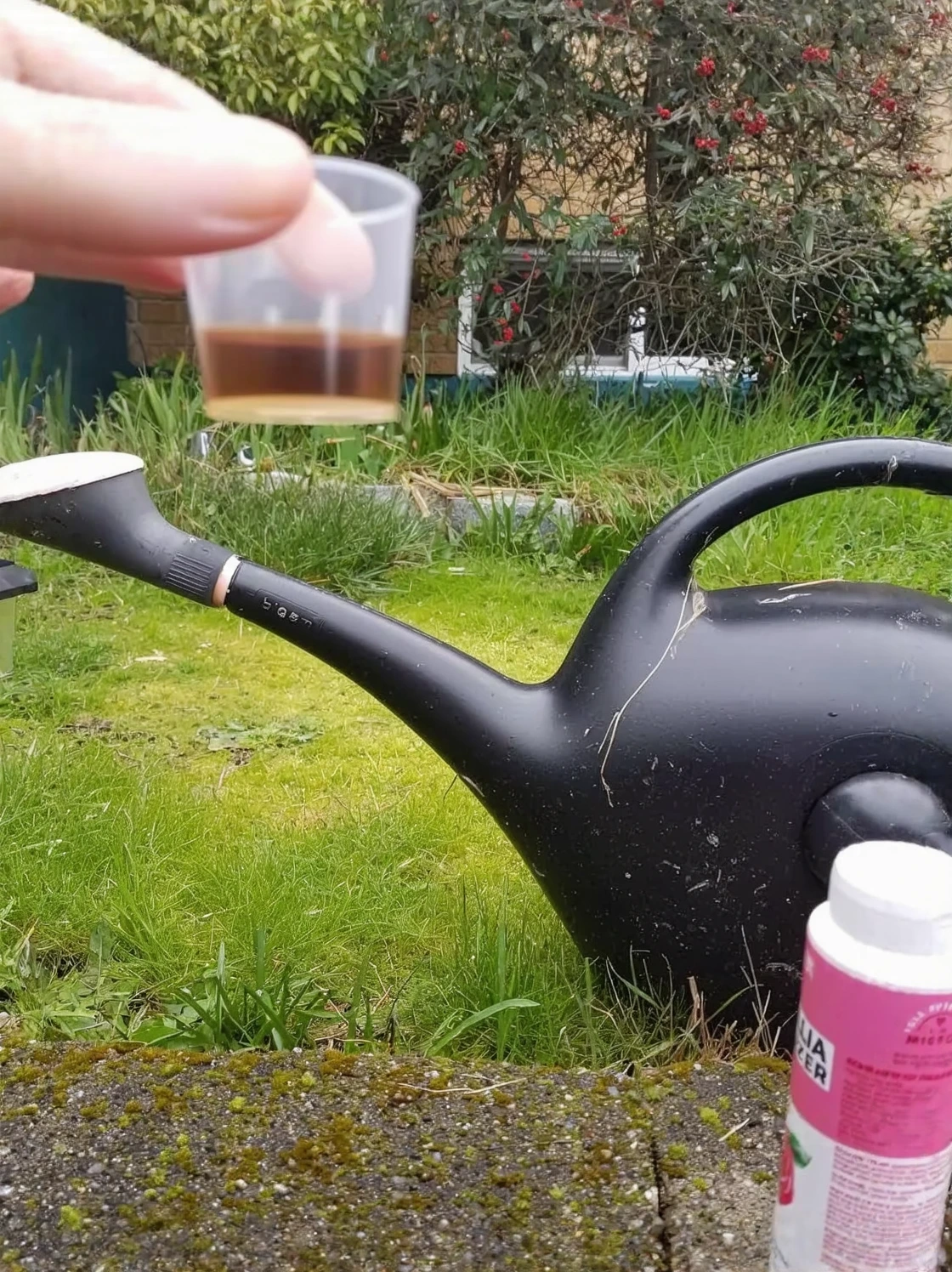
The moment I spot that new growth flush emerging and the forecast reads clean, I make my first application. I apply a diluted liquid fertilizer directly to the root zone and water it in thoroughly. I skip foliar feeding entirely in spring — the young leaves are still too delicate, and I’ve seen tip burn result even from properly diluted solutions.
A day before feeding, I give the plants a deep, thorough soaking. Fertilizing dry roots concentrates salts and risks burning them. It’s a step plenty of gardeners skip, and I genuinely believe it explains a good share of the “fertilizer damage” complaints that circulate through our local camellia society chapter.
I apply the fertilizer around the drip line rather than close to the trunk. Sometimes I work it in lightly with my fingers; other times I just let the hose carry it down. Either way, I try to leave the mulch layer as undisturbed as I can.
The Second Feeding: Wrapping Up the Spring Cycle
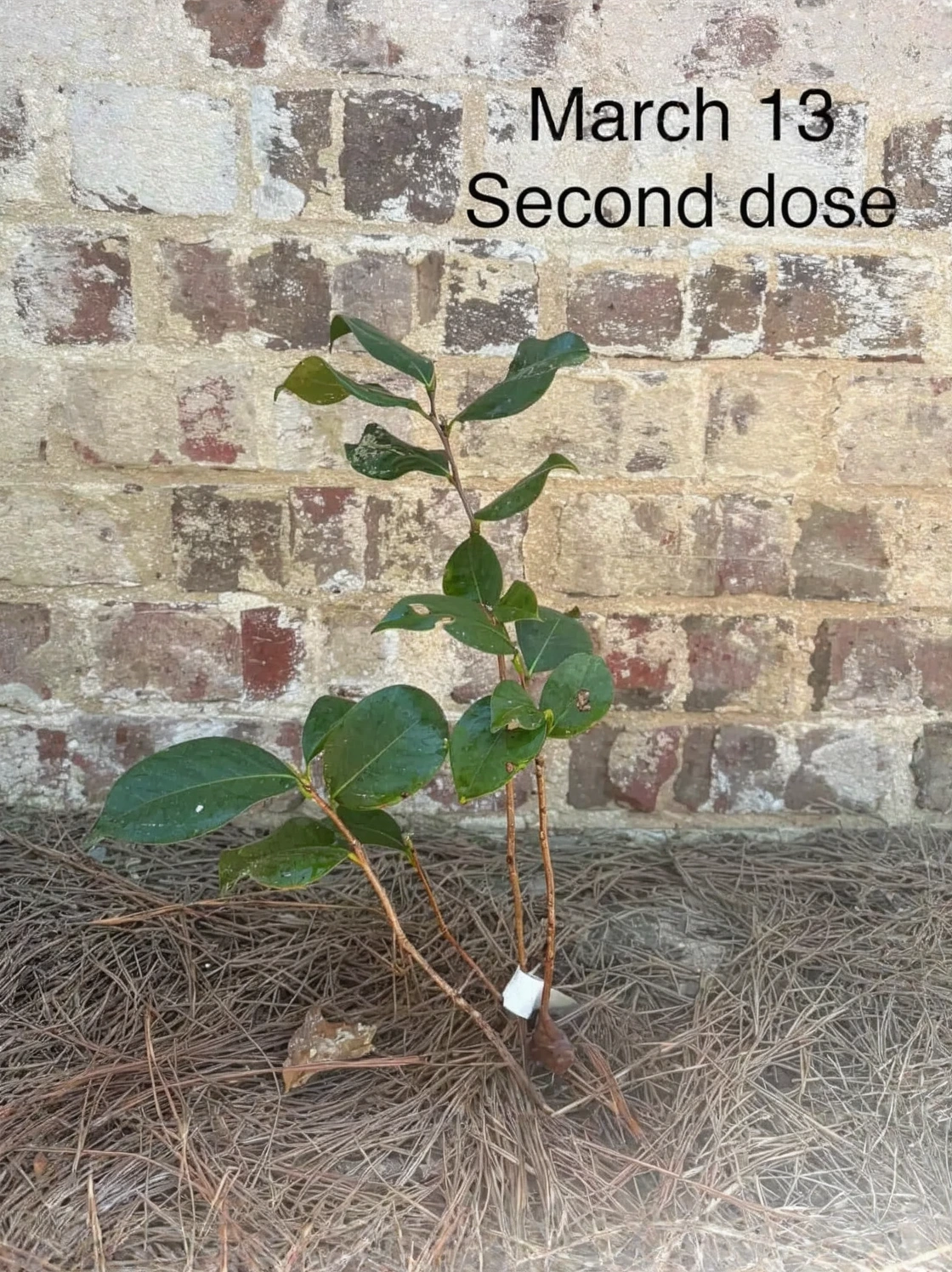
Roughly six to eight weeks after that first round — usually landing in late May — I make a second application. By then, the new growth has mostly hardened off, and the plant has shifted into building the energy reserves it will rely on for next year’s bud set. If anything, this second feeding may matter even more than the first.
After that second round, I stop entirely — no summer feeding at all. Nearly everything I’ve read in camellia literature agrees with what my own experience has confirmed: fertilizing past mid-June in most temperate climates pushes out soft, late growth that never gets the chance to harden before fall arrives. That tender growth is always the first thing winter cold takes down. I’ve watched it happen. Two well-timed spring feedings, done properly, are genuinely enough.
The Products I Rely On
Over the years I’ve cycled through granular, liquid, slow-release — nearly every format on the market. Here’s where I’ve landed:
For my primary spring applications, I now use a dedicated liquid camellia fertilizer that offers a balanced nutrient profile without requiring me to do the math. Liquid formulas reach roots faster than granular ones, and within that tight spring window, I want results without any lag. Depending on how many plants I’m working through that season, I keep both sizes on hand:
- Camellia Fertilizer – Liquid Plant Food for More Blooms, Rich Green Leaves & Stronger Root Development, 8 oz — I use this for spot-treating individual plants or newer additions I am monitoring closely.
- Camellia Fertilizer – Liquid Plant Food for More Blooms, Rich Green Leaves & Stronger Root Development, 32 oz — This is what I grab when I am working through the full garden. Better value when you are feeding a collection.
For gardeners who prefer a water-soluble granular option, I have used Miracle-Gro Water Soluble Azalea, Camellia, Rhododendron Plant Food (5 lb.) for years as well. It is formulated for acid-loving plants, applies quickly, and the results have been consistent. I still keep a container of it in the shed as a backup and use it on my azaleas and rhododendrons in the same pass.
Whatever product you choose, confirm it’s formulated for acid-loving plants. Camellias do best in soil with a pH between 5.5 and 6.5. A fertilizer that pushes pH in the wrong direction undoes everything else you’re working toward.
The Step I Skipped Too Long: Testing Your Soil First
Here’s the part most fertilizing guides never mention: none of this matters nearly as much as actually knowing what your soil needs. It took me seven years of growing camellias before I finally ran a proper soil test, and when I did, I discovered a pH of 6.8 — too high, and it explained the chronic yellowing I’d been battling with sulfur treatments that never quite solved it. That single test reshaped my entire approach.
Before you apply any fertilizer to your camellias this spring, mail a sample off to your local cooperative extension office. In most states, it runs somewhere between ten and twenty dollars. The results will spell out exactly which amendments your soil is missing and what your pH actually requires. Fertilize without that information, and you’re essentially guessing, however educated the guess.
Why Patience Pays Off in the Long Run
Of every plant I grow, camellias reward patience the most. They establish slowly, forgive mistakes slowly, and respond to changes slowly. But get the fertilizing timing right, year after year, and the rewards compound. Some of my oldest plants — closing in on twenty years in the ground now — put on growth and bloom displays that would have seemed impossible during their first decade.
None of this spring fertilizing routine is complicated. Wait for the blooms to drop. Watch for the new growth to emerge. Feed twice, lightly, using the right product. Then close up the fertilizer until next year rolls around. That’s the entire routine — and after twenty years, I’ve never found a reason to change it.
The Fertilizer That Earned My Trust After the Frost Took My ‘Survivor’
Losing that twelve-year-old camellia to over-eager spring feeding left me second-guessing nearly every fertilizer decision for years afterward. What I needed was something dependable enough to nourish my camellias without pushing out fragile new growth at the wrong moment—something built specifically for acid-loving plants, not some generic catch-all blend.
The Strengths
- Being a liquid concentrate, it lets me dose precisely and on my own timeline—no guessing at granule breakdown rates or slow-release schedules that don’t sync with zone 7b frost patterns.
- Compared with generic fertilizers, growth response comes on steadier; my camellias green up nicely without that surge of tender new foliage that invites frost damage.
- The 8 oz bottle keeps me disciplined about quantity—it’s far too easy to overdo it with a large jug, but this smaller size naturally enforces restraint through spring.
The Drawbacks
- Get the dilution wrong and you’ll end up with either watered-down feeding or scorched foliage—there’s no tolerance for sloppy mixing, the exact kind of carelessness that cost me a plant before.
- Per ounce, it costs more than bulk granular options, but for anyone tending just a handful of camellias rather than running a commercial operation, one small bottle stretches across most of a season.
I almost talked myself out of switching to liquid concentrate in year five—I thought I was overcomplicating things—but that decision to slow down and measure carefully is what finally broke my cycle of damage and recovery. If you’ve had your own fertilizer disaster, Camellia Fertilizer – Liquid Plant Food for More Blooms, Rich Green Leaves & Stronger Root Development, 8 oz might be the reset you need.
About This Article

Written by Helen Pritchard. Helen Pritchard is a lifelong gardener in the Pacific Northwest who has grown more than 200 named camellia cultivars over two decades. She writes practical, experience-based guides to camellia care, from variety selection and pruning to troubleshooting yellowing leaves and bud drop. More about this site.
Verify this against a primary source
Specifics change, and your situation may differ from the one described here. These are the authorities worth checking directly:
- American Camellia Society — cultivar registration and culture guides
- USDA Plant Hardiness Zone Map — zone verification for your location
- Royal Horticultural Society — camellia cultivation and pest guidance