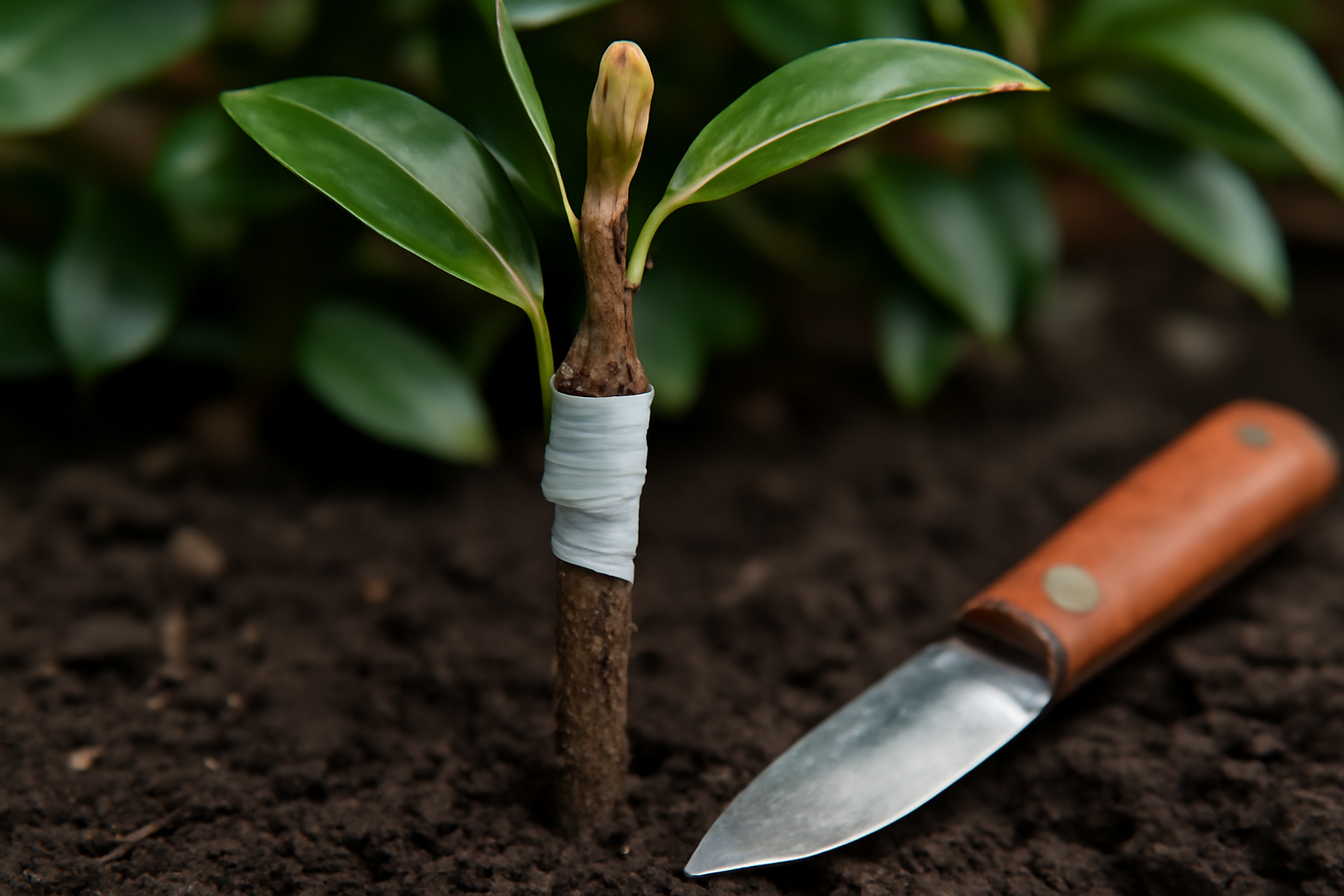
Why would anyone go through the trouble of grafting a camellia instead of just rooting a cutting? Here’s the honest answer: because some plants simply won’t give you a choice. I hit that exact wall years ago, standing over a leggy, root-knot-nematode-riddled Camellia japonica ‘Nuccio’s Gem’ that I refused to let die. Its blooms were something else entirely — pure white, formal double, not a flaw on them. Losing that plant wasn’t an option I could stomach. A longtime grower friend told me to try grafting it onto fresh, vigorous rootstock, and I figured, how tricky could that really be? Turns out it’s more approachable than I expected, though it demands patience, a steady hand, and a tolerance for a few failed attempts before things click.
What Grafting Actually Involves — and Why Bother
At its core, grafting means joining a cut stem from one plant — the scion — onto the rooted stem of another, called the rootstock. The two pieces knit together over time and function as a single living plant. It sounds like sleight of hand, and truthfully, seeing it work never quite loses its thrill for me, even two decades in.
So why choose grafting over the simpler route of taking cuttings? A handful of solid reasons come to mind. For one, certain camellias are stubborn about rooting from cuttings alone. Camellia reticulata selections such as ‘Captain Rawes’ and ‘Cornelian’ are prime examples. From what I’ve seen, you can coax a reticulata cutting into rooting eventually, but it’s a slow, unpredictable slog. Grafting simply removes that headache.
There’s also the matter of speed. A grafted plant inherits a rootstock that already has an established root system in place, so the scion taps into water and nutrients right away instead of building its own roots from scratch. That translates to faster establishment and earlier blooms compared to a cutting, which might take three to five years just to flower on its own.
Then there’s a detail I find genuinely compelling: the rootstock itself can shift the plant’s cold tolerance. Growers frequently use Camellia oleifera as rootstock specifically to extend hardiness for scions that wouldn’t otherwise survive colder winters. That’s no small thing when your garden sits in Zone 7b, as mine does up at my mountain property.
Picking a Rootstock That Won’t Let You Down
Few decisions in this process carry as much weight as rootstock selection. Choose well, and the rest of the graft practically falls into place. Choose poorly, and even flawless technique won’t save you from a failed union.
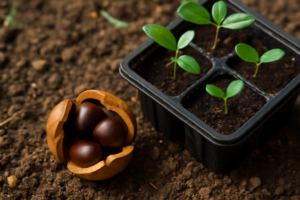
Seedling-grown Camellia japonica and Camellia sasanqua are the go-to rootstocks for most grafters, and for good reason — both grow vigorously, are easy to find, and get along with nearly any scion you’d pair them with. When I’m working with reticulata hybrids specifically, I reach for a sturdy, unnamed japonica seedling, nothing fancy, just healthy and about pencil-thick in diameter.
Gardening in Zone 7b or somewhere colder? Look into Camellia oleifera rootstock instead. It’s the foundation behind the cold-hardy breeding work done at the U.S. National Arboretum — cultivars like ‘Winter’s Star’ and the whole “Ice Angels” line trace back to this approach. The catch is availability; oleifera seedlings aren’t as easy to track down as japonica ones. Specialty camellia nurseries are your best bet, since many stock bare-root seedlings in late winter just for grafting purposes.
No matter which rootstock you settle on, it needs to be actively growing and free of disease. I always check the root system thoroughly before committing a plant to rootstock duty. Root-knot nematodes, Phytophthora root rot, or scale hiding on the rootstock will sink your graft before it even has a chance. The equation is simple: sound roots lead to a sound graft.
Getting Your Scion Wood Ready
Scion wood is the piece you’re attaching to the rootstock, and its quality shapes the entire outcome. I’ve discovered, sometimes the hard way, that weak or badly timed scion material produces weak, unreliable grafts.
What you want is semi-hardwood from this season’s new growth — stems that have wrapped up their growth spurt and firmed up just enough. Not soft and bendy, but not old, fully woody stems either. In Zone 8a and 8b, that sweet spot for most japonica cultivars lands in late summer through early fall, somewhere around August to October.
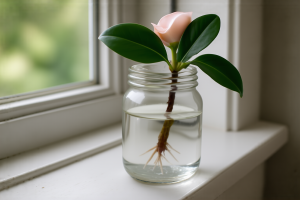
Each piece of scion should run three to four inches with a couple of healthy buds — two or three is plenty. Strip off the lower leaves and cut the remaining ones in half to cut down on moisture loss. Move fast once the cut is made; I stash mine in a damp paper towel inside a zip-lock bag until it’s grafting time. Scion wood left out in the open dries up faster than you’d guess.
When I’m cutting scion from reticulata varieties like ‘Buddha’ or ‘Shot Silk,’ I do it in the morning, while the stems are still fully hydrated — afternoon heat works against you here. If you’re pulling scion from a sasanqua like ‘Yuletide’ or ‘Setsugekka,’ the same window applies: late summer, semi-hardwood, cut early in the day.
Doing a Cleft Graft, Start to Finish
Camellia growers use several grafting techniques — splice grafts, approach grafts, and cleft grafts are the main ones. I lean on the cleft graft more than any other method. It’s forgiving if you’re new to this, tolerates some mismatch in stem thickness between scion and rootstock, and consistently gives me solid takes.
Tools and Supplies to Have on Hand
- A truly sharp grafting knife — a dull blade will ruin your cuts (mine’s a Victorinox grafting knife)
- Grafting tape or strips of budding rubber
- A rooted rootstock plant, potted in something four to six inches across
- Scion wood, prepped as described earlier
- A clear plastic bag or some kind of humidity tent
- Rubbing alcohol or a flame, for sterilizing your blade between every cut
Making the Graft
Begin by slicing the rootstock stem straight across, roughly three to four inches up from the soil. One clean cut — no back-and-forth sawing motion. Then slice a vertical split down the middle of that cut surface, going about an inch deep. That’s your cleft, ready to receive the scion.
Now shape the scion’s base into a long, narrow wedge — both faces sloped evenly to a point, roughly an inch in length. You’re aiming for the widest possible cambium contact once it’s inserted. The cambium is that thin greenish layer tucked just under the bark, and it’s where the actual fusing happens. Cambium meeting cambium is the whole game here.
Pry the cleft open carefully and slide the scion into place. Line it up so the outer cambium edge of the scion matches the outer cambium edge of the rootstock exactly. You don’t need perfect alignment on both sides — one side with clean cambium contact is enough for the graft to take. Wrap the union tightly with grafting tape, working from bottom to top and covering it completely. No gaps allowed.
Last step: slip a clear plastic bag over the whole grafted plant and cinch it loosely at the base. This traps humidity around the scion and keeps it from drying out before the union has a chance to knit. Put the pot somewhere bright but shielded from direct sun — sunlight hitting that plastic will cook the graft almost instantly.
A Slip-Up Worth Learning From (So You Don’t Repeat It)
Let me spare you a headache. When I first started grafting, I couldn’t resist checking on my work constantly. Every few days I’d lift the bag to peek at the union, and every single time, I broke the humidity seal — which, I’m convinced, quietly tanked my success rate.
The fix is simple: don’t touch it. Seal the bag, mark four weeks on your calendar, and step away completely. The union knits together slowly and, at first, invisibly. The tell that it’s working is when the scion’s buds start swelling and pushing — that’s usually somewhere between four and six weeks in. That’s your cue to start venting the bag gradually so the plant can adjust to regular humidity.
Here’s another lesson that cost me a few plants: hold off on fertilizer. Wait for clear evidence the graft has taken and new growth is pushing outward before feeding it. Fertilizing a fresh graft too early puts stress on the union. My rule now is a full eight weeks after confirmed take before any fertilizer touches the plant, and even then I start light — a half-strength, balanced liquid feed.
Caring for the Graft and Spotting a Win
Once you’re sure the graft has taken hold, ease the plant into normal conditions gradually. Spread the bag removal over seven to ten days, opening it a bit wider each day instead of stripping it off in one go. A sudden shift in humidity will stress a newly grafted plant more than you’d think.
Give the grafted plant a full growing season in sheltered, frost-free conditions before it ever goes into the ground outdoors. In my Zone 7b garden, that means a cold greenhouse for its first winter. Gardeners in Zone 8b often have enough leeway to overwinter well-established grafts in a sheltered outdoor spot instead.
Keep an eye out for shoots sprouting from the rootstock below the graft union. Left alone, they’ll grow aggressively and choke out your scion. Cut them off right at their point of origin, not just at the surface. I make a habit of scanning for these every couple of weeks through the growing season — it’s a small task, but skipping it can undo everything else you’ve done.
Soil matters just as much before planting out as after. Camellias want well-drained, acidic soil, ideally sitting between pH 5.5 and 6.5. I’ve gone into soil prep more thoroughly in my post on planting camellias, but the short version holds true here too: nail the pH before planting, and your grafted camellia will pay you back for it.
Which Camellias Actually Need Grafting?
Grafting isn’t a requirement for every camellia out there. Plenty of japonicas root readily from cuttings — common cultivars like ‘April Kiss’ or ‘Professor Charles S. Sargent’ do just fine that way. Still, there are specific circumstances where grafting is clearly the better call.
- Camellia reticulata cultivars — Notoriously poor rooters that pretty much force your hand toward grafting. ‘Captain Rawes,’ ‘Cornelian,’ ‘Buddha,’ and ‘Shot Silk’ all propagate best this way.
- One-of-a-kind or hard-to-replace cultivars — If you’ve only got a single plant of something special and want to safeguard it, grafting beats gambling on whether a cutting roots.
- Cold-climate gardens — Using C. oleifera as rootstock genuinely broadens what’s possible to grow in Zone 7b, and even pushes into Zone 7a.
- Boosting vigor — An aging cultivar limping along on tired roots can get a real jolt of energy from a strong new rootstock.
That said, if all you want is to propagate an easygoing sasanqua like ‘Narumigata’ or a dependable japonica like ‘Elegans,’ skip the graft and stick with cuttings. I walked through that process in my post on taking camellia cuttings — it’s a far simpler entry point for most gardeners.
Feeling Ready to Attempt Your Own Graft?
Of all the skills I’ve picked up over my years growing this genus, grafting camellias ranks among the most rewarding. It does take practice, no question. Your first try might not take — mine sure didn’t. But the moment you spot that first scion pushing new growth on rootstock you grafted with your own hands, something shifts. You’ll be itching to try it again right away.
Keep your first attempt modest. Pick one prized reticulata or one plant that’s been struggling on its own roots. Track down a healthy rootstock seedling, pull together your tools, and give the cleft graft a shot this coming late summer. Work through the steps above, resist checking too early, and let time do its part.
Camellias reward patience in general, and grafting them doubles down on that lesson. Got questions about where to find rootstock, whether a specific cultivar pairing will work, or how aftercare shifts depending on your zone? Leave them in the comments — I read every one and genuinely enjoy hashing out the details with other camellia growers.
About This Article

Written by Helen Pritchard. Helen Pritchard is a lifelong gardener in the Pacific Northwest who has grown more than 200 named camellia cultivars over two decades. She writes practical, experience-based guides to camellia care, from variety selection and pruning to troubleshooting yellowing leaves and bud drop. More about this site.
Verify this against a primary source
Specifics change, and your situation may differ from the one described here. These are the authorities worth checking directly:
- American Camellia Society — cultivar registration and culture guides
- USDA Plant Hardiness Zone Map — zone verification for your location
- Royal Horticultural Society — camellia cultivation and pest guidance