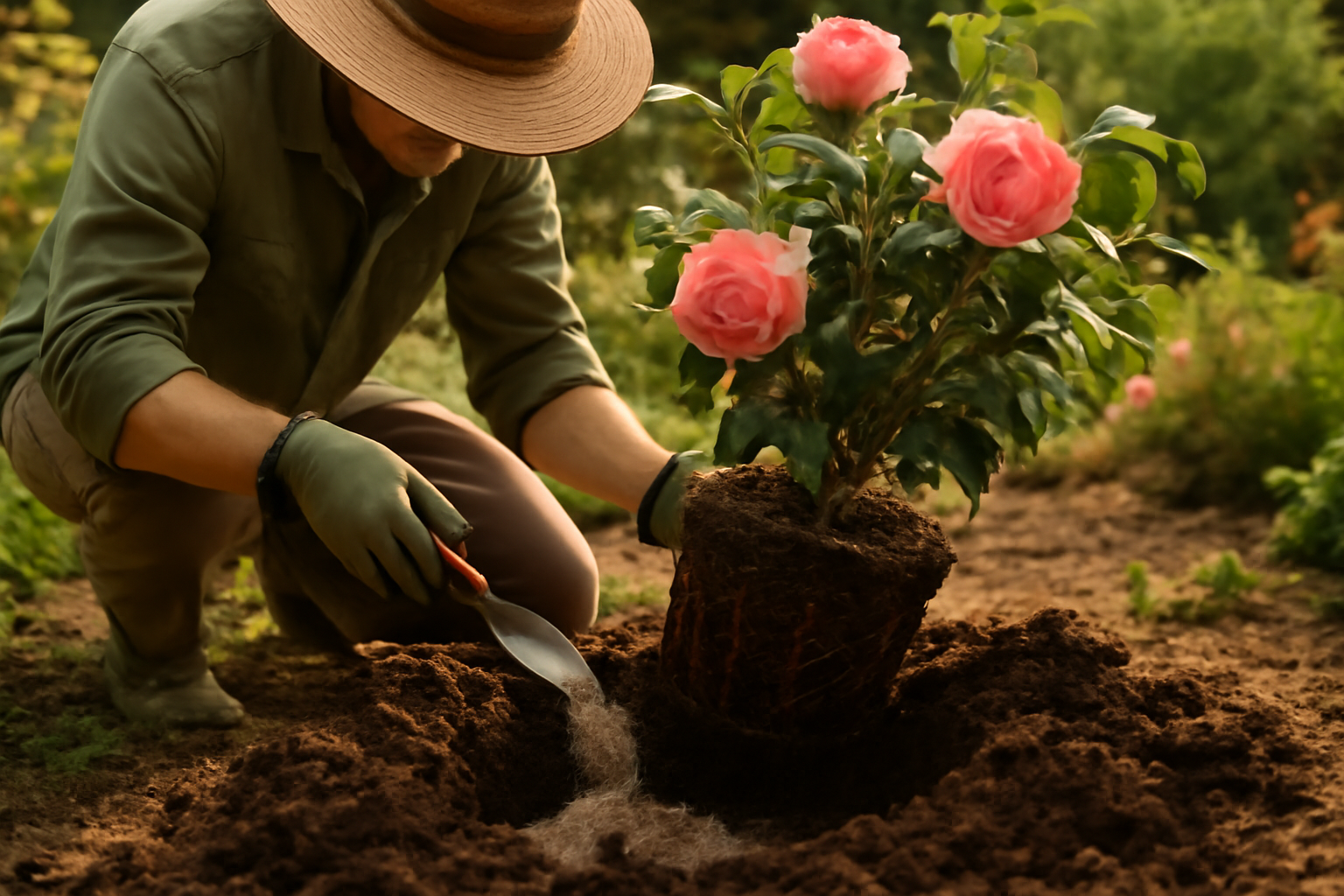
An unseasonable heat spell rolled through my Zone 8b garden in late October last year, right as I’d scheduled the relocation of four established camellias to clear space for a new garden path. Twenty-plus years of growing these shrubs had taught me plenty about caution, but that timing put my nerve to the test, since transplanting into stress-inducing heat is practically an invitation for a full season of sulking. That’s the point where I started digging into Bio-Tone starter transplanting camellias, wondering whether a biological fertilizer could genuinely soften that rough establishment window.
None of the four shrubs lined up for the move were petite. A pair were mature Camellia japonica ‘Kramer’s Supreme’ specimens I had tended for close to twelve years, while the remaining two were Camellia sasanqua ‘Setsugekka’ shrubs just now showing real vigor after three sluggish years. Losing even one of them wasn’t something I could stomach. Luck alone wasn’t going to be enough this time.
This wasn’t my first attempt at moving camellias, and the outcomes had never been consistent. Some recovered within weeks; others shed leaves, stagnated, and needed two entire growing seasons before looking like themselves again. Clearly my method needed an overhaul. That realization is what led me to test a biological starter fertilizer for the very first time.
How a Mycorrhizal Boost Kept Transplant Shock at Bay
Moving a camellia typically comes with a price: weeks or even months of dropped leaves, halted growth, and that nagging worry you’ve just killed a plant you can’t replace. What I wanted was something that would speed up root establishment and genuinely shrink that miserable adjustment period.
Where It Delivered
- New growth appeared on every one of the four plants inside 6 to 8 weeks—roughly half the 12-plus weeks of sulking I’d come to expect—and the foliage held a deeper color and firmer texture the entire time.
- The mycorrhizal fungi genuinely took hold in the root zone; months afterward, digging near the root ball revealed visible white fungal threads, something I’d never once seen when using plain potting soil.
- Two of the four Bio-Tone-treated shrubs produced blooms the very next winter—a fast turnaround for relocated camellias that points to real root strength having developed by autumn.
Where It Falls Short
- With an NPK ratio of just 4-3-3, there’s little risk of scorching tender roots, but that also means the nutrient load itself is minimal—success here depends almost entirely on the microbial activity, not the fertilizer numbers.
- Cost adds up too, running $12 to $15 per transplant at the recommended rate, and if your soil is already fertile or the plant isn’t under enough stress to need mycorrhizal help, you may notice no benefit at all.
I was skeptical that biology alone could outperform a balanced starter fertilizer, and the first three weeks showed almost no visible difference from my usual transplant routine. Espoma Organic Bio-Tone Starter Plus 4-3-3 Natural & Organic Starter Plant Food with Both Endo & Ecto Mycorrhizae; 4 lb. Bag; The Ultimate Starter Fertilizer – Pack of 2
About This Article

Written by Helen Pritchard. Helen Pritchard is a lifelong gardener in the Pacific Northwest who has grown more than 200 named camellia cultivars over two decades. She writes practical, experience-based guides to camellia care, from variety selection and pruning to troubleshooting yellowing leaves and bud drop. More about this site.
Verify this against a primary source
Specifics change, and your situation may differ from the one described here. These are the authorities worth checking directly:
- American Camellia Society — cultivar registration and culture guides
- USDA Plant Hardiness Zone Map — zone verification for your location
- Royal Horticultural Society — camellia cultivation and pest guidance