Pick up any camellia care guide and you’ll find the same generic advice: cover your plants when a freeze is coming. What none of those guides tell you is how differently that plays out once you’re managing thirty shrubs scattered across a sloped garden instead of a couple of pots by the porch. I learned that gap the hard way last February, when an overnight hard freeze scorched every open bloom on my ‘Professor Charles S. Sargent’ Japonica. Those flowers had been flawless — deep crimson, fully double, just days from peak form. By sunrise they’d collapsed into brown, papery tissue. Twenty-plus years of growing camellias in Zone 7b, and it took that single loss to finally make frost cloth a fixed part of my cold-weather routine rather than an afterthought.
The loss cut deeper than a typical frost setback would have. That particular shrub had barely recovered from a rough transplant the spring before, and I’d watched it slowly regain its footing all year. Then a 26°F overnight low undid months of recovery in a single night, and that was the wake-up call I needed. I finally admitted that grabbing old bedsheets and draping them over plants in a 10 PM panic wasn’t a strategy — it was just damage control.
My garden occupies a north-facing slope with heavy clay soil I’ve spent years amending to hold pH somewhere between 5.5 and 6.5. That grade means cold air settles precisely where my oldest Japonicas are rooted. With roughly thirty camellias in the ground — a mix of Japonicas, Sasanquas, and a handful of Hybrids — I couldn’t rely on anything that only worked plant by plant. A single decorative frost cover does the job beautifully if you’ve got three or four shrubs near the front door. That approach collapses fast once you’re trying to protect thirty plants spread down a hillside on a night when the mercury is falling quickly.
How My Slope Traps Cold Differently Than the Rest of the Yard
It took me embarrassingly long to figure out why my oldest bed is always the first thing to freeze. Cold air is heavier than warm air, and on a slope it moves almost exactly like water — it flows downhill and settles wherever something blocks its path or the ground finally flattens out. That collection point is what growers call a frost pocket, and mine happens to sit right at the base of the slope, where my oldest Japonicas were planted long before I understood the terrain. The north-facing exposure compounds the problem, since that bed gets barely any direct winter sun. Without daytime warmth to reset the soil and foliage, the cold just keeps stacking up night after night instead of easing off.
Once I understood what was happening, I started noticing everything that was making my particular pocket worse. A thick hedge and a stretch of privacy fence run along the lower edge of the property, directly below that bed, and they were doing precisely what I’d read warned against — holding cold air against my plants instead of letting it continue draining downhill. I ended up cutting a couple of openings through the lower hedge specifically so cold air could keep moving instead of stalling out around my camellias. It’s a minor adjustment, but on borderline nights, it makes a measurable difference.
I also quit guessing at how much colder that low bed actually runs. I keep two cheap min/max thermometers in place — one down at the bottom of the slope near my oldest plants, another roughly forty feet upslope near the house. On still, clear nights, I’ve recorded a four- to five-degree gap between the two readings. That gap is often exactly what separates “needs to be covered tonight” from “will be fine on its own,” and it’s not something you can judge from a single weather app reading tied to your zip code.
Getting Thirty Plants Through a Freeze Without Losing the Whole Night
Throwing covers over two or three camellias ahead of a freeze takes maybe ten minutes. Doing the same for thirty plants turns into a logistics problem, and I had to rethink my whole approach once my collection outgrew what I could reasonably wrap one shrub at a time in the dark with a flashlight clenched in my teeth.
- Sort your plants before you cover a single one. Not everything needs protection on every cold night. I focus first on whatever is in full, open bloom, since open flowers are far more vulnerable to freeze damage than tight buds, followed by anything transplanted in the past year or two, and whatever sits deepest in the cold-air pocket. Mature, established plants holding tight buds usually shrug off a moderate dip without any help from me.
- Get everything staged before the freeze watch is issued, not once it’s already underway. Frost cloth pre-cut to length, plus clothespins and stakes, lives in a labeled bin near the beds it’s meant for. When a hard freeze is on the forecast, I’m not scrambling for supplies at dusk — I’m simply walking down the row and putting it to use.
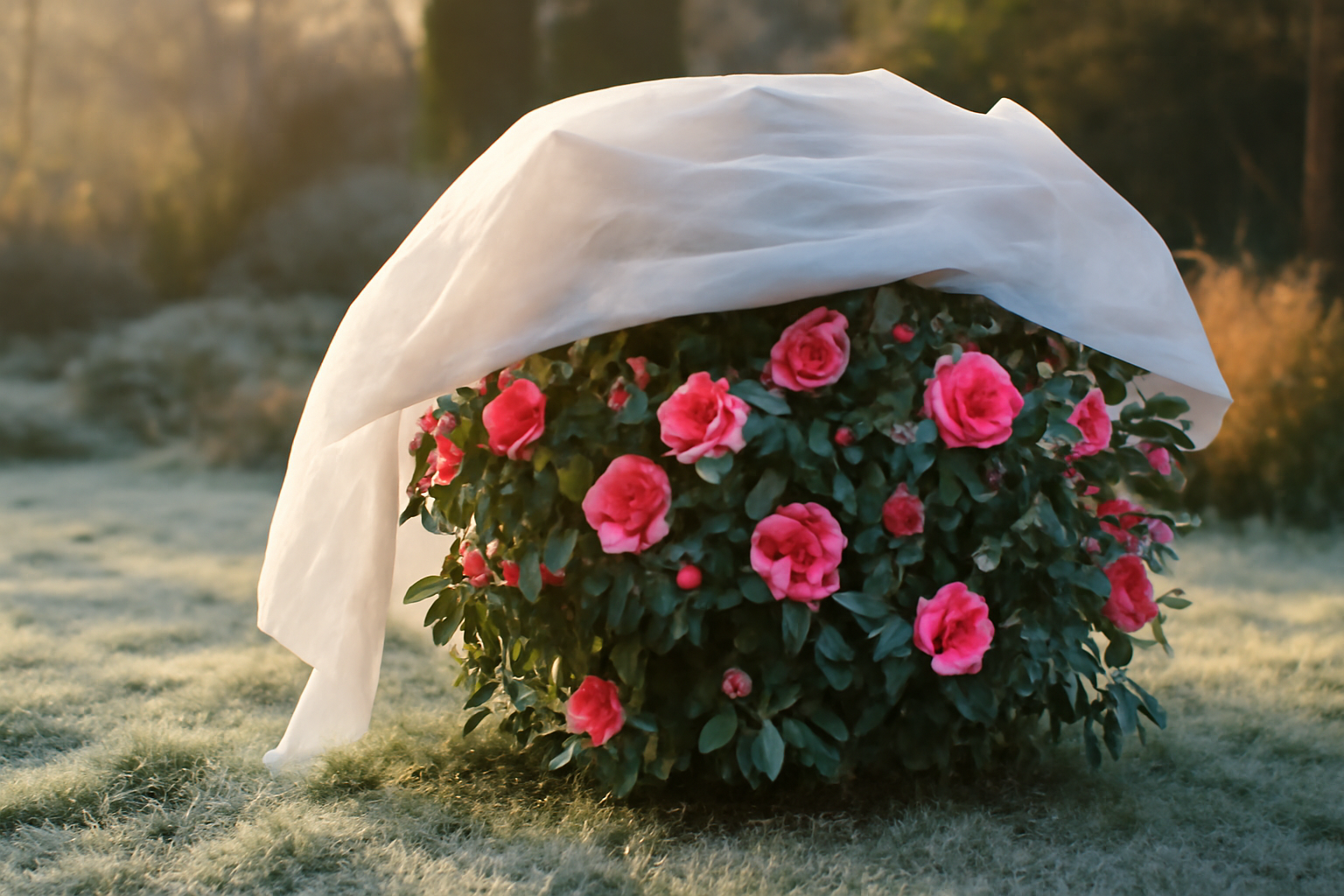
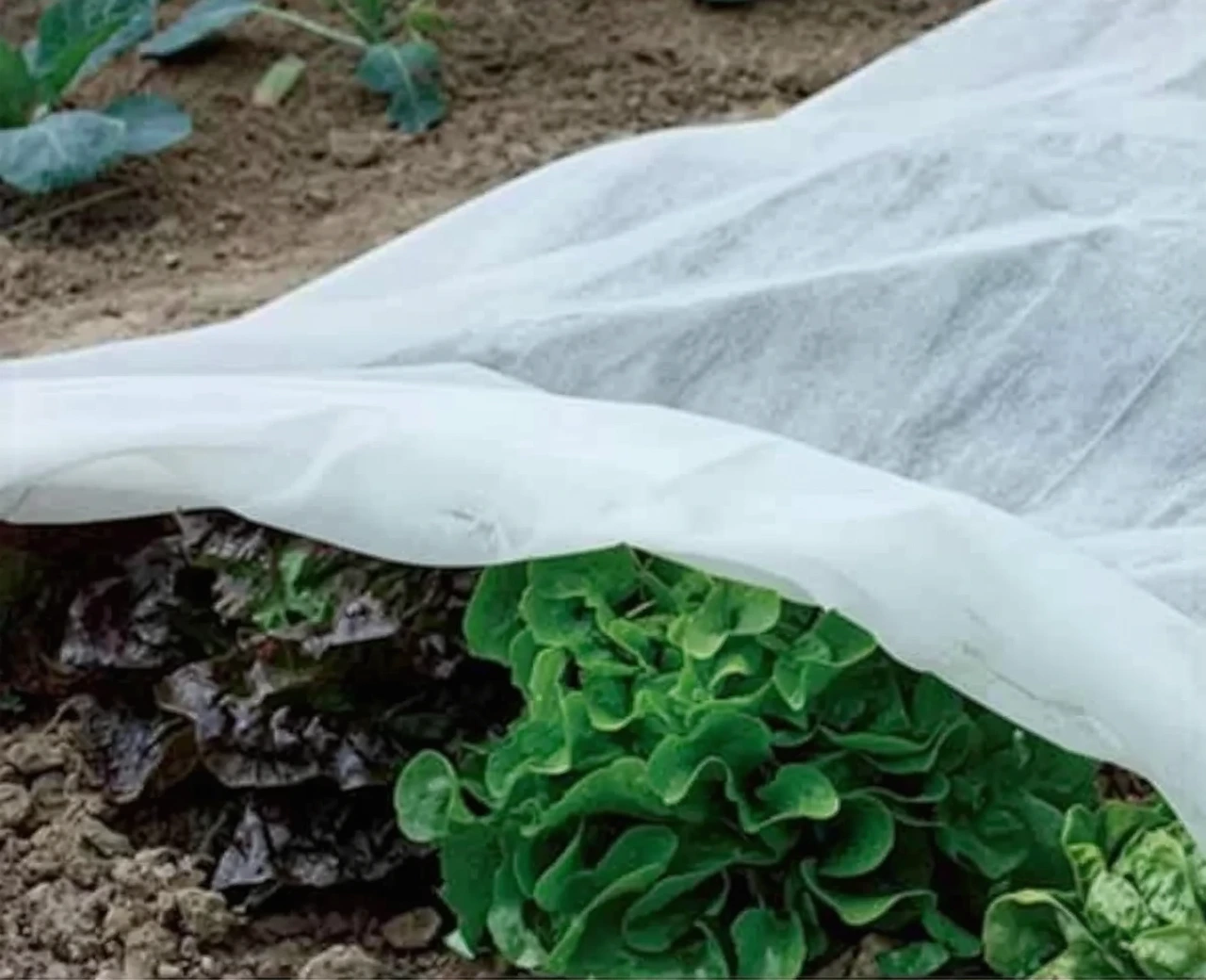
- Cover in continuous stretches, not shrub by shrub. Using a wide roll, I stretch one unbroken length of fabric across three or four neighboring shrubs and pin the edges down between them, rather than wrapping each one separately. It’s quicker, and it holds a larger, steadier pocket of warmer air than a snug individual wrap ever manages.
- Think ahead to sunrise, not just the freeze itself. Pulling covers off thirty plants isn’t instant, and cloth left in place too long once the sun’s out can scorch foliage or trap damp air against it. I head out at first light and start wherever direct morning sun hits first, since that’s where heat builds under the cloth the fastest.
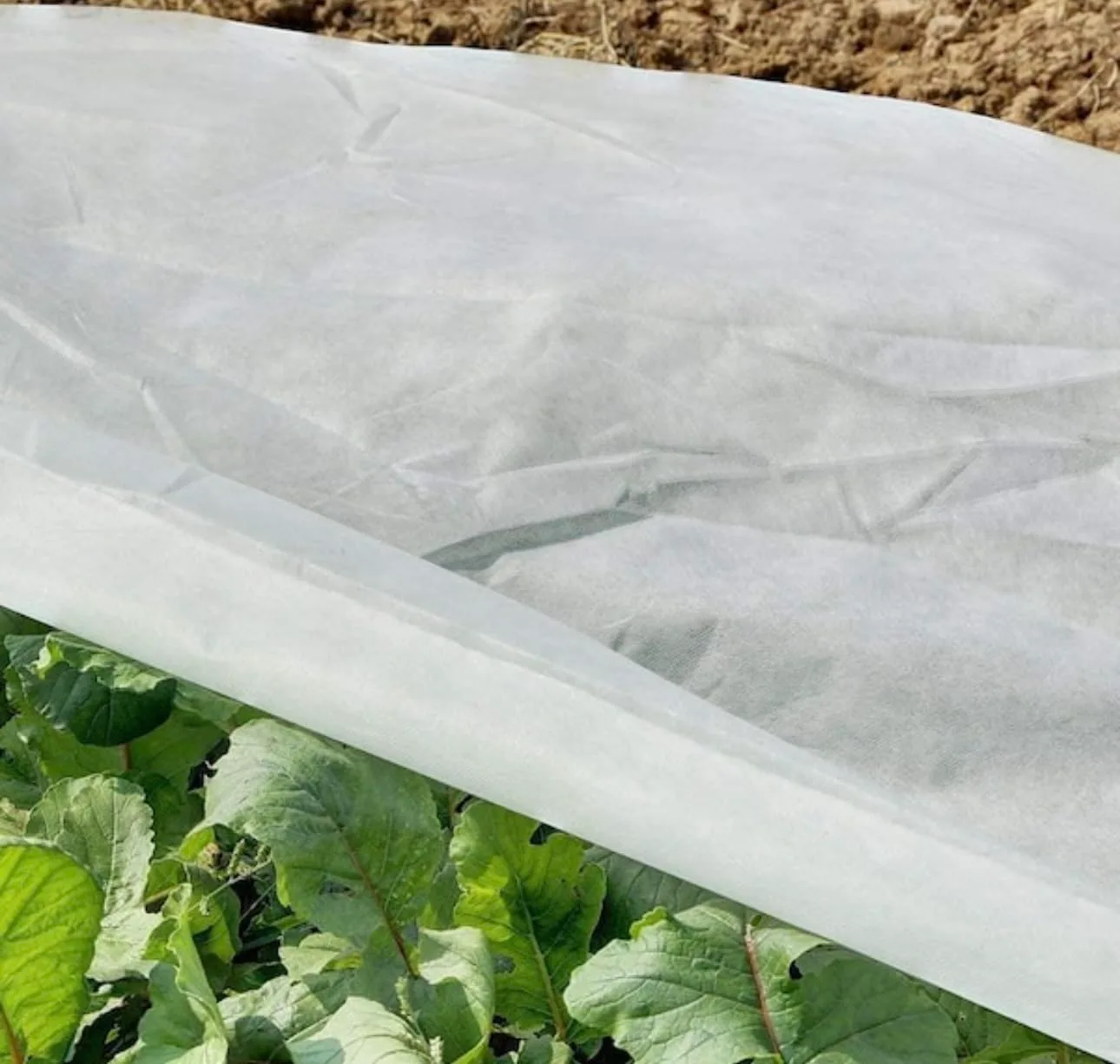
Switching to wide-roll frost cloth instead of small single-plant covers changed everything once I was managing a collection this size — it costs less per square foot, and it lets me protect an entire stretch of the cold-air pocket in one motion rather than stitching together mismatched covers plant by plant.
Frost Cloth That Doesn’t Shift or Tear Once the Wind Kicks Up
Late-blooming camellias are extremely exposed when a surprise hard freeze moves in overnight, and any frost cloth that slides around or tears apart under wind defeats its entire purpose — especially across a large planting where standing outside holding fabric down by hand simply isn’t an option. After losing that ‘Sargent’ to the cold, I went looking for something rugged enough to span multiple mature plants without blowing loose or shredding.
What works
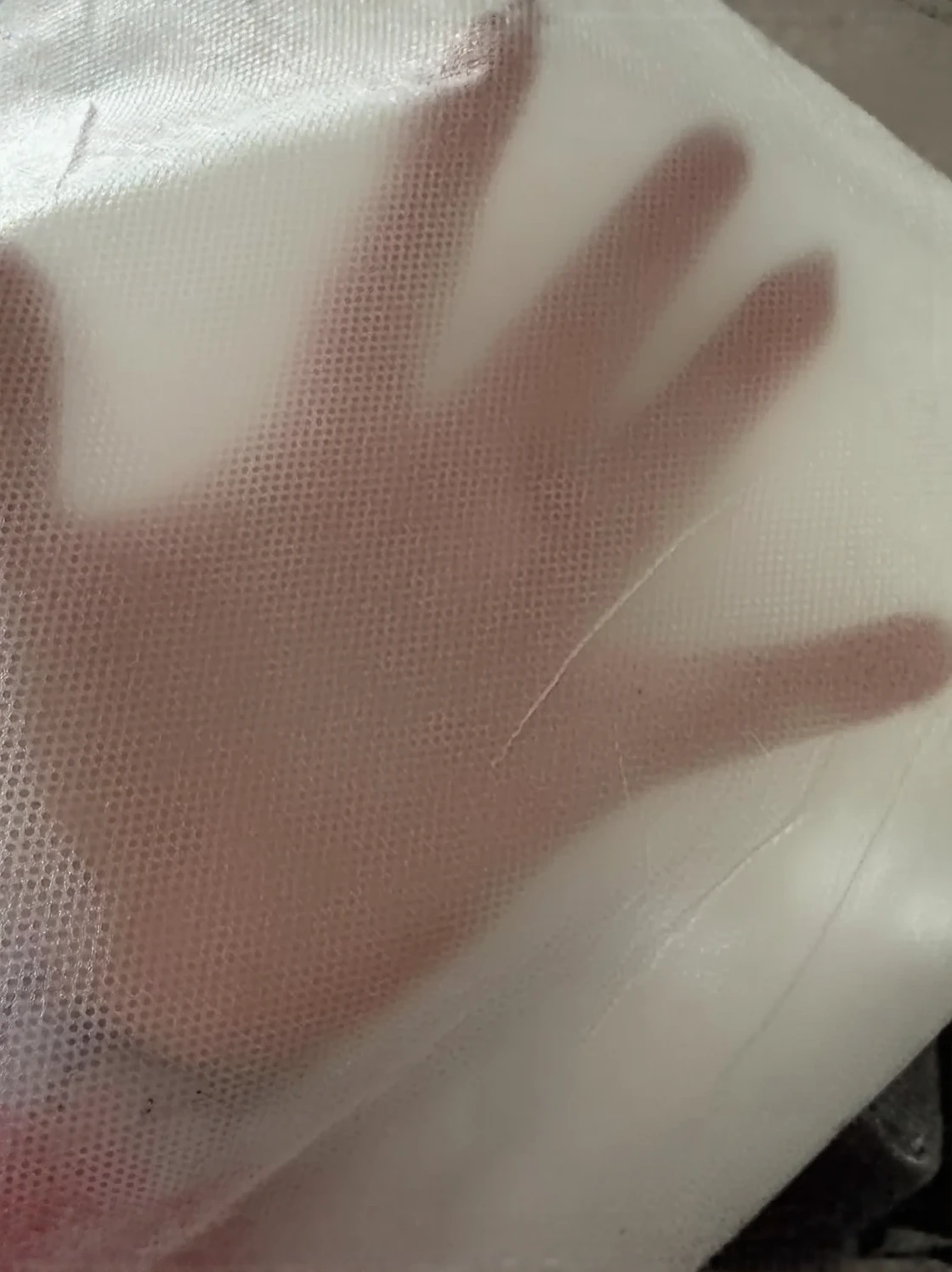
- At 1.1 oz, the fabric has enough heft to stay anchored through a windy freeze night — I’ve watched it hold steady through gusts over 20 mph without slipping off the plants.
- Its 10-foot width and 33-foot length let me blanket an entire section of my larger Japonicas alongside neighboring Sasanquas in one continuous drape, which counts for a lot when you’re racing a forecasted freeze across a full bed rather than a single shrub.
- It retains enough warmth underneath to keep open blooms from browning even when readings dropped to 24°F — the gap between total loss and flowers worth keeping was real, and it held true across several plants simultaneously, not just one lucky specimen.
What doesn’t
- Thirty-three feet of fabric is awkward to fold and store once freeze season passes — I ended up wrapping mine around a length of PVC pipe in the shed, and it still eats up more room than I’d like when you’re storing enough to cover thirty plants.
- The material holds onto moisture, so leaving it on too long after a freeze once daytime temperatures climb can invite fungal problems — with this many plants under cover, you need to stay disciplined about pulling everything off in the morning, or you’ll end up battling mildew on top of frost damage.
I’ll admit my first deployment across the whole cold-air pocket was nerve-wracking — I wasn’t sure the cloth would hold up across that much ground, and I kept checking it every hour that night like a nervous parent — but it proved itself when I saw those buds still intact come morning, all the way down the slope. If you’re managing more than a handful of camellias in a difficult microclimate, Garutom Plant Covers Freeze Protection 10ft x 33ft 1.1 oz Frost Cloth Plant Freeze Protection is worth the investment.
If your garden sits on flat, sheltered ground and you’re only tending a handful of camellias, you may never need to overthink frost protection this much — a single cover thrown on the coldest nights will likely serve you fine. But if you’re working with a tricky microclimate, a slope where cold air genuinely pools, or a collection big enough that “just go throw a cover on it” no longer takes five minutes, building frost protection into a full system rather than a one-time purchase is what actually carries your blooms safely through the season.
About This Article

Written by Helen Pritchard. Helen Pritchard is a lifelong gardener in the Pacific Northwest who has grown more than 200 named camellia cultivars over two decades. She writes practical, experience-based guides to camellia care, from variety selection and pruning to troubleshooting yellowing leaves and bud drop. More about this site.
Verify this against a primary source
Specifics change, and your situation may differ from the one described here. These are the authorities worth checking directly:
- American Camellia Society — cultivar registration and culture guides
- USDA Plant Hardiness Zone Map — zone verification for your location
- Royal Horticultural Society — camellia cultivation and pest guidance