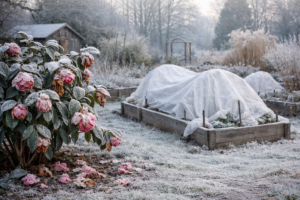
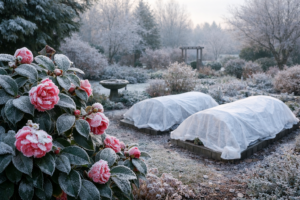
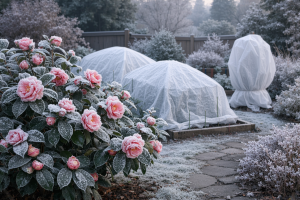
Sixteen years ago, on a bitterly cold morning near the end of January, I shuffled outside in my dressing gown just as a hard frost was settling over the garden like a slow-motion catastrophe. One casualty stood out — a ‘Jury’s Yellow’ I had babied along for four seasons — which I’d tucked in the night before using nothing but blind hope and a cover that turned out to be a complete waste of money. That single frozen morning kicked off what became a three-winter obsession with figuring out which frost protection covers actually work for camellias, and everything I learned since is what I’m handing over to you here, so you don’t have to lose a plant or a paycheck finding out the hard way.
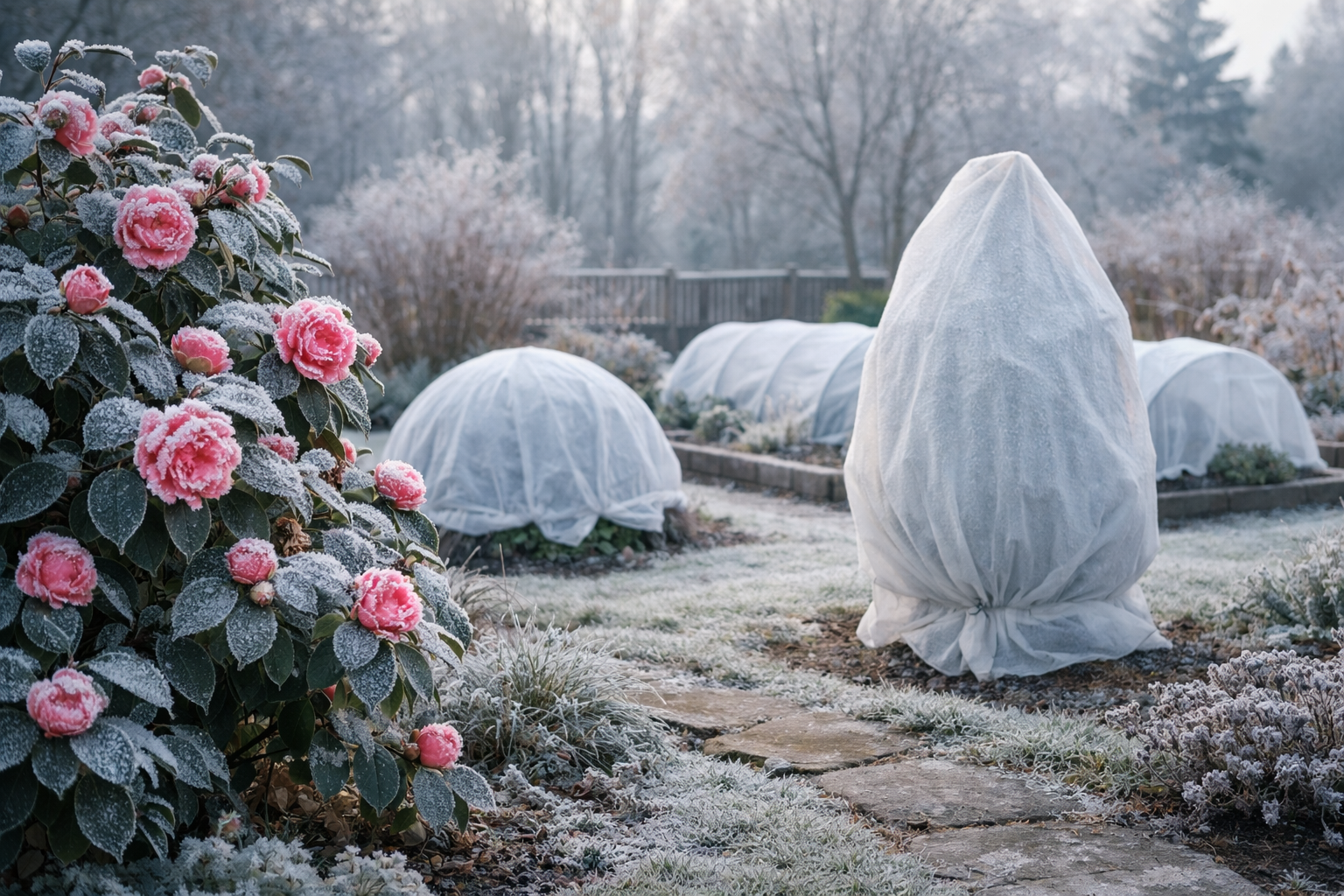
The Real Reason Camellias Need Winter Protection at All
Before we get anywhere near products, I want to correct a common misconception: camellias aren’t the delicate creatures people make them out to be. Plenty of varieties shrug off a solid freeze without a fuss. What’s genuinely at risk are the flower buds. A hard frost that sneaks in right after a stretch of mild weather can reduce those plump, promising buds to a soggy mess by sunrise. And because Japonica-type camellias tend to flower in late winter or early spring, they’re often putting on their finest display at exactly the moment the weather turns most dangerous.
There’s a second threat lurking alongside freeze damage, and that’s drying out. Cold winds strip water from the leaves faster than icy roots can pull replacement moisture up from the ground, and the result is that telltale crispy brown leaf margin that leaves your camellia looking sorry for itself come March. So really, you’re guarding against two separate problems — frozen buds and blossoms on one hand, wind-stripped foliage on the other. Not every product tackles both, which is exactly why it pays to understand the difference before you open your wallet.
Across three winters I put seven different products through their paces — thin row covers, heavier frost blankets, anti-desiccant sprays, burlap wraps, and one liquid de-icer whose purchase I still can’t fully explain. Below is the unfiltered verdict on each.
Where Frost Blankets and Row Covers Earn Their Keep
If there’s exactly one type of frost gear worth handing over money for, let it be a quality fabric row cover or frost blanket. These have proven themselves the true backbone of winter plant defense, and three winters of trial-and-error left me a firm believer.
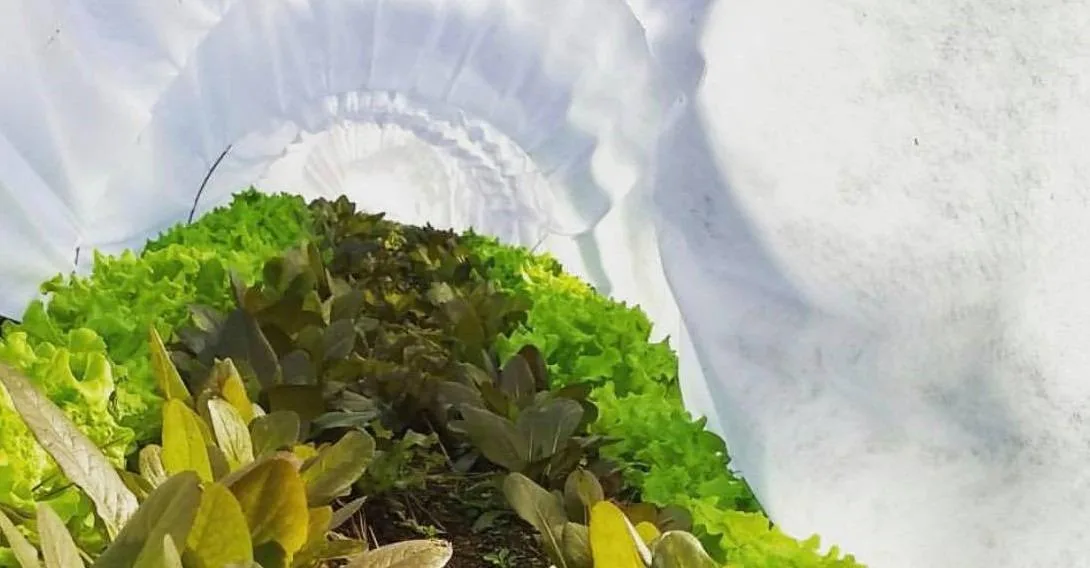
The mechanism isn’t complicated: the fabric holds a thin cushion of warmer air right against the plant while still letting in a bit of light and moisture. A solid frost blanket can nudge the temperature around your camellia up by several degrees — often just enough to rescue flower buds when the mercury dips slightly below freezing, and enough to blunt the drying wind that would otherwise do real damage.
The Cover That Pulled My Jury’s Yellow Through When Burlap Couldn’t
Once that miserable January morning with the ‘Jury’s Yellow’ had sunk in, it dawned on me that burlap and spare blankets had only been giving me a false sense of security — they hold onto moisture and sag under the weight of wet frost. Switching to a genuine frost protection cloth, made specifically for cold-sensitive plants, completely changed how I handle hard freezes now.
Where it earns its price
- It breathes well enough that morning dew doesn’t sit and refreeze on the foliage — I’ve seen ice crystals form along the fabric edge on burlap-covered plants, whereas this material lets moisture pass right through.
- It’s light enough to lay straight over tender new growth without crushing anything, and once staked down properly it holds its ground in wind rather than sliding off like a loose bedsheet.
- It holds up for three to four winters before the fabric starts to degrade, which means the cost per use is genuinely fair once you’re not throwing away a single-use cover every season.
Where it falls short
- At 7ft by 10ft, coverage gets tight fast once a camellia outgrows its fourth year, and stretching the fabric to compensate thins it out and weakens its insulating power — a mistake I made by underestimating how much plant I was dealing with.
- Leaving it on past a sunny morning above 50°F is a real risk, since the plant will effectively bake underneath it, turning your protective measure into the very thing harming the camellia.
I’ll admit I doubted it would work better than the “premium” cover I’d wasted money on the year before, but the second winter I used it, my ‘Jury’s Yellow’ not only survived but set buds for spring bloom. Plant Covers Freeze Protection 7ft×10ft Reusable Rectangle Frost Protection Floating Row Cover
About This Article

Written by Helen Pritchard. Helen Pritchard is a lifelong gardener in the Pacific Northwest who has grown more than 200 named camellia cultivars over two decades. She writes practical, experience-based guides to camellia care, from variety selection and pruning to troubleshooting yellowing leaves and bud drop. More about this site.
Verify this against a primary source
Specifics change, and your situation may differ from the one described here. These are the authorities worth checking directly:
- American Camellia Society — cultivar registration and culture guides
- USDA Plant Hardiness Zone Map — zone verification for your location
- Royal Horticultural Society — camellia cultivation and pest guidance