Is your camellia actually dying right now, or is it simply doing what camellias do every January? Nine times out of ten, it’s the second one — and I learned just how universal that panic is the day my neighbor Linda knocked on my door holding her phone out like it was evidence in a courtroom. On the screen: her camellia, leaves pulled in tight and curling, a handful of buds looking papery and defeated, the whole shrub cloaked in that flat, dishwater green that makes any gardener’s chest tighten. “It’s dead, isn’t it,” she said — not really asking. I glanced at the photo, then at her, and told her, “Linda, that’s just what January looks like.” She wasn’t convinced. Her camellia, though? Thriving by the time March rolled around. If you’ve ever stood in Linda’s shoes, or fired off one of those worried texts I get flooded with every winter without fail, this breakdown of camellia winter dormancy is the one to save now, before the next cold front rolls through.
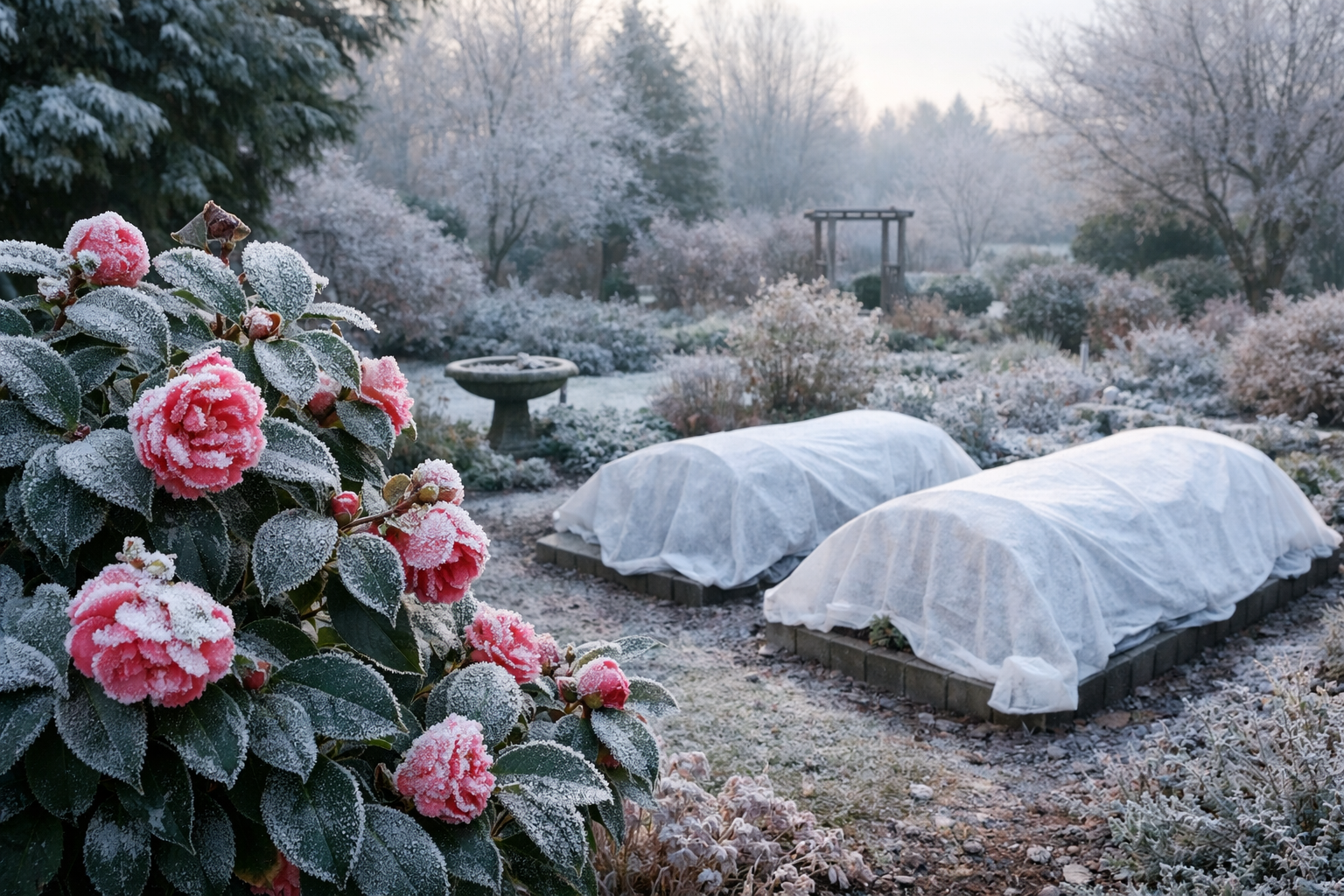
Sorting Ordinary Winter Sleep From Trouble
Here’s some good news to hold onto: camellias have far more grit than their appearance suggests. Those show-stopping blooms in spring and fall give off a conservatory-flower vibe, all delicate petals under glass, but underneath that elegance most mature camellias are sturdy, resilient shrubs built to shut down for winter in a way that’s entirely on schedule — even though that shutdown can look pretty alarming if you don’t already know what’s coming.
Once the season’s first hard frost arrives and the cold really settles in, dormancy tightens its grip, and you’ll likely spot a handful of changes that read as trouble but are actually nothing to worry about:
- Foliage rolling inward or drooping downward (a defensive move against cold air and drying out, not a sign of decline)
- Leaves taking on a flat, somewhat gray-green cast instead of their usual glossy color
- Flower buds that seem frozen mid-development, showing no obvious progress
- Barely any fresh growth, or none at all
- Some leaves letting go and dropping — normal winter behavior, not a red flag
Notice the word doing a lot of work in that list: some. A bit of curl. A touch of dullness. A scattering of dropped leaves. As long as these signs stay mild-to-moderate and show up more or less uniformly across the whole shrub, you’re almost certainly watching a camellia perform exactly as designed — hoarding energy, shielding its essential structure, and quietly waiting out your winter worrying.
The One Product That Cured My Urge to Water Dormant Camellias
If you don’t already know what dormancy looks like, it reads as a death spiral — curled foliage, washed-out color, buds that appear to have given up entirely. The real complication is that even sleeping camellias keep releasing moisture through their leaves, yet their roots can’t pull anything back up from soil that’s frozen or close to it. That mismatch is what stresses the plant, even in cases where nothing is actually wrong.
Where it earns its keep
- Lays down a thin protective barrier that cuts moisture loss from foliage by fifty percent or more — my own plants stayed noticeably less crinkled and curled through dry, blustery January weeks after using it.
- Put down in fall, ahead of the season’s real cold, it takes the guesswork out of “should I water them or not?” — the shrub gets tougher on its own, and you stop lying awake second-guessing yourself.
- Stays clear enough that sunlight still reaches the leaves on bright winter days, so photosynthesis carries on — you’re cushioning against moisture stress, not smothering the plant into some deeper, unnatural sleep.
Where it falls short
- Wears off after a heavy rain, or if you put off application until deep winter — spray it once in November and walk away until March, and you’ll come up short; budget for at least two applications a season.
- Won’t shield a camellia from actual freeze damage if it’s planted somewhere genuinely harsh or sitting in a wind corridor — think of it as insurance against moisture stress, not a barrier against an arctic blast.
I almost skipped using this my second winter, convinced Linda’s camellia just needed to “toughen up,” and it ended up with brown-edged leaves I shouldn’t have had to accept. Wilt-Pruf Original Winter Plant Protection became non-negotiable after that.
About This Article

Written by Helen Pritchard. Helen Pritchard is a lifelong gardener in the Pacific Northwest who has grown more than 200 named camellia cultivars over two decades. She writes practical, experience-based guides to camellia care, from variety selection and pruning to troubleshooting yellowing leaves and bud drop. More about this site.
Verify this against a primary source
Specifics change, and your situation may differ from the one described here. These are the authorities worth checking directly:
- American Camellia Society — cultivar registration and culture guides
- USDA Plant Hardiness Zone Map — zone verification for your location
- Royal Horticultural Society — camellia cultivation and pest guidance