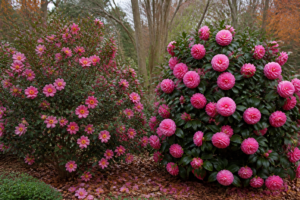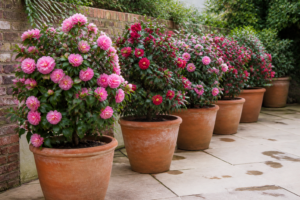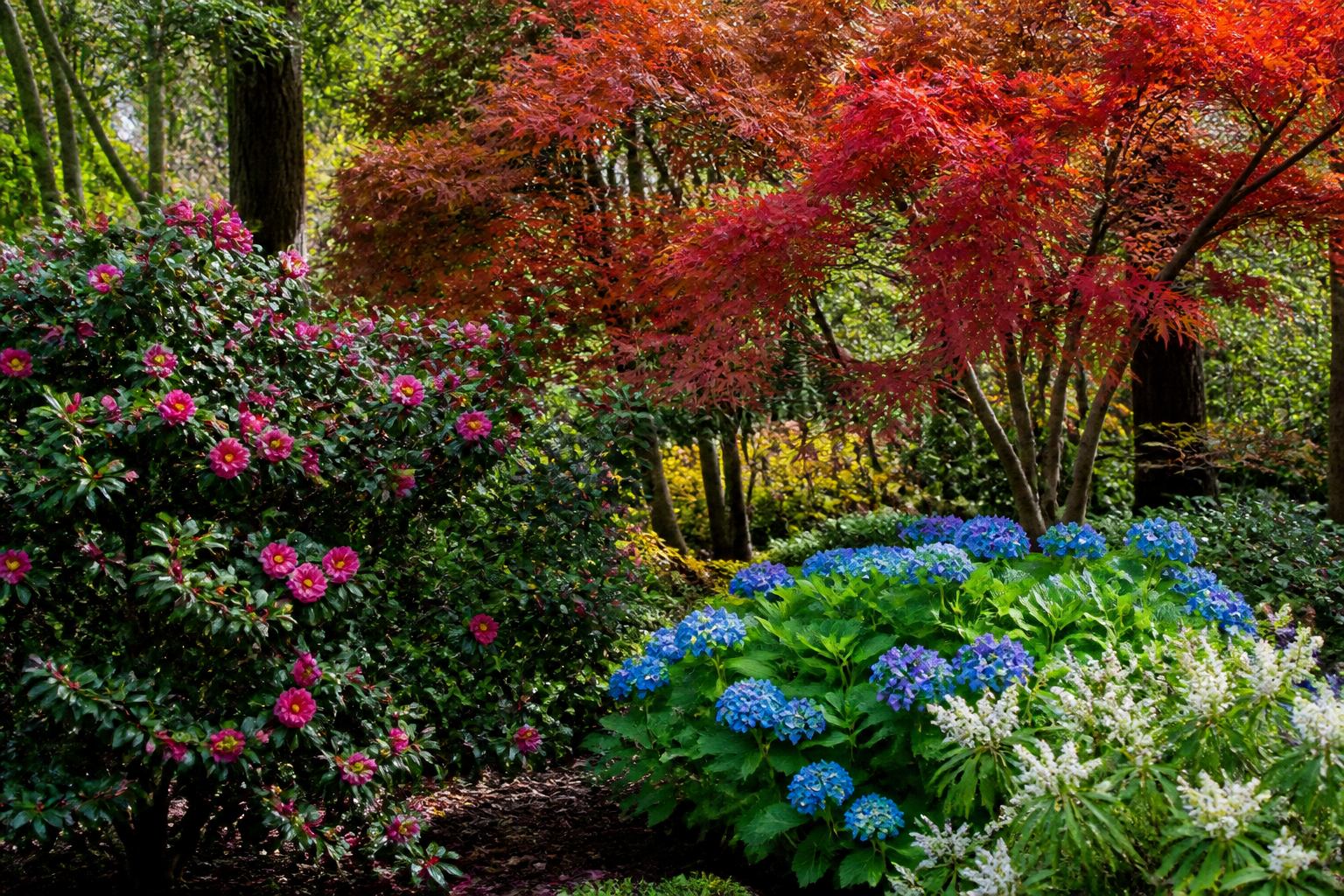
Three years ago, I redesigned a bed around my beloved Camellia × williamsii ‘Donation’. It had become a lonely specimen, gorgeous in February but surrounded by bare earth and the wrong neighbours. I realised then that camellia companion plants weren’t a luxury—they were the difference between a specimen shrub and a garden that sings for nine months of the year.
Today, that bed is one of my proudest achievements. It moves from winter fragrance to spring colour to autumn fire. The secret? Understanding what plants genuinely partner well with camellias, rather than hoping everything will muddle along.
After twenty years and over two hundred named cultivars across three USDA zones, I’ve learned that the best what to plant with camellias question has one clear answer: acid-lovers. In this guide, I’ll share exactly what works, what doesn’t, and the real-world lessons I’ve picked up along the way.
The Key to Good Camellia Companions — Matching Soil pH
This is where most gardeners go wrong. They choose pretty plants and wonder why everything struggles.
Camellias thrive in mildly acidic soil. Specifically, pH 5.5 to 6.5 is ideal. When you amend a bed to suit camellias, you’re creating a microclimate—an acid-loving zone. The smartest move is to populate that zone with other plants that crave the same conditions.
Why? Because one soil amendment strategy serves the whole bed. You’ll test once, amend once, maintain one pH. You won’t be fighting yourself, trying to lime for lavender while pulling iron chelate for your camellias. I learned this the hard way when I planted roses in a camellia bed and spent two seasons chasing my tail with conflicting amendments.
The best camellia companion plants share that acid preference. Azaleas, rhododendrons, pieris, Japanese maples, hellebores—these aren’t random choices. They’re plants that genuinely want to live where your camellia lives.
The Best Plants to Grow Alongside Camellias
Over the years, I’ve settled on a core group of camellia companions. These aren’t experimental. They’re tested, reliable, and they create genuine garden magic when planted thoughtfully.
Azaleas — the Classic Camellia Companion
Azaleas are my go-to. If I could grow only one companion plant with camellias, it would be azaleas.
Here’s why they work so well. Both demand acid soil. Both are evergreen or semi-evergreen. And crucially, their bloom times complement each other beautifully. Many camellias flower in winter and early spring. Azaleas flood in during mid to late spring, carrying the garden’s colour forward.
The colour range is staggering. I grow Japanese azaleas—Rhododendron japonicum hybrids and others—as a lower storey beneath my tall camellias. This spring, my ‘Donation’ was a backdrop for brilliant magenta and coral azaleas. Next year it’ll be pale pink and white. The flexibility is enormous.
In my experience, azaleas reach 3 to 6 feet depending on variety. This scales beautifully with most camellias. You get layered height, textured foliage, and a canopy structure that feels cohesive rather than chaotic. I’ve never regretted planting an azalea near a camellia. Not once.
Pieris, Rhododendrons, and Other Ericaceous Shrubs
Pieris japonica (sometimes called Andromeda) is the sophisticated choice. It’s an evergreen, acid-loving shrub that brings four seasons of interest to a camellia bed.
The new growth emerges in brilliant red or bronze. In spring, tiny white flowers dangle like lily-of-the-valley bells. Year-round, the foliage is glossy and structured. Pieris ‘Forest Flame’ is my favourite cultivar—that scarlet new growth is unmissable. Blooming just as sasanqua camellias fade, it bridges the seasonal gap perfectly.
Rhododendrons deserve mention too. They share camellias’ acid requirement and add dramatic spring colour. However, I recommend caution here. Large rhododendron hybrids can overwhelm smaller camellias. Instead, I favour species like Rhododendron yakushimanum and its hybrids. They’re more restrained, rarely exceeding 4 to 5 feet, and they create a woodland garden feeling without dominating the space.
Both pieris and rhododendrons thrive in part shade—which is exactly what most camellias need. That makes them practical as well as beautiful companions.
Hydrangeas with Camellias — Does It Work?
This is the question I hear most often. The simple answer is yes—camellias and hydrangeas grow well together. But there’s nuance worth understanding.
Hydrangea macrophylla (the big-leaf mophead type) and H. serrata are both acid-lovers. pH 5.5 to 6.5 suits them perfectly. In that slightly acidic soil, blue-flowering hydrangeas deepen to a gorgeous true blue—the anthocyanin pigments respond directly to acidity. Plant them with camellias and you’re already in the right pH zone.
The contrast is wonderful too. Hydrangeas are deciduous, dropping their leaves in autumn. Camellias remain evergreen. This creates visual interest through the off-season. In summer, hydrangeas bloom abundantly while camellias are dormant. In winter, camellias flower while hydrangeas rest. You get extended colour across the calendar.
One caveat: avoid pairing camellias with panicle hydrangeas (H. paniculata). Those are tougher, more alkaline-tolerant plants. If you’re amending for camellias, panicle hydrangeas may struggle or fade. Stick with macrophylla and serrata varieties, and you’ll have no regrets.
Japanese Maples — Structure and Autumn Colour
Acer palmatum is a revelation in an acid bed. Japanese maples want exactly what camellias want—mildly acidic soil, dappled shade, good drainage, consistent moisture.
Beyond soil chemistry, maples add something camellias alone cannot deliver: autumn fire. While camellias rest in late season, a Japanese maple explodes in crimson or gold. My ‘Osakazuki’ turns the most brilliant scarlet every October. It sits near my winter-blooming C. sasanqua ‘Narumigata’, and together they create a visual story that spans from deep red foliage to delicate pink flowers.
Maples also provide light dappled shade in summer. Camellias appreciate afternoon shade in warmer zones. A Japanese maple with its finely divided leaves filters harsh sun without creating deep darkness. This is practical companionship disguised as ornament.
Size varies widely—from dwarfs at 4 feet to taller varieties reaching 15 feet or more. Choose the cultivar to match your camellia’s height and spread. They should feel like partners, not one overshadowing the other.
Sarcococca, Hellebores, and Ferns — the Underplanting Layer
These plants work at a different scale. They’re smaller, nestled near the feet of camellias and larger shrubs. But they’re no less important to the composition.
Sarcococca (Christmas Box) is my secret weapon for winter gardens. This evergreen shrub barely exceeds 3 feet. In January and February, its tiny white flowers release a fragrance that fills the entire bed. I call it the perfect winter companion. While camellias are flaunting their blooms visually, sarcococca adds scent—a dimension camellias rarely provide. Plant Sarcococca confusa where you’ll brush past it on a winter morning. That’s when its perfume hits hardest.
Hellebores (winter-blooming hellebores, specifically) bloom in late winter alongside early japonicas. They’re shade-tolerant, acid-tolerant, and they flower when the garden is coldest and darkest. The colour range—from deep plum to creamy white—complements camellias without competing. I treat hellebores as underplanting companions, not bold structural elements.
Ferns round out the picture. Shield ferns (Polystichum) and lady ferns (Dryopteris) thrive in the same conditions as camellias. They add texture and lushness—a woodland quality that feels right alongside camellias. No flowers, but endless visual interest in form and foliage tone.
Leucothoe fontanesiana deserves special mention here. This arching evergreen shrub reaches 4 to 6 feet. It’s acid-loving, shade-tolerant, and displays beautiful red and orange autumn tints. Because it’s lower-growing than many camellias, it functions as a companion without overwhelming them. It’s subtle but transformative.
What About Roses and Camellias Together?
I’m going to be honest here. Can you plant roses and camellias together? Yes. Should you? Usually not.
Camellias prefer pH 5.5 to 6.5. Standard garden roses prefer pH 6.0 to 7.0. There is overlap—specifically around pH 6.0 to 6.2. In theory, you could garden in that narrow band and keep both happy.
In practice, I tried this. I planted hybrid tea roses near my C. × williamsii ‘Jury’s Yellow’ about five years ago. The roses struggled. They weren’t terrible, but they weren’t their best selves either. Bloom count dropped. Disease pressure increased slightly. Meanwhile, if I limed to get better roses, I risked the camellia’s health.
My advice: if you must grow roses with camellias, choose shrub roses rather than hybrid teas. Shrub roses are more forgiving. Keep pH carefully at 6.0 to 6.2. Monitor both constantly. It’s additional work.
Or—and this is what I do now—maintain a separate rose garden. Give your roses their own bed where you can optimise pH to 6.5 or higher without worrying about the camellia. This removes all tension from the equation. Each plant gets its ideal home.
Plants to Avoid Near Camellias
Some plants are acid-averse. Planting them near camellias creates conflict. You’ll either sacrifice one plant or spend years battling soil chemistry.
Avoid lavender, clematis, lilac, dianthus, and most Mediterranean herbs. These crave alkaline or neutral soil. Plant them where camellias live, and they’ll fade or fail. Lime the soil for them, and your camellias will suffer iron chlorosis and decline.
It’s not worth the headache. Choose acid-loving companions instead. You’ll have less work, happier plants, and a more cohesive garden.
Helen’s Favourite Camellia Border Design
Let me walk you through my “winter to spring border”—the bed I redesigned three years ago. It’s the design I recommend to anyone planning camellia companion plants for the first time.
The backbone: Camellia × williamsii ‘Donation’. This cultivar reaches 8 to 10 feet at maturity. It flowers February through March with semi-double pink blooms. I chose it for height, longevity, and reliability. It’s the anchor.
Spring colour layer: Japanese azaleas—specifically a mix of coral, magenta, and white varieties. I plant them in a loose semi-circle around the camellia’s base. At 4 to 5 feet, they create a lower tier that blooms as the camellia fades. The colour transition is seamless.
Structural interest: Pieris ‘Forest Flame’ on one side. That scarlet spring foliage is impossible to ignore. It sits at the bed’s edge, where its 5 to 6 feet of height frames the composition without blocking sight lines. The tiny white flowers arrive just as azaleas peak.
Autumn drama: A Japanese maple, Acer palmatum ‘Osakazuki’, positioned so it’s visible through the seasons. In summer, its dissected leaves create dappled shade for the camellia. In autumn, it turns scarlet. The contrast with the camellia’s winter pink is electric.
Winter fragrance: Sarcococca confusa tucked at the bed’s edge, where winter walkers will brush past it. No visual drama, but olfactory magic. Its fragrance peaks in January, as early camellias bloom.
Texture and greenery: Shield ferns scattered throughout. They anchor the eye between flowering moments and add lush, quiet beauty. No effort, endless benefit.
This design flows from December through May. The camellia blooms. Sarcococca scents the air. Azaleas colour the spring. The maple turns gold and red. Pieris glows. Ferns soften everything. Then in June, the garden quiets. But by then, I’m satisfied. The bed has performed its purpose.
All these plants share one requirement: pH 5.5 to 6.5. I amended my soil once, four years ago, with sulphur. I maintain it with annual leaf-mould mulch. One strategy. No conflict. No regrets.
Landscaping Ideas with Camellias
Beyond my personal border, there are other ways to think about landscaping ideas with camellias.
The woodland garden: Layer camellias with rhododendrons, azaleas, pieris, and ferns. Underplant with hellebores and sarcococca. This mimics the natural forest edge where camellias evolved. It feels organic and restful.
The contemporary mixed bed: Pair camellias with hydrangeas, ferns, and low ornamental grasses like Hakonechloa macra. Add Japanese maple for structure. This feels more modern—cleaner lines, unexpected texture combinations, seasonal movement.
The spring bulb integration: Plant acid-loving bulbs beneath and around camellias. Trilliums, erythroniums, and snowdrops thrive in the same conditions. As camellias fade, spring bulbs rise. Continuous colour from February through May.
Each approach works because it respects the camellia’s soil preferences and uses companions that share them.
Now, I’d love to hear from you. What companion plantings have worked in your garden? Have you discovered combinations I haven’t tried? Share your experiences in the comments below—I read every one, and the best ideas often come from gardeners in the field, not from books.
The beauty of camellia companion plants is that there’s no single “right” answer. There’s only your garden, your soil, your light, and your aesthetic vision. But whatever you choose, ground it in soil chemistry. Match that pH, and everything else becomes possible.
Happy planting.
“`