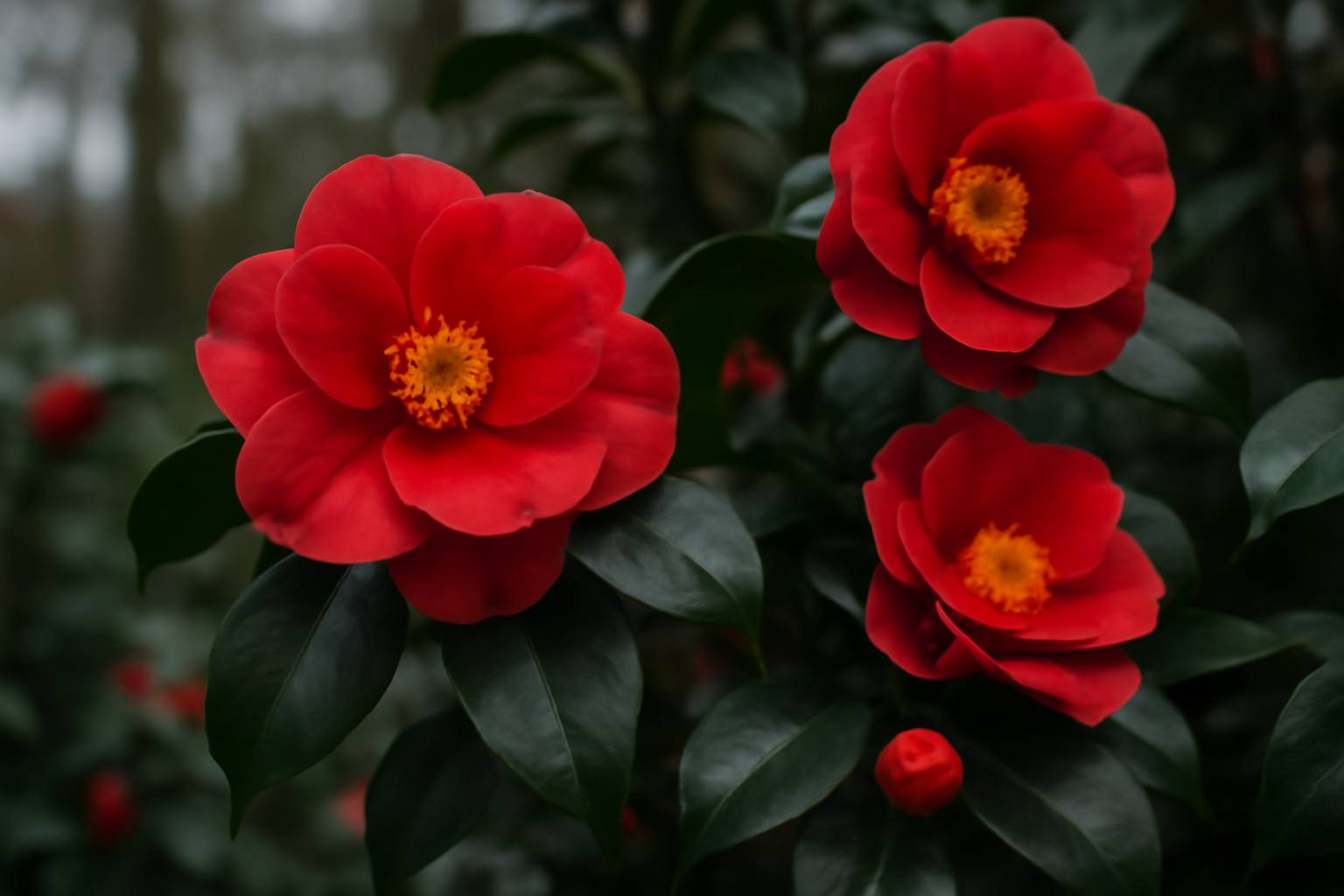
Every January, my neighbor stops at my fence and asks the same question: “Helen, what on earth is blooming in your garden right now?” The answer is almost always a red camellia japonica. There is something almost defiant about a deep crimson flower opening in the dead of winter, when everything else looks grey and defeated. Over the past two decades, I have trialed dozens of red camellia japonica varieties across my three garden zones — USDA 7b, 8a, and 8b — and I have learned which ones truly deliver and which ones overpromise. In this post, I am sharing my absolute favorites, along with the honest details you need to grow them well.
Why Red Camellia Japonicas Deserve a Place in Your Winter Garden
Most gardeners plan their color around spring and summer. Winter color feels like a bonus, almost an accident. However, once you have grown a great red camellia japonica, you start planning your entire garden around it.
Camellia japonica blooms typically run from November through March, depending on cultivar and climate. In my zone 8a garden in the Carolinas, my earliest japonicas open in late November. My latest carry color right into April. That is an extraordinary season for any flowering shrub.
Red varieties specifically bring a warmth that pink and white camellias simply cannot match on a cold grey morning. They photograph beautifully against evergreen foliage. They also attract overwintering pollinators on mild days — something I genuinely love watching from my kitchen window.
My Top Red Camellia Japonica Varieties
These are varieties I grow personally or have grown for extended periods. Every recommendation here comes from real garden experience, not catalog descriptions.
1. ‘Professor Charles S. Sargent’
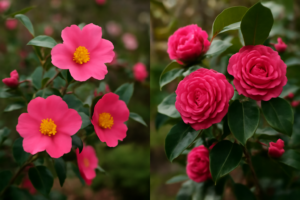
This is my workhorse red. ‘Professor Charles S. Sargent’ produces deep crimson, fully double blooms with a tight, almost peony-like form. It blooms mid-season here — usually January into February — which places it perfectly between my early and late performers.
In my experience, this cultivar is one of the most cold-hardy japonicas I grow. It handles my zone 7b garden reliably, where temperatures occasionally dip to 5°F. The flowers are reasonably weather-resistant, too. They do not turn brown the moment frost touches them, which is more than I can say for some showier varieties.
Growth habit is upright and dense. That makes it excellent for screening or as a specimen shrub. I planted mine in a north-facing bed with morning sun, and it has thrived for twelve years without complaint.
2. ‘Adolphe Audusson’
‘Adolphe Audusson’ is a classic for good reason. The blooms are large — sometimes reaching four inches across — and a rich, saturated blood-red with prominent yellow stamens. That stamen flash gives it a drama that fully double varieties lack.
This is a mid-to-late season bloomer in my zone 8a garden. Flowering typically begins in late January and continues well into March. However, it does have one weakness: the blooms are sensitive to hard freezes. A night below 28°F will damage open flowers. That said, new buds keep opening behind the damaged ones, so the overall display rarely disappints.
I grow a variegated sport of this cultivar called ‘Adolphe Audusson Variegated,’ which splashes white across the red petals unpredictably. Both are worth growing if you have the space.
3. ‘Kramer’s Supreme’
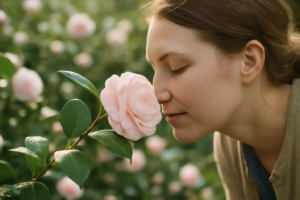
‘Kramer’s Supreme’ is my fragrant red. Most camellia japonicas have little or no scent — that is simply the species. ‘Kramer’s Supreme’ is one of the rare exceptions. The flowers carry a soft, sweet fragrance that surprises visitors who bend in for a closer look.
Blooms are large, semi-double to peony form, and a clear turkey-red. They open mid-season and last well on the shrub. Growth is vigorous and upright. In my experience, this one appreciates good drainage more than most. I lost an early plant to root rot before I understood that. More on that in the soil section below.
4. ‘Governor Mouton’
‘Governor Mouton’ offers something different: a semi-double flower in a rich carmine-red, frequently streaked with white or blush pink. The variegation is natural and irregular, so no two flowers look identical. Personally, I find that quality endlessly interesting.
This is an early-to-mid season performer. In my zone 8b container garden, it begins opening in November. It also tolerates heat better than many japonicas, which matters for gardeners at the southern edge of the camellia range.
5. ‘Dr. Burnside’
For sheer size and impact, ‘Dr. Burnside’ is hard to beat. The flowers are very large — up to five inches — fully double, and a deep red that holds its color even in bright sun. Some red camellias fade to an unattractive pinkish-orange in full afternoon sun. This one does not.
It blooms mid-to-late season. The plant itself grows vigorously and can become quite large over time. Specifically, plan for eight feet or more at maturity without pruning. I wrote more about managing camellia size through pruning in another post on this site — it is worth a read before you plant something this vigorous near your foundation.
A Lesson I Learned the Hard Way About Red Camellias
Let me save you some heartache. For years I chased the most dramatic, deep-red, show-form japonicas — the ones that look incredible in photographs. Many of them are prima donnas in actual garden conditions.
Early in my camellia journey, I planted ‘Ville de Nantes’ — a gorgeous, semi-double red with heavily fimbriated petals — in a spot that got afternoon sun and had borderline drainage. It sulked for three years, produced maybe a dozen blooms total, and finally died after a particularly wet winter. I was devastated.
The lesson? Beautiful blooms mean nothing if the plant is not matched to your actual conditions. The varieties I listed above are all beautiful AND genuinely garden-worthy. That combination matters far more than winning a flower show.
Growing Conditions That Make Red Japonicas Thrive
Camellia japonicas are not difficult plants, but they do have specific preferences. Getting these right makes the difference between a struggling shrub and a showstopper.
Soil pH and Preparation
Soil pH is non-negotiable. Camellias require acidic soil — ideally between 5.5 and 6.5. Above pH 6.5, they cannot properly absorb iron and manganese. As a result, leaves yellow and plants stall. This condition is called chlorosis, and it is extremely common in gardens where the soil has not been tested.
Test your soil before planting. Amend with elemental sulfur if your pH is too high. Work in organic matter generously — composted pine bark is my preferred amendment for camellias. It feeds beneficial mycorrhizal fungi, improves drainage, and gradually acidifies the soil.
Light Requirements
Most camellia japonicas prefer dappled shade or morning sun with afternoon protection. However, my experience with red varieties specifically is that they handle more sun than white or pale pink forms. The dark pigment seems to offer some protection.
That said, avoid planting in full afternoon sun in USDA zones 8b and above. Heat stress causes bud drop and shortens bloom time. Morning sun is ideal — it dries dew off the foliage, which reduces fungal issues, while sparing flowers from the harshest afternoon heat.
Watering and Drainage
Camellias are surprisingly drought-tolerant once established — usually after two to three years in the ground. The establishment period is critical, though. Water deeply and consistently during the first two summers. Inconsistent watering during bud development (late summer through fall) causes bud drop.
Drainage is equally important. Camellias will not tolerate wet feet. If your soil holds water after heavy rain, raise the planting area or build a berm. I plant all my camellias two to three inches above the surrounding soil level. This simple habit has saved me from root rot problems in my heavier clay areas.
Hardiness Zones and Timing: What to Expect
Camellia japonica is generally hardy from USDA zones 7 through 10. In zone 7a and colder, you can still grow japonicas, but site selection becomes critical. Protected microclimates — against a south-facing wall, for example — can extend hardiness by nearly a full zone.
For red varieties specifically, I consider ‘Professor Charles S. Sargent’ and ‘Governor Mouton’ the most reliably cold-hardy in my collection. Both have survived temperatures in the upper single digits in my zone 7b garden with minimal flower bud damage when the cold arrived gradually.
Bloom timing varies by cultivar and location. Early varieties in zone 8a begin in October or November. Mid-season varieties peak December through February. Late varieties carry the show into March and April. For maximum winter color, I recommend choosing one early, one mid-season, and one late red — that strategy keeps something in bloom for five months or more.
Companion Plants for Red Camellia Japonicas
Red camellias are bold. They need companions that complement rather than compete.
In my garden, I pair red japonicas with the following:
- Hellebores — Their nodding flowers in plum, white, and blush tones echo the camellia season without competing for attention.
- Mahonia — Yellow winter flowers provide sharp contrast against red camellia blooms. The blue-black berries that follow are a bonus.
- Snowdrops and winter aconite — Low-growing bulbs that weave through the base of camellia shrubs beautifully.
- Camellia sasanqua varieties — I use early-blooming sasanquas like ‘Yuletide’ (also red, conveniently) to bridge the gap before my japonicas peak.
- Evergreen ferns — Their texture and deep green foliage make red blooms pop throughout winter.
Avoid planting large-leaved competitors like hostas immediately beneath camellias. They compete for the slightly acidic, well-drained conditions that camellias need. On the other hand, shade-tolerant groundcovers like Liriope or Ajuga work beautifully under established plants.
Quick-Reference: My Recommended Red Camellia Japonica Varieties
- ‘Professor Charles S. Sargent’ — Deep crimson, fully double, cold-hardy, mid-season. Best all-around choice for zones 7b–9a.
- ‘Adolphe Audusson’ — Rich blood-red, semi-double, large blooms, mid-to-late season. Ideal for zones 8a–9b.
- ‘Kramer’s Supreme’ — Turkey-red, peony form, fragrant, mid-season. Excellent for zones 7b–9a with good drainage.
- ‘Governor Mouton’ — Carmine-red with natural variegation, early-to-mid season. Good heat tolerance for zones 8b–10.
- ‘Dr. Burnside’ — Very large deep-red blooms, fully double, mid-to-late season. Vigorous grower for zones 7b–9b.
Start With One Red Camellia Japonica This Year
If you have been on the fence about growing red camellia japonica varieties, I want to give you one clear nudge: start with ‘Professor Charles S. Sargent.’ It is forgiving