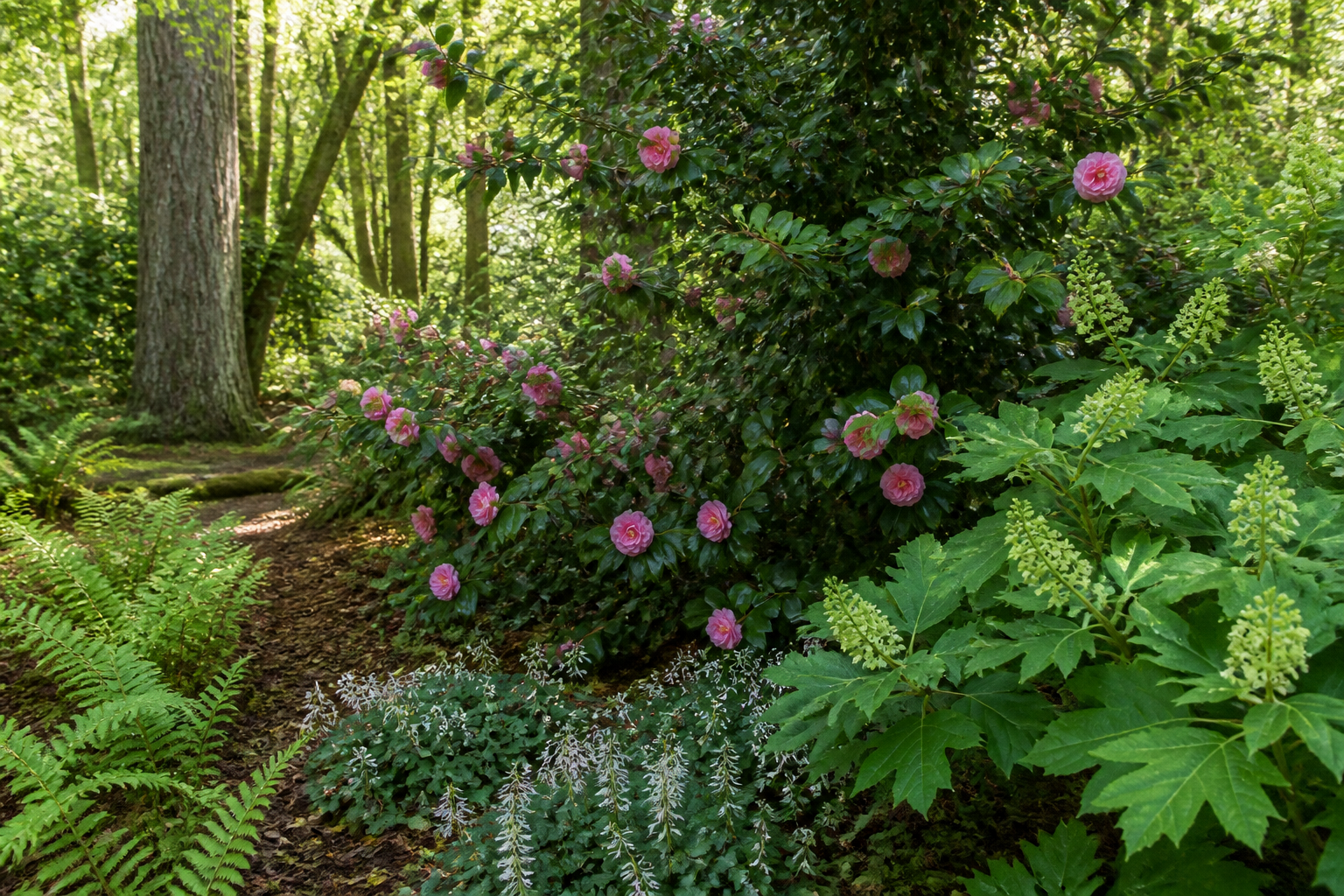
Last spring, a gardener from North Carolina emailed me a question that stopped me in my tracks. She’d been reading the usual camellia companion-planting advice—the same azaleas and hydrangeas everyone recommends—and asked something wonderfully practical: “What actually grows there in nature, where camellias come from?” It’s a question I’d never been asked directly, but it made me realize how much of the companion-plant advice online ignores the woodland ecology that camellias actually love. That email sparked this guide on native companion plants for camellias, because the truth is, the best partners for your camellias aren’t always the fanciest cultivars. Often they’re the plants that evolved in the same shade, soil, and climate as camellias themselves—or in your own region’s understory.
Why Native Companions Make Sense for Camellias
Camellias are woodland understory shrubs. They evolved in the dappled shade beneath taller trees in East Asia, rooted in acidic, humus-rich soil that stays consistently moist but never waterlogged. That ecological niche is the key to understanding how to plant around them.
Here’s what I’ve learned over two decades: the best companions aren’t chosen for botanical relationship to camellias. Instead, they’re plants that thrive in that same part-shade, acidic woodland niche. And if those plants are native to your region—or to Australia, if you’re gardening there—they’ll adapt faster, need less fussing, and look more at home in your garden than yet another Japanese or European cultivar.
Native plants are also better for local pollinators, birds, and the whole web of life under your camellia canopy. I made the mistake early on of treating my camellia beds like formal specimen plantings, surrounded by hostas and shade perennials that needed constant deadheading and amendment. Once I started working with native companions, the beds practically managed themselves. They still look beautiful—just less manicured, and far more resilient.
Native Companion Plants for US Gardens
If you’re gardening east of the Mississippi, or in zones 7b through 9b where camellias thrive, native woodland plants are your secret weapon. These shrubs, ferns, and groundcovers are specifically adapted to the acidic, part-shade conditions camellias love. Best of all, they’re increasingly available at native plant nurseries and regional plant society sales.
Native Shrubs
Oakleaf hydrangea (Hydrangea quercifolia) is my top recommendation. Native to the southeastern United States, it has the same acidic-soil preference and part-shade tolerance as camellias. But here’s where it shines: oakleaf hydrangea blooms in summer—June through August—precisely when your camellias are resting as green foliage. Those upright white panicles create a striking textural contrast to glossy camellia leaves. In fall, the leaves turn burgundy and persist through winter, while the cinnamon-colored peeling bark adds year-round interest.
I’ve paired my ‘Yuletide’ camellia—a deep red winter bloomer—with oakleaf hydrangea on the north side of my garden. The oakleaf fills that awkward late-spring gap when camellias have finished but nothing else is in bloom yet. It tolerates dry shade once established, though it prefers consistent moisture, much like a camellia’s root zone.
Virginia sweetspire (Itea virginica) is another southeastern native I rely on. This elegant, upright shrub produces fragrant white flower spikes in early summer. The foliage turns a stunning deep burgundy in autumn and often persists into winter. It tolerates the same damp, acidic conditions camellias enjoy and can even handle part shade, though it blooms more prolifically with at least four hours of sunlight.
Compared to oakleaf hydrangea, sweetspire is more refined and less bulky. It’s perfect if you want a native companion that feels a bit more sculptural. One caution: it can spread via underground runners, which I discovered the hard way when mine wandered into a nearby camellia bed. Planting it where that spreading tendency isn’t a problem, or installing a root barrier, saves headaches later.
Native deciduous azaleas deserve mention here too. Most gardeners pair camellias with the usual hybrid azaleas, but native species like Rhododendron periclymenoides (pinxterbloom) and R. canescens (piedmont azalea) are fragrant and more deeply adapted to local pollinators. These species are also more variable in habit and color than mass-produced hybrids, giving your garden character. They bloom in mid-to-late spring, creating a softer transition between camellia season and summer foliage.
Native Ferns and Groundcovers
The base of a mature camellia is prime real estate for native ferns. Christmas fern (Polystichum acrostichoides) is evergreen, shallow-rooted, and completely unbothered by the dense shade and root competition a large camellia creates. Its leathery fronds add texture and stay green year-round. Native wood ferns like Dryopteris species and Onoclea sensibilis (sensitive fern) work beautifully too, though sensitive fern can spread aggressively—it’s best in a contained area.
For low groundcovers, foamflower (Tiarella cordifolia) is exceptional. It spreads slowly into dense mats, tolerates deep dry shade, and produces delicate white flower spikes in spring. I’ve used it under several ‘Nuccio’s Pearl’ camellias with excellent results. Wild ginger (Asarum canadense) is another native I adore. Its heart-shaped leaves create a lush groundcover, and it tolerates root competition better than almost any other plant I’ve tried.
One honest note: sourcing straight native species is harder than finding cultivars. Big box stores stock very few. Your best bet is a native plant nursery or a regional native plant society sale. In my area, the North Carolina Native Plant Society hosts quarterly sales. These events connect you with local growers who understand your specific ecosystem and zone.
Native Companion Plants for Australian Camellia Gardens
If you’re reading this from Victoria, New South Wales, or anywhere camellias thrive across southern Australia, this section is for you. Camellias—especially sasanquas—are beloved garden staples in Australia, and many gardeners want to soften the formality of a camellia specimen or hedge with plants that feel more authentically local.
Full disclosure: I garden in the United States and haven’t personally grown these Australian natives. However, the ecological logic is identical to what works in my garden. Australian camellia growers apply the same shade-and-acid-soil thinking to native species that thrive in that niche. I’ve drawn this section from their experience and best practice, so you can apply it with confidence even though it’s not drawn from my own soil.
Groundcovers and Strappy Foliage
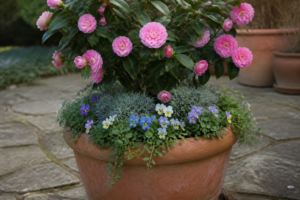
Native violet (Viola hederacea) is the first plant I’d recommend for underplanting Australian camellias. It’s shade-tolerant, spreads gently to fill bare ground, and tolerates the moist, acidic root zone camellias create. The tiny blue-and-white flowers are delicate without competing visually with camellia blooms. This groundcover handles the humidity and consistent moisture that camellias prefer, making it an ideal natural partner.
Flax lily (Dianella species) offers textural contrast through strappy, evergreen foliage that plays beautifully against camellias’ glossy, rounded leaves. Flax lily tolerates part shade admirably and needs minimal maintenance once established. The delicate blue flowers appear in summer, adding subtle interest without overwhelming the space. It’s a tough, low-fuss choice that works in both formal and naturalistic plantings.
Lomandra (mat rush) serves a similar textural role. Its tight, structural clumps of strappy foliage provide strong edging around a camellia bed. Lomandra is exceptionally drought-tolerant once established, making it ideal if you’re planting in drier microclimates. It’s also more formal in appearance than flax lily, so it works particularly well near a structured camellia hedge.
For larger gardens, soft tree fern (Dicksonia antarctica) creates the same woodland understory feeling that ferns bring to US native plantings. It loves the humidity and part shade a camellia provides, growing slowly into a stunning architectural statement. Plant it where it has room to mature—these ferns eventually reach three meters or more—and give it mulch and consistent moisture.
What to Avoid Pairing
Here’s the critical caveat for Australian gardeners: many gorgeous native plants—grevilleas, banksias, and other Proteaceae—are adapted to low-phosphorus, well-drained soils. They actively dislike the rich, regularly fertilized, moisture-retentive beds camellias thrive in. Pairing these plants directly with camellias often results in nutrient toxicity or root rot in the natives.
If you love those showier natives, plant them separately in their own beds with appropriate soil and drainage. Stick to the shade-tolerant groundcovers and ferns I’ve listed above for companions that’ll genuinely share a camellia’s growing conditions. This isn’t a compromise—it’s honoring both plants’ needs and creating a garden that actually works ecologically.
Sourcing and Planting Tips
Native plants can feel harder to find than cultivars, but that’s changing. Search for native plant nurseries in your region or contact your state’s native plant society. Many also host online directories. These specialists understand what grows well in your specific zone and soil type, and they’re infinitely more helpful than big-box store staff.
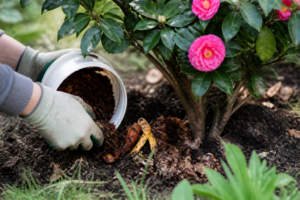
When you plant native companions, treat them the way you’d treat a camellia: amend the soil with peat moss or composted pine bark to acidify and improve drainage. Most woodland natives appreciate consistent moisture during their first growing season. After that, let them settle into the same watering rhythm as your camellias.
Mulch is your friend. A three-to-four-inch layer of pine needles or shredded bark around both camellias and native companions keeps soil cool, retains moisture, and adds the organic matter these plants crave as they break down.
One Final Thought
After more than twenty years, my best camellia gardens aren’t the ones surrounded by the fanciest hybrid companions. They’re the ones where I’ve stepped back and asked: what actually belongs here? For US gardeners, that’s oakleaf hydrangea, Christmas fern, and foamflower creating a woodland edge that feels native and effortless. For Australian gardeners, it’s native violet and flax lily softening a camellia specimen into something that feels rooted in place.
Native companion plants for camellias aren’t just prettier or easier—they’re the right ecological choice. Start there, trust the logic that governs woodland gardens everywhere, and you’ll find your camellia beds flourish with far less intervention. Your garden will thank you, and so will the birds and pollinators that make it thrive.