
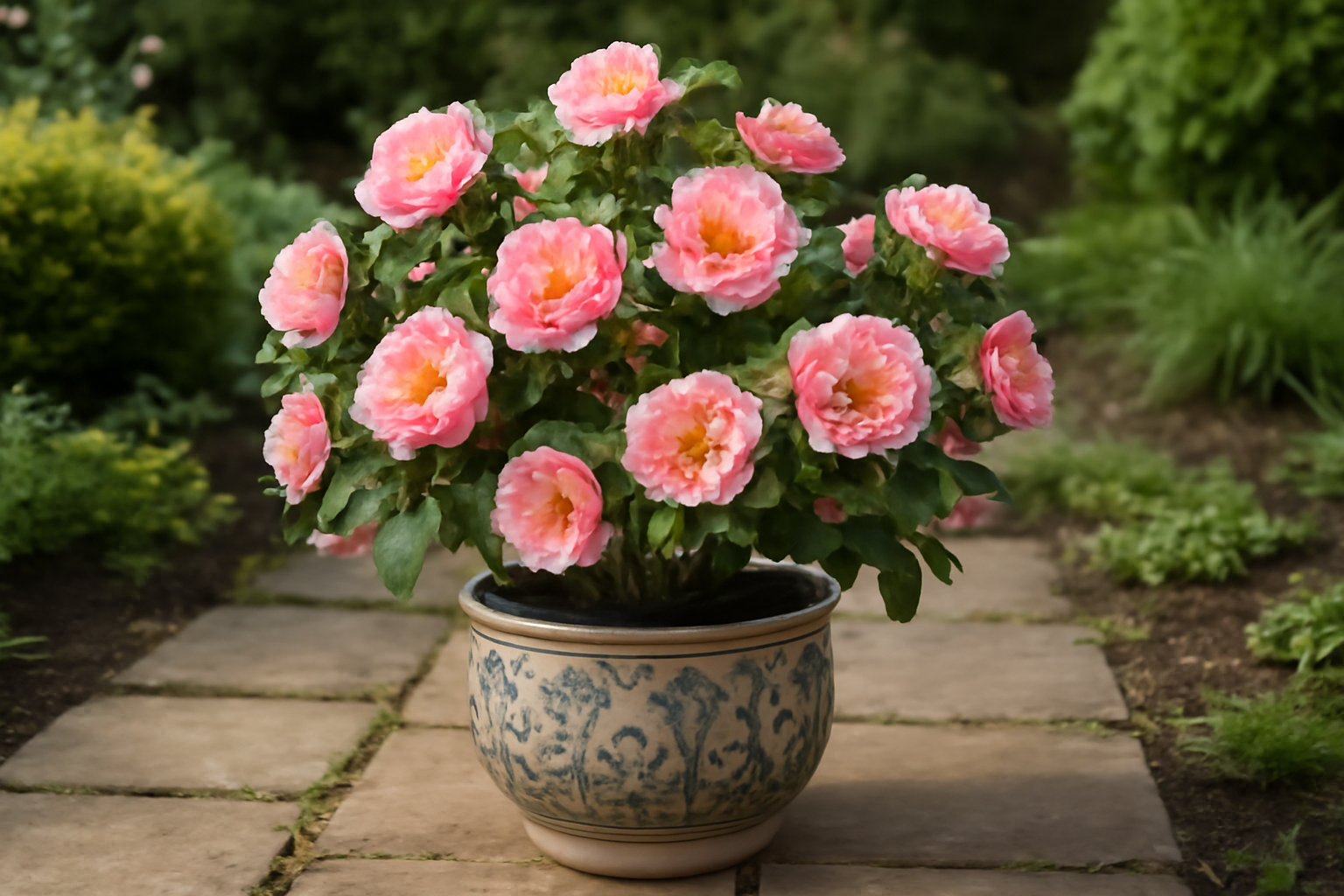
A few years ago, I squeezed one more camellia into my already-crowded Zone 8a garden by stuffing a dwarf camellia variety into a large terracotta pot on my back patio. That single experiment changed how I think about growing camellias entirely. Small-space gardeners, container enthusiasts, and anyone who assumed camellias were strictly for sprawling landscapes — this post is for you.
Not every garden has room for a ten-foot Camellia japonica. Mine certainly doesn’t anymore. However, the world of compact and miniature camellias is surprisingly rich. There are cultivars that stay under three feet, varieties that thrive in containers for decades, and small-growing sasanquas that tumble beautifully over raised bed edges. After growing more than 200 named cultivars across three USDA zones, I’ve developed some strong opinions about which ones actually deliver.
What Actually Counts as a Dwarf Camellia Variety?
This is where things get a little murky, and I wish someone had clarified it for me earlier. In the camellia world, “dwarf” and “miniature” don’t always mean the same thing. Miniature usually refers to flower size — blooms under 2.5 inches in diameter. Dwarf typically refers to the plant’s overall growth habit and mature size.
A true dwarf camellia generally reaches under four feet at maturity, with a slow annual growth rate of two to four inches per year. Some cultivars tick both boxes — small flowers on a compact plant. Others are slow-growing but eventually get quite large if you leave them alone for twenty years. Knowing which category your variety falls into matters enormously for container planning.
For this guide, I’m focusing on varieties that stay genuinely manageable — suitable for containers, small beds, or tight courtyard spaces — without requiring constant hard pruning to keep them in check.
My Favourite Dwarf Camellia Varieties for Containers
Let me start with the cultivars I actually grow in containers myself, because that’s where the rubber meets the road.
Camellia japonica ‘Bokuhan’ (Tinsie)
‘Bokuhan,’ sold widely as ‘Tinsie,’ is one of my absolute favourites. It produces anemone-form flowers with a striking red outer ring of petals surrounding a dense white petaloid centre. The blooms are miniature — well under two inches — and the plant itself is naturally compact and slow-growing.
In my Zone 8a garden, it reliably blooms from February through March. Hardy to Zone 7b, it handles a light frost without much complaint. I keep mine in a 15-gallon glazed ceramic container with excellent drainage, and after six years it sits at around three feet tall. Honestly, it’s one of the most elegant things on my patio.
Camellia japonica ‘Finlandia Variegated’
‘Finlandia Variegated’ is a semi-double white with pink streaking and a naturally tidy, upright habit. It grows slowly, rarely exceeding four to five feet even in the ground. In containers, it stays beautifully compact. I grow this one in Zone 8b, where it blooms mid-season — typically January into February.
The variegation is inconsistent from bloom to bloom, which I find charming rather than frustrating. Some flowers are almost pure white; others show bold pink streaks. That said, if you want predictability, it might not be your pick. For me, the surprise is part of the appeal.
Camellia sasanqua ‘Setsugekka’
‘Setsugekka’ isn’t the smallest sasanqua on the market, but it responds beautifully to container culture and stays very manageable with minimal pruning. Large, semi-double white flowers with ruffled petals appear from October into December — well before any japonica in my collection wakes up. Hardy to Zone 7a, it’s also one of the tougher choices for colder regions.
In containers, I’ve kept mine around three to four feet for years. It appreciates a slightly acidic potting mix — I target a pH between 5.5 and 6.0 — and responds well to a slow-release fertiliser formulated for acid-loving plants applied in early spring.
Small-Growing Camellias for Tight Garden Beds
Not everyone wants to garden in containers. Sometimes you just need a camellia that won’t eat your entire border in five years. These are the varieties I reach for in those situations.
Camellia japonica ‘Nuccio’s Gem’
‘Nuccio’s Gem’ is a classic for good reason. It produces formal double white flowers of near-perfect symmetry, and the plant itself grows upright but slowly. In the ground across my Zone 7b and 8a plots, it’s taken about twelve years to reach six feet. That’s genuinely slow for a japonica.
Bloom time is mid-season, running roughly January through March depending on your location. It’s one of the cultivars I recommend most confidently to gardeners with limited space who still want that classic, formal camellia look. In my experience, it’s also more resistant to petal blight than many white japonicas, which is a real bonus.
Camellia sasanqua ‘Yuletide’
‘Yuletide’ is possibly the most recognisable compact sasanqua in cultivation, and for good reason. It delivers bright red single flowers with golden stamens right around the winter holidays — living up to its name completely. The growth habit is dense, upright, and relatively slow, typically maturing at five to six feet over many years.
Hardy to Zone 7a, it handles cold better than many of my japonicas. I grow it in a narrow side bed in Zone 8a where nothing else seemed happy, and it thrives. Specifically, it tolerates slightly more sun exposure than most camellias prefer, making it versatile for trickier spots.
Camellia japonica ‘Jury’s Yellow’
If you want something genuinely unusual, ‘Jury’s Yellow’ delivers. Technically a hybrid with Camellia japonica parentage, it produces anemone-form flowers in a creamy ivory-yellow that no pure japonica can match. The plant is compact, slow-growing, and well-suited to containers or small beds.
It blooms in early-to-mid season, roughly December through February in my Zone 8b garden. One thing I’ll say — it needs protection from harsh afternoon sun. I learned this the hard way when a plant in a sunnier spot developed significant leaf scorch one summer. Dappled shade or morning sun only is the rule I stick to now.
A Mistake I Made (So You Don’t Have To)
I’ve already hinted at one lesson above, but let me be direct about the biggest container mistake I’ve made with compact camellias. For years, I used a standard peat-based potting mix without adjusting the pH. I knew camellias wanted acidic soil — the ideal range is 5.5 to 6.5 — but I assumed bagged mix would be close enough.
It wasn’t. Several of my container plants developed yellowing leaves with green veins — classic interveinal chlorosis from iron deficiency caused by a pH that was too high. The nutrients were there; the plants just couldn’t access them. As a result, growth stalled and bloom quality dropped noticeably.
Now I always test my container mix before planting. I use a simple digital pH meter and, if needed, amend with elemental sulfur or a dedicated ericaceous compost. If you’re serious about container camellias, a soil pH meter is one of the best fifteen-dollar investments you can make. I wish I’d made it sooner.
Practical Container Tips for Compact Camellias
Growing dwarf camellia varieties in containers is genuinely rewarding, but there are a few principles I return to every season.
- Pot size matters more than people think. Start compact cultivars in a 10- to 15-gallon container. Going too large too fast encourages root problems and slows blooming.
- Drainage is non-negotiable. Camellias hate wet feet. Every container I use has multiple drainage holes, and I elevate pots slightly to prevent them from sitting in standing water.
- Repot every three to four years. In my experience, container camellias begin to sulk when rootbound. I move up one pot size at a time, not two.
- Fertilise carefully. I use a slow-release acid-plant fertiliser in early spring, just as new growth begins. Avoid fertilising after July — late feeding pushes soft growth that can get hammered by frost.
- Water consistently but don’t overdo it. Container camellias need more frequent watering than in-ground plants, especially in summer. However, I always let the top inch of soil dry out between waterings.
What About Reticulata Hybrids? A Word of Caution
Camellia reticulata and its hybrids are famous for spectacular, enormous blooms. Varieties like ‘Francie L’ and ‘Dr Clifford Parks’ are genuinely breathtaking. However, I wouldn’t classify most reticulata hybrids as small-garden plants. They tend toward vigorous, open growth and can reach twelve to fifteen feet without significant intervention.
That said, there are a handful of reticulata-influenced hybrids that stay more restrained. ‘Royalty’ is one I’ve trialled in Zone 8b — it grows more compactly than most reticulatas and produces large, semi-double pink flowers that stop visitors in their tracks. It’s not truly dwarf, but it can be container-grown for several years if you’re committed to the management.
For most small-garden situations, I’d steer you toward japonicas and sasanquas first. They’re more reliable, hardier, and the compact cultivar selection is far broader. I cover reticulata varieties in much more depth in another post on this site — worth a read if you have the space for them.
Zone Considerations for Small-Space Camellia Growing
One genuine advantage of container growing is the flexibility it gives you with hardiness zones. I grow camellias across Zones 7b, 8a, and 8b, and the container plants get extra protection options that in-ground plants simply don’t have.
In Zone 7b, winters can push temperatures down to 5°F (-15°C). Most japonicas handle that; many sasanquas do too, especially well-established ones. However, container plants are more vulnerable because their roots aren’t insulated by surrounding soil. On the coldest nights, I move pots into my unheated garage or cluster them against a south-facing wall and wrap them in horticultural fleece.
If you’re gardening at the colder edge of camellia territory, specifically Zone 6b or 7a, look for cold-hardy selections like the ‘April’ series (April Blush, April Dawn, April Snow) developed specifically for northern gardens. These japonicas are rated to Zone 6b and have performed remarkably well in trials. I’ve been watching them with interest for potential inclusion in my own collection.
Pruning Compact Camellias: Less Is Usually More
One of the reasons I love genuinely dwarf camellia varieties is that they require very little pruning to stay attractive. That’s the whole point of choosing a naturally compact cultivar.
When pruning is needed — to remove deadwood, improve airflow, or maintain shape — I always do it immediately after flowering finishes. For most japonicas in my garden, that window falls in March or April. Pruning later risks cutting off the following season’s flower buds, which form on current-season growth through summer.
Light tip-pruning is fine for shaping. Hard renovation pruning should be reserved for genuinely overgrown plants that need rescuing, not compact varieties being managed well. I wrote more about camellia pruning techniques in another post here on Camellia Curios — it goes into much more detail on timing and method.
Start Small and Build Confidence with Dwarf Camellia Varieties
If there’s one thing I want you to take away from this guide, it’s that dwarf camellia varieties have genuinely transformed what’s possible in my smaller garden spaces. They’re not a consolation prize for people who can’t grow the big showy specimens. Many of them are extraordinary plants in their own right — intricate flowers, beautiful evergreen foliage, and a manageable scale that makes them genuinely easy to live with.