
This post contains affiliate links. As an Amazon Associate, I earn from qualifying purchases at no extra cost to you.
Three years ago, I nearly lost two of my most prized Japonicas. The culprit wasn’t a pest or a late frost. It was my own neglect of something basic: proper mulching. My soil was compacting badly between waterings, the pH was creeping up toward 7.0, and my camellias were showing it. Pale leaves, reluctant blooms, and that telltale yellowing between the veins that signals nutrient lockout. I knew I needed to get serious about pine bark mulch for my camellias, and fast.
I’ve been growing camellias in Zone 7b for over twenty years. In that time, I’ve learned that these plants are both tougher and more particular than most people give them credit for. They thrive in slightly acidic soil — ideally between pH 5.5 and 6.5 — and they absolutely hate wet feet. Good mulch solves both problems at once. However, finding the right product, especially for container specimens and smaller garden beds, had been a frustrating trial-and-error process for years.
That search eventually led me to the Soil Sunrise 100% Natural Pine Bark Mulch Nuggets (12 Quarts). I’ve now used it across three full growing seasons. This is my honest account of what worked, what didn’t, and whether it’s worth your time and money.
Why I Chose Pine Bark Mulch for My Camellias
My search started in the usual places — gardening forums, extension service bulletins, and a few trusted Facebook groups dedicated to camellia growing. The consensus was consistent: pine bark mulch is one of the best natural mulch choices for camellias. As it decomposes, it gently acidifies the soil. That’s exactly what my plants needed.
The science backs this up. Pine bark has a naturally low pH. Over time, its decomposition produces organic acids that help maintain the acidic soil environment camellias prefer. On top of that, it improves drainage, suppresses weeds, and moderates soil temperature — three benefits that matter enormously in my humid Mid-Atlantic garden.
But why this specific product? I’d used bulk pine bark from local garden centers before. Honestly, quality control was inconsistent. Some batches were heavily contaminated with soil, bark dust, or oddly large chunks that looked terrible on container plants. I wanted something cleaner and more uniform, especially for my container-grown Sasanquas on the front porch.
The Soil Sunrise 100% Natural Pine Bark Mulch Nuggets (12 Quarts) kept coming up in positive reviews from indoor plant enthusiasts and outdoor container gardeners alike. The “small chips” sizing was the detail that sold me. My containers don’t need the large nuggets you’d toss around a landscape bed. Smaller chips settle more evenly and look more intentional on potted specimens.
First Impressions: Unboxing and Quality Check
The bag arrived well-sealed and in good condition. My first move was always to open, smell, and feel the product before applying anything near my plants. Pine bark should smell earthy and woody — a clean, forest-floor kind of smell. This did. There was no sour or fermented odor, which can indicate anaerobic decomposition. That’s a genuine red flag with cheaper bark products, so I was relieved.
The chip size was consistent. Most pieces fell in the half-inch to one-inch range. A few were smaller, which I appreciated. There was minimal fine dust at the bottom of the bag — something that plagues lower-quality products and can actually impede drainage when it accumulates around plant stems.
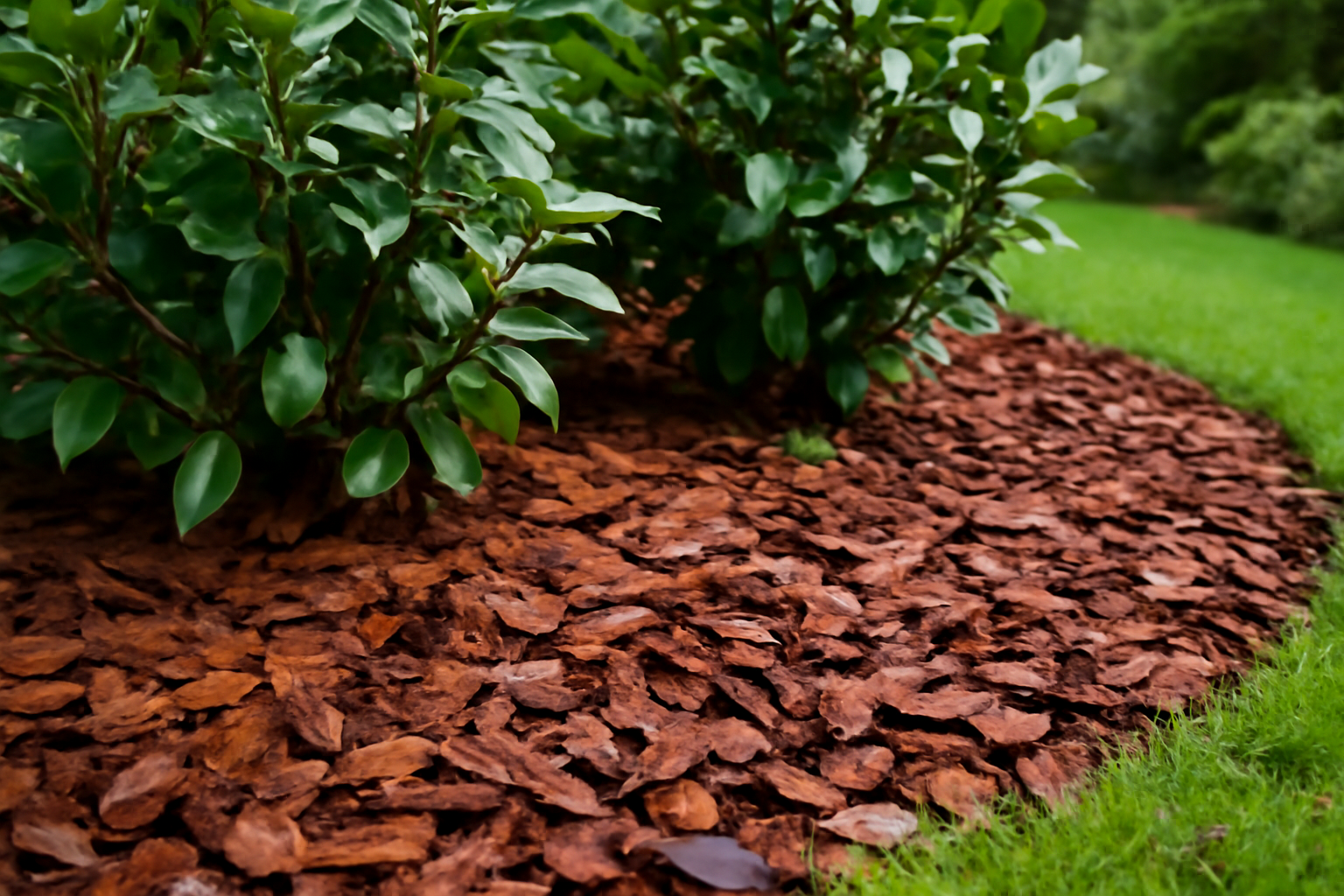
Visually, the bark was a rich, dark reddish-brown. It looked attractive immediately. For my ornamental container camellias, appearance matters almost as much as function. A sloppy mulch topper undermines years of careful pruning and shaping. This product passed the eye test before I’d even applied it.
My Testing Approach Over Three Seasons
I’m not a casual tester. When I commit to evaluating a product, I track results methodically. My test group included five plants across two species and three settings.
In the ground, I used it on two established Camellia japonica specimens — ‘Nuccio’s Gem’ and ‘Professor Sargent.’ Both are mature shrubs, about eight years old. They grow in a slightly raised bed with amended, well-draining soil. My baseline pH reading before the first application was 6.4.
In containers, I tested on three Camellia sasanqua plants: ‘Setsugekka,’ ‘Yuletide,’ and ‘Kanjiro.’ These live in large 15-gallon nursery pots filled with a mix of quality potting soil and aged compost. Container pH starting point was 6.2.
My application method was straightforward. Each spring, I cleared away old mulch, tested soil pH, and applied a fresh two-inch layer. For containers, I used roughly one inch — enough to retain moisture without smothering the root flare. I reapplied a light topdressing each fall. I watered it in gently after application and monitored moisture retention, pH drift, and bloom performance across all five plants.
Soil pH Tracking
I tested pH at the start and end of each growing season using an inexpensive soil meter, confirmed periodically with paper test strips. By the end of year one, in-ground pH had nudged down to 6.1. In the containers, it held steady at 6.0. By year three, ground bed pH sat at 5.8 — well within the ideal range and noticeably more consistent than in previous years when I mulched with pine straw alone.
What Actually Changed: Honest Results
Let me start with the wins, because there were genuine ones.
Moisture retention improved noticeably from the first season. My ‘Setsugekka’ Sasanqua had always been prone to stress during summer dry spells. That first summer after mulching with the Soil Sunrise 100% Natural Pine Bark Mulch Nuggets (12 Quarts), I extended the time between waterings by almost three days without any signs of wilt. In a July heat dome, that’s meaningful.
‘Professor Sargent’ has always been a reliable bloomer. However, in year two of mulching, bloom count increased noticeably. I counted 34 open flowers on the main stems at peak bloom, compared to my rough estimate of 22 the year before. Anecdotal? Sure. But consistent with the plant receiving better-regulated moisture and a more stable pH environment.
‘Nuccio’s Gem’ showed the most dramatic turnaround. The previous year, it had produced thin-petaled, slightly washed-out blooms. After two seasons of consistent mulching and better pH management, its flowers were fuller and more vividly white. The foliage also deepened in color — a sign of improved iron and manganese uptake, both of which are affected by soil pH.
What Didn’t Change (And What That Taught Me)
Weed suppression was modest. I won’t pretend it was transformative. Oxalis and chickweed still found ways through, especially in the in-ground bed. A two-inch layer of small chip bark is better than nothing, but it’s not a total weed barrier. For that, I’ve learned to lay cardboard underneath before mulching. That combination works well.
Also, the 12-quart bag is smaller than it looks. For container use, it covers two to three mid-sized pots adequately. For ground beds, you’ll need multiple bags or you’ll find yourself stretching it thin. More on that in the downsides section.
The Downsides You Should Know
I want to be honest here, because I’ve read too many reviews that bury the negatives at the bottom under layers of enthusiasm. Here are the real limitations of this product.
Volume is the biggest issue. A 12-quart bag covers limited ground. For anyone mulching an established landscape bed of camellias, you’ll need to order several bags or jump straight to the larger size. The cost per quart on single bags adds up quickly compared to bulk alternatives.
Decomposition rate is faster than large-nugget bark. The smaller chip size breaks down more quickly. That’s great for soil improvement, but it means more frequent topdressing. I reapplied every six months to maintain coverage. If you’re looking for a low-maintenance, set-it-and-forget-it mulch, the smaller chip format may frustrate you.
My moment of doubt came in year two. After a particularly rainy spring, I noticed the mulch compacting slightly around my ‘Kanjiro’ container. Rainwater wasn’t draining as freely as I expected. I raked the surface to loosen it, and drainage improved immediately. However, it was a reminder that even good mulch needs occasional attention. Don’t apply it and walk away entirely.
This is not a fertilizer replacement. Mulch improves conditions; it doesn’t replace nutrition. My camellias still received a targeted acid-loving plant fertilizer each spring. If you expect mulch alone to solve nutrient deficiencies, you’ll be disappointed.
Final Verdict: Is Pine Bark Mulch Right for Your Camellias?
After three full years of use, I’m confident in this product for the right applications. Using pine bark mulch for camellias — specifically the Soil Sunrise 100% Natural Pine Bark Mulch Nuggets (12 Quarts) — has made a measurable difference in my container plants and ground-bed specimens alike.
The quality is consistent. The chip size is genuinely well-suited to containers and smaller beds. The pH benefits are real and trackable. For the right gardener, this product delivers on its promises.
Buy This If:
- You grow camellias in containers and want a clean, attractive mulch topper
- You have one to three in-ground camellia shrubs and want targeted pH management
- You’re in USDA Zones 6–9 and dealing with alkaline creep in your soil
- You want a natural, chemical-free way to gently acidify soil over time
- Aesthetics matter — this product looks polished and intentional on ornamental plants
Skip This If:
- You’re mulching a large landscape bed and need bulk coverage
- You want a low-maintenance mulch that won’t need refreshing every season
- You’re hoping mulch alone will correct severe nutrient deficiencies
- You prefer large-nugget bark for coarser, more informal garden settings
My overall rating: 4.5 out of 5. The only reason it’s not a perfect five is the volume limitation and the faster decomposition rate. Those are real considerations for larger gardens. For container growing and targeted bed mulching, however, this remains my first choice three years running.
A Quick Note on the Larger Size Option
If you love the product but need more coverage, consider the Soil Sunrise 100% Natural Pine Bark Mulch Nuggets (30 Quarts). It’s the same quality product in a larger bag — a better value per quart for anyone mulching multiple in-ground shrubs or refreshing several containers at once. In my experience, the 12-quart size is ideal for targeted, seasonal use. The 30-quart bag makes more sense for spring bed prep when you need volume. Both are solid options from the same line, so quality should be consistent.