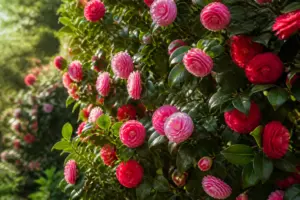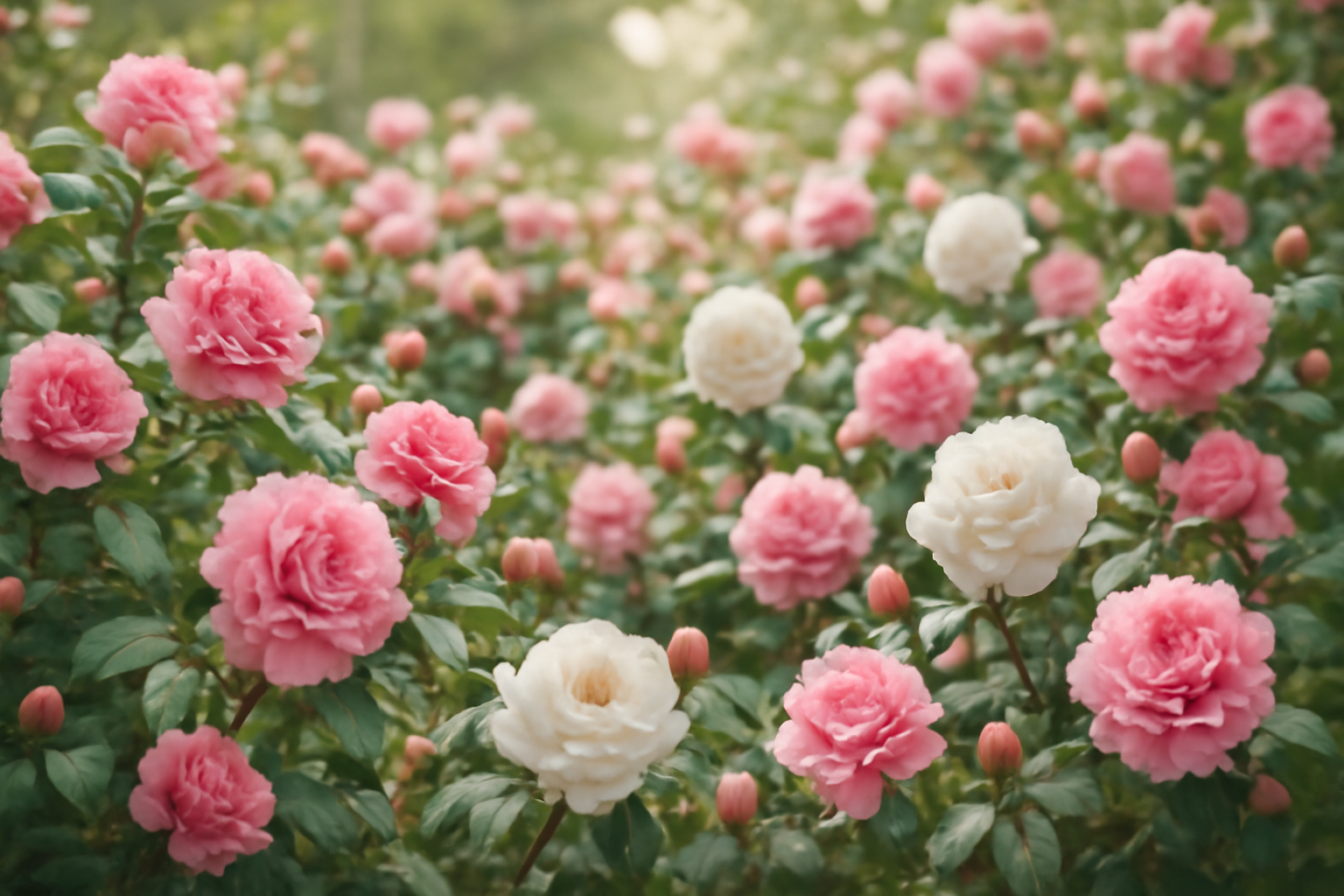
Three years. Three springs of walking past that ‘April Kiss’ camellia in my side garden, watching it push out healthy dark green leaves while producing exactly zero flowers. I fertilized it. I watered it. I talked to it — yes, I talk to my camellias, don’t judge me. Nothing. By year two I was genuinely questioning whether I had somehow purchased a decorative shrub masquerading as a flowering plant.
Then last April, I walked outside on a Tuesday morning and counted forty-two blooms. Forty-two. I actually counted them twice.
If you’re dealing with a camellia not blooming, I want to share exactly what I changed, because I wasted two years doing the wrong things with good intentions. This isn’t a generic checklist I pulled together — this is the specific sequence of mistakes and corrections I made in my own zone 7b garden, informed by 22 years of growing these plants and some frank conversations with fellow American Camellia Society members who helped me finally diagnose the problem.
First, I Had to Stop Guessing at Soil pH
I assumed my soil pH was fine. I grow azaleas in the same bed, they bloom fine, so surely the camellia was happy too, right? Wrong. I finally broke down and did a proper soil test — not a cheap home kit, but a mail-in test through my state’s cooperative extension service. The result: pH of 6.4 in that particular spot.
Camellias want a soil pH between 5.5 and 6.5, and while 6.4 technically falls within range, it’s at the high end. More importantly, soil pH affects nutrient availability, not just the pH number itself. At 6.4, iron and manganese start becoming less bioavailable. My camellia wasn’t starving for nutrients per se — it was struggling to absorb the ones already in the ground.
I applied elemental sulfur in late September at a rate of about 1 pound per 10 square feet, worked shallowly into the mulch layer. By the following spring test, I was sitting at 5.9. That single change, I believe, was responsible for at least half of the improvement I saw.
Honest caveat here: Lowering soil pH is a slow process. Elemental sulfur doesn’t work overnight, and if you have highly buffered clay soil like I do, it takes months to register meaningful change. Don’t expect a fall application to fix your spring bloom cycle. Plan a full growing season ahead.
I Was Fertilizing at the Wrong Time
Here’s the mistake I’m most embarrassed about, because I genuinely should have known better. I was feeding my camellia in late summer — August, sometimes even early September — because I was already in the garden feeding other things and it seemed convenient.
Late nitrogen applications push soft, vegetative growth right when the plant should be hardening off for winter and, critically, setting flower buds. Every time I fed it in August, I was essentially telling the plant to keep growing leaves instead of committing energy to bud development. Then the cold would come, that tender new growth would get nipped, and I’d lose whatever marginal buds might have formed anyway.
The correct window for camellia fertilizing is from late winter through no later than mid-July. After that, you leave them alone. I now do three applications: one in late February as new growth begins, one in April, and one final application around the first week of July. That’s it. The rest of the season I step back and let the plant do its thing.
The Pruning Mistake I Kept Repeating
Camellias bloom on old wood — specifically, on buds that formed during the previous growing season. I knew this intellectually. But I was doing a light cleanup prune every fall, tidying up the shape, removing a few crossing branches. Sounds harmless. It wasn’t.
Fall pruning on camellias removes the very buds you spent all summer waiting to develop. I was literally cutting off next year’s flowers every October, then standing there in spring wondering why the plant wasn’t performing.
If you need to prune camellias, do it immediately after they finish blooming — and I mean within a few weeks of petal drop. That window, typically late spring for most japonicas, gives the plant the entire growing season to set new buds on the fresh growth. I haven’t touched mine with pruning shears since May of last year, and the bud set going into this fall is the best I’ve ever seen on that plant.
I Also Addressed the Drainage Problem I’d Been Ignoring
This one required some honest self-reflection. That side bed where ‘April Kiss’ lives gets morning sun and afternoon shade — ideal camellia conditions on paper. But after a heavy rain I noticed the soil staying soggy for two or three days longer than I’d like.
Camellias hate wet feet. They will sit in poorly drained soil, look perfectly healthy, and simply refuse to bloom. The stress of periodic waterlogging redirects the plant’s energy away from reproduction and toward basic survival. I added a raised berm — nothing dramatic, just about four inches of additional soil elevation using a mix of native soil and composted pine bark — and improved the drainage significantly. Combined with the other changes, the plant finally had no reason left not to perform.
This post contains affiliate links. As an Amazon Associate I earn from qualifying purchases.
What I Use and Recommend
After two years of trial and error, I’ve settled into a consistent fertilizing program. Here’s what I actually use in my garden:
For my routine liquid applications during the growing season, I’ve been using Camellia Fertilizer – Liquid Plant Food for More Blooms, Rich Green Leaves & Stronger Root Development, 8 oz. I like a liquid formula in spring because it delivers nutrients quickly to a plant just coming out of dormancy, and this one is formulated specifically for camellias rather than being a generic acid-lover blend.
For my mid-season granular application — usually that early July feeding — I rely on Miracle-Gro Water Soluble Azalea, Camellia, Rhododendron Plant Food – Fertilizer for Acid-Loving Plants & Flowers, 5 lb.. It’s widely available, consistent, and I’ve used it on my azaleas for years with reliable results. The water-soluble format makes it easy to apply evenly across a bed.
And for plants I’m trying to establish or where I know the soil pH is running a little high, I’ve started incorporating GARDENWISE 8-4-8 Acidic Fertilizer for Azaleas, Camellias, Hydrangeas, Blueberries, Gardenias, Magnolia Trees, Evergreens, and Rhododendrons – Ideal Iron-Rich Plant Food (12 OZ). The iron content in this formula is something I specifically look for now, given what I learned from my soil test about iron availability at higher pH levels.
One More Thing Nobody Talks About: Patience Has Limits
I want to be straightforward with you. I’ve seen camellias that genuinely struggle to bloom because of variety selection — some japonicas are simply slower to reach mature blooming size, and planting a large-growing variety in a confined space will produce a stressed plant year after year. If you’ve corrected pH, timing, pruning, and drainage and you’re still getting nothing, it’s worth asking whether the right plant is in the right place.
In 22 years I’ve moved established camellias more times than I’d like to admit. It’s stressful on the plant, but sometimes it’s the correct call. A camellia in the wrong microclimate — too much wind, late frost exposure, competing root pressure from a nearby tree — can limp along for a decade without ever giving you a proper display.
The Bottom Line
When my camellia finally bloomed, it wasn’t because of one magic fix. It was because I stopped guessing and started diagnosing. Soil test first. Review your fertilizing calendar. Think hard about when you last pruned and whether you’re cutting off buds. Look at your drainage after a heavy rain. These aren’t glamorous interventions, but they’re the real reason a camellia not blooming eventually becomes one that stops you cold on a Tuesday morning and makes you count forty-two flowers just to be sure.
If you’ve been fighting this problem for a season or two, I hope something here saves you the third year I lost. These plants are worth the trouble — but they’re not going to perform on a schedule that ignores what they actually need.