
This post contains affiliate links. As an Amazon Associate, I earn from qualifying purchases at no extra cost to you.
Last February, I walked out to my garden and felt my stomach drop. My ‘Kramer’s Supreme’ japonicas — plants I had been nursing for over a decade in my Zone 8 garden — were covered in the telltale brown blotches of camellia petal blight. If you’ve dealt with Daconil fungicide camellia petal blight searches at two in the morning, you already know the panic. The blooms that had been a deep, perfect red just days before were now a soggy, ruined mess.
Petal blight, caused by Ciborinia camelliae, is one of the most heartbreaking diseases a camellia grower can face. It spreads fast, travels through the soil, and conventional wisdom says there’s not much you can do once it starts. I’ve been growing camellias for over twenty years. I’ve lost seasons to this fungus before. This time, I decided to fight back systematically instead of just watching helplessly.
That fight eventually led me to the Central Garden Gulfstream Gardentech Daconil Fungicide Rtu Spray. What followed was several weeks of careful testing, some genuine disappointment, and ultimately, results that changed how I manage my camellia beds every single season. Here’s everything I learned.
The Petal Blight Problem Nobody Talks About Honestly
Most gardening advice about petal blight falls into two unhelpful camps. Either it tells you to remove infected blooms (which you’re already doing, obviously) or it suggests replacing your camellias entirely. Neither answer satisfies someone who has twenty-year-old Sasanqua hedges they planted with their own hands.
My garden sits in a humid, mild climate. My soil runs slightly acidic, right in that ideal camellia range of pH 5.5 to 6.5 — a blessing for plant health, but also a comfortable environment for fungal pathogens. Good drainage helps, but wet winters create the exact conditions Ciborinia camelliae loves: cool temperatures, high humidity, and fallen petals becoming a reservoir of infectious spores in the mulch.
I had infected plants across three separate beds. Two were established ‘Kramer’s Supreme’ japonicas. One bed held a mix of Sasanqua varieties including ‘Setsugekka’ and ‘Yuletide.’ The spread was uneven but clearly accelerating. Something had to change before the entire bloom season was lost.
Why I Chose Daconil Fungicide for Camellia Petal Blight
I did not choose this product impulsively. After the initial panic subsided, I spent several evenings reading university extension publications, camellia society forums, and product reviews from actual gardeners. Chlorothalonil — the active ingredient in Daconil — came up repeatedly as one of the more reliable broad-spectrum fungicides for ornamental disease management.
That said, I want to be transparent about something. Daconil is primarily marketed as a preventive fungicide. It works best before infection takes hold, or right at the earliest signs of disease. Several sources cautioned me about this. Honestly, I was already past the ideal intervention window. I knew I might be disappointed. I tried it anyway, because doing nothing felt worse.
The ready-to-use spray format appealed to me specifically. In past seasons, I’d mixed concentrated fungicides and ended up with either too weak or too strong solutions. Consistency matters enormously with fungal treatments. The Central Garden Gulfstream Gardentech Daconil Fungicide Rtu Spray eliminates that variable entirely. You pick it up, shake it, and spray. For a busy gardener managing multiple beds, that simplicity carries real value.
First Impressions Out of the Box
The bottle arrived well-packaged with no leakage — something I always appreciate with liquid products. The trigger sprayer attached to the top felt sturdy. It wasn’t flimsy plastic that would fail after three uses. The nozzle adjusted smoothly between a fine mist and a more directed stream, which turned out to be genuinely useful in application.
The label is thorough. I read it completely before spraying anything. Chlorothalonil requires some basic precautions: wear gloves, avoid contact with eyes, don’t spray on windy days, and keep pets and children away from treated areas until dry. Nothing alarming for an experienced gardener, but worth knowing before you buy if you have curious dogs who like to sniff freshly sprayed foliage.
One thing caught my attention right away. The ready-to-use concentration is calibrated to be effective without dilution, which means you’re not guessing at ratios. That consistency matters when you’re treating a disease as stubborn as petal blight. My first impression was cautiously positive. It felt like a professional-grade product in an accessible format.
My Testing Approach: Camellias, Conditions, and Timeline
I treated three separate areas over a five-week period starting in mid-February. My Zone 8 garden was in the middle of its main camellia bloom season — exactly the window when petal blight does its worst damage.
Bed One: ‘Kramer’s Supreme’ Japonicas
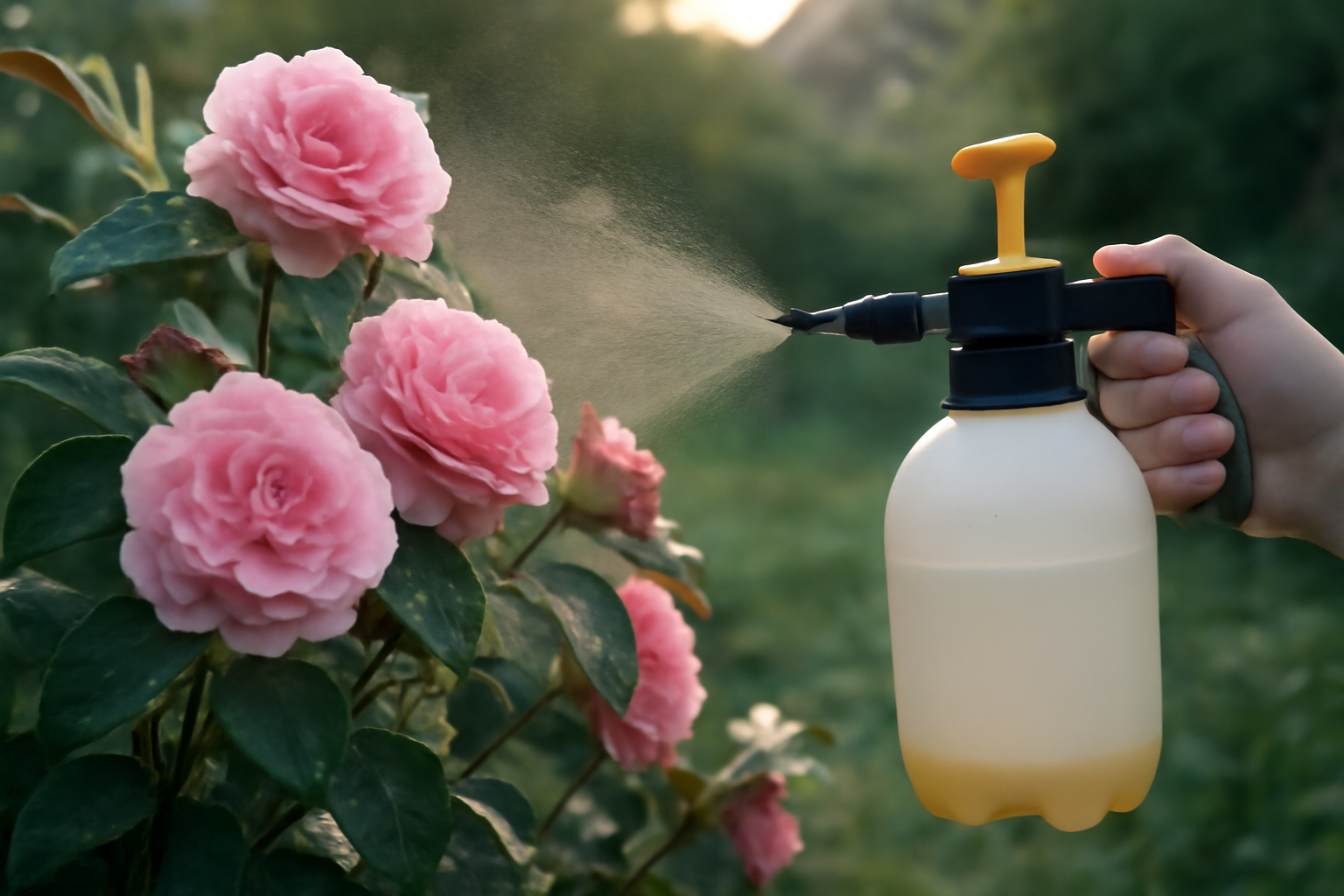
These are my oldest camellias. They’re large, established shrubs with dense canopies. I applied the Central Garden Gulfstream Gardentech Daconil Fungicide Rtu Spray directly to the buds and emerging blooms, as well as to the surrounding mulch layer where fallen petals had accumulated. I first removed all visibly infected blooms before spraying — that step is critical regardless of which product you use.
Applications happened every seven days. I sprayed early in the morning to allow drying before temperatures peaked. Wet foliage overnight creates its own fungal risks, so timing matters. I used roughly half a bottle per application across this one bed alone.
Bed Two: Mixed Sasanquas
The ‘Setsugekka’ and ‘Yuletide’ Sasanquas showed earlier, milder symptoms than the japonicas. Their more open flower forms may actually make them slightly less vulnerable to prolonged moisture retention in petals. I used the same protocol here — weekly applications with infected blooms removed first.
Additionally, I replaced the top inch of mulch in both beds before starting treatment. Sclerotia from Ciborinia camelliae overwinter in soil and old organic matter, so reducing the inoculum load in the soil gives any fungicide treatment a better chance of working.
What Actually Changed: Honest Results With a Timeline
Here’s where I have to be completely straight with you. The first week showed almost no improvement on already-infected blooms. That was my moment of real doubt. I had spent money, time, and effort, and the blooms already damaged continued to brown and collapse. I nearly stopped the treatment entirely.
I’m glad I didn’t. By week two, something shifted. New buds opening on the treated japonicas were showing significantly less infection than during the previous weeks. The rate of spread slowed noticeably. Blooms that opened after the second application stayed intact for four to six days before showing any browning — compared to the one or two days I’d been experiencing before treatment.
By week four, the Sasanqua bed was performing remarkably well. ‘Setsugekka’ blooms were clean and fully open. ‘Yuletide’ showed only minimal spotting on a few outer petals. The japonicas improved too, though less dramatically. Their dense canopy made thorough coverage harder to achieve, and I think that limited my results somewhat.
After five weeks of consistent treatment, I estimated roughly 60-70% reduction in new petal blight infection on the japonicas, and close to 80% on the Sasanquas. Those numbers represent a meaningful salvage of a bloom season I nearly wrote off entirely.
The Downsides You Should Know Before Buying
This product has real limitations. Understanding them will help you set appropriate expectations.
- It is not a cure. Daconil is a protectant fungicide, not a systemic one. It does not penetrate plant tissue to kill existing infections. Already-blighted blooms will not recover.
- Repeated applications are non-negotiable. A single spray does very little. You need consistent weekly coverage throughout bloom season, which adds up in both cost and time.
- Coverage on large, dense shrubs is genuinely difficult. My mature japonicas required awkward angles and multiple passes to reach the inner canopy. Smaller or more open-form camellias are much easier to treat effectively.
- Bottle size may frustrate you. For gardeners managing more than two or three large shrubs, you’ll go through multiple bottles quickly. The cost becomes significant over a full season of treatment.
- Weather sensitivity. Rain within a few hours of application washes away coverage. In a wet February or March, timing your spray windows can be genuinely frustrating.
On the environmental side, chlorothalonil is toxic to aquatic organisms and should not be sprayed near ponds, water features, or areas with runoff into natural waterways. Keep that in mind if your garden has drainage flowing toward a stream or pond.
Final Verdict: Who Should Buy This and Who Should Skip It
After five weeks of real-world testing, here is my honest bottom line on using Daconil fungicide camellia petal blight treatment with this specific product.
The Central Garden Gulfstream Gardentech Daconil Fungicide Rtu Spray is a genuinely effective tool — when used correctly, consistently, and with realistic expectations. For home gardeners managing a small number of camellias with moderate petal blight, it can meaningfully protect new blooms and slow disease spread during your bloom season. The ready-to-use format makes it accessible even for newer gardeners who haven’t mixed concentrated fungicides before.
Buy this if:
- You have three or fewer camellia shrubs showing early to moderate petal blight symptoms
- You’re willing to commit to weekly applications for the full bloom season
- You want a no-mix, grab-and-go treatment format
- You’re growing Sasanqua varieties or younger, smaller japonicas where coverage is easier
- You want to use it preventively starting before symptoms appear — that’s where it truly shines
Skip this (or supplement it) if:
- You have large, mature japonica hedges where thorough coverage is nearly impossible
- Your infection is already severe and bloom season is nearly over
- You garden near water features or sensitive ecosystems
- You’re looking for a single-application cure — that product simply doesn’t exist for petal blight
My personal rating: 4 out of 5 stars. It earns that score because it did what it is actually designed to do — protect new growth from infection — and the ready-to-use format is genuinely convenient. I’m deducting one star for the cost-per-use reality with larger gardens and the frustration of rain-interrupted spray schedules.
A Quick Note on the Concentrate Alternative
If you’re managing a larger collection of camellias and the cost of the ready-to-use spray becomes prohibitive, consider the Daconil Fungicide, 16-oz. concentrate as your runner-up option. The same active ingredient, chlorothalo