
This post contains affiliate links. As an Amazon Associate I earn from qualifying purchases at no extra cost to you.
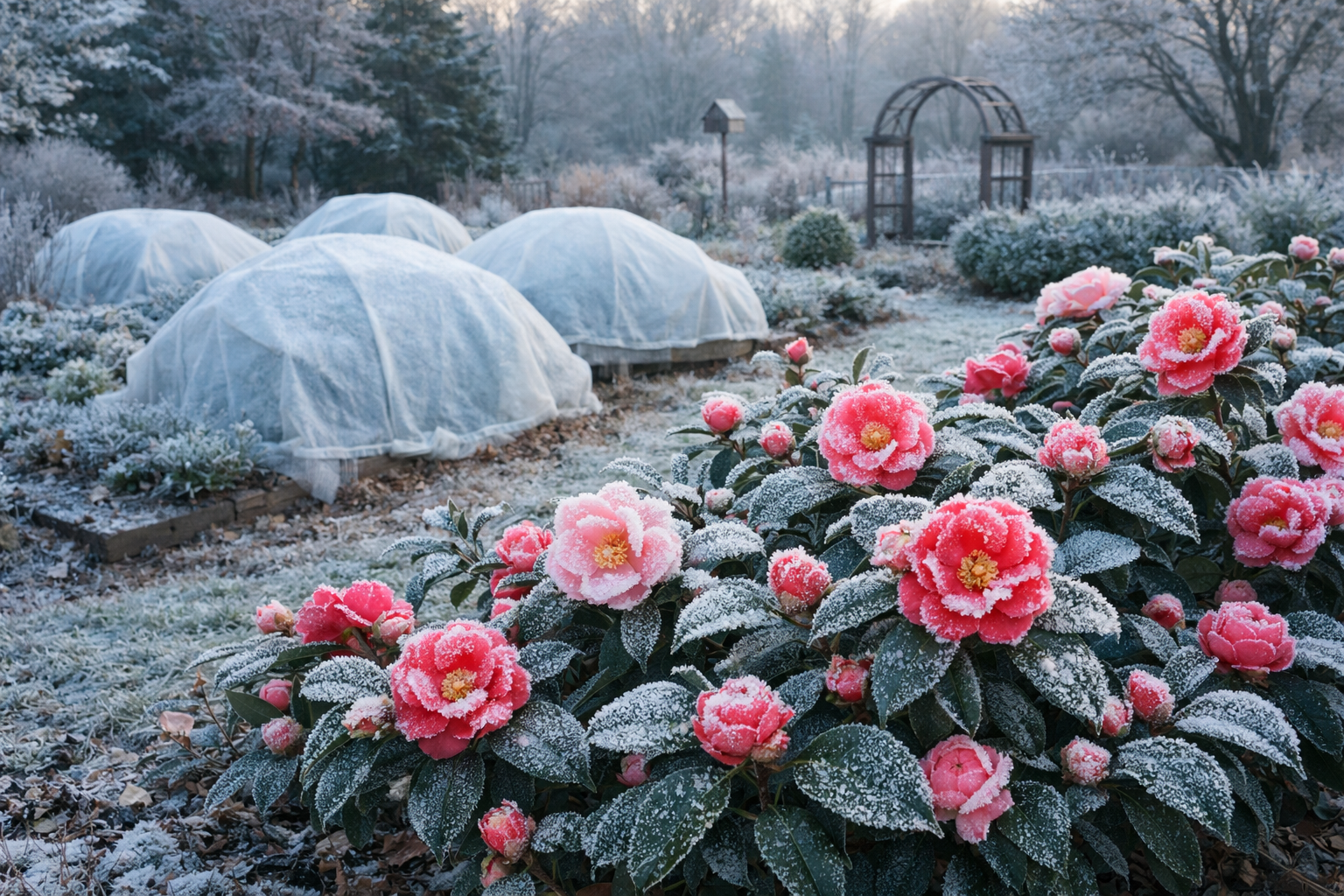
It was a gray November afternoon, and my neighbor leaned over the fence with that particular look — the one that says “I’m about to save you from yourself.” He pointed at the small shrub I was tucking into the bed along my south-facing wall and said, flatly, “You can’t grow camellias in zone 6.” I smiled politely and kept digging. That was three years ago. Today I have eleven camellias in my garden, and not a single one has given up on me. If you’ve been told the same thing and you’re searching for cold hardy camellia varieties zone 6 gardeners can actually grow with confidence, pull up a chair. I have some good news for you.
Why Cold-Hardy Camellias Are Finally Worth Talking About
For a long time, camellias were firmly in the “southeastern garden only” category. The classic Camellia japonica varieties are gorgeous, yes, but they’re also remarkably unforgiving once temperatures dip into the single digits. Zone 6 gardeners — dealing with winter lows anywhere from -10°F to 0°F — were essentially told to admire them in magazines and move on.
But breeding programs, particularly work done at the National Arboretum and by dedicated hybridizers over the past few decades, changed everything. A new wave of cold-tolerant varieties entered the market, many of them Camellia oleifera hybrids or specially selected Camellia japonica and Camellia sinensis crosses bred specifically to handle brutal winters. These aren’t just “surviving” — some of them are actively blooming in late fall and early spring, which, if you’ve ever seen a camellia flower emerge from a frost-covered garden, is about the most magical thing you’ll ever witness.
I’ll be honest: I lost one plant in my first winter. It was a variety I picked up at a big-box store with zero cold-hardiness information on the tag. Lesson learned. The eleven that remain? All deliberately chosen, all proven performers. Here’s what I grow and what I’d recommend.
The Best Cold Hardy Camellia Varieties for Zone 6
Winter’s Star (Camellia oleifera hybrid)
This is the one I tell every skeptical neighbor about. Winter’s Star is a Camellia oleifera hybrid developed through the National Arboretum’s breeding program, and it’s rated reliably hardy to -10°F — firmly in zone 6 territory. It produces semi-double lavender-pink blooms in October and November, often right as the rest of the garden is shutting down for the year. Mine has made it through two brutal cold snaps without a single complaint. It’s not the showiest camellia you’ll ever see, but it’s dependable, and in zone 6, dependable is everything.
Survivor (Camellia oleifera hybrid)
The name is not subtle, and it earns it. Survivor is another National Arboretum introduction, with white semi-double flowers that open in late fall. It’s been documented surviving temperatures below -10°F and bouncing back from heavy snow loads without significant dieback. I planted mine in a spot that gets hit by northwest wind in January, and it looks completely unfazed each spring. If you’re just starting out with cold-hardy camellias and want something forgiving, start here.
Pink Icicle (Camellia oleifera hybrid)
Pink Icicle gives you delicate pink single flowers in fall and occasionally in late winter if temperatures cooperate. It’s rated to about -5°F to -10°F, which puts it right on the edge for the colder parts of zone 6 — but with proper siting against a south-facing wall (which I use for three of my plants), it performs reliably. This one also has a slightly more elegant growth habit than some of the other cold-hardy varieties, which matters if you’re placing it somewhere visible.
April Series (Camellia japonica hybrids)
The April series — April Blush, April Dawn, April Kiss, April Rose, April Snow, and April Tryst — was developed by Clifford Parks and is specifically selected for late spring bloom time, which means the flowers avoid late frost damage that plagued earlier blooming japonicas. These are Camellia japonica hybrids rated to around -5°F, which makes them workable in zone 6b and with protection in 6a. I grow April Rose and April Blush, and the flowers are classically gorgeous — full, formal, and the kind of thing that makes people stop walking and stare.
Korean Fire (Camellia japonica)
Collected from wild plants on an island off the coast of Korea, Korean Fire is a Camellia japonica selection known for exceptional cold hardiness compared to most of its species cousins. It produces vivid red single flowers and has been grown successfully in zone 6 gardens with good siting and protection. It’s on the edge, and I won’t pretend otherwise — but with the right microclimate and winter prep, it’s absolutely achievable.
Winters Interlude, Winters Hope, and Winters Rose
These are additional National Arboretum hybrids that round out the cold-hardy lineup beautifully. Winters Interlude has anemone-form lavender-pink flowers and is arguably the most ornamental of the group. Winters Hope produces white blooms with a clean, formal look. Winters Rose has small, fully double rose-pink flowers that are just impossibly charming. All three are rated to -10°F and have proven themselves in zone 6 gardens across the Mid-Atlantic and lower Midwest.
How to Site and Plant Camellias in Zone 6
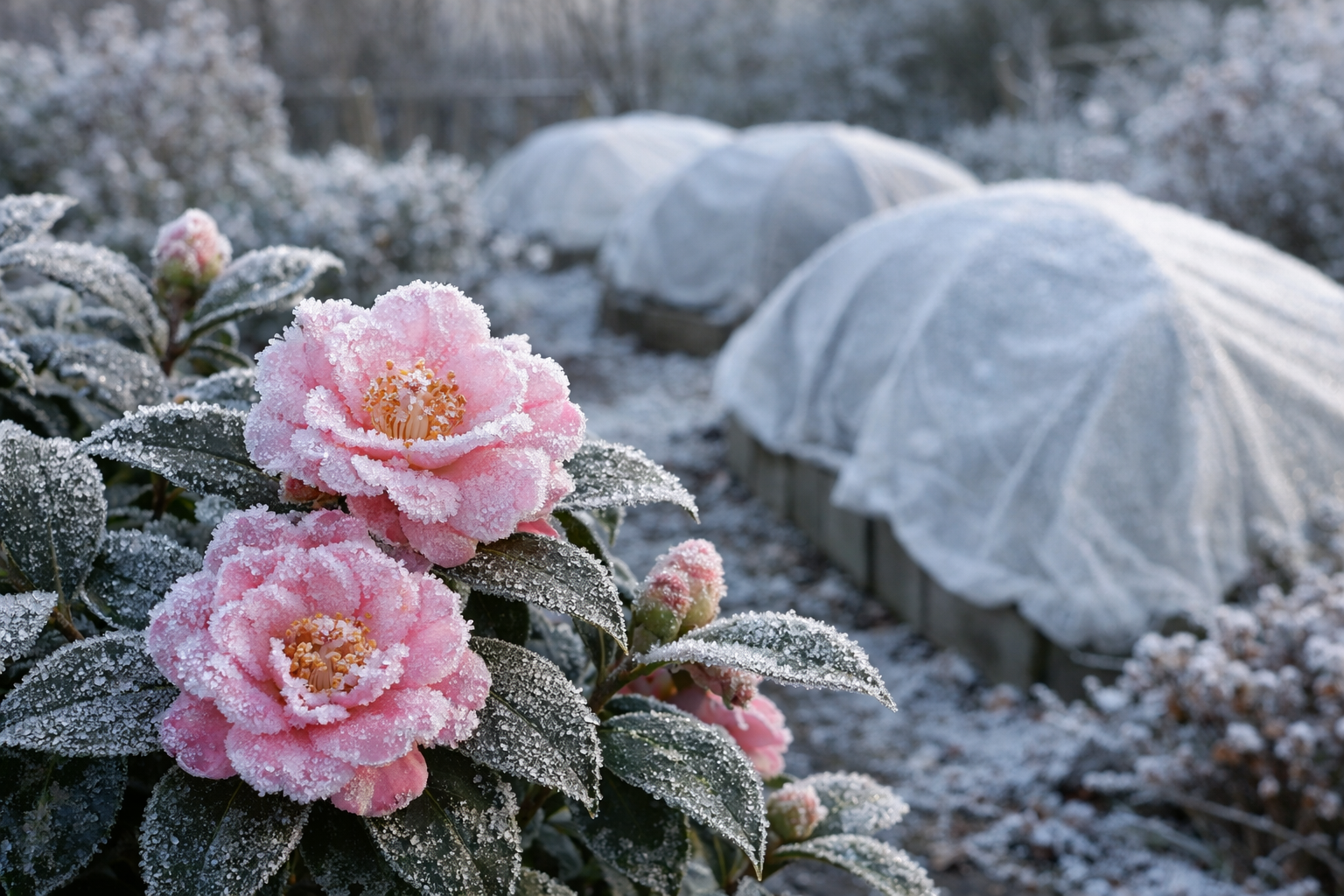
I can not overstate how much siting matters. A camellia that would die in an exposed north-facing bed may thrive for decades in a protected microclimate. When I plan a placement, I’m thinking about three things: wind protection, winter sun, and drainage.
- Wind protection: A south or southeast-facing wall, a fence, or a grouping of evergreens on the north and west sides will dramatically reduce desiccation damage in winter. Cold wind is often what kills camellias in zone 6 before the temperature itself does.
- Winter sun: Morning sun on frozen foliage can cause rapid thaw damage, so some dappled shade or a location that gets afternoon rather than harsh morning sun can be beneficial, particularly for japonicas.
- Drainage: Camellias sitting in wet, frozen ground are vulnerable to root damage. Raised beds or slightly elevated planting spots help enormously.
- Soil prep: Camellias want acidic, well-amended, humus-rich soil. Get the pH right — 5.5 to 6.5 — and you’ll have a stronger, more resilient plant going into winter.
I also plant in fall rather than spring whenever I can. It gives the roots several weeks to establish before the ground freezes, which sets them up better than a spring planting that goes straight into summer heat stress.
Winter Protection Strategies That Actually Work
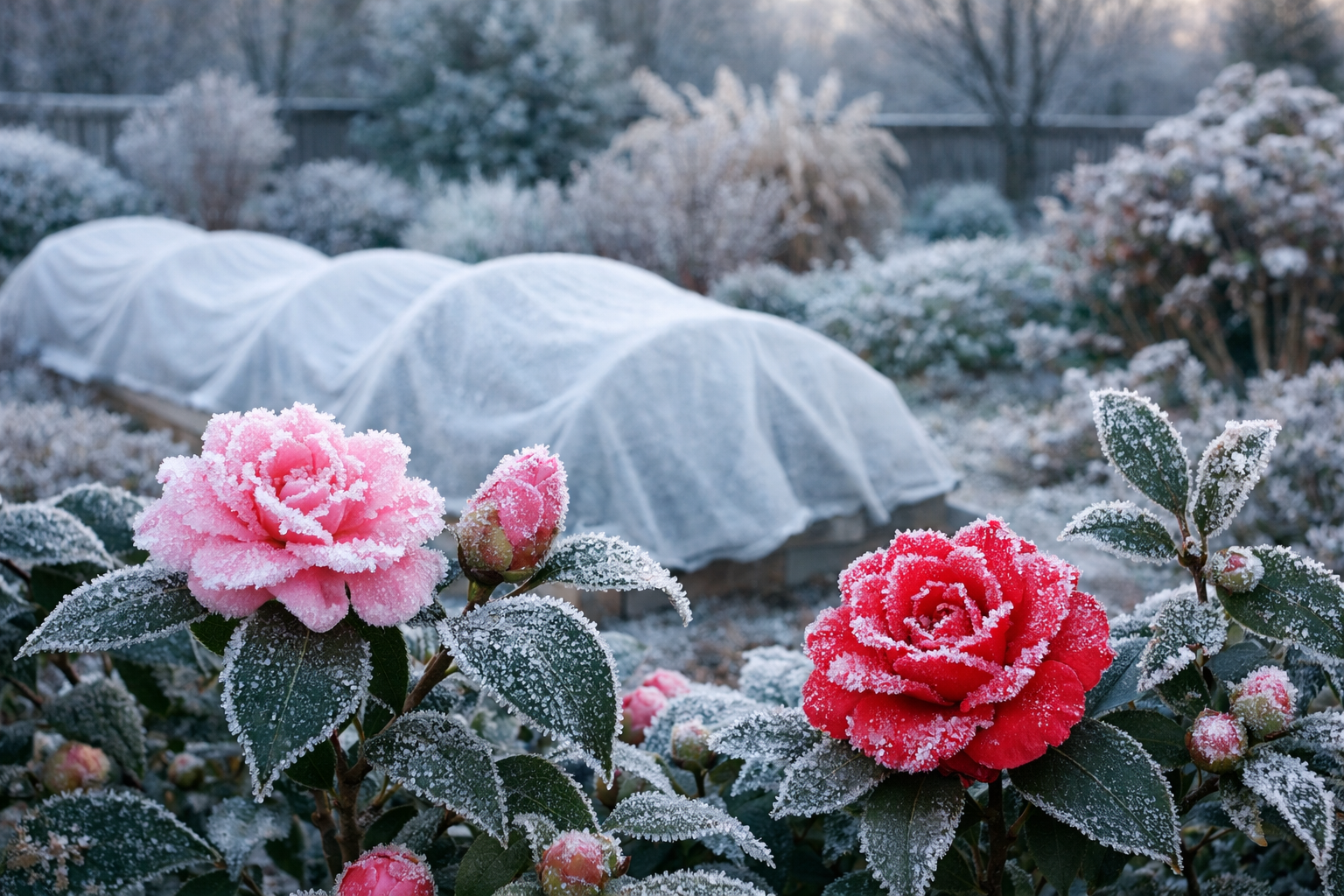
Even the hardiest varieties benefit from a little help in the coldest stretches of a zone 6 winter. Here’s what I actually use — not a theoretical list, but the stuff that’s sitting in my garage right now.
Frost Blankets and Row Covers
For younger plants and anything marginally hardy, a good frost blanket is your best friend. I’ve had great results with the Plant Covers Freeze Protection 10ft×33ft Reusable Rectangle Frost Protection Floating Row Cover — it’s large enough to drape generously over even a full-size shrub without bunching, and it’s reusable season after season. For smaller individual plants, the Antifrost Cover 7ft×10ft Reusable Rectangle Frost Protection Floating Row Cover is a better fit and easier to store.
I also keep a roll of the Homoda Plant Covers Freeze Protection 10 ft x 30 ft Frost Blanket for those surprise polar vortex nights when I need to cover multiple plants fast and don’t have time to fuss with sizing. For a heavier-duty option that holds up to repeated use and harsh conditions, the MuyuRise 10 FT x 33 FT 1.8 oz/yd² Thickened Frost Cloth is excellent — the extra weight per yard provides meaningfully better insulation on the coldest nights.
Anti-Desiccant Spray
Winter burn — that ugly browning on camellia foliage from drying winds and sun — is one of the biggest threats in zone 6, and it’s separate from actual freeze damage. I spray all my camellias in late November with Wilt-Pruf® Original Winter Plant Protection Ready-to-Spray. It forms a breathable protective coating on the leaves that dramatically reduces moisture loss. One application lasts up to four months, which gets me through the worst of the winter. This stuff has made a noticeable difference — my foliage stays greener and more attractive all winter long.
Burlap Wrapping for Young Shrubs
For newly planted camellias in their first one or two winters, I don’t rely on frost blankets alone. I wrap them in burlap, which provides wind protection and insulation without completely blocking airflow. The Burlap Tree Protector Wraps 7.8″ × 9.8′ Winter Tree Trunk Guards work well for wrapping individual stems and lower trunks, and I use the SYWHXY Natural Jute Burlap Tree Wraps when I need more coverage — the four-roll pack means I’m not running out mid-garden on a cold afternoon.
Path and Driveway De-Icer
This one might not seem directly related to camellia care, but hear me out: traditional salt-based de-icers are genuinely damaging to camellias and other acid-loving