
This post contains affiliate links. As an Amazon Associate I earn from qualifying purchases at no extra cost to you.
It was the third week of January, and I was standing in my garden at 6 a.m. in my dressing gown, watching a hard frost settle over my camellias like a slow disaster. One of them — a ‘Jury’s Yellow’ I’d been nursing for four years — had been covered the night before with what I can only describe as enthusiastic optimism and a product that absolutely did not earn its price tag. That morning was the beginning of a rather obsessive, three-winter education in the best frost protection covers for camellias, and I’m here to save you the cold toes and the wasted money.
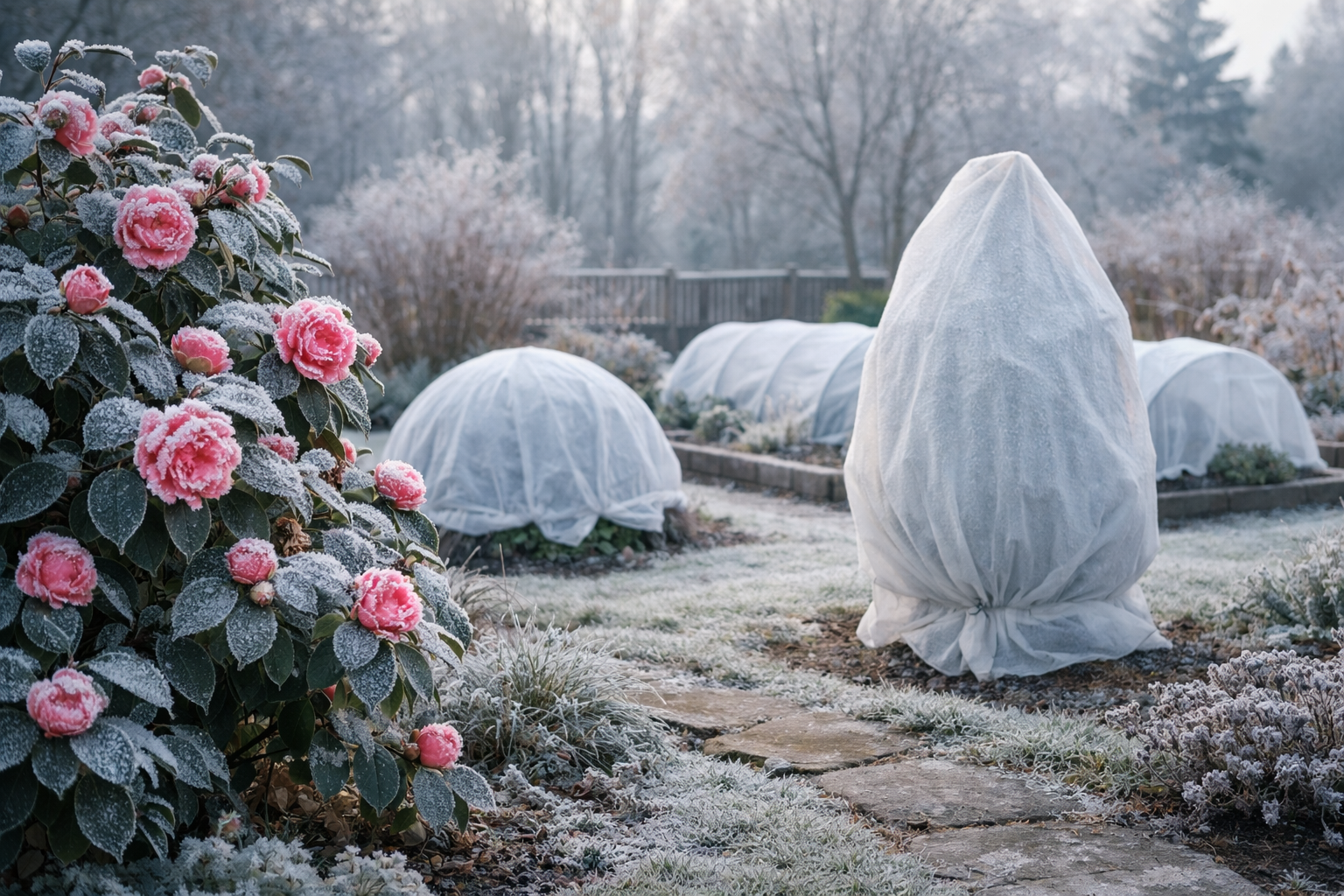
Why Camellias Need Frost Protection in the First Place
Let me be clear about something before we get into products: camellias are not as fragile as people assume. Many varieties handle a decent freeze without any drama at all. The real vulnerability is their flower buds. A hard frost — especially a sudden one after a mild spell — can turn those beautiful tight buds to mush overnight. And if your camellia is a late-winter or early-spring bloomer, like a Japonica variety, it’s putting on its best show right when the weather is at its most treacherous.
The other risk is desiccation. Cold, drying winds pull moisture from the leaves faster than frozen roots can replace it, causing that ugly brown-edged leaf burn that makes your camellia look thoroughly miserable by March. So you’re protecting against two things: direct freeze damage to buds and flowers, and wind-driven moisture loss from the foliage. Different products address these problems differently, and that’s worth understanding before you spend a penny.
Over three winters I tested seven different products — lightweight row covers, heavy frost blankets, anti-desiccant sprays, burlap wraps, and one liquid de-icer I genuinely do not know why I bought. Here’s the honest breakdown.
Frost Blankets and Row Covers: The Clear Winners
If you only buy one category of frost protection product for your camellias, make it a good fabric row cover or frost blanket. These are the genuine workhorses of winter garden protection, and after three winters of testing, I am completely converted.
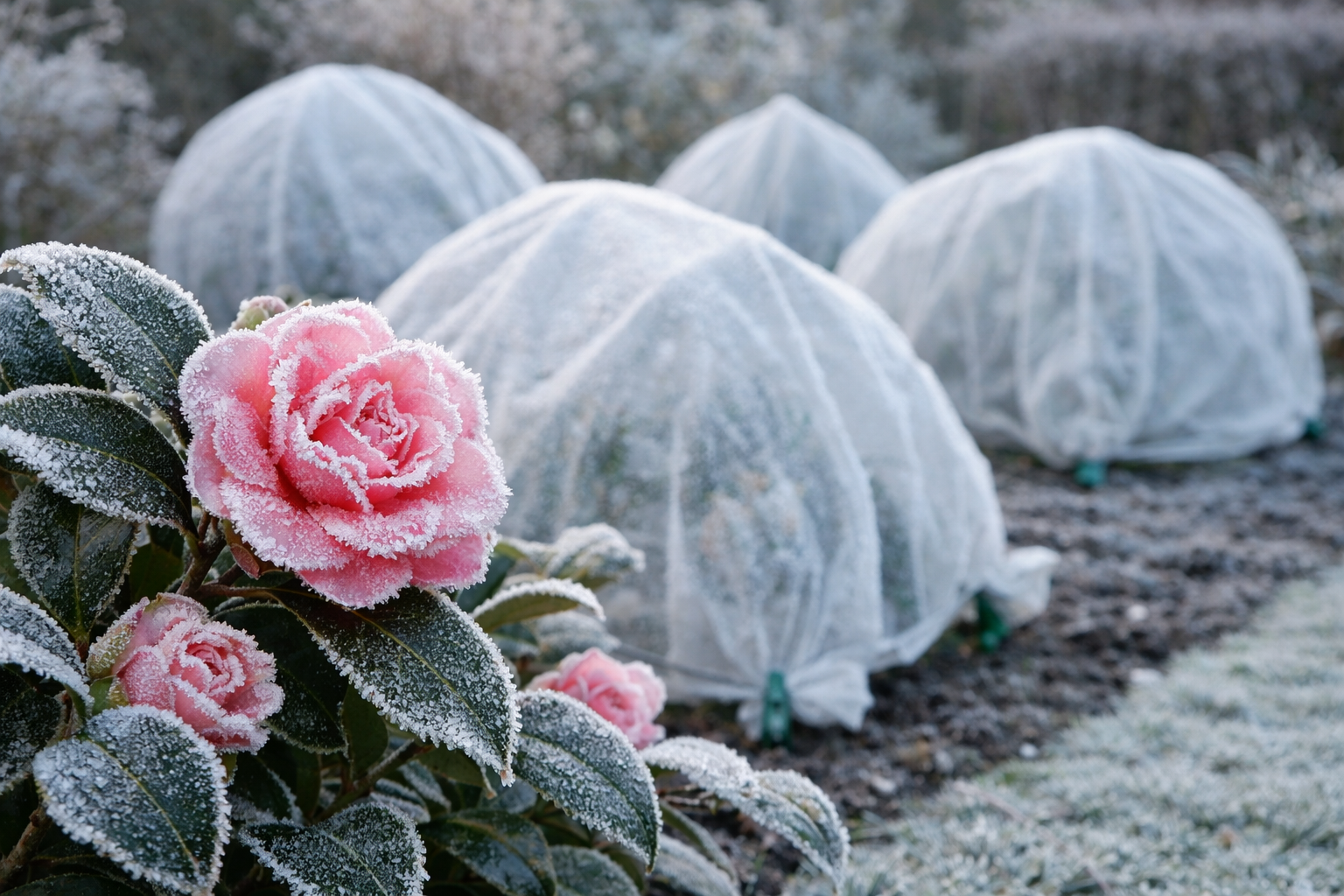
The principle is simple: the fabric traps a small but meaningful pocket of warmer air around the plant while still allowing a little light and moisture through. A good frost blanket can raise the temperature around your camellia by several degrees — enough to save flower buds when temperatures dip just below freezing, and enough to stop that desiccating wind from doing its worst.
Lightweight Row Covers: Best for Mild Frosts and Everyday Use
For gardens that get occasional light frosts rather than sustained hard freezes, a lighter-weight row cover fabric is often the right choice. It’s easier to drape and remove, kinder to buds and blooms that might already be opening, and you can leave it on for longer periods without worrying about the plant getting too warm on a sunny day.
The Plant Covers Freeze Protection 7ft×10ft Reusable Rectangle Frost Protection Floating Row Cover is a great option for smaller or younger camellias. I used this on a container-grown ‘Yuletide’ one winter and was genuinely impressed — the buds came through a night of -3°C completely unscathed. The 7×10ft size drapes generously over a medium-sized shrub without you having to wrestle it into position at dusk.
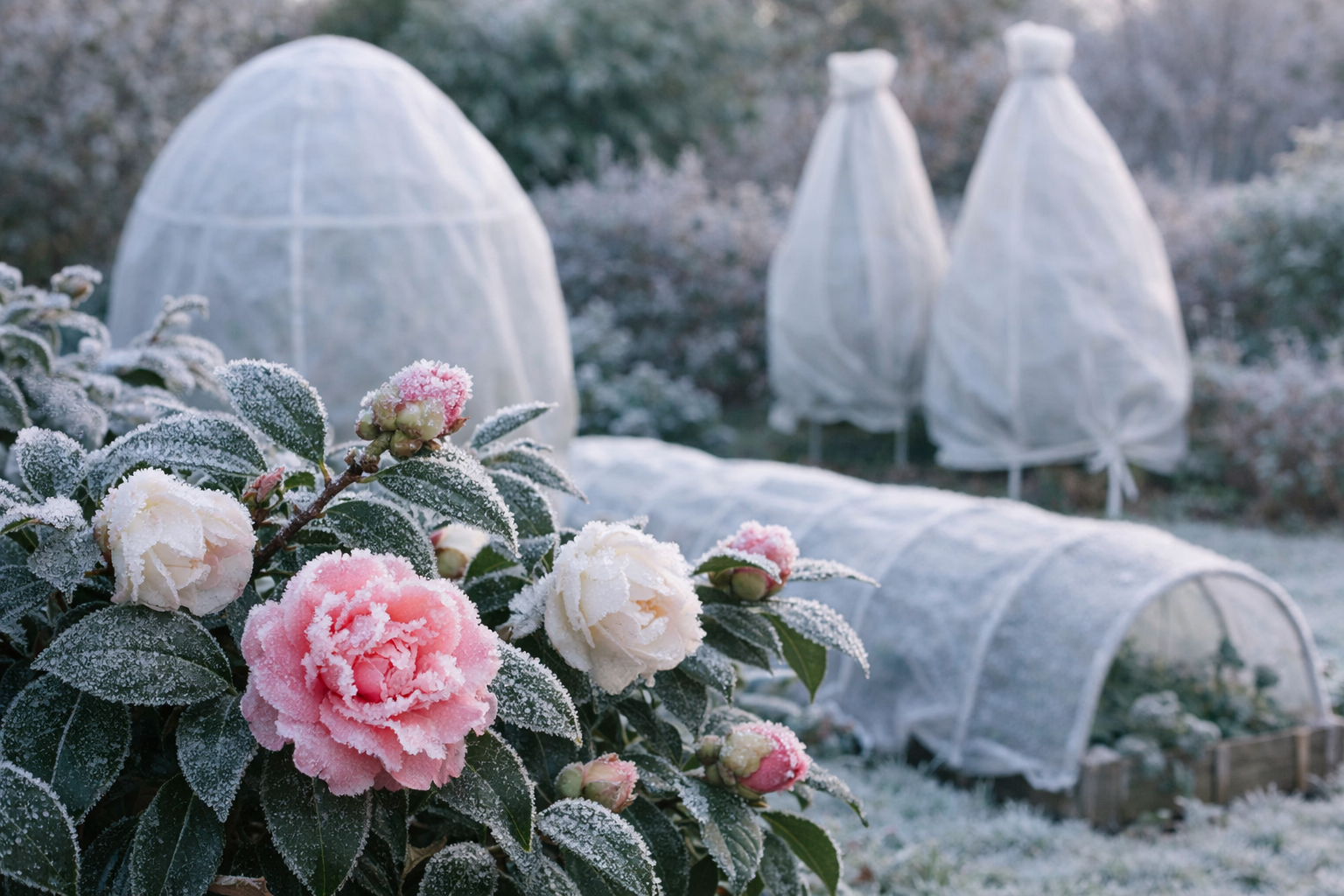
If you have a larger established camellia or want to cover a small group of shrubs, the Plant Covers Freeze Protection 10ft×33ft Reusable Rectangle Frost Protection Floating Row Cover gives you real flexibility. I’ve used this to throw a long tent over a row of camellias against a north-facing wall, weighting the edges with stones, and it performed extremely well. The reusable material washes and folds away neatly, which is more than I can say for some of the scrappier alternatives I’ve tried.
Heavier Frost Cloth: When Winter Gets Serious
When a genuinely cold snap is forecast — the kind where temperatures drop well below freezing for several nights in a row — you want something with a bit more weight and insulating power. This is where a thicker frost cloth earns its place.
The MuyuRise 10 FT x 33 FT Plant Covers Freeze Protection kit — 1.8 oz/yd² Thickened Frost Cloths Blankets is the heaviest-duty option I tested, and it showed. The kit comes with accessories to help anchor it, which I appreciated because there is nothing more demoralising than watching your carefully arranged frost cover sail across the garden at midnight. The thicker weave provides noticeably better insulation and wind resistance. If you’re in a region that gets proper winter cold, this is the one I’d reach for first.
Similarly, the Homoda Plant Covers Freeze Protection 10 ft x 30 ft 1.2oz Frost Blankets for Outdoor Plants sits in the middle ground — heavier than a basic floating row cover but still manageable to handle solo. I found this one particularly useful as a secondary layer when temperatures were forecast to be especially severe. Doubling up two lighter covers, incidentally, gives you better insulation than you might expect.
Anti-Desiccant Sprays: Genuinely Useful, But Not Magic
Anti-desiccant sprays occupy an interesting middle ground in the frost protection world. They don’t protect against hard frost in the way a physical cover does, but they do address that second vulnerability I mentioned — moisture loss through the leaves during cold, dry, windy winters.
Wilt-Pruf® Original Winter Plant Protection Ready-to-Spray is the most well-known product in this category, and it’s popular for good reason. You spray it directly onto the foliage in late autumn or early winter, and it creates a thin, flexible coating that reduces the rate at which the leaves lose moisture. It claims to last up to four months, and in my experience that’s roughly accurate — I applied it in November and could still see the sheen on the leaves in February.
Does it help camellias specifically? I think yes, modestly. The leaves on my sprayed plants looked noticeably better through winter than on an unsprayed comparison plant — less browning at the edges, better overall colour. However, and this is important: I’d use Wilt-Pruf as a supplement to physical covers on the coldest nights, not as a replacement. It won’t save your buds from a hard freeze on its own.
Apply it on a dry day when temperatures are above freezing, and do it well before a frost is forecast. Don’t spray it on open flowers. That’s about all you need to know.
Burlap Wraps and the Products I Found Theatrical
Burlap has been used to protect shrubs from cold and wind for generations, and I want to be fair to it: it has genuine merit for certain plants in certain situations. For camellias specifically, my experience was more mixed.
I tested both the Bare Ground 2 Rolls Burlap Tree Protector Wraps and the SYWHXY 4 Rolls Natural Jute Burlap Tree Wraps. Both are well-made products and genuinely useful for wrapping around trunks and stems to prevent bark splitting — which can be a real issue for young or newly planted camellias in hard winters. Wrapped around the main stem of a young plant that hasn’t yet developed a thick protective bark, burlap provides meaningful insulation.
Where I found burlap less convincing for camellias was as a full canopy cover. The weave is loose enough that cold wind passes through it fairly readily, and draping it over an established camellia with a full spread of branches is awkward and — I say this with some self-awareness — slightly embarrassing to wrestle with in the dark. A purpose-made frost blanket covers more area, sits more securely, and provides better all-round protection. Save the burlap for wrapping young stems and newly planted specimens.
And the liquid de-icer? The Bare Ground BGPS-1 All Natural Anti-Snow Liquid De-Icer with Battery Powered Sprayer is, I want to be clear, a perfectly good product for its intended purpose — clearing ice from paths and hard surfaces. I have absolutely no idea what possessed me to think it would help my camellias. It did not. Please do not spray de-icer on your plants. I offer this information purely so you may learn from my mistake without having to repeat it.
Practical Tips for Using Frost Covers on Camellias
Even the best frost protection cover in the world won’t help if you put it on incorrectly. A few things I’ve learned the hard way:
- Cover your camellias in the evening before a frost, not the morning after. By then the damage is done.
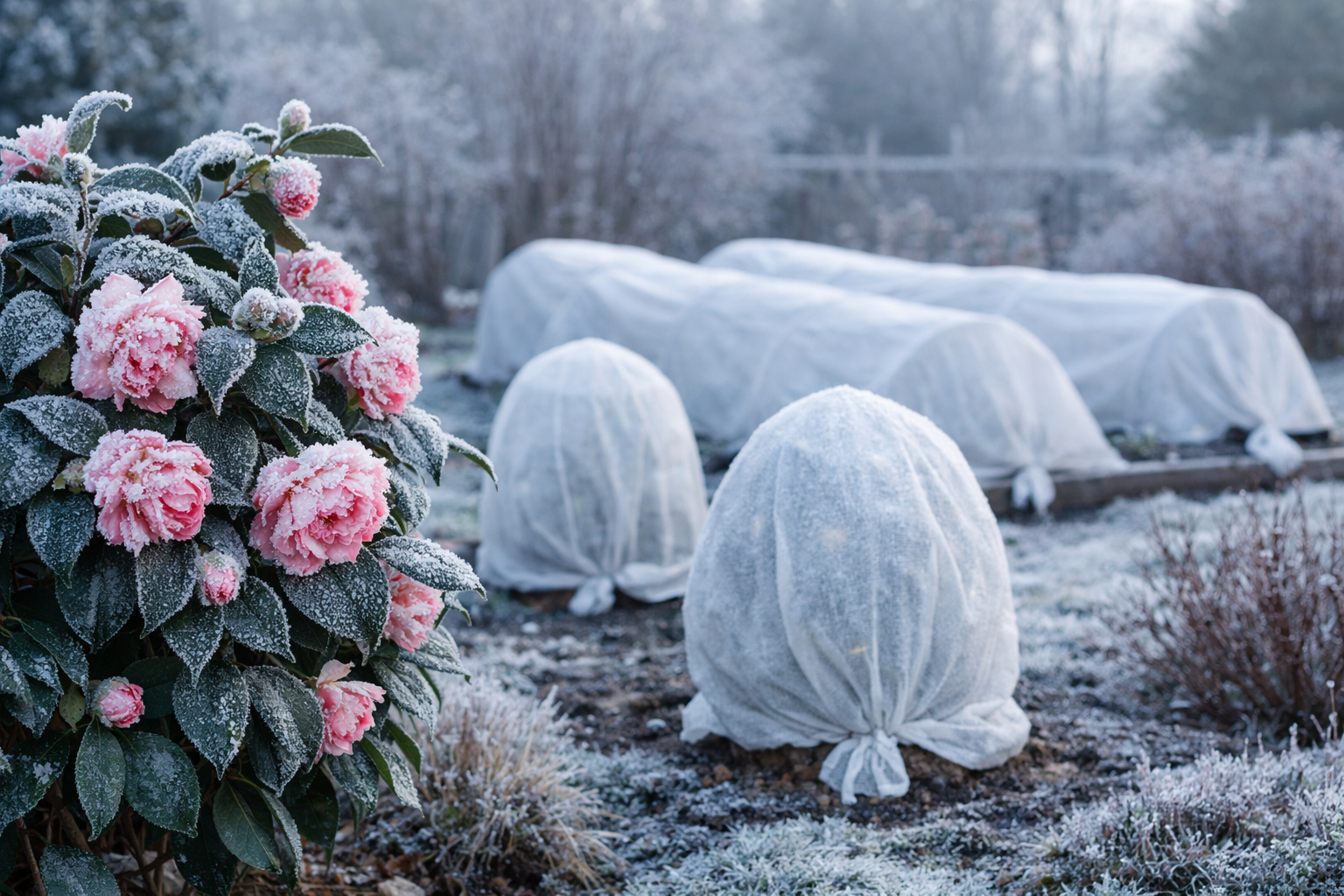
- Make sure the cover reaches the ground and is weighted or pegged down at the edges. Cold air sinks and will find any gap underneath.
- Remove covers during the day if temperatures rise above freezing and the sun is out. Camellias appreciate the light, and trapped daytime warmth can actually cause buds to develop too quickly, making them more frost-sensitive.
- Don’t let frost cloth press directly onto open flowers if you can help it. Use canes or a simple frame to hold it slightly away from the plant and you’ll get much better results.
- For container camellias, moving the pot to a sheltered spot against a wall or into an unheated shed is always more effective than any cover — do this first, then add a cover as backup on the coldest nights.
My Final Recommendation on the Best Frost Protection Covers for Camellias
After three winters and seven products, here’s where I’ve landed: for most camellia gardeners, the best frost protection covers for camellias are a good-quality reusable frost blanket and, as a seasonal supplement, an anti-desiccant spray like Wilt-Pruf.
If you have smaller or younger plants, start with the Categories Winter Care & Frost Protection