
This post contains affiliate links. As an Amazon Associate, I earn from qualifying purchases at no extra cost to you.
Last spring, I hit a wall I hadn’t expected after two decades of growing camellias. My raised beds — which I’d built specifically for acid-loving plants — started showing signs of pH drift. Leaves on my ‘Kanjiro’ Sasanqua turned a sickly yellow-green. New growth on two established Japonicas looked stunted and pale. I tested the soil and got a reading of 6.9. That’s far too alkaline for camellias, which need a pH between 5.5 and 6.5 to absorb nutrients properly. Something had to change, and fast. That’s when I started researching the right azalea camellia potting mix to help me course-correct.
I garden in USDA Zone 7b, here in the mid-Atlantic region. My raised beds get morning sun and afternoon shade — near-perfect camellia conditions, or so I thought. The problem was my soil amendment routine. I’d been top-dressing with a general-purpose compost that was quietly pushing my pH in the wrong direction. Over three seasons, the damage had crept up on me.
Fixing this wasn’t just about adding sulfur and hoping for the best. I needed a reliable, purpose-built growing medium to use as a top dressing and to repot some container specimens that had become root-bound. So I started reading reviews, digging into product specs, and asking questions in a couple of online camellia forums I’ve been part of for years.
Why I Chose Soil Sunrise Acid Loving Plant Potting Soil Mix
I looked at a lot of options. Honestly, the choices in the specialty soil market can feel overwhelming. Several products claim to be “pH balanced,” but few actually state the target range on the label. That bothered me right away.
The Soil Sunrise Acid Loving Plant Potting Soil Mix (12 Quarts) stood out for a few specific reasons. First, it’s explicitly formulated for azaleas, rhododendrons, blueberries, and camellias — the same family of acid-loving ericaceous plants I’ve been growing for years. Second, the product description emphasized pH balance as a core feature, not an afterthought. Third, several reviewers had used it specifically for camellias in containers and raised beds, which matched my exact use case.
In my experience, generic potting mixes — even “premium” ones — often run neutral to slightly alkaline. That’s fine for tomatoes. For camellias, however, it’s a slow-motion disaster. Seeing a product designed from the ground up for this pH range gave me real confidence. The 12-quart size also made practical sense for testing across multiple plants without a huge upfront investment.
First Impressions: Unboxing and Initial Quality Check
The bag arrived in good shape — no tears, no moisture damage. That matters more than people realize. A compromised bag means compromised sterility, and introducing weed seeds or pathogens into a camellia bed is the last thing you want.
Opening it up, the mix had a rich, dark appearance. The texture was immediately noticeable — well-aerated, with visible bark fines, peat moss, and what looked like perlite. There was a pleasant, earthy smell without any of the sour or ammonia-like odor that sometimes signals poor composting. I’ve opened enough bags of soil over the years to know that smell is a real indicator of quality.
The moisture content was appropriate — damp but not waterlogged. That’s exactly what you want for immediate use. Bone-dry mixes are frustrating to work with and can repel water initially. On the other hand, sopping wet mixes are heavy, messy, and can encourage anaerobic conditions in the bag. This one hit the right balance.
I did a quick at-home pH test using indicator strips before applying anything. The reading came back right around 5.5 to 6.0, which is solidly in the sweet spot for camellias. That preliminary result built my confidence immediately.
My Testing Approach: Which Plants, How I Applied It, and Over What Timeframe
I used the Soil Sunrise Acid Loving Plant Potting Soil Mix (12 Quarts) across three different scenarios over about four months, starting in late April and running through mid-August.
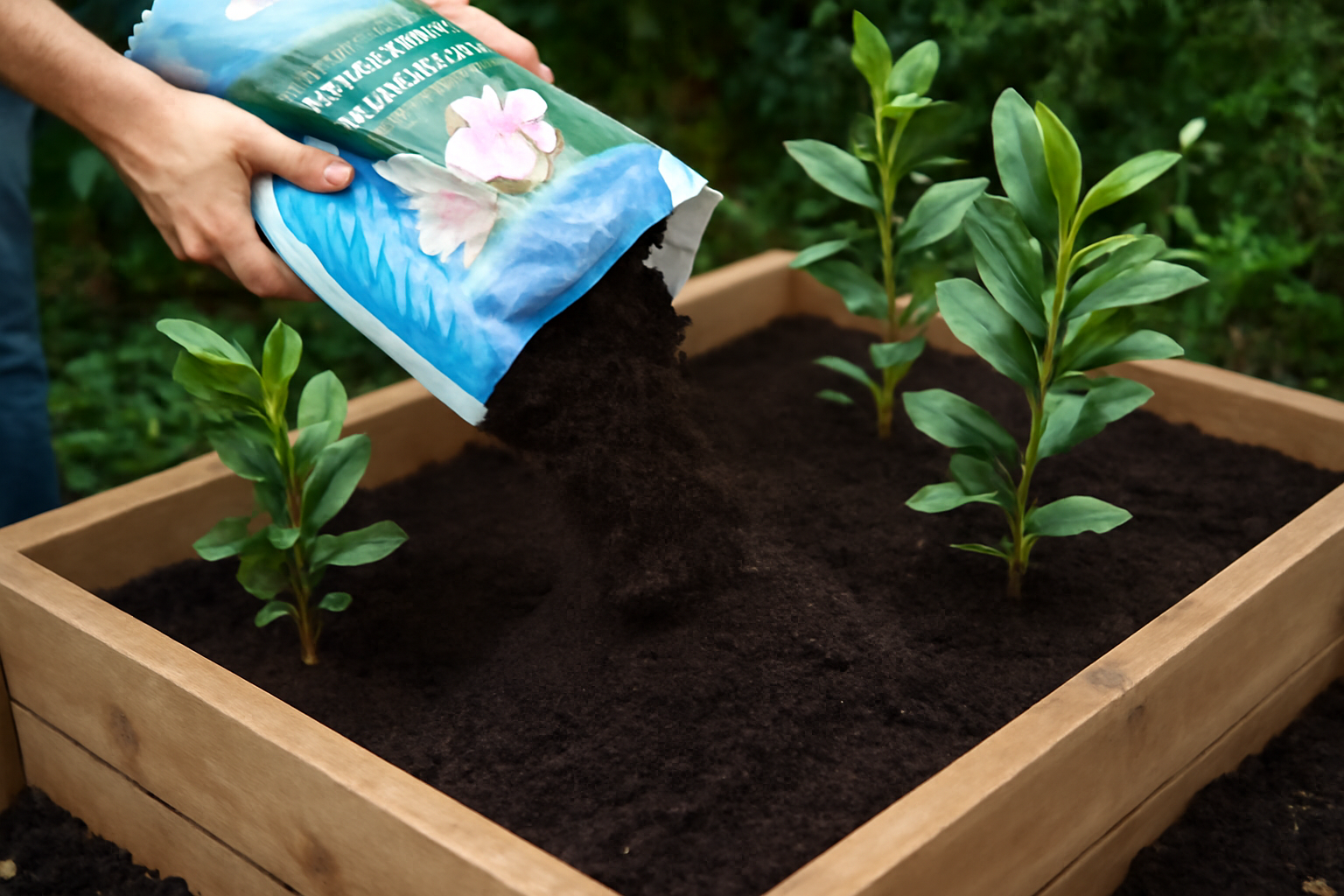
Scenario one: raised bed top-dressing. I spread roughly two inches of the mix across a 4×8 raised bed containing a mature ‘Survivor’ Japonica and a younger ‘Yuletide’ Sasanqua. Both had shown chlorosis symptoms. I worked it lightly into the top inch of existing soil and watered it in thoroughly.
Scenario two: container repotting. I had a ‘Debutante’ Japonica in a five-gallon nursery pot that was badly root-bound. I up-potted it into a seven-gallon container using the Soil Sunrise mix as roughly 60% of the new growing medium, blended with some of my existing amended soil.
Scenario three: new planting. I established a small ‘Setsugekka’ Sasanqua in a half-barrel container using the mix as the primary growing medium. This gave me a clean baseline with no prior soil history to muddy the results.
Throughout testing, I watered consistently, avoided adding any additional fertilizers for the first six weeks, and monitored foliage color and new growth. I also re-tested soil pH at weeks four, eight, and sixteen.
What Actually Changed: Honest Results With Timeline
By week four, the most visible change was in my ‘Yuletide’ Sasanqua. New growth had begun pushing out at the branch tips, and critically, it was a healthy, deep green. Previously, new leaves had been emerging yellowish. This shift is consistent with improved iron availability — a direct result of lower pH unlocking nutrients that were chemically locked out in alkaline conditions.
The ‘Survivor’ Japonica was slower to respond. That’s not surprising; mature plants with established root systems take longer to show improvement from soil changes. By week eight, however, the older yellowed leaves had mostly been replaced by new, healthier foliage. The plant looked dramatically better than it had in over a year.
The repotted ‘Debutante’ Japonica thrived. Within three weeks of repotting, I could see new root growth at the drainage holes. That’s an excellent sign — it means the plant found the new medium hospitable and expanded quickly. By midsummer, it had put on several inches of new growth and looked noticeably fuller.
The ‘Setsugekka’ Sasanqua in the clean baseline container performed beautifully. Drainage was excellent. Growth was vigorous. By mid-August, it had set visible flower buds — earlier than any Sasanqua I’d planted from scratch in recent memory.
pH readings stayed consistently in the 5.5 to 6.2 range throughout the test period. That stability impressed me more than almost anything else.
Bloom Results by Late Season
My ‘Yuletide’ Sasanqua opened its first blooms in October — right on schedule, with noticeably richer red coloring than the previous fall. Whether that’s entirely the soil or a combination of factors, I can’t say with certainty. That said, the correlation was hard to ignore after a difficult previous season.
The Downsides You Should Know About This Azalea Camellia Potting Mix
I want to be straight with you here, because no product is perfect and you deserve honest information.
The 12-quart size sounds generous. In practice, however, it goes fast if you’re working with raised beds or multiple large containers. I went through two bags during my testing period and honestly could have used a third. For anyone managing more than two or three medium containers, plan to order multiple bags upfront. Buying in bulk is simply more economical.
I also had a moment of real doubt around week three. The ‘Survivor’ Japonica showed no visible improvement at that point. I second-guessed myself. Had I made a mistake? Should I have gone with a sulfur drench instead? I nearly ordered a soil acidifier to supplement. Fortunately, I gave it more time — and the results eventually came. But patience is genuinely required. If you’re expecting overnight transformation, this product will frustrate you.
Additionally, this mix is designed for containers and bed amendments, not for in-ground planting into heavy clay. My raised beds have well-draining base soil, which helped enormously. Spreading this into dense, poorly draining native clay would likely give disappointing results — not because the mix is bad, but because drainage is non-negotiable for camellias regardless of pH.
One more note: this isn’t a complete fertilizer. After my initial six-week observation window, I added a slow-release acid fertilizer formulated for camellias and azaleas. The Soil Sunrise mix provides the right growing environment, but it won’t replace a feeding program entirely.
Final Verdict: Who Should Buy This, and Who Should Skip It
After four months of deliberate testing across multiple camellia varieties, I’m genuinely impressed with the Soil Sunrise Acid Loving Plant Potting Soil Mix (12 Quarts) Premium Container Blend. It does what it promises: it delivers a stable, well-structured, properly acidic growing medium for camellias, azaleas, and other ericaceous plants.
I’d give it 4.5 out of 5 stars. The small deduction is purely for the bag size — I wish a larger format were available.
Buy this if you:
- Grow camellias, azaleas, or rhododendrons in containers or raised beds
- Are dealing with pH drift or chlorosis symptoms in established plants
- Want a purpose-built azalea camellia potting mix that won’t require constant pH adjustment
- Are establishing new container specimens and want to start with the right foundation
- Garden in zones 6-9 where camellias thrive with the right soil support
Skip this if you:
- Are planting directly into heavy, poorly draining native soil without raised beds
- Need large volumes and can’t order multiple bags
- Expect rapid visible results within the first two or three weeks
- Grow only in-ground in already well-balanced, naturally acidic soil
A Quick Note on the Runner-Up
During my research, I also came across the Gardenera Premium Balsam Camellia Potting Soil Mix (1 Quart). It’s a solid option, specifically branded for camellias and emphasizing nutrient balance, drainage, and aeration. The one-quart size makes it ideal for small containers or single-plant repotting projects. However, the small volume limited its appeal for my multi-plant testing needs. For a gardener managing just one or two potted camellias, it’s worth a look as a convenient, targeted option.
For my purposes — and likely for most serious camellia growers — the Soil Sunrise mix offered better value and broader versatility. That’s why it earned the top spot in my raised bed experiment and on my potting bench going forward.